Loading...
Otto I the Great vs Suleiman I
Suleiman I leads by 3.6 pts · 2 figures compared
…
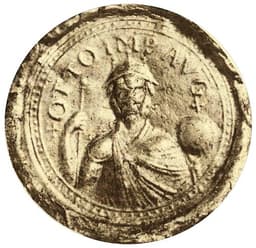
Otto I the Great
Emperor · Medieval
75.2Total
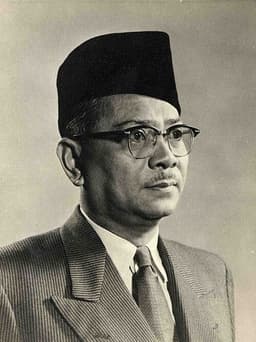
Suleiman I
Emperor · Medieval
78.8Total
Basic Information
Born
912
1494
Died
973
1566
Era
Medieval
Medieval
Nationality
Holy Roman Empire
Ottoman Empire
Occupation
Emperor
Emperor
Civilization
Western
Middle Eastern
Score Comparison
Military (10%)
82.0
78.5
Political (20%)
70.0
82.0
Influence (20%)
88.0
85.0
Legacy (20%)
65.0
70.8
Leadership (15%)
78.0
81.7
Strategy (15%)
65.4
74.4
TOTAL
75.2
78.8
Otto I the Great — Complete Timeline
951 AD
Diplomatic Marriage to Adelaide of ItalyPolitical Action◆ Major
Otto married Adelaide, the widowed queen of Italy, after intervening in Italian politics. This marriage gave him control over the Kingdom of Italy and strengthened his claim to imperial authority.
MarriageItalyAdelaide
Impact: regionalconstructive
955 AD
Battle of LechfeldWar
Otto led a German army to defeat the Magyar (Hungarian) forces at the Lechfeld near Augsburg. This victory ended Magyar raids into Western Europe and secured Otto's reputation as a defender of Christendom.
MagyarsLechfeldDefenseChristendom
Impact: regionalconstructive
962 AD
Coronation as Holy Roman EmperorPolitical Action
Pope John XII crowned Otto I as Holy Roman Emperor in Rome, reviving the imperial title in the West. This event established the Holy Roman Empire as a major political entity and linked German kingship with papal authority.
CoronationHoly Roman EmpirePapacy
Impact: globalconstructive
Suleiman I — Complete Timeline
1522 AD
Siege of RhodesWar◆ Major
Suleiman I led a massive Ottoman army and fleet to besiege the island of Rhodes, held by the Knights Hospitaller. After a six-month siege, the knights surrendered and were allowed to leave. This victory secured Ottoman control over the eastern Mediterranean.
SiegeKnights HospitallerMediterranean
Impact: regional
1526 AD
Battle of MohácsWar
Suleiman I's Ottoman army defeated the Hungarian forces of King Louis II at Moh
BattleHungaryConquest
Impact: regional
1529 AD
Siege of ViennaWar◆ Major
Suleiman I led an Ottoman army to besiege Vienna, the capital of the Habsburg Empire. The siege failed due to supply problems and the onset of winter. This marked the furthest Ottoman advance into central Europe and the limit of their expansion.
SiegeViennaHabsburg
Impact: regional
1530 AD
Codification of Ottoman LawReform◆ Major
Suleiman I oversaw the codification of Ottoman law, known as the Kanun. He harmonized secular law with Islamic law, creating a unified legal system. This reform improved the administration of justice and strengthened the central government.
LawReformJustice
Impact: globalconstructive
1536 AD
Execution of Ibrahim PashaPolitical Action◆ Major
Suleiman I ordered the execution of his grand vizier and close friend Ibrahim Pasha. Ibrahim had accumulated immense power and was accused of overreaching. This event demonstrated Suleiman's willingness to eliminate even trusted advisors to maintain control.
ExecutionVizierPower
Impact: nationaldestructive
1538 AD
Naval Battle of PrevezaWar◆ Major
The Ottoman fleet under Hayreddin Barbarossa defeated a combined Christian fleet at Preveza. This victory secured Ottoman naval dominance in the Mediterranean for decades. It allowed the Ottomans to control trade routes and raid coastal areas.
Naval BattleBarbarossaMediterranean
Impact: regional
Expert Analysis
Origins
Suleiman I (1494-1566) was the tenth and longest-reigning sultan of the Ottoman Empire, born in Trabzon to Sultan Selim I. He inherited a vast, expanding empire and a formidable military machine. Otto I (912-973), son of Henry the Fowler, was Duke of Saxony and King of East Francia, inheriting a fragmented kingdom threatened by Magyar raids and internal rebellions. Both rose from royal lineages, but Suleiman's path was smoother, while Otto faced constant challenges to his authority.
Rise to Power
Suleiman ascended in 1520 after his father's death, facing no serious opposition. His early reign was marked by conquests: Belgrade (1521) and Rhodes (1522). Otto was elected King in 936 and immediately had to suppress revolts from his dukes and brothers. His decisive victory at Lechfeld (955) against the Magyars cemented his power and earned him the title "the Great." Suleiman's rise was more linear; Otto's was a struggle for survival.
Leadership & Governance
Suleiman was an able administrator who codified Ottoman law (Kanun), balancing sharia with secular law, earning him the title "the Lawgiver." He centralized bureaucracy and expanded the empire's judicial system. Otto strengthened the Church as a counterweight to secular nobles, appointing bishops and abbots who owed loyalty to him. He also used marriage alliances, like his marriage to Adelaide of Italy, to secure control. Both were effective, but Suleiman's legal reforms had a longer-lasting institutional impact. Score: Suleiman 85, Otto 82.
Triumph & Tragedy
Suleiman's triumphs include the conquest of Hungary at Mohács (1526), the capture of Rhodes, and the siege of Vienna (1529), which, though a failure, demonstrated Ottoman reach. His tragedy was the execution of his grand vizier and close friend Ibrahim Pasha (1536) and later his son Mustafa, leading to succession crises. Otto's greatest triumph was Lechfeld, ending the Magyar threat. His tragedy was the failed invasion of Italy and the revolt of his son Liudolf. Both experienced personal and political setbacks, but Suleiman's later years were marred by paranoia and decline.
Character & Destiny
Suleiman was intelligent, cultured, and ruthless. He was a poet and patron of the arts, but also capable of ordering the deaths of his sons. His destiny was to rule the Ottoman Empire at its zenith. Otto was pious, strategic, and determined. He saw himself as a Christian emperor, reviving Charlemagne's legacy. His destiny was to create the Holy Roman Empire. Suleiman's character led to a stable but autocratic rule; Otto's laid the foundation for a decentralized but enduring political entity.
Legacy
Suleiman's legacy is the peak of Ottoman power, law, and culture, but also the beginning of stagnation. His legal code remained in force for centuries. Otto is remembered as the founder of the Holy Roman Empire, which lasted until 1806. Both left lasting imprints: Suleiman's empire dominated the Middle East and Balkans; Otto's empire shaped Central Europe. In terms of immediate impact, Suleiman's was greater; in terms of longevity, Otto's institution outlasted his by centuries. Numerical scores: Suleiman 79, Otto 75.
Conclusion
Suleiman I narrowly edges out Otto the Great in overall impact, scoring 79 vs 75. Suleiman's military conquests, legal reforms, and cultural flourishing mark the Ottoman Empire's golden age. Otto's defeat of the Magyars and establishment of the Holy Roman Empire were pivotal, but his reign lacked the same level of administrative innovation. Both were exceptional rulers, but Suleiman's broader and more immediate influence gives him the advantage.
Rankings
🥇
Suleiman ILeader
Mil: 78.5Pol: 82.0Inf: 85.0
78.8
🥈
Otto I the Great
Mil: 82.0Pol: 70.0Inf: 88.0
75.2
+3.6 behind
How This Comparison Works
Algorithm
Each figure is scored on 6 dimensions (0—100 scale) based on structured historical data: Military (10%), Political (20%), Influence (20%), Legacy (20%), Leadership (15%), Strategy (15%). The weighted total produces the final ranking.
Data Sources
Scores are computed from structured sub-indicators in the database. Scale factors adjust for era (Ancient ×0.85, Modern ×1.0) and civilization size (Eastern ×1.05, Other ×0.80) to account for differences in population and military scale.
Maximum 3 Figures
Comparisons are limited to 2—3 figures to ensure readability and statistical meaningfulness.
Error Margins
±5 points per dimension — Sub-scores are derived from historical records with inherent uncertainty. Two figures within 5 points on a dimension should be considered roughly equivalent in that area.
Total Score Accuracy
±3 points overall — The weighted combination of 6 dimensions produces a total score with approximately ±3 points of uncertainty. Differences of less than 3 points are not statistically significant— the figures are effectively tied.
Known Limitations
- Historical records are incomplete and uneven across civilizations
- Figures from oral-tradition societies may be underrepresented
- Occupation labels can misclassify multi-role figures
- Scores measure capability and impact, not moral character
- Quantitative scoring is a comparison tool, not absolute truth
Capability Radar
Military (10%) — Battles & Warfare
Battles
75
95
Win Rate
80
92
Expansion
70
95
Political (20%) — Governance & Reform
Reform
80
90
Diplomacy
85
88
Economy
70
85
Influence (20%) — Cultural & Global Reach
Cultural
65
85
Global
70
85
Legacy (20%) — Historical Impact
Historical
80
88
Longevity
75
80
Leadership (15%) — Power & Stability
Tenure
85
95
Stability
75
80
Strategy (15%) — Tactics & Innovation
Strategy
75
90
Tactics
70
88
Reform
65
85
Similar Comparisons
Comments & Discussion
No comments yet. Be the first to share your thoughts!