Loading...
Otto I the Great vs Rudolf of Habsburg
Otto I the Great leads by 15.0 pts · 2 figures compared
…
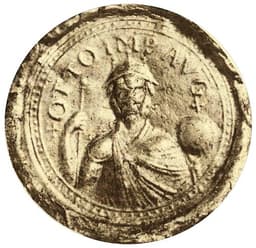
Otto I the Great
Emperor · Medieval
75.2Total
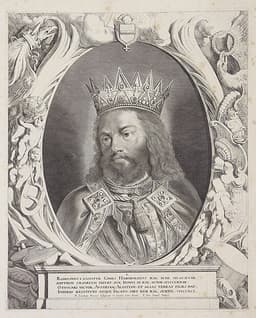
Rudolf of Habsburg
Emperor · Medieval
60.2Total
Basic Information
Born
912
1218
Died
973
1291
Era
Medieval
Medieval
Nationality
Holy Roman Empire
Holy Roman Empire
Occupation
Emperor
Emperor
Civilization
Western
Western
Score Comparison
Military (10%)
82.0
47.5
Political (20%)
70.0
68.0
Influence (20%)
88.0
61.0
Legacy (20%)
65.0
55.0
Leadership (15%)
78.0
68.0
Strategy (15%)
65.4
60.0
TOTAL
75.2
60.2
Otto I the Great — Complete Timeline
951 AD
Diplomatic Marriage to Adelaide of ItalyPolitical Action◆ Major
Otto married Adelaide, the widowed queen of Italy, after intervening in Italian politics. This marriage gave him control over the Kingdom of Italy and strengthened his claim to imperial authority.
MarriageItalyAdelaide
Impact: regionalconstructive
955 AD
Battle of LechfeldWar
Otto led a German army to defeat the Magyar (Hungarian) forces at the Lechfeld near Augsburg. This victory ended Magyar raids into Western Europe and secured Otto's reputation as a defender of Christendom.
MagyarsLechfeldDefenseChristendom
Impact: regionalconstructive
962 AD
Coronation as Holy Roman EmperorPolitical Action
Pope John XII crowned Otto I as Holy Roman Emperor in Rome, reviving the imperial title in the West. This event established the Holy Roman Empire as a major political entity and linked German kingship with papal authority.
CoronationHoly Roman EmpirePapacy
Impact: globalconstructive
Rudolf of Habsburg — Complete Timeline
1273 AD
Elected King of GermanyPolitical Action
Rudolf of Habsburg was elected King of Germany by the prince-electors, ending the Great Interregnum. His election was supported by the Papacy and marked the beginning of the Habsburg dynasty's rise to power in the Holy Roman Empire.
ElectionGreat InterregnumHabsburg Dynasty
Impact: regionalconstructive
Crowned Holy Roman EmperorPolitical Action◆ Major
Rudolf of Habsburg was crowned Holy Roman Emperor in Aachen. His coronation marked the end of the Great Interregnum and the restoration of imperial authority, though his power was limited to his dynastic lands.
CoronationHoly Roman EmpireGreat Interregnum
Impact: regional
1278 AD
Defeated Ottokar II of Bohemia at the Battle of MarchfeldWar
Rudolf of Habsburg defeated King Ottokar II of Bohemia at the Battle of Marchfeld. This victory secured the Habsburg control over Austria, Styria, and Carniola, which became the core territories of the Habsburg dynasty.
BattleHabsburgAustria
Impact: regional
1282 AD
Invested His Sons with Austria and StyriaPolitical Action◆ Major
Rudolf of Habsburg invested his sons Albert and Rudolf with the duchies of Austria and Styria. This act established the Habsburg dynasty's hereditary claim to these territories, laying the foundation for their future power in Central Europe.
Territorial GrantHabsburgAustria
Impact: regionalconstructive
Expert Analysis
Origins
Otto I, born in 912, was the son of Henry the Fowler, Duke of Saxony and King of East Francia. He inherited a nascent kingdom threatened by internal rebellions and external invasions. His early education was in military and governance, shaped by the need to consolidate royal authority. Rudolf of Habsburg, born in 1218, came from a minor Swabian noble family. His early years were spent managing his small territorial holdings and serving as a loyal vassal to the Hohenstaufen emperors. Unlike Otto, Rudolf lacked a royal lineage and his rise was based on political maneuvering and military service.
Rise to Power
Otto became King of East Francia in 936 at age 24. He faced immediate challenges from his brother Henry and other dukes. He suppressed rebellions and secured his position by 941. His decisive military victory at the Battle of Lechfeld in 955 over the Magyars ended their raids and elevated him to a protector of Christendom. This paved the way for his coronation as Holy Roman Emperor in 962 by Pope John XII. Rudolf's rise was more gradual. He was elected King of Germany in 1273, ending the Great Interregnum of 1254-1273. His election was a compromise among prince-electors who sought a weaker ruler. Rudolf skillfully used this position to claim lands and titles, notably defeating King Ottokar II of Bohemia at the Battle of Marchfeld in 1278. He secured Austria and Styria for his family.
Leadership & Governance
Otto I scored 78.0 in leadership and 70.0 in political acumen. He centralized royal power by appointing bishops and abbots as administrators, reducing the influence of lay dukes. He also used marriage alliances to control Italy and Burgundy. Otto's governance model relied on the Ottonian system, where the Church became a pillar of imperial authority. Rudolf scored 68.0 in leadership and 68.0 in politics. His governance focused on expanding Habsburg territories through marriage and inheritance. He invested his sons with Austria and Styria in 1282, establishing the dynasty's hereditary base. Unlike Otto, Rudolf did not create a centralized imperial administration but rather strengthened his family holdings.
Triumph & Tragedy
Otto's greatest triumph was the Battle of Lechfeld (955), where his forces annihilated the Magyar army. This victory secured the eastern frontier and boosted his prestige. His coronation as emperor in 962 revived the imperial title and established the Holy Roman Empire. However, his later years saw conflict with Pope John XII, who Otto deposed in 963. This strained the papal-imperial relationship. Rudolf's greatest triumph was his victory at Marchfeld (1278), which allowed him to seize Austria and Styria from Ottokar II. He also ended the Great Interregnum, restoring imperial authority. His tragedy was his failure to secure the imperial crown for his son; after his death in 1291, the Habsburgs lost the throne for a time. Rudolf's political score of 68.0 reflects his skill in maneuvering but also his limited long-term impact on the empire's structure.
Character & Destiny
Otto was decisive and ambitious, with a strategic mind (score 65.4). His military prowess (82.0) was matched by his political calculation. He forged alliances with the Church and used his brothers as loyal subordinates after initial rebellions. Rudolf was more cautious and pragmatic. His military score of 47.5 indicates he was not a great warrior; his victory at Marchfeld was aided by allies. Rudolf's leadership score of 68.0 shows he was effective but not transformative. His destiny was to found a dynasty that would dominate Europe for centuries, but his personal achievements were modest compared to Otto's.
Legacy
Otto I scored 88.0 in influence and 65.0 in legacy. He is remembered as the founder of the Holy Roman Empire, which lasted until 1806. His defeat of the Magyars reshaped European history, allowing for the development of medieval German and Eastern European states. The Ottonian Renaissance in arts and learning also marked his reign. Rudolf's legacy is more narrow: he established the Habsburgs as a major power in Austria. His influence score of 61.0 reflects this. While the Habsburgs later became emperors, Rudolf's own imperial tenure was short. His legacy is overshadowed by later Habsburgs like Charles V.
Conclusion
Otto I had a greater impact on history than Rudolf of Habsburg. Otto's military victory at Lechfeld (955) was a turning point for Europe, ending Magyar invasions and allowing for the consolidation of Germany. His revival of the imperial title created a political structure that influenced European politics for centuries. Rudolf, while important for Habsburg history, did not fundamentally alter the course of the Holy Roman Empire. His political score of 68.0 versus Otto's 70.0 shows a slight gap, but the difference in influence (88.0 vs 61.0) and military (82.0 vs 47.5) is decisive. Otto I remains a transformative figure; Rudolf was a competent ruler who set the stage for his dynasty's future.
Rankings
🥇
Otto I the GreatLeader
Mil: 82.0Pol: 70.0Inf: 88.0
75.2
🥈
Rudolf of Habsburg
Mil: 47.5Pol: 68.0Inf: 61.0
60.2
+15.0 behind
How This Comparison Works
Algorithm
Each figure is scored on 6 dimensions (0—100 scale) based on structured historical data: Military (10%), Political (20%), Influence (20%), Legacy (20%), Leadership (15%), Strategy (15%). The weighted total produces the final ranking.
Data Sources
Scores are computed from structured sub-indicators in the database. Scale factors adjust for era (Ancient ×0.85, Modern ×1.0) and civilization size (Eastern ×1.05, Other ×0.80) to account for differences in population and military scale.
Maximum 3 Figures
Comparisons are limited to 2—3 figures to ensure readability and statistical meaningfulness.
Error Margins
±5 points per dimension — Sub-scores are derived from historical records with inherent uncertainty. Two figures within 5 points on a dimension should be considered roughly equivalent in that area.
Total Score Accuracy
±3 points overall — The weighted combination of 6 dimensions produces a total score with approximately ±3 points of uncertainty. Differences of less than 3 points are not statistically significant— the figures are effectively tied.
Known Limitations
- Historical records are incomplete and uneven across civilizations
- Figures from oral-tradition societies may be underrepresented
- Occupation labels can misclassify multi-role figures
- Scores measure capability and impact, not moral character
- Quantitative scoring is a comparison tool, not absolute truth
Capability Radar
Military (10%) — Battles & Warfare
Battles
75
45
Win Rate
80
50
Expansion
70
60
Political (20%) — Governance & Reform
Reform
80
55
Diplomacy
85
70
Economy
70
50
Influence (20%) — Cultural & Global Reach
Cultural
65
40
Global
70
55
Legacy (20%) — Historical Impact
Historical
80
70
Longevity
75
75
Leadership (15%) — Power & Stability
Tenure
85
65
Stability
75
60
Strategy (15%) — Tactics & Innovation
Strategy
75
55
Tactics
70
40
Reform
65
30
Similar Comparisons
Comments & Discussion
No comments yet. Be the first to share your thoughts!