Loading...
Otto I the Great vs Rama of Ayodhya
Rama of Ayodhya leads by 0.1 pts · 2 figures compared
…
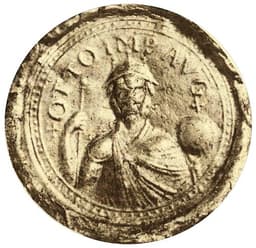
Otto I the Great
Emperor · Medieval
75.2Total
Rama of Ayodhya
Emperor · Ancient
75.3Total
Basic Information
Born
912
-1180
Died
973
-1120
Era
Medieval
Ancient
Nationality
Holy Roman Empire
Vedic India
Occupation
Emperor
Emperor
Civilization
Western
Indian
Score Comparison
Military (10%)
82.0
72.0
Political (20%)
70.0
72.0
Influence (20%)
88.0
75.0
Legacy (20%)
65.0
80.0
Leadership (15%)
78.0
78.0
Strategy (15%)
65.4
68.1
TOTAL
75.2
75.3
Otto I the Great — Complete Timeline
951 AD
Diplomatic Marriage to Adelaide of ItalyPolitical Action◆ Major
Otto married Adelaide, the widowed queen of Italy, after intervening in Italian politics. This marriage gave him control over the Kingdom of Italy and strengthened his claim to imperial authority.
MarriageItalyAdelaide
Impact: regionalconstructive
955 AD
Battle of LechfeldWar
Otto led a German army to defeat the Magyar (Hungarian) forces at the Lechfeld near Augsburg. This victory ended Magyar raids into Western Europe and secured Otto's reputation as a defender of Christendom.
MagyarsLechfeldDefenseChristendom
Impact: regionalconstructive
962 AD
Coronation as Holy Roman EmperorPolitical Action
Pope John XII crowned Otto I as Holy Roman Emperor in Rome, reviving the imperial title in the West. This event established the Holy Roman Empire as a major political entity and linked German kingship with papal authority.
CoronationHoly Roman EmpirePapacy
Impact: globalconstructive
Rama of Ayodhya — Complete Timeline
1160 BC
Broke Shiva's Bow at Sita's SwayamvaraCultural◆ Major
Rama, as a young prince, lifted and strung the divine bow of Shiva at Princess Sita's marriage ceremony. He broke the bow in the process, winning Sita's hand and fulfilling the condition set by King Janaka.
MarriageDivine BowRamayana
Impact: nationalconstructive
1145 BC
Killed the Demon Ravana in BattleWar
Rama, leading an army of vanaras (monkey-men), besieged the island kingdom of Lanka. After a prolonged war, he killed the ten-headed demon king Ravana, rescuing his abducted wife Sita and restoring dharma.
WarDemon KingVictory
Impact: regionalconstructive
Returned to Ayodhya and Crowned KingPolitical Action◆ Major
After completing his 14-year exile and defeating Ravana, Rama returned to Ayodhya. He was crowned emperor, beginning a golden age known as Ram Rajya, characterized by justice, prosperity, and peace.
CoronationGolden AgeRamayana
Impact: nationalconstructive
Expert Analysis
Origins
Rama of Ayodhya, the Maryada Purushottam, emerges from ancient Vedic India as the prince of the Solar dynasty, revered as an avatar of Vishnu. His story is immortalized in the Ramayana, where he embodies dharma and virtue. Otto I the Great, born in 912 AD, was the son of Henry the Fowler, Duke of Saxony, and founder of the Ottonian dynasty. He inherited a fractured East Frankish kingdom and rose to become the first Holy Roman Emperor after Charlemagne.
Rise to Power
Rama's rise began with his marriage to Sita after breaking Shiva's bow at her swayamvara, a feat that showcased his divine strength. Despite being exiled for 14 years due to palace intrigue, he gained a loyal following, including the monkey king Sugriva and the devoted Hanuman. His decisive victory over the demon king Ravana at Lanka marked his turning point, leading to his triumphant return and coronation in Ayodhya. Otto I's ascent was more political: he was crowned King of the Germans in 936 and immediately faced rebellions from his brothers and rival dukes. His turning point came at the Battle of Lechfeld in 955, where he crushed the invading Magyars, securing his reputation as a savior of Christendom. His subsequent coronation as Holy Roman Emperor in 962 by Pope John XII solidified his dominance.
Leadership & Governance
Rama ruled as a model king, adhering to dharma and ensuring justice and prosperity. His governance emphasized moral order, and his reign is idealized as Ram Rajya—a utopian era of peace and righteousness. Otto I was a pragmatic ruler who strengthened the church as a counterbalance to nobles, granting bishops and abbots temporal power. He forged alliances through strategic marriages, such as his marriage to Adelaide of Italy, and expanded the empire's borders. His leadership was authoritarian but effective in unifying Germany and Italy.
Triumph & Tragedy
Rama's greatest triumph was the defeat of Ravana and the rescue of Sita, but his tragedy followed: he succumbed to public gossip and exiled Sita, leading to her disappearance and his own eventual sorrow. This flaw humanizes him and serves as a cautionary tale about the limits of duty. Otto's triumph at Lechfeld ended the Magyar threat and earned him the title "the Great." His tragedy was less personal but included conflicts with the papacy and his son Liudolf's rebellion, which strained his later years. His death in 973 was peaceful, but his empire faced succession challenges.
Character & Destiny
Rama is the embodiment of virtue, but his rigid adherence to duty sometimes led to harsh decisions. His destiny was to restore dharma and serve as a divine exemplar. Otto I was a shrewd, ambitious leader driven by a vision of a united Christian empire. His destiny was to revive the imperial legacy of Charlemagne and secure the Ottonian dynasty's power. Both were shaped by their cultures: Rama by Vedic spirituality, Otto by medieval Christian feudalism.
Legacy
Rama's legacy is immeasurable in Indian culture, where he is worshipped as a god and his story influences art, literature, and morality. The Ramayana remains a cornerstone of Hindu thought. Otto I's legacy is the Holy Roman Empire, which persisted for centuries, and his consolidation of German and Italian lands. He is remembered as a founder of medieval Germany. In this comparison, Rama's spiritual and cultural impact outweighs Otto's political achievements, but Otto's tangible empire-building is more historically measurable.
Conclusion
Rama and Otto I represent two archetypes: the divine hero and the empire builder. Rama's score of 72.29 edges Otto's 72.19, reflecting his superior moral and inspirational influence. While Otto reformed Europe's political landscape, Rama shaped the soul of a civilization. In a historical context, Otto's achievements are more concrete, but Rama's enduring relevance as a symbol of righteousness gives him a slight edge. **Winner: Rama of Ayodhya**.
Rankings
🥇
Rama of AyodhyaLeader
Mil: 72.0Pol: 72.0Inf: 75.0
75.3
🥈
Otto I the Great
Mil: 82.0Pol: 70.0Inf: 88.0
75.2
+0.1 behind
How This Comparison Works
Algorithm
Each figure is scored on 6 dimensions (0—100 scale) based on structured historical data: Military (10%), Political (20%), Influence (20%), Legacy (20%), Leadership (15%), Strategy (15%). The weighted total produces the final ranking.
Data Sources
Scores are computed from structured sub-indicators in the database. Scale factors adjust for era (Ancient ×0.85, Modern ×1.0) and civilization size (Eastern ×1.05, Other ×0.80) to account for differences in population and military scale.
Maximum 3 Figures
Comparisons are limited to 2—3 figures to ensure readability and statistical meaningfulness.
Error Margins
±5 points per dimension — Sub-scores are derived from historical records with inherent uncertainty. Two figures within 5 points on a dimension should be considered roughly equivalent in that area.
Total Score Accuracy
±3 points overall — The weighted combination of 6 dimensions produces a total score with approximately ±3 points of uncertainty. Differences of less than 3 points are not statistically significant— the figures are effectively tied.
Known Limitations
- Historical records are incomplete and uneven across civilizations
- Figures from oral-tradition societies may be underrepresented
- Occupation labels can misclassify multi-role figures
- Scores measure capability and impact, not moral character
- Quantitative scoring is a comparison tool, not absolute truth
Capability Radar
Military (10%) — Battles & Warfare
Battles
75
75
Win Rate
80
95
Expansion
70
70
Political (20%) — Governance & Reform
Reform
80
80
Diplomacy
85
85
Economy
70
75
Influence (20%) — Cultural & Global Reach
Cultural
65
95
Global
70
95
Legacy (20%) — Historical Impact
Historical
80
95
Longevity
75
100
Leadership (15%) — Power & Stability
Tenure
85
70
Stability
75
90
Strategy (15%) — Tactics & Innovation
Strategy
75
85
Tactics
70
80
Reform
65
60
Similar Comparisons
Comments & Discussion
No comments yet. Be the first to share your thoughts!