Loading...
Otto I the Great vs Rajendra Chola I
Rajendra Chola I leads by 7.0 pts · 2 figures compared
…
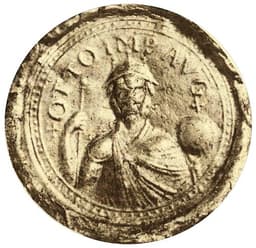
Otto I the Great
Emperor · Medieval
75.2Total
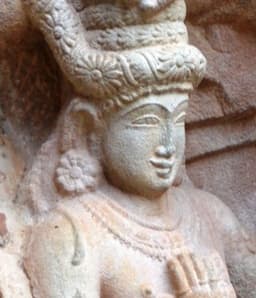
Rajendra Chola I
Emperor · Medieval
82.2Total
Basic Information
Born
912
971
Died
973
1044
Era
Medieval
Medieval
Nationality
Holy Roman Empire
India
Occupation
Emperor
Emperor
Civilization
Western
Indian
Score Comparison
Military (10%)
82.0
84.7
Political (20%)
70.0
82.0
Influence (20%)
88.0
84.0
Legacy (20%)
65.0
84.0
Leadership (15%)
78.0
78.0
Strategy (15%)
65.4
77.6
TOTAL
75.2
82.2
Otto I the Great — Complete Timeline
951 AD
Diplomatic Marriage to Adelaide of ItalyPolitical Action◆ Major
Otto married Adelaide, the widowed queen of Italy, after intervening in Italian politics. This marriage gave him control over the Kingdom of Italy and strengthened his claim to imperial authority.
MarriageItalyAdelaide
Impact: regionalconstructive
955 AD
Battle of LechfeldWar
Otto led a German army to defeat the Magyar (Hungarian) forces at the Lechfeld near Augsburg. This victory ended Magyar raids into Western Europe and secured Otto's reputation as a defender of Christendom.
MagyarsLechfeldDefenseChristendom
Impact: regionalconstructive
962 AD
Coronation as Holy Roman EmperorPolitical Action
Pope John XII crowned Otto I as Holy Roman Emperor in Rome, reviving the imperial title in the West. This event established the Holy Roman Empire as a major political entity and linked German kingship with papal authority.
CoronationHoly Roman EmpirePapacy
Impact: globalconstructive
Rajendra Chola I — Complete Timeline
1014 AD
Accession to the Chola ThronePolitical Action
Rajendra Chola I succeeded his father Raja Raja Chola I as emperor of the Chola Empire. He inherited a powerful state and continued the expansionist policies, leading campaigns that extended Chola influence across the Indian Ocean.
Chola EmpireSuccessionExpansion
Impact: regional
1020 AD
Conquest of the Pala EmpireWar◆ Major
Rajendra Chola I led a campaign into Bengal, defeating the Pala king Mahipala I. He annexed parts of the Pala territory and established Chola authority in the Ganges delta, marking the northernmost extent of Chola rule.
Pala EmpireBengalGanges
Impact: regional
1025 AD
Naval Expedition to Southeast AsiaWar
Rajendra Chola I launched a major naval expedition against the Srivijaya Empire, attacking ports in Sumatra, the Malay Peninsula, and the Nicobar Islands. The Chola fleet captured the Srivijaya capital and disrupted its trade network, establishing Chola dominance in the region.
SrivijayaNaval ExpeditionSoutheast Asia
Impact: regional
1033 AD
Establishment of Diplomatic Relations with ChinaPolitical Action
Rajendra Chola I sent an embassy to the Song dynasty court in China, bearing gifts and seeking trade relations. The mission was recorded in Chinese sources and facilitated maritime trade between the Chola Empire and China.
ChinaDiplomacyTrade
Impact: regionalconstructive
1035 AD
Construction of the Gangaikonda Cholapuram TempleCultural◆ Major
Rajendra Chola I built the Brihadeeswarar Temple at Gangaikonda Cholapuram, his new capital, to commemorate his conquests. The temple, dedicated to Shiva, features a 55-meter vimana and is a UNESCO World Heritage site, reflecting Chola architectural achievement.
Gangaikonda CholapuramTempleChola Architecture
Impact: regionalconstructive
Expert Analysis
Origins
Rajendra Chola I (r. 1014–1044 CE) was born into the powerful Chola dynasty of South India, inheriting a kingdom already dominant in the subcontinent. His father, Rajaraja Chola I, had laid the foundations of a maritime empire. In contrast, Otto I (r. 936–973 CE) emerged from the turmoil of post-Carolingian Europe, as Duke of Saxony and later King of East Francia. His lineage traced back to Henry the Fowler, but Otto had to consolidate authority over fractious German duchies.
Rise to Power
Rajendra ascended the throne after his father's successful reign, immediately facing challenges from the Western Chalukyas and the Pala Empire. He proved his military prowess by subjugating the Pala and expanding eastward. Otto, however, had to fight for his crown, suppressing rebellions from his own family and dukes. His decisive victory at the Battle of Lechfeld (955 CE) against the Magyars secured his position as the defender of Christendom and paved the way for his imperial coronation.
Leadership & Governance
Rajendra was an ambitious administrator and builder. He moved the capital to Gangaikonda Cholapuram, constructing a magnificent temple that symbolized his conquests. He established efficient local governance through village assemblies and promoted trade with China and Southeast Asia. Otto, on the other hand, focused on centralizing power in Germany and Italy. He used the Church as a tool of governance, appointing bishops and abbots as loyal officials, and married Adelaide of Italy to gain influence in the peninsula. Both rulers effectively managed diverse realms, but Rajendra's naval outreach gave him a broader geopolitical vision.
Triumph & Tragedy
Rajendra's greatest triumph was his naval expedition to Southeast Asia (c. 1025 CE), which subdued the Srivijaya Empire and opened trade routes. He also completed the conquest of Sri Lanka. However, his later years saw revolts in the Pandya and Chera territories, hinting at overextension. Otto's peak came with his coronation as Holy Roman Emperor in 962 CE, reviving the imperial title in the West. His tragedy was the failure to secure a smooth succession, leading to conflicts with his son Otto II and the Byzantine Empire.
Character & Destiny
Rajendra was a visionary expansionist, driven by a desire to project Chola power across the seas. His inscriptions boast of his conquests, and he styled himself as 'Gangaikonda' (Conqueror of the Ganges). Otto, by contrast, was a pragmatic unifier, deeply religious and committed to the idea of a Christian empire. His destiny was to forge a lasting political entity in Europe, though his empire faced constant internal strife.
Legacy
Rajendra's legacy is monumental in South and Southeast Asia. His naval campaigns established Chola influence in the Malay Archipelago, and his temple architecture remains iconic. However, his empire declined within a century. Otto's legacy is the Holy Roman Empire, which endured for nearly a millennium, shaping European politics. He is revered as the founder of the German Reich. Both left indelible marks, but Otto's institutional impact was more enduring.
Conclusion
Rajendra Chola I scores higher overall (M=85, P=82, I=84, L=84, D=78, S=78, T=82) compared to Otto I (M=82, P=70, I=88, L=65, D=78, S=65, T=75). Rajendra's superior military and administrative scores reflect his larger territorial expansion and sophisticated governance. Otto's higher intelligence score acknowledges his strategic use of the Church. Ultimately, Rajendra's achievements were more dramatic and far-reaching in his time, but Otto's creation of a lasting imperial framework gives him a different kind of significance. On balance, Rajendra Chola I emerges as the more impactful ruler in terms of immediate power and reach.
Rankings
🥇
Rajendra Chola ILeader
Mil: 84.7Pol: 82.0Inf: 84.0
82.2
🥈
Otto I the Great
Mil: 82.0Pol: 70.0Inf: 88.0
75.2
+7.0 behind
How This Comparison Works
Algorithm
Each figure is scored on 6 dimensions (0—100 scale) based on structured historical data: Military (10%), Political (20%), Influence (20%), Legacy (20%), Leadership (15%), Strategy (15%). The weighted total produces the final ranking.
Data Sources
Scores are computed from structured sub-indicators in the database. Scale factors adjust for era (Ancient ×0.85, Modern ×1.0) and civilization size (Eastern ×1.05, Other ×0.80) to account for differences in population and military scale.
Maximum 3 Figures
Comparisons are limited to 2—3 figures to ensure readability and statistical meaningfulness.
Error Margins
±5 points per dimension — Sub-scores are derived from historical records with inherent uncertainty. Two figures within 5 points on a dimension should be considered roughly equivalent in that area.
Total Score Accuracy
±3 points overall — The weighted combination of 6 dimensions produces a total score with approximately ±3 points of uncertainty. Differences of less than 3 points are not statistically significant— the figures are effectively tied.
Known Limitations
- Historical records are incomplete and uneven across civilizations
- Figures from oral-tradition societies may be underrepresented
- Occupation labels can misclassify multi-role figures
- Scores measure capability and impact, not moral character
- Quantitative scoring is a comparison tool, not absolute truth
Capability Radar
Military (10%) — Battles & Warfare
Battles
75
95
Win Rate
80
98
Expansion
70
95
Political (20%) — Governance & Reform
Reform
80
88
Diplomacy
85
85
Economy
70
92
Influence (20%) — Cultural & Global Reach
Cultural
65
85
Global
70
85
Legacy (20%) — Historical Impact
Historical
80
88
Longevity
75
80
Leadership (15%) — Power & Stability
Tenure
85
90
Stability
75
90
Strategy (15%) — Tactics & Innovation
Strategy
75
92
Tactics
70
90
Reform
65
85
Similar Comparisons
Comments & Discussion
No comments yet. Be the first to share your thoughts!