Loading...
Oduduwa vs Yuwen Yong
Yuwen Yong leads by 7.5 pts · 2 figures compared
…
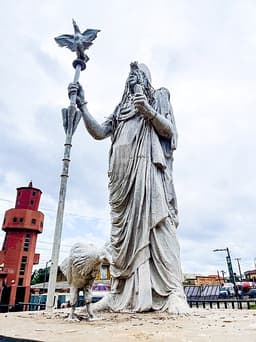
Oduduwa
Emperor · Medieval
59.7Total
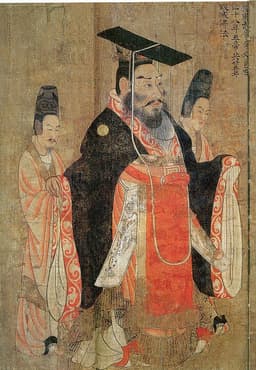
Yuwen Yong
Emperor · Medieval
67.2Total
Basic Information
Born
950
543
Died
1020
578
Era
Medieval
Medieval
Nationality
Ife
China
Occupation
Emperor
Emperor
Civilization
Other
Eastern
Score Comparison
Military (10%)
50.0
78.0
Political (20%)
46.6
78.0
Influence (20%)
68.0
58.0
Legacy (20%)
68.0
54.0
Leadership (15%)
67.0
85.0
Strategy (15%)
36.8
69.1
TOTAL
59.7
67.2
Oduduwa — Complete Timeline
1000 AD
Foundation of the Yoruba civilization at Ile-IfeCultural
According to Yoruba oral tradition, Oduduwa descended from heaven at Ile-Ife and founded the Yoruba civilization. He is credited with establishing the first Yoruba kingdom and the sacred city of Ile-Ife, which became the spiritual and cultural heartland of the Yoruba people.
Impact: regionalconstructive
1010 AD
Establishment of the Yoruba royal dynastiesPolitical Action◆ Major
Oduduwa is said to have sent his sons and grandsons to found the various Yoruba kingdoms, including Oyo, Benin, and Ketu. This act established the royal lineages that ruled these states for centuries, creating a network of related kingdoms under the spiritual authority of the Ooni of Ife.
Impact: regionalconstructive
Yuwen Yong — Complete Timeline
574 AD
Suppression of Buddhism in Northern ZhouReform◆ Major
Emperor Wu of Northern Zhou (Yuwen Yong) ordered the suppression of Buddhism, confiscating monastic lands, forcing monks and nuns to return to lay life, and destroying temples. He aimed to increase state revenue and military manpower, strengthening the state.
Northern ZhouBuddhist PersecutionReform
Impact: nationaldestructive
577 AD
Conquest of Northern QiWar
Emperor Wu led a successful campaign against the rival Northern Qi dynasty, conquering its territory and unifying northern China under Northern Zhou. This victory ended the division of the north and set the stage for the Sui dynasty's unification of all China.
Northern ZhouUnificationNorthern Qi
Impact: regionalconstructive
578 AD
Death during campaign against the TurksWar◆ Major
Emperor Wu died of illness while leading a campaign against the G
Northern ZhouMilitary CampaignDeath
Impact: regionaltragic
Expert Analysis
Yuwen Yong vs Oduduwa
# The Emperor and the Progenitor: Two Paths to Founding a Civilization
On a spring morning in 574, Emperor Yuwen Yong of Northern Zhou stood before his court and issued an order that would shake the foundations of Chinese Buddhism. Across the empire, monks were dragged from their temples, monastic lands confiscated, and centuries of religious tradition dismantled by imperial decree. Four centuries earlier and ten thousand miles away, another founding figure—Oduduwa of Ife—was said to have descended from the sky onto a hilltop in West Africa, carrying nothing but a handful of earth and a cock's claw, ready to create a world from chaos. One man commanded armies and destroyed institutions; the other built a civilization from myth and memory. Both reshaped the destinies of millions. Why did their paths diverge so radically?
Origins
Yuwen Yong was born in 543 into a world of fractured empires and constant warfare. The Northern Wei dynasty had collapsed, leaving China divided between rival kingdoms that fought for supremacy with religious fervor and military brutality. His family, the Yuwen clan, were military aristocrats of Xianbei descent—nomadic warriors who had conquered northern China and adopted Chinese court culture while retaining their cavalry traditions. Yuwen Yong grew up in barracks and palaces, learning strategy from generals and politics from eunuchs. His world was one of sieges, alliances, and the cold calculus of power.
Oduduwa's origins are shrouded in the sacred mists of oral tradition. He is said to have arrived at Ile-Ife around 1000, descending from heaven on a chain, sent by the supreme god Olodumare to create solid ground where only water existed. In Yoruba cosmology, he carried a snail shell filled with earth, a five-toed chicken, and a palm nut—tools of creation, not conquest. His era was one of migration and settlement, as Bantu-speaking peoples spread across West Africa, founding villages and kingdoms in the dense forests and savannas. Where Yuwen Yong inherited a world of warring states, Oduduwa stepped into a world waiting to be born.
Rise to Power
Yuwen Yong's ascent was not divine but bloody. He became emperor in 560 at age seventeen, inheriting a throne dominated by powerful regents and ambitious uncles. For years he played the passive puppet, biding his time while his rivals eliminated each other. In 572, he staged a sudden coup, arresting his cousin Yuwen Hu, who had controlled the court for over a decade. The execution was swift and personal—Yuwen Yong struck the first blow himself. From that moment, he ruled alone, a man who understood that power in northern China belonged to those willing to seize it with their own hands.
Oduduwa's rise is told as a founding myth, not a political biography. According to tradition, he was the first king of Ife, chosen by the gods to establish order among the scattered Yoruba clans. His authority came not from military victory but from divine mandate—he was the *Ooni*, the sacred ruler whose person linked heaven and earth. Where Yuwen Yong earned his throne through intrigue and violence, Oduduwa received his as a gift from the cosmos. The contrast reflects two different conceptions of leadership: the Chinese emperor as supreme commander, the Yoruba king as cosmic intermediary.
Leadership & Governance
As ruler, Yuwen Yong was a reformer with a sword. His military strategy earned a score of 81.8—among the highest of his era. In 577, he launched a devastating campaign against the Northern Qi dynasty, conquering their territory in a series of lightning strikes that unified northern China for the first time in decades. But his most controversial act was the suppression of Buddhism in 574. He saw the Buddhist monasteries as parasitic institutions—tax-exempt, land-holding, and drawing young men away from military service. His solution was brutal: confiscate all monastic property, force monks back into lay life, and destroy temples. Tens of thousands of religious institutions vanished. It was state-building by demolition.
Oduduwa's governance was the opposite: additive, not subtractive. He did not destroy existing institutions because none existed. Instead, he established the framework of Yoruba civilization: the sacred kingship at Ife, the council of chiefs, the system of lineages and clans that would govern Yoruba life for centuries. Around 1010, he sent his sons and grandsons to found new kingdoms—Oyo, Benin, Ketu—each ruled by a king who traced his authority back to Oduduwa's divine lineage. His political score of 72.0 reflects this foundational work, but his strategy score of only 30.0 reveals a ruler who built through myth and marriage, not military campaigns.
Triumph & Tragedy
Yuwen Yong's greatest triumph was the conquest of Northern Qi in 577—a campaign that realized the dream of northern unification. He stood at the apex of his power, commanding an empire that stretched from the Yellow River to the Great Wall. But tragedy struck immediately. In 578, while leading an expedition against the Göktürks, he fell ill and died at age thirty-five. His son inherited a unified but fragile empire, and within three years the Yuwen clan was overthrown by a general who founded the Sui dynasty. Yuwen Yong's life's work—the unification he had achieved through blood and iron—crumbled almost as soon as he left the stage.
Oduduwa's triumph was not a single battle but the creation of a civilization that would endure for a millennium. He is said to have ruled Ife for many years, establishing the rituals and institutions that still define Yoruba kingship today. His tragedy is the silence of history: we know almost nothing of his death. Oral tradition says he transformed into a stone or ascended back to heaven—a fitting end for a figure who was always more symbol than man. Where Yuwen Yong died in the saddle, his empire already slipping away, Oduduwa vanished into myth, his legacy growing stronger with each retelling.
Character & Destiny
Yuwen Yong was a pragmatist, perhaps even a cynic. He saw religion as a political tool and destroyed it when it threatened his state. He trusted no one, killed his own relatives, and died young from the strain of constant warfare. His personality—cold, calculating, ruthless—was perfectly adapted to the brutal world of sixth-century China, but it left him isolated and his dynasty vulnerable. He built an empire on fear and force, and fear and force cannot outlast their creator.
Oduduwa was a founder, not a fighter. His scores tell the story: military 11.4, leadership 81.7. He was a unifier through culture, not conquest. His personality—if we can speak of it—was that of a civilizer, a bringer of order to chaos. He did not need to destroy because there was nothing to destroy; he only needed to create. And creation, unlike conquest, has a way of perpetuating itself. The Yoruba kingdoms he founded would survive the rise and fall of empires, the transatlantic slave trade, and the colonial era.
Legacy
Yuwen Yong is remembered as a footnote in Chinese history—a capable emperor whose achievements were quickly overshadowed by the Sui and Tang dynasties that followed. His suppression of Buddhism was reversed within decades, and his unification was completed by others. His total score of 74.0 reflects a competent but forgettable ruler, a bridge between greater figures.
Oduduwa's legacy is immeasurable. Every Yoruba king today traces his lineage to Oduduwa. Ile-Ife remains the spiritual capital of the Yoruba world. His name is invoked in coronations, festivals, and prayers. He is not remembered as a historical figure but as a cosmic ancestor, a being who straddles the line between humanity and divinity. His total score of 60.1 reflects the difficulty of quantifying myth—but in the hearts of millions, he is worth far more than any number.
Conclusion
Two founders, two civilizations, two kinds of immortality. Yuwen Yong conquered an empire and lost it; Oduduwa created a world and gave it away. One trusted in steel and strategy, the other in stories and symbols. Perhaps the deepest lesson is this: the empires built by force are remembered in history books, but the civilizations built by myth are remembered in prayers. Yuwen Yong's name appears in chronicles; Oduduwa's name appears in the mouths of kings. Which legacy would you choose?
Rankings
🥇
Yuwen YongLeader
Mil: 78.0Pol: 78.0Inf: 58.0
67.2
🥈
Oduduwa
Mil: 50.0Pol: 46.6Inf: 68.0
59.7
+7.5 behind
How This Comparison Works
Algorithm
Each figure is scored on 6 dimensions (0—100 scale) based on structured historical data: Military (10%), Political (20%), Influence (20%), Legacy (20%), Leadership (15%), Strategy (15%). The weighted total produces the final ranking.
Data Sources
Scores are computed from structured sub-indicators in the database. Scale factors adjust for era (Ancient ×0.85, Modern ×1.0) and civilization size (Eastern ×1.05, Other ×0.80) to account for differences in population and military scale.
Maximum 3 Figures
Comparisons are limited to 2—3 figures to ensure readability and statistical meaningfulness.
Error Margins
±5 points per dimension — Sub-scores are derived from historical records with inherent uncertainty. Two figures within 5 points on a dimension should be considered roughly equivalent in that area.
Total Score Accuracy
±3 points overall — The weighted combination of 6 dimensions produces a total score with approximately ±3 points of uncertainty. Differences of less than 3 points are not statistically significant— the figures are effectively tied.
Known Limitations
- Historical records are incomplete and uneven across civilizations
- Figures from oral-tradition societies may be underrepresented
- Occupation labels can misclassify multi-role figures
- Scores measure capability and impact, not moral character
- Quantitative scoring is a comparison tool, not absolute truth
Capability Radar
Military (10%) — Battles & Warfare
Battles
10
75
Win Rate
10
80
Expansion
30
80
Political (20%) — Governance & Reform
Reform
50
85
Diplomacy
40
70
Economy
40
75
Influence (20%) — Cultural & Global Reach
Cultural
80
40
Global
70
40
Legacy (20%) — Historical Impact
Historical
80
65
Longevity
80
50
Leadership (15%) — Power & Stability
Tenure
40
60
Stability
50
70
Strategy (15%) — Tactics & Innovation
Strategy
10
75
Tactics
10
70
Reform
10
85
Similar Comparisons
Comments & Discussion
Grain-of-Sand General6/16/2026
The military comparison is a mismatch. Yuwen Yong commanded actual field armies in coordinated campaigns against Northern Qi, employing supply lines and siege tactics that consumed real resources. Oduduwa's "conquests" are mythical bird migrations and earth rituals. One is quantifiable history with troop movements and casualties; the other is ancestral legend without a single verifiable battle. You can't put a clay pot’s sacred ancestor next to a man who marched 50,000 soldiers through mountain
泥塑史官6/16/2026
拿宇文邕的灭佛令跟奥杜杜瓦的创世神话类比,简直驴唇不对马嘴。一个是有明确年代、档案可查的行政命令——574年从长安下发各级官府,拆寺三万、还俗僧尼百万;另一个连是人是神都说不清,全靠口传记忆充数。你要吹非洲起源故事我没意见,但别拿具体的历史事件当陪衬。史学的底线就是区分实物与传说。
Temple Scorcher6/16/2026
I’ll defend Yuwen Yong’s temple destructions any day. Those Buddhist monasteries had accumulated so much tax-exempt land and serf-labor that they threatened the entire Northern Zhou economy. When Yong seized their grain stores and bronze for coinage, he wasn’t a tyrant; he was a fiscal realist. Oduduwa’s followers didn’t face state collapse—they built a symbolic order. Its durability is impressive, sure. But Yong made hard decisions to keep a real empire solvent, not just mythical. One saved a t
圣树影子6/16/2026
奥杜杜瓦的“从天而降”看似荒诞,实则是西非政治合法性的精妙设计。他带的那把土和不死之鸡,不是穷人的把戏——这是在用神权确认土地归属权,让后来的约鲁巴城邦有条不紊地分土立国。反观宇文邕,他靠的是兵变和血洗宗室上台,灭佛背后是赤裸裸的财政剥削。两人都从“虚无”里造秩序,但一个靠信仰缝合,一个靠铁腕榨取。我选奥杜杜瓦,因为他的故事能传一千年还不散架。