Loading...
Odoacer vs Pompey the Great
Pompey the Great leads by 8.2 pts · 2 figures compared
…
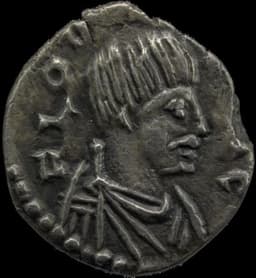
Odoacer
General · Ancient
49.7Total
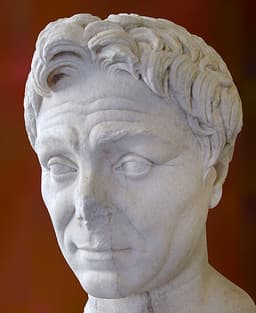
Pompey the Great
General · Ancient
57.9Total
Basic Information
Born
433
-106
Died
493
-48
Era
Ancient
Ancient
Nationality
Italy
Roman Republic
Occupation
General
General
Civilization
Western
Western
Score Comparison
Military (10%)
70.0
88.0
Political (20%)
29.3
68.0
Influence (20%)
54.1
55.0
Legacy (20%)
46.7
40.0
Leadership (15%)
47.3
48.8
Strategy (15%)
60.0
78.4
TOTAL
49.7
57.9
Odoacer — Complete Timeline
476 AD
Deposition of Romulus AugustulusPolitical Action
Odoacer, leading a revolt of Germanic foederati, deposed the Western Roman Emperor Romulus Augustulus. He sent the imperial regalia to the Eastern Roman Emperor Zeno, effectively ending the Western Roman Empire.
Fall of Western Roman EmpireEnd of Antiquity
Impact: global
Proclamation as King of ItalyPolitical Action◆ Major
After deposing Romulus Augustulus, Odoacer was proclaimed King of Italy by his troops. He ruled Italy autonomously while nominally recognizing the authority of the Eastern Roman Emperor, establishing a new political order.
Kingdom of ItalyGermanic RulePost-Roman
Impact: regional
489 AD
War with the OstrogothsWar◆ Major
The Eastern Roman Emperor Zeno sent the Ostrogothic king Theodoric the Great to invade Italy and overthrow Odoacer. Odoacer's forces were defeated at the battles of Isonzo and Verona, leading to a prolonged siege of Ravenna.
Ostrogothic InvasionItaly War
Impact: regionaldestructive
493 AD
Siege of Ravenna and DeathWar◆ Major
Odoacer surrendered Ravenna to Theodoric after a three-year siege. Under a truce, Theodoric invited Odoacer to a banquet and killed him with his own hands, ending Odoacer's rule and establishing the Ostrogothic Kingdom of Italy.
AssassinationOstrogothic KingdomEnd of Rule
Impact: regionaltragic
Pompey the Great — Complete Timeline
67 BC
Clearing the Mediterranean of PiratesWar◆ Major
Pompey was granted extraordinary command under the Lex Gabinia to eliminate piracy in the Mediterranean. He divided the sea into sectors and within three months destroyed pirate fleets and captured their strongholds, restoring Roman trade routes and grain supply.
PiracyRoman NavyGrain Supply
Impact: regionalconstructive
66 BC
Conquest of the East (Third Mithridatic War)War◆ Major
Pompey took command against Mithridates VI of Pontus, defeating him and forcing his suicide. He then annexed Syria, captured Jerusalem, and established Roman provinces in the East. He organized the region into client kingdoms and provinces, extending Roman hegemony to the Euphrates.
Eastern ConquestRoman EmpireClient Kingdoms
Impact: global
60 BC
Formation of the First TriumviratePolitical Action◆ Major
Pompey, Caesar, and Crassus formed a political alliance to advance their individual ambitions. Pompey sought ratification of his Eastern settlements and land for his veterans. The pact dominated Roman politics for a decade until Crassus's death in 53 BC.
AllianceRoman PoliticsPower Sharing
Impact: global
48 BC
Battle of PharsalusWar
Pompey commanded the senatorial army against Caesar at Pharsalus in Greece. Despite numerical superiority, his forces were defeated by Caesar's veterans. Pompey fled to Egypt, expecting refuge, but was assassinated on the orders of the Egyptian court upon arrival.
Roman Civil WarDefeatDeath
Impact: globaltragic
Assassination in EgyptPolitical Action◆ Major
After his defeat at Pharsalus, Pompey landed in Egypt seeking refuge. On September 28, 48 BC, he was stabbed to death by former Roman soldiers serving the Egyptian king Ptolemy XIII, who hoped to curry favor with Caesar. His head was presented to Caesar.
AssassinationEgyptCivil War
Impact: regionaltragic
Expert Analysis
Origins
**Odoacer** (c. 433–493 CE) was born into a Germanic tribe, likely the Sciri or Heruli, in the region of Pannonia (modern Hungary). His father Edeko was a Hun chieftain. Odoacer grew up amid the crumbling Western Roman Empire, serving as a mercenary in the Roman army. He lacked formal education but gained military experience in the frontier wars.
**Pompey the Great** (106–48 BCE) was born in Picenum (Italy) to a wealthy senatorial family. His father Gnaeus Pompeius Strabo was a successful general. Pompey received a traditional Roman education and early military training. He inherited his father's client army and wealth, which jumpstarted his career.
Rise to Power
Odoacer rose through the ranks of the Roman foederati (barbarian auxiliaries). In 472 CE, he supported the Western emperor Anthemius, but later switched allegiances. By 476 CE, he led a revolt of Germanic troops against the Western Roman emperor Romulus Augustulus. Odoacer's forces captured Ravenna, deposed the emperor, and sent the imperial regalia to Constantinople. He then proclaimed himself King of Italy, ruling with nominal recognition from the Eastern emperor Zeno.
Pompey's rise began with raising a private army to support Sulla in the civil war (83–82 BCE). He then suppressed the Marian faction in Sicily and Africa, earning the title 'Magnus' (the Great). In 71 BCE, he was elected consul without meeting the age requirement. He cleared the Mediterranean of pirates under the Lex Gabinia (67 BCE) and conquered the East in the Third Mithridatic War (66–63 BCE), annexing Syria and Judea. He formed the First Triumvirate with Caesar and Crassus in 60 BCE to dominate Roman politics.
Leadership & Governance
Odoacer ruled Italy pragmatically, maintaining Roman administrative systems and respecting the Senate. He distributed land to his followers but avoided radical reforms. His military score of 70.0 reflects his ability to defeat the Western Roman army and defend Italy against the Rugii (487–488 CE). However, his political score of 29.3 indicates weak statecraft: he failed to secure recognition from the Eastern empire and mismanaged relations with the Ostrogoths.
Pompey's leadership was more ambitious. As a general, he earned a military score of 88.0, excelling in organization and logistics. He reformed the provinces of the East, established client kingdoms, and brought massive wealth to Rome. Politically (68.0), he was a skilled negotiator but ultimately lacked the ruthlessness of Caesar. His governance style was aristocratic and conservative, favoring the Senate's authority—until he allied with Caesar.
Triumph & Tragedy
Odoacer's greatest triumph was ending the Western Roman Empire and establishing a barbarian kingdom in Italy—a turning point in history. His tragedy came when Theodoric the Great invaded Italy (489–493 CE). After a three-year siege of Ravenna, Odoacer surrendered under a truce, only to be murdered by Theodoric at a banquet. His kingdom collapsed immediately.
Pompey's triumphs include clearing the Mediterranean of pirates in three months (scoring 78.4 in strategy) and conquering the East, adding vast territories to Rome. His tragedy was the civil war against Caesar. Despite commanding a larger army at Pharsalus (48 BCE), he was decisively defeated, fled to Egypt, and was assassinated on landing. His death marked the end of the Roman Republic.
Character & Destiny
Odoacer was pragmatic and cautious, but his lack of political acumen (political score 29.3) sealed his fate. He failed to forge alliances with Constantinople or the Roman aristocracy, leaving him isolated when Theodoric arrived. His destiny was to be a transitional figure: he destroyed the old order but could not build a lasting one.
Pompey was a brilliant organizer but indecisive in politics. His leadership score of 48.8 reflects his inability to command loyalty from his own troops in the end. He underestimated Caesar's ambition and hesitated to strike early. His fate was to be outmaneuvered by a more ruthless opponent, dying as a fugitive.
Legacy
Odoacer's legacy (score 46.7) is as the man who ended the Western Roman Empire—a symbolic act that historians mark as the start of the Middle Ages. However, his kingdom vanished within decades, and his influence (54.1) is overshadowed by Theodoric's Italy.
Pompey's legacy (40.0) is more complex. His conquests shaped the Roman East for centuries, and his name became synonymous with military glory. But his political failure contributed to the Republic's fall. He is remembered as a great general who lost the ultimate struggle for power.
Conclusion
Pompey the Great had greater impact than Odoacer. While Odoacer's deposition of Romulus Augustulus was a symbolic watershed, Pompey's conquests and political maneuvers directly shaped the transition from Republic to Empire. Pompey scores higher overall (57.9 vs 49.7), particularly in military (88.0 vs 70.0) and political (68.0 vs 29.3) dimensions. Odoacer's reign was brief and his state ephemeral; Pompey's eastern settlements lasted for centuries. The general who conquered the East and fought Caesar left a deeper mark on history than the barbarian who toppled a dying empire.
Rankings
🥇
Pompey the GreatLeader
Mil: 88.0Pol: 68.0Inf: 55.0
57.9
🥈
Odoacer
Mil: 70.0Pol: 29.3Inf: 54.1
49.7
+8.2 behind
How This Comparison Works
Algorithm
Each figure is scored on 6 dimensions (0—100 scale) based on structured historical data: Military (10%), Political (20%), Influence (20%), Legacy (20%), Leadership (15%), Strategy (15%). The weighted total produces the final ranking.
Data Sources
Scores are computed from structured sub-indicators in the database. Scale factors adjust for era (Ancient ×0.85, Modern ×1.0) and civilization size (Eastern ×1.05, Other ×0.80) to account for differences in population and military scale.
Maximum 3 Figures
Comparisons are limited to 2—3 figures to ensure readability and statistical meaningfulness.
Error Margins
±5 points per dimension — Sub-scores are derived from historical records with inherent uncertainty. Two figures within 5 points on a dimension should be considered roughly equivalent in that area.
Total Score Accuracy
±3 points overall — The weighted combination of 6 dimensions produces a total score with approximately ±3 points of uncertainty. Differences of less than 3 points are not statistically significant— the figures are effectively tied.
Known Limitations
- Historical records are incomplete and uneven across civilizations
- Figures from oral-tradition societies may be underrepresented
- Occupation labels can misclassify multi-role figures
- Scores measure capability and impact, not moral character
- Quantitative scoring is a comparison tool, not absolute truth
Capability Radar
Military (10%) — Battles & Warfare
Battles
45
85
Win Rate
50
90
Expansion
40
92
Political (20%) — Governance & Reform
Reform
30
65
Diplomacy
50
80
Economy
35
70
Influence (20%) — Cultural & Global Reach
Cultural
30
75
Global
35
75
Legacy (20%) — Historical Impact
Historical
50
85
Longevity
40
80
Leadership (15%) — Power & Stability
Tenure
55
85
Stability
30
60
Strategy (15%) — Tactics & Innovation
Strategy
45
88
Tactics
40
80
Reform
20
70
Similar Comparisons
Comments & Discussion
No comments yet. Be the first to share your thoughts!