Loading...
H. D. Deve Gowda vs Queen Victoria
Queen Victoria leads by 12.8 pts · 2 figures compared
…
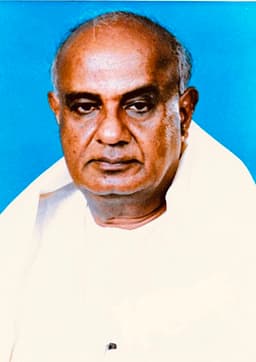
H. D. Deve Gowda
Politician · Modern
51.8Total
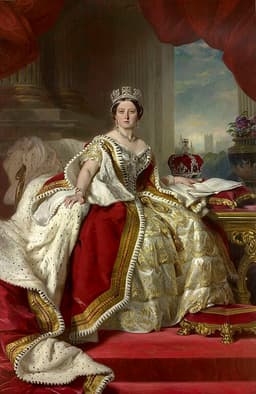
Queen Victoria
Politician · Modern
64.6Total
Basic Information
Born
1933
1819
Died
—
1901
Era
Modern
Modern
Nationality
India
United Kingdom
Occupation
Politician
Politician
Civilization
Indian
Western
Score Comparison
Military (10%)
40.3
25.9
Political (20%)
68.0
70.0
Influence (20%)
52.5
75.0
Legacy (20%)
41.7
70.0
Leadership (15%)
53.2
72.0
Strategy (15%)
60.0
45.0
TOTAL
51.8
64.6
H. D. Deve Gowda — Complete Timeline
1991 AD
Appointment as Chairman of the National Commission for Scheduled Castes and Scheduled TribesPolitical Action
H. D. Deve Gowda was appointed Chairman of the National Commission for Scheduled Castes and Scheduled Tribes. This role involved monitoring the implementation of constitutional safeguards for marginalized communities.
CommissionSC/STSocial Justice
Impact: nationalconstructive
1994 AD
Election as Chief Minister of KarnatakaPolitical Action◆ Major
H. D. Deve Gowda was elected Chief Minister of Karnataka, leading the Janata Dal to a landslide victory. His government focused on rural development and irrigation projects, including the Cauvery River dispute.
Chief MinisterKarnatakaJanata Dal
Impact: regionalconstructive
1996 AD
Appointment as Prime Minister of IndiaPolitical Action◆ Major
H. D. Deve Gowda became the 11th Prime Minister of India, leading the United Front coalition government. His tenure lasted 11 months, from June 1996 to April 1997, as a compromise candidate after the 1996 general election.
Prime MinisterUnited FrontCoalition
Impact: national
1997 AD
Resignation as Prime MinisterPolitical Action◆ Major
H. D. Deve Gowda resigned as Prime Minister after the Congress party withdrew its support from the United Front government. The withdrawal was triggered by differences over the handling of the DMK in Tamil Nadu.
ResignationCoalition CollapseCongress
Impact: national
1999 AD
Formation of the Janata Dal (Secular)Political Action◆ Major
H. D. Deve Gowda founded the Janata Dal (Secular) after a split in the Janata Dal. The party became a major political force in Karnataka, focusing on secularism and social justice.
Party FormationJanata Dal (Secular)Karnataka
Impact: regionalconstructive
Queen Victoria — Complete Timeline
1851 AD
Great Exhibition of 1851Cultural◆ Major
Prince Albert, Victoria's consort, organized the Great Exhibition in London's Crystal Palace. The exhibition showcased industrial and cultural achievements from around the world, symbolizing Britain's technological and imperial dominance during the Victorian Era.
ExhibitionIndustryCulture
Impact: globalconstructive
1857 AD
Indian Rebellion of 1857War
The Indian Rebellion of 1857, a major uprising against British East India Company rule, occurred during Victoria's reign. The rebellion was suppressed, leading to the dissolution of the Company and the establishment of direct British Crown rule over India in 1858.
IndiaRebellionEmpire
Impact: global
1867 AD
Reform Act 1867 PassedReform◆ Major
The Reform Act 1867, passed during Victoria's reign, expanded the franchise to include many urban working-class men in Britain. This electoral reform increased the electorate by over a million voters, reshaping British politics and the two-party system.
ReformDemocracyPolitics
Impact: nationalprogressive
British North America Act PassedPolitical Action◆ Major
The British North America Act, passed by the UK Parliament, created the Dominion of Canada as a self-governing entity within the British Empire. Victoria's approval marked the beginning of Canadian confederation and a model for future colonial autonomy.
CanadaColonialSelf-Government
Impact: regionalconstructive
1899 AD
Second Boer War BeganWar◆ Major
The Second Boer War broke out between the British Empire and the Boer republics in South Africa. The conflict, which ended in 1902, resulted in British victory and the incorporation of the Transvaal and Orange Free State into the empire, but at great cost.
WarSouth AfricaEmpire
Impact: regional
Expert Analysis
Origins
H. D. Deve Gowda was born on May 18, 1933, in Haradanahalli, a small village in the princely state of Mysore (now Karnataka), into a Vokkaliga farming family. His father, Dodda Gowda, was a farmer, and his mother, Nagamma, was a homemaker. Deve Gowda studied at the Government College in Mandya and later earned a diploma in civil engineering from the Sri Jayachamarajendra Polytechnic in Bangalore. However, he soon left engineering to enter politics, inspired by the socialist ideals of Ram Manohar Lohia.
Queen Victoria was born on May 24, 1819, at Kensington Palace in London, the only child of Prince Edward, Duke of Kent and Strathearn, and Princess Victoria of Saxe-Coburg-Saalfeld. Her father died when she was a baby, and she was raised under the strict supervision of her mother and Sir John Conroy. Victoria's education was rigorous, focusing on languages, history, and music, preparing her for her future role as monarch.
Rise to Power
Deve Gowda's political rise began in the 1960s when he joined the Indian National Congress. He was first elected to the Karnataka Legislative Assembly in 1962 from the Holenarasipur constituency. He held various ministerial positions in the Karnataka government, including Public Works and Irrigation. In 1994, he led the Janata Dal to a landslide victory in Karnataka and became Chief Minister. His tenure focused on rural development and irrigation projects. On June 1, 1996, after the general election resulted in a hung parliament, Deve Gowda was chosen as Prime Minister of India, heading the United Front coalition. He took office on June 1, 1996, and served until April 21, 1997.
Queen Victoria ascended to the throne on June 20, 1837, at age 18, following the death of her uncle, King William IV. Her early reign was influenced by her first Prime Minister, Lord Melbourne, and later by her husband, Prince Albert, whom she married in 1840. Victoria's reign saw the expansion of the British Empire and the consolidation of constitutional monarchy. Her popularity fluctuated, but the Great Exhibition of 1851, organized by Albert, boosted her public image.
Leadership & Governance
Deve Gowda's leadership style was pragmatic and focused on coalition management. As Prime Minister, he prioritized rural development, agricultural reforms, and social justice. He introduced the 'Panchayat Raj' system to empower local governance. However, his tenure was marked by political instability, as the United Front coalition was fragile. His governance scored 53.2 in leadership and 60.0 in strategy, reflecting his ability to navigate complex political terrain but limited by short tenure.
Queen Victoria's leadership was largely symbolic, but she wielded significant influence through her role as constitutional monarch. She advised and encouraged her ministers, often expressing strong opinions on foreign and domestic policy. Her reign saw the passage of the Reform Act 1867, which expanded the franchise, and the British North America Act 1867, creating the Dominion of Canada. Victoria's political score of 70.0 and leadership score of 72.0 reflect her enduring impact on British governance and the empire.
Triumph & Tragedy
Deve Gowda's greatest triumph was becoming Prime Minister of India, a feat for a farmer's son from Karnataka. He successfully led a coalition government and implemented rural development programs. However, his tenure was cut short after 11 months when the Congress party withdrew support, leading to his resignation. This was a major failure, as he could not stabilize the coalition or secure longer-term policies. His overall score of 51.8 reflects a modest but significant political career.
Queen Victoria's triumphs include the expansion of the British Empire to its zenith, the Great Exhibition, and her role in shaping modern constitutional monarchy. Her reign saw industrial and cultural flourishing. However, tragedies include the death of Prince Albert in 1861, which plunged her into deep mourning and withdrawal from public life. The Second Boer War (1899-1902) was a costly conflict that tarnished the empire's image. Victoria's military score of 25.9 is low, as she was not a military leader, but her political and influence scores are high.
Character & Destiny
Deve Gowda was known for his humility and connection to his rural roots. He was a pragmatic politician who often worked behind the scenes. His character shaped his destiny as a regional leader who briefly rose to national prominence but lacked the support to sustain it. Historians note his effective administration in Karnataka but his inability to manage coalition politics at the center.
Queen Victoria was known for her strong will, sense of duty, and emotional nature. Her character influenced her reign: her stubbornness sometimes caused friction with ministers, but her dedication to her role solidified the monarchy's place in British society. Her destiny was to preside over an era of immense change and imperial expansion, leaving a lasting legacy.
Legacy
Deve Gowda's legacy is primarily regional. He founded the Janata Dal (Secular) in 1999, which remains a significant force in Karnataka politics. His focus on rural development and social justice influenced subsequent state governments. However, his national impact is limited. His legacy score of 41.7 reflects his modest influence beyond India.
Queen Victoria's legacy is vast. The Victorian Era is defined by industrial progress, cultural achievements, and imperial expansion. Her name is synonymous with an age of innovation and morality. The British monarchy's modern ceremonial role was shaped during her reign. Her legacy score of 70.0 and influence score of 75.0 underscore her enduring impact globally.
Conclusion
Queen Victoria had a greater impact than H. D. Deve Gowda, as reflected in her higher total score of 64.6 compared to his 51.8. Victoria's reign shaped the modern world through empire, industry, and constitutional evolution, while Deve Gowda's influence is largely confined to Indian state politics. Victoria's legacy endures globally, whereas Deve Gowda's is regional and time-bound. The data supports this conclusion: Victoria's political, influence, and legacy scores are significantly higher, and her era's transformations remain foundational to contemporary society.
Rankings
🥇
Queen VictoriaLeader
Mil: 25.9Pol: 70.0Inf: 75.0
64.6
🥈
H. D. Deve Gowda
Mil: 40.3Pol: 68.0Inf: 52.5
51.8
+12.8 behind
How This Comparison Works
Algorithm
Each figure is scored on 6 dimensions (0—100 scale) based on structured historical data: Military (10%), Political (20%), Influence (20%), Legacy (20%), Leadership (15%), Strategy (15%). The weighted total produces the final ranking.
Data Sources
Scores are computed from structured sub-indicators in the database. Scale factors adjust for era (Ancient ×0.85, Modern ×1.0) and civilization size (Eastern ×1.05, Other ×0.80) to account for differences in population and military scale.
Maximum 3 Figures
Comparisons are limited to 2—3 figures to ensure readability and statistical meaningfulness.
Error Margins
±5 points per dimension — Sub-scores are derived from historical records with inherent uncertainty. Two figures within 5 points on a dimension should be considered roughly equivalent in that area.
Total Score Accuracy
±3 points overall — The weighted combination of 6 dimensions produces a total score with approximately ±3 points of uncertainty. Differences of less than 3 points are not statistically significant— the figures are effectively tied.
Known Limitations
- Historical records are incomplete and uneven across civilizations
- Figures from oral-tradition societies may be underrepresented
- Occupation labels can misclassify multi-role figures
- Scores measure capability and impact, not moral character
- Quantitative scoring is a comparison tool, not absolute truth
Capability Radar
Military (10%) — Battles & Warfare
Battles
44
10
Win Rate
49
10
Expansion
47
70
Political (20%) — Governance & Reform
Reform
40
60
Diplomacy
55
75
Economy
45
80
Influence (20%) — Cultural & Global Reach
Cultural
20
85
Global
25
85
Legacy (20%) — Historical Impact
Historical
30
90
Longevity
20
80
Leadership (15%) — Power & Stability
Tenure
60
95
Stability
40
85
Strategy (15%) — Tactics & Innovation
Strategy
55
20
Tactics
55
10
Reform
56
30
Similar Comparisons
Comments & Discussion
No comments yet. Be the first to share your thoughts!