Loading...
Abdullah Gul vs Nicos Anastasiades
Abdullah Gul leads by 2.1 pts · 2 figures compared
…

Abdullah Gul
Politician · Modern
55.6Total
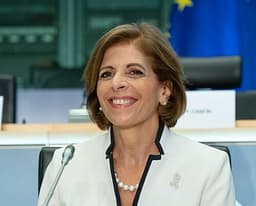
Nicos Anastasiades
Politician · Modern
53.5Total
Basic Information
Born
1950
1946
Died
—
—
Era
Modern
Modern
Nationality
Turkey
Cyprus
Occupation
Politician
Politician
Civilization
Middle Eastern
Western
Score Comparison
Military (10%)
50.0
50.0
Political (20%)
60.0
68.0
Influence (20%)
60.0
51.8
Legacy (20%)
45.8
43.3
Leadership (15%)
72.0
68.0
Strategy (15%)
43.9
42.8
TOTAL
55.6
53.5
Abdullah Gul — Complete Timeline
2001 AD
Co-founded the Justice and Development Party (AK Party)Political Action
Abdullah Gul was a founding member of the Justice and Development Party (AK Party), along with Recep Tayyip Erdogan. The party positioned itself as conservative democratic and won the 2002 elections.
AK PartyFoundingConservative Democracy
Impact: nationalconstructive
2002 AD
Served as Prime Minister of TurkeyPolitical Action◆ Major
Gul served as Prime Minister of Turkey from 2002 to 2003, leading the first AK Party government. He oversaw the early phase of economic reforms and EU accession negotiations.
Prime MinisterAK PartyEU Accession
Impact: nationalconstructive
2003 AD
Served as Minister of Foreign AffairsPolitical Action◆ Major
Gul served as Minister of Foreign Affairs from 2003 to 2007. He played a key role in Turkey's EU accession negotiations and in improving relations with neighboring countries.
Foreign AffairsEU NegotiationsDiplomacy
Impact: nationalconstructive
2007 AD
Elected President of TurkeyPolitical Action
Gul was elected as the 11th President of Turkey after a contentious process. His election sparked a constitutional crisis due to his AK Party background and his wife's headscarf, leading to early elections.
PresidencyConstitutional CrisisHeadscarf
Impact: national
Presidency and Support for EU ReformsPolitical Action◆ Major
As president, Gul supported Turkey's EU accession process and democratic reforms. He served until 2014, maintaining a largely ceremonial role while backing the AK Party's agenda.
PresidencyEU ReformsDemocratic Reforms
Impact: nationalconstructive
Nicos Anastasiades — Complete Timeline
2013 AD
Elected President of CyprusPolitical Action◆ Major
Anastasiades was elected President of Cyprus in February 2013, succeeding Demetris Christofias. His election occurred during the peak of the Cypriot financial crisis, with the economy facing collapse and needing an international bailout.
ElectionFinancial Crisis
Impact: national
Negotiated the Cyprus BailoutPolitical Action◆ Major
Anastasiades negotiated a
BailoutFinancial CrisisEurozone
Impact: nationaldestructive
2015 AD
Resumed Cyprus Reunification TalksPolitical Action◆ Major
Anastasiades resumed negotiations with Turkish Cypriot leader Mustafa Ak
ReunificationDiplomacyCyprus Problem
Impact: regional
2017 AD
Crans-Montana Reunification Conference FailurePolitical Action◆ Major
The UN-facilitated reunification conference in Crans-Montana, Switzerland, ended without an agreement in July 2017. Anastasiades and Ak
ReunificationDiplomacyFailure
Impact: regionaltragic
2018 AD
Re-elected President of CyprusPolitical Action◆ Major
Anastasiades won a second five-year term in the 2018 presidential election, defeating Stavros Malas in a runoff. His re-election was seen as a mandate for continued economic recovery and reunification talks.
ElectionRe-election
Impact: national
Expert Analysis
Origins
Abdullah Gul was born in 1950 in Kayseri, Turkey, into a religious family. He studied economics at Istanbul University and later earned a PhD in economics. His early career included academia and a stint at the Islamic Development Bank. He entered politics in 1991 as a member of the Welfare Party, gaining experience in Islamist politics.
Nicos Anastasiades was born in 1946 in Pera Pedi, Cyprus, into a Greek Cypriot family. He studied law at the University of Athens and later practiced as a lawyer. He entered politics in 1981 as a member of the Democratic Rally (DISY) party, becoming its president in 1997. His early focus was on legal and constitutional issues related to the Cyprus dispute.
Rise to Power
Gul's rise accelerated with the founding of the Justice and Development Party (AK Party) in 2001, alongside Recep Tayyip Erdogan. He became Prime Minister in 2002 after the AK Party's landslide victory, serving until 2003 when Erdogan took over. Gul then served as Foreign Minister from 2003 to 2007, gaining international recognition for Turkey's EU accession negotiations. In 2007, he was elected President after a contentious process that sparked a constitutional crisis due to his AK Party background.
Anastasiades rose to prominence as the leader of DISY, the main center-right party. He was elected President in February 2013, during the peak of the Cypriot financial crisis. His victory came amid public anger over the previous administration's handling of the economy and a banking sector collapse.
Leadership & Governance
Gul's leadership style was pragmatic and reformist. As President, he maintained a largely ceremonial role but used his influence to support EU accession and democratic reforms. He scored 72.0 in leadership and 60.0 in political skill. His governance focused on economic liberalization and EU alignment, though he faced criticism for not opposing Erdogan's increasingly authoritarian moves later.
Anastasiades led Cyprus through a severe financial crisis. He negotiated a €10 billion bailout with the Eurogroup and IMF in March 2013, which included a controversial levy on bank deposits. His leadership score of 68.0 reflects his handling of the crisis, though the bailout terms caused significant public hardship. He also pursued Cyprus reunification talks, engaging with Turkish Cypriot leader Mustafa Akıncı from 2015.
Triumph & Tragedy
Gul's greatest success was co-founding the AK Party and leading Turkey's early EU accession process, improving relations with Greece and the EU. His presidency saw political stability and economic growth. However, his failure to prevent Turkey's democratic backsliding under Erdogan tarnished his legacy. He scored 45.8 in legacy, reflecting mixed outcomes.
Anastasiades' triumph was securing the bailout and stabilizing Cyprus's economy, preventing a disorderly default. He also kept reunification talks alive. His tragedy was the failure at Crans-Montana in 2017, where reunification efforts collapsed, and the long-term economic impact of the bailout, including high unemployment and debt. He scored 43.3 in legacy.
Character & Destiny
Gul was known as a conciliator and technocrat, often seen as a moderate within the AK Party. His character as a reformist helped Turkey's EU bid but ultimately left him sidelined as Erdogan consolidated power. His destiny was to be a transitional figure.
Anastasiades was a pragmatic lawyer who prioritized stability. His cautious approach helped navigate the crisis but frustrated those seeking bolder reforms. His character as a negotiator led to the bailout deal, but also to the collapse of reunification talks, as he was seen as inflexible on key issues.
Legacy
Gul's legacy is tied to the early AK Party era: economic growth, EU reforms, and a more open Turkey. However, his long-term impact is overshadowed by Erdogan's later authoritarianism. He scored 60.0 in influence.
Anastasiades' legacy is the Cyprus bailout and its aftermath. He is remembered for averting immediate financial collapse, but the bailout's terms and the failure of reunification define his tenure. He scored 51.8 in influence.
Conclusion
Abdullah Gul had a greater overall impact due to his role in shaping Turkey's political landscape and EU trajectory, despite the later decline. His total score of 55.6 surpasses Anastasiades' 53.5. Gul's influence on Turkey's modern political identity and early reforms outweighs Anastasiades' crisis management, which was largely reactive. While both faced significant challenges, Gul's proactive role in a major regional power gives him the edge.
Rankings
🥇
Abdullah GulLeader
Mil: 50.0Pol: 60.0Inf: 60.0
55.6
🥈
Nicos Anastasiades
Mil: 50.0Pol: 68.0Inf: 51.8
53.5
+2.1 behind
How This Comparison Works
Algorithm
Each figure is scored on 6 dimensions (0—100 scale) based on structured historical data: Military (10%), Political (20%), Influence (20%), Legacy (20%), Leadership (15%), Strategy (15%). The weighted total produces the final ranking.
Data Sources
Scores are computed from structured sub-indicators in the database. Scale factors adjust for era (Ancient ×0.85, Modern ×1.0) and civilization size (Eastern ×1.05, Other ×0.80) to account for differences in population and military scale.
Maximum 3 Figures
Comparisons are limited to 2—3 figures to ensure readability and statistical meaningfulness.
Error Margins
±5 points per dimension — Sub-scores are derived from historical records with inherent uncertainty. Two figures within 5 points on a dimension should be considered roughly equivalent in that area.
Total Score Accuracy
±3 points overall — The weighted combination of 6 dimensions produces a total score with approximately ±3 points of uncertainty. Differences of less than 3 points are not statistically significant— the figures are effectively tied.
Known Limitations
- Historical records are incomplete and uneven across civilizations
- Figures from oral-tradition societies may be underrepresented
- Occupation labels can misclassify multi-role figures
- Scores measure capability and impact, not moral character
- Quantitative scoring is a comparison tool, not absolute truth
Capability Radar
Military (10%) — Battles & Warfare
Battles
23
28
Win Rate
27
30
Expansion
30
35
Political (20%) — Governance & Reform
Reform
60
55
Diplomacy
70
60
Economy
65
45
Influence (20%) — Cultural & Global Reach
Cultural
40
20
Global
50
30
Legacy (20%) — Historical Impact
Historical
45
35
Longevity
30
25
Leadership (15%) — Power & Stability
Tenure
65
65
Stability
55
40
Strategy (15%) — Tactics & Innovation
Strategy
27
38
Tactics
35
43
Reform
35
42
Similar Comparisons
Comments & Discussion
No comments yet. Be the first to share your thoughts!