Loading...
Nelson Mandela vs Peter the Great
Peter the Great leads by 16.2 pts · 2 figures compared
…
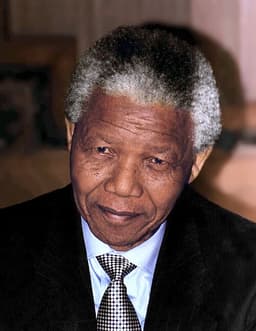
Nelson Mandela
Politician · Modern
57.0Total
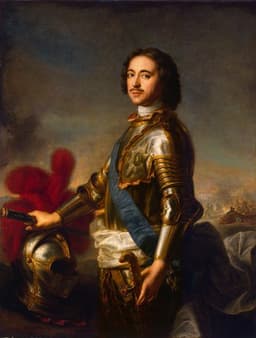
Peter the Great
Emperor · Modern
73.2Total
Basic Information
Born
1918
1672
Died
2013
1725
Era
Modern
Modern
Nationality
South Africa
Russia
Occupation
Politician
Emperor
Civilization
Other
Western
Score Comparison
Military (10%)
10.0
75.0
Political (20%)
78.0
90.0
Influence (20%)
40.0
68.0
Legacy (20%)
68.0
65.0
Leadership (15%)
82.0
78.0
Strategy (15%)
50.0
72.0
TOTAL
57.0
73.2
Nelson Mandela — Complete Timeline
1964 AD
Rivonia TrialPolitical Action
Nelson Mandela and other anti-apartheid leaders were tried for sabotage and conspiracy. Mandela was sentenced to life imprisonment, delivering a speech from the dock that became a rallying cry against apartheid. The trial drew international attention to the anti-apartheid struggle.
Impact: global
1990 AD
Release from PrisonPolitical Action
After 27 years of imprisonment, Mandela was released from Victor Verster Prison by President F.W. de Klerk. His release was a pivotal moment in South Africa's transition from apartheid to multiracial democracy, leading to negotiations for a new constitution.
Impact: globalprogressive
1993 AD
Awarding of the Nobel Peace PrizeCultural◆ Major
Mandela and F.W. de Klerk were jointly awarded the Nobel Peace Prize for their roles in ending apartheid and laying the foundations for a democratic South Africa. The award recognized their peaceful transition and commitment to reconciliation.
Impact: globalprogressive
1994 AD
Inauguration as President of South AfricaPolitical Action
Mandela was inaugurated as South Africa's first Black president after the country's first fully democratic elections. His presidency focused on national reconciliation, establishing the Truth and Reconciliation Commission, and dismantling the legacy of apartheid.
Impact: globalprogressive
Peter the Great — Complete Timeline
1697 AD
Grand EmbassyPolitical Action◆ Major
Peter the Great traveled incognito to Western Europe as part of a diplomatic mission. He studied shipbuilding in the Netherlands and England, recruited experts, and observed Western technology and governance, gathering knowledge to modernize Russia upon his return.
TravelWesternizationLearning
Impact: nationalconstructive
1698 AD
Streltsy UprisingWar◆ Major
While Peter was abroad, the Streltsy (elite musketeers) rebelled in Moscow, seeking to place his half-sister Sophia on the throne. Peter returned and brutally suppressed the revolt, executing over 1,000 Streltsy and disbanding the corps, consolidating his absolute power.
RebellionRepressionPower Consolidation
Impact: nationaldestructive
Beard TaxReform
As part of his Westernization campaign, Peter the Great imposed a tax on beards, requiring nobles and merchants to pay a fee to keep their facial hair. Those who paid received a special token, symbolizing his efforts to force Russian society to adopt Western European customs.
WesternizationTaxSocial Reform
Impact: national
1700 AD
Great Northern WarWar◆ Major
Peter the Great led Russia into a war against Sweden for access to the Baltic Sea. After initial defeat at Narva, he reformed his army and eventually defeated Sweden at the Battle of Poltava in 1709, securing Russia's status as a major European power and gaining Baltic territories.
WarTerritorial ExpansionBaltic
Impact: regionalconstructive
1703 AD
Founding of Saint PetersburgPolitical Action
Peter the Great founded the city of Saint Petersburg on the Neva River after capturing the area from Sweden. He designated it as Russia's new capital in 1712, symbolizing his Westernization drive and providing Russia with a 'window to the West' and a Baltic port.
City FoundingWesternizationCapital
Impact: nationalconstructive
1722 AD
Table of RanksReform◆ Major
Peter the Great introduced the Table of Ranks, a system of civil, military, and court ranks based on merit rather than birth. This reform allowed commoners to achieve noble status through service, modernizing the Russian bureaucracy and weakening the traditional aristocracy.
BureaucracyMeritocracySocial Reform
Impact: nationalprogressive
Expert Analysis
Peter the Great vs Nelson Mandela
# The Iron Tsar and the Gentle Giant
On a spring morning in 1697, a towering Russian man with rough hands and a crude manner arrived incognito in the Dutch shipbuilding town of Zaandam. He wore simple clothes, worked alongside common carpenters, and asked endless questions about the construction of hulls and masts. Nearly three centuries later, on a February afternoon in 1990, another man—older, dignified, dressed in a neat suit—walked out of Victor Verster Prison in South Africa, his fist raised in a gesture of quiet triumph. One man sought to drag his nation into modernity by force; the other sought to heal his nation through forgiveness. Peter the Great and Nelson Mandela—two titans of vastly different worlds—each reshaped their countries, yet their paths, methods, and legacies could hardly be more different. What drove them, and what do their contrasting stories reveal about the nature of leadership itself?
Origins
Peter was born in 1672 into the chaos of the Kremlin, the son of Tsar Alexei Mikhailovich and his second wife. His childhood was marked by the violent power struggles of the Streltsy, the elite musketeers who once murdered his uncles before his eyes. From this crucible of fear and brutality, Peter emerged with a visceral hatred of the old order and an obsessive curiosity for the West. He built mock fortresses, sailed toy boats on ponds, and surrounded himself with foreign engineers and soldiers. Russia, in his view, was backward, isolated, and doomed unless it learned from Europe.
Mandela was born in 1918 in the small village of Mvezo, in the Eastern Cape of South Africa. His father was a Thembu chief, but young Rolihlahla—his birth name—was raised in the royal household after his father's death. He absorbed the values of consultation, consensus, and respect for elders. Educated at Methodist schools and later at the University of Fort Hare, Mandela became a lawyer and a political activist. Where Peter saw a nation to be conquered and remade, Mandela saw a people to be liberated and reconciled.
Rise to Power
Peter's ascent was neither smooth nor peaceful. In 1682, at age ten, he was placed on the throne alongside his half-brother Ivan, with their sister Sophia acting as regent. For seven years, Sophia ruled, until Peter, now seventeen, staged a coup and seized power. The turning point came in 1697 with the Grand Embassy—his secret journey to Western Europe. He studied shipbuilding in the Netherlands, visited English dockyards, and hired hundreds of foreign specialists. But while he was abroad, the Streltsy rebelled again, seeking to restore Sophia. Peter rushed home, crushed the revolt with savage brutality—hundreds were executed, their bodies left rotting outside the Kremlin walls—and then imposed his will. The Beard Tax of 1698 was symbolic: any noble who wished to keep his beard had to pay a fee. Peter himself sheared off the beards of his boyars, laughing as they wept.
Mandela's rise was a slow, painful climb through the ranks of resistance. He joined the African National Congress in 1944 and co-founded its Youth League. For two decades, he led nonviolent protests, strikes, and defiance campaigns. But after the Sharpeville massacre of 1960, he concluded that peaceful means were futile. He helped found Umkhonto we Sizwe, the armed wing of the ANC, and trained in guerrilla warfare. In 1962, he was arrested; the following year came the Rivonia Trial. Facing the death penalty, Mandela delivered a speech from the dock that would echo through history: "I have fought against white domination, and I have fought against black domination. I have cherished the ideal of a democratic and free society... It is an ideal which I hope to live for and to achieve. But if needs be, it is an ideal for which I am prepared to die." He was sentenced to life imprisonment.
Leadership & Governance
Peter ruled by decree, by fear, and by relentless energy. He reorganized the army along Western lines, built Russia's first navy, and founded Saint Petersburg in 1703 on the swamps of the Neva—a "window to the West" carved by the labor of tens of thousands of serfs who died in the marshes. The Great Northern War against Sweden (1700–1721) was his defining military campaign. After a disastrous defeat at Narva in 1700, he rebuilt his forces and eventually crushed Sweden at Poltava in 1709, securing Russia's access to the Baltic. At home, he imposed the Table of Ranks in 1722, a merit-based system that allowed commoners to rise to noble status through service. He forced the nobility to shave, dress like Europeans, and educate their children. He taxed everything from beards to oak coffins. His reforms were brutal, top-down, and absolute.
Mandela governed by persuasion, by example, and by moral authority. After 27 years in prison—most of them on Robben Island, breaking rocks in a lime quarry—he was released in 1990. He did not call for revenge. Instead, he negotiated with the very men who had jailed him, including President F.W. de Klerk. Together, they won the Nobel Peace Prize in 1993. The following year, Mandela was inaugurated as South Africa's first Black president after the nation's first fully democratic elections. His leadership was a masterclass in reconciliation: he invited his white former jailers to his inauguration, wore the jersey of the mostly-white Springboks rugby team at the 1995 World Cup, and established the Truth and Reconciliation Commission to heal the wounds of apartheid.
Triumph & Tragedy
Peter's greatest triumph was the creation of Saint Petersburg, a city that became Russia's capital and a symbol of its European ambition. His greatest tragedy was the death of his son Alexei, who opposed his reforms and was tortured and executed on Peter's orders in 1718. The tsar's own hand was stained with the blood of his heir.
Mandela's greatest triumph was the peaceful transition to democracy in a country that many predicted would descend into civil war. His greatest tragedy was the loss of his youth—27 years stolen from his life, from his family, from his wife Winnie, who suffered greatly in his absence. He emerged old and frail, yet unbowed.
Character & Destiny
Peter was impulsive, cruel, and possessed of a volcanic temper. He drank heavily, laughed loudly, and worked himself to exhaustion. He once beheaded a condemned man with his own axe to demonstrate the technique. Yet he also labored as a common carpenter, studied anatomy, and personally pulled teeth from his courtiers. His character was forged in the violence of his youth and the conviction that Russia's survival required its transformation—by any means necessary.
Mandela was patient, disciplined, and possessed of an extraordinary emotional intelligence. He learned Afrikaans in prison, studied his enemies' history, and understood their fears. He knew that liberation would be hollow if it came with hatred. His character was forged in the long solitude of Robben Island, where he led his fellow prisoners in quiet acts of defiance—studying, debating, and maintaining their dignity. "I am not a saint," he once said, "unless you think of a saint as a sinner who keeps on trying."
Legacy
Peter the Great left behind a Russia that was militarily powerful, territorially vast, and permanently altered. He established the Russian Empire and forced it onto the European stage. But his methods—autocratic, violent, and contemptuous of human suffering—set a pattern that would haunt Russia for centuries. His legacy is a double-edged sword: a modernizer who ruled like a barbarian.
Mandela left behind a South Africa that was democratic, multiracial, and at peace with itself. He proved that forgiveness could be a political weapon, that reconciliation could be stronger than revenge. His legacy is the Truth and Reconciliation Commission, the Constitution of 1996, and a nation that calls itself the "Rainbow Nation." But the economic inequalities of apartheid remain, and the struggle for true justice continues.
Conclusion
Two men, two worlds, two visions of leadership. Peter the Great believed that change must be imposed from above, that a nation could be hammered into shape like iron on an anvil. Nelson Mandela believed that change must be nurtured from within, that a nation could be healed like a wounded body. Peter's Russia rose, but at a terrible cost. Mandela's South Africa healed, but the scars remain. Perhaps the deepest lesson is that both were products of their times—and that the times demanded different kinds of greatness. Peter built a state; Mandela built a soul. In the end, the world remembers both, but it loves only one.
Rankings
🥇
Peter the GreatLeader
Mil: 75.0Pol: 90.0Inf: 68.0
73.2
🥈
Nelson Mandela
Mil: 10.0Pol: 78.0Inf: 40.0
57.0
+16.2 behind
How This Comparison Works
Algorithm
Each figure is scored on 6 dimensions (0—100 scale) based on structured historical data: Military (10%), Political (20%), Influence (20%), Legacy (20%), Leadership (15%), Strategy (15%). The weighted total produces the final ranking.
Data Sources
Scores are computed from structured sub-indicators in the database. Scale factors adjust for era (Ancient ×0.85, Modern ×1.0) and civilization size (Eastern ×1.05, Other ×0.80) to account for differences in population and military scale.
Maximum 3 Figures
Comparisons are limited to 2—3 figures to ensure readability and statistical meaningfulness.
Error Margins
±5 points per dimension — Sub-scores are derived from historical records with inherent uncertainty. Two figures within 5 points on a dimension should be considered roughly equivalent in that area.
Total Score Accuracy
±3 points overall — The weighted combination of 6 dimensions produces a total score with approximately ±3 points of uncertainty. Differences of less than 3 points are not statistically significant— the figures are effectively tied.
Known Limitations
- Historical records are incomplete and uneven across civilizations
- Figures from oral-tradition societies may be underrepresented
- Occupation labels can misclassify multi-role figures
- Scores measure capability and impact, not moral character
- Quantitative scoring is a comparison tool, not absolute truth
Capability Radar
Military (10%) — Battles & Warfare
Battles
0
85
Win Rate
7
80
Expansion
9
90
Political (20%) — Governance & Reform
Reform
95
95
Diplomacy
95
80
Economy
60
85
Influence (20%) — Cultural & Global Reach
Cultural
85
85
Global
90
85
Legacy (20%) — Historical Impact
Historical
90
90
Longevity
80
85
Leadership (15%) — Power & Stability
Tenure
60
90
Stability
80
70
Strategy (15%) — Tactics & Innovation
Strategy
8
85
Tactics
12
75
Reform
17
95
Similar Comparisons
Comments & Discussion
TSAR HAMMER6/16/2026
Peter wasn't a "reformer"—he was a trauma response. Growing up watching the Streltsy massacre his relatives, he militarized Russian society to exorcise his own childhood demons. Building St. Petersburg on swamps with 30,000 serf corpses? That's CPTSD on a national scale. Mandela had 27 years in prison to process his anger; Peter had zero therapy and a lifetime of absolute power. We need to stop romanticizing violent modernization as "greatness."
数据侦探6/16/2026
忽略了一个致命细节:彼得大帝在位期间俄罗斯人口几乎没有增长,而曼德拉领导下的南非避免了预估的内战死亡人数——通常在10万到100万之间。彼得把国家当实验品,代价是无数人命;曼德拉把国家当病人,代价是经济不平等持续至今。进步的定义从来不是统一的,数据不会说谎,选择在于你更在意哪种“账本”。
CLASSICS NERD6/16/2026
Funny how we measure leaders by Roman standards when they'd hate each other's methods. Peter could've been a Caesar—autocratic, expansionist, infrastructure-obsessed. Mandela was more like Cincinnatus, the dictator who walked away from power. Peter's legal code had 2,000+ pages of regulations; Mandela's constitution is one of the world's shortest and most elegant. The difference? One trusted the state, the other trusted the people. I know which I'd rather live under.
历史老饕6/16/2026
冷战后的西方叙事把曼德拉塑造成圣人,但别忘了彼得大帝也曾被苏联捧为“进步君主”。曼德拉对跨国资本让步,彼得对西方技术屈服——本质上都是被迫妥协于更强大的文明形态。区别在于:彼得把俄罗斯变成了普鲁士的翻版,曼德拉把南非维持在了资本主义体系的附庸位置。哪个是真正的“胜利”?历史判决书还没写完。
RUSTY SPECTACLES6/16/2026
Skip the sentimentalism. Peter built the first Russian navy from scratch in 15 years—500 ships while fighting Sweden. Mandela inherited a nuclear-capable state and chose to dismantle weapons programs instead of building a regional empire. One man empire-built; the other empire-renounced. The "greatness" depends entirely on whether your moral compass points toward 18th-century Realpolitik or 20th-century human rights. I'm not convinced either approach aged well.