Loading...
George Washington vs Peter the Great
George Washington leads by 3.6 pts · 2 figures compared
…
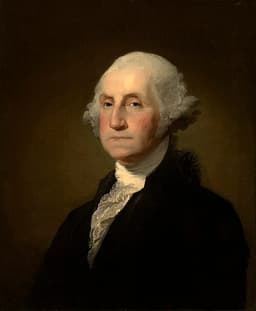
George Washington
Politician · Modern
76.8Total
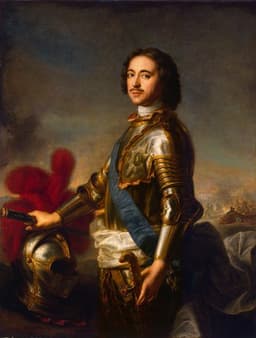
Peter the Great
Emperor · Modern
73.2Total
Basic Information
Born
1732
1672
Died
1799
1725
Era
Modern
Modern
Nationality
United States
Russia
Occupation
Politician
Emperor
Civilization
Western
Western
Score Comparison
Military (10%)
75.0
75.0
Political (20%)
82.0
90.0
Influence (20%)
75.0
68.0
Legacy (20%)
80.0
65.0
Leadership (15%)
85.0
78.0
Strategy (15%)
55.0
72.0
TOTAL
76.8
73.2
George Washington — Complete Timeline
1775 AD
Appointed Commander-in-Chief of the Continental ArmyOther◆ Major
The Second Continental Congress appointed Washington as commander-in-chief of the Continental Army on June 15, 1775. He accepted the position without pay, taking command of the forces besieging Boston at the start of the American Revolutionary War.
American RevolutionMilitary Leadership
Impact: national
1776 AD
Crossed the Delaware RiverOther◆ Major
On the night of December 25-26, 1776, Washington led 2,400 troops across the ice-choked Delaware River. The surprise attack on Hessian forces at Trenton resulted in a decisive American victory, capturing nearly 1,000 prisoners and reviving Patriot morale after a series of defeats.
American RevolutionBattleTurning Point
Impact: nationalconstructive
1787 AD
Presided over the Constitutional ConventionPolitical Action◆ Major
Washington served as president of the Constitutional Convention in Philadelphia from May to September 1787. His presence lent legitimacy to the proceedings, and he formally signed the final draft of the U.S. Constitution, though he contributed little to the debates.
ConstitutionFounding Father
Impact: national
1789 AD
Inaugurated as First President of the United StatesPolitical Action◆ Major
Washington was unanimously elected by the Electoral College and inaugurated on April 30, 1789, at Federal Hall in New York City. He established numerous executive branch precedents, including the cabinet system, the inaugural address, and the title 'Mr. President'.
PresidencyFounding Father
Impact: national
1793 AD
Issued the Proclamation of NeutralityOther◆ Major
Washington issued the Proclamation of Neutrality on April 22, 1793, declaring the United States neutral in the conflict between France and Great Britain. This decision established the precedent of American isolationism and avoided entanglement in European wars.
Foreign PolicyNeutrality
Impact: national
1796 AD
Delivered the Farewell AddressOther◆ Major
Washington published his Farewell Address on September 19, 1796, announcing his decision not to seek a third term. The address warned against political factionalism, permanent foreign alliances, and the influence of the military in government, shaping American political culture.
PresidencyLegacy
Impact: national
Peter the Great — Complete Timeline
1697 AD
Grand EmbassyPolitical Action◆ Major
Peter the Great traveled incognito to Western Europe as part of a diplomatic mission. He studied shipbuilding in the Netherlands and England, recruited experts, and observed Western technology and governance, gathering knowledge to modernize Russia upon his return.
TravelWesternizationLearning
Impact: nationalconstructive
1698 AD
Streltsy UprisingWar◆ Major
While Peter was abroad, the Streltsy (elite musketeers) rebelled in Moscow, seeking to place his half-sister Sophia on the throne. Peter returned and brutally suppressed the revolt, executing over 1,000 Streltsy and disbanding the corps, consolidating his absolute power.
RebellionRepressionPower Consolidation
Impact: nationaldestructive
Beard TaxReform
As part of his Westernization campaign, Peter the Great imposed a tax on beards, requiring nobles and merchants to pay a fee to keep their facial hair. Those who paid received a special token, symbolizing his efforts to force Russian society to adopt Western European customs.
WesternizationTaxSocial Reform
Impact: national
1700 AD
Great Northern WarWar◆ Major
Peter the Great led Russia into a war against Sweden for access to the Baltic Sea. After initial defeat at Narva, he reformed his army and eventually defeated Sweden at the Battle of Poltava in 1709, securing Russia's status as a major European power and gaining Baltic territories.
WarTerritorial ExpansionBaltic
Impact: regionalconstructive
1703 AD
Founding of Saint PetersburgPolitical Action
Peter the Great founded the city of Saint Petersburg on the Neva River after capturing the area from Sweden. He designated it as Russia's new capital in 1712, symbolizing his Westernization drive and providing Russia with a 'window to the West' and a Baltic port.
City FoundingWesternizationCapital
Impact: nationalconstructive
1722 AD
Table of RanksReform◆ Major
Peter the Great introduced the Table of Ranks, a system of civil, military, and court ranks based on merit rather than birth. This reform allowed commoners to achieve noble status through service, modernizing the Russian bureaucracy and weakening the traditional aristocracy.
BureaucracyMeritocracySocial Reform
Impact: nationalprogressive
Expert Analysis
Peter the Great vs George Washington
# The Founder and the Transformer
On a winter morning in 1799, an aging George Washington mounted his horse for his daily ride around Mount Vernon, unaware that this would be his last. Seventy-five years earlier and five thousand miles away, a ten-year-old boy named Peter Alekseyevich watched in horror as rebellious musketeers butchered his relatives before his eyes. One man would become the reluctant father of a democratic republic; the other, the iron-fisted architect of an autocratic empire. Both remade their nations, but their paths—and their legacies—could not have diverged more sharply.
Origins
Washington was born into Virginia’s planter aristocracy, a world of tobacco fields, enslaved labor, and gentlemanly ambition. His formal education was modest—he never attended university—but he absorbed the Enlightenment ideals of self-governance and natural rights that simmered across the Atlantic colonies. His early career as a surveyor and soldier on the frontier taught him patience, resilience, and the art of command under hardship.
Peter, by contrast, was born into the Kremlin’s chaos. The son of Tsar Alexei I, he grew up amid violent palace intrigues, culminating in the Streltsy Uprising of 1698, when elite musketeers tried to install his half-sister Sophia on the throne. This trauma forged a ruler who trusted no one and brooked no opposition. Where Washington learned compromise, Peter learned terror.
Rise to Power
Washington’s ascent was measured and reluctant. After serving as a young officer in the French and Indian War, he returned to plantation life. But when colonial grievances against British rule erupted into revolution, he was chosen to lead the Continental Army—not for his brilliance, but for his character. As John Adams noted, Washington was “the man who could unite the colonies.” He spent eight grueling years holding together a starving, ragged army, learning strategy through defeat at New York and triumph at Trenton.
Peter’s rise was far more dramatic and deliberate. In 1697, he embarked on the Grand Embassy, traveling incognito to Western Europe to study shipbuilding in the Netherlands and England. He returned with a vision: Russia would become a European power or perish. When the Streltsy rebelled in his absence, he crushed them with savage efficiency, executing hundreds and displaying their bodies outside the Kremlin walls as a warning.
Leadership & Governance
Washington’s leadership was defined by restraint. As president, he established norms that would outlive him: a cabinet system, the two-term precedent, and a policy of neutrality in foreign wars. He wielded power reluctantly, famously calling the presidency “an experiment entrusted to the hands of the American people.” His Farewell Address warned against factionalism and foreign entanglements—advice that shaped American policy for generations.
Peter governed through transformation. He imposed a Beard Tax on nobles who refused to shave, forcing Western dress and manners upon a reluctant aristocracy. He introduced the Table of Ranks in 1722, replacing birthright with merit in civil and military service. He founded Saint Petersburg in 1703, a “window to the West” built on swampland and the bones of thousands of serfs. His military reforms turned Russia into a formidable force, culminating in victory over Sweden in the Great Northern War (1700–1721). Where Washington built institutions, Peter built an engine of state power.
Triumph & Tragedy
Washington’s greatest triumph was not a battle but a surrender: when he resigned his commission as commander-in-chief in 1783, he stunned the world by voluntarily giving up power. King George III reportedly said that if Washington did this, “he will be the greatest man in the world.” His greatest failure was his inability to resolve the contradiction of slavery—he freed his own slaves in his will but took no national action against the institution.
Peter’s triumph was Russia’s emergence as a Baltic power. Saint Petersburg became the symbol of a new Russia, a city of canals and palaces that rivaled any in Europe. But his tragedy was the human cost: millions died from war, forced labor, and brutal modernization. His own son, Alexei, was tortured and executed for opposing his reforms. Peter wept at the boy’s death, but he never wavered.
Character & Destiny
Washington was a man of immense self-control. He suppressed his fiery temper behind a mask of dignity, learning that a leader’s character was his most powerful weapon. His humility was genuine: he refused a crown, insisted on being called “Mr. President,” and retired to Mount Vernon as a private citizen.
Peter was a man of volcanic energy. He stood six feet seven inches tall, worked with his hands in shipyards, and could drink any man under the table. He was cruel, impulsive, and visionary. His personality shaped Russia’s destiny: a nation that would modernize through coercion, expand through war, and centralize power in a single, absolute ruler.
Legacy
Washington’s legacy is the United States itself—a republic founded on the principle that power must be checked and leaders must serve. His image appears on currency, monuments, and the capital city that bears his name. Yet his legacy is also contested, as historians grapple with his role as a slaveholder.
Peter’s legacy is modern Russia: a centralized state, a military power, and a culture torn between East and West. Saint Petersburg remains his monument, a city that embodies his vision. But his methods—autocracy, forced modernization, and ruthless expansion—set a pattern that would echo through Russian history for centuries.
Conclusion
Two men, two nations, two visions of leadership. Washington believed that power was a trust to be held humbly and surrendered willingly. Peter believed that power was a tool to be wielded absolutely and ruthlessly. Both succeeded in transforming their countries, but they left behind very different worlds. Washington’s America would debate freedom; Peter’s Russia would obey authority. And the question they posed—can a nation reform itself without destroying its soul?—remains as urgent today as it was in the eighteenth century.
Rankings
🥇
George WashingtonLeader
Mil: 75.0Pol: 82.0Inf: 75.0
76.8
🥈
Peter the Great
Mil: 75.0Pol: 90.0Inf: 68.0
73.2
+3.6 behind
How This Comparison Works
Algorithm
Each figure is scored on 6 dimensions (0—100 scale) based on structured historical data: Military (10%), Political (20%), Influence (20%), Legacy (20%), Leadership (15%), Strategy (15%). The weighted total produces the final ranking.
Data Sources
Scores are computed from structured sub-indicators in the database. Scale factors adjust for era (Ancient ×0.85, Modern ×1.0) and civilization size (Eastern ×1.05, Other ×0.80) to account for differences in population and military scale.
Maximum 3 Figures
Comparisons are limited to 2—3 figures to ensure readability and statistical meaningfulness.
Error Margins
±5 points per dimension — Sub-scores are derived from historical records with inherent uncertainty. Two figures within 5 points on a dimension should be considered roughly equivalent in that area.
Total Score Accuracy
±3 points overall — The weighted combination of 6 dimensions produces a total score with approximately ±3 points of uncertainty. Differences of less than 3 points are not statistically significant— the figures are effectively tied.
Known Limitations
- Historical records are incomplete and uneven across civilizations
- Figures from oral-tradition societies may be underrepresented
- Occupation labels can misclassify multi-role figures
- Scores measure capability and impact, not moral character
- Quantitative scoring is a comparison tool, not absolute truth
Capability Radar
Military (10%) — Battles & Warfare
Battles
75
85
Win Rate
70
80
Expansion
60
90
Political (20%) — Governance & Reform
Reform
90
95
Diplomacy
85
80
Economy
65
85
Influence (20%) — Cultural & Global Reach
Cultural
85
85
Global
85
85
Legacy (20%) — Historical Impact
Historical
95
90
Longevity
90
85
Leadership (15%) — Power & Stability
Tenure
70
90
Stability
85
70
Strategy (15%) — Tactics & Innovation
Strategy
80
85
Tactics
65
75
Reform
85
95
Similar Comparisons
Comments & Discussion
The Reluctant Cincinnatus6/16/2026
Calling Peter a "reformer" while comparing him to Washington misses the point entirely. Washington voluntarily gave up power twice—after the Revolution and as President—setting a precedent that shaped democracy for centuries. Peter died while literally torturing his own son to death for opposing reforms. One man built institutions that outlasted him; the other built a personality cult that collapsed his dynasty. Washington's greatest legacy is the power he relinquished, not the power he accumula
铁腕改造者6/16/2026
你拿华盛顿和彼得大帝比?这就像拿烛光比火山。彼得强行把俄罗斯从中世纪拽进18世纪,用十万具尸体铺路,用野蛮对抗野蛮。他砍掉贵族的胡子,建起圣彼得堡的沼泽之城,每根柱子下都埋着农奴的骨头。华盛顿是革命者,彼得是革命本身——他毁灭旧俄罗斯的方式和创造新俄罗斯一样彻底。别用共和国之父的标准衡量帝国的铁锤。
The Numbers Guy6/16/2026
Let's talk measurable impact, not romantic narratives. Under Washington's leadership, the US grew from 13 struggling colonies to 2.5 million free citizens by 1790. Under Peter's reign, Russia's population actually stagnated due to his endless wars—the Great Northern War alone cost 300,000 Russian lives. Washington's economy doubled; Peter's nearly bankrupted Russia twice. For all the "Great" talk, Peter's modernization was blood-soaked inefficiency dressed up as progress.
历史辩证法6/16/2026
你们都在用西方的道德滤镜评判彼得。沙皇时代的俄罗斯需要一场暴力革命才能存活,彼得给了。他输掉了纳尔瓦战役,却赢得了战争——他向瑞典学习失败,然后回来摧毁他们。华盛顿的战争是保守的,他想保留一个旧世界;彼得的是搭构的,他要创造一个新世界。八十年后,叶卡捷琳娜二世沿着彼得铺的路把俄罗斯变成欧洲宪兵。华盛顿给了美国自由;彼得给了俄罗斯生存。这是不同需求下的不同答案。
Historian6496/16/2026
Here's the real distinction: Washington was a gardener, Peter a carpenter. Washington cultivated what was already there—colonial self-governance, Enlightenment values, rule of law—and pruned away monarchy. Peter tore down Russian society to its foundations and rebuilt it in foreign image, whether it fit or not. Washington's tools were persuasion and precedent; Peter's were the knout and the executioner's block. One legacy is the US Constitution; the other is the Romanov family's bullet-riddled b