Loading...
Neferirkare Kakai vs Zhizhi Chanyu
Zhizhi Chanyu leads by 3.6 pts · 2 figures compared
…
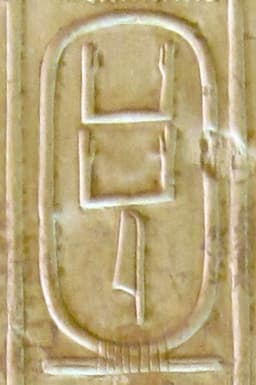
Neferirkare Kakai
Emperor · Ancient
37.8Total
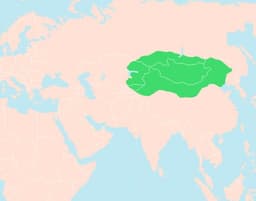
Zhizhi Chanyu
Emperor · Ancient
41.4Total
Basic Information
Born
-2440
-60
Died
-2430
-36
Era
Ancient
Ancient
Nationality
Old Kingdom Egypt
Xiongnu
Occupation
Emperor
Emperor
Civilization
Middle Eastern
Eastern
Score Comparison
Military (10%)
36.2
40.0
Political (20%)
32.1
29.3
Influence (20%)
43.2
47.9
Legacy (20%)
33.3
40.0
Leadership (15%)
33.6
45.0
Strategy (15%)
51.9
43.3
TOTAL
37.8
41.4
Neferirkare Kakai — Complete Timeline
2440 BC
Administrative reforms and expansion of the bureaucracyReform
Neferirkare Kakai oversaw a significant expansion of the Egyptian state bureaucracy, as evidenced by the large number of dated administrative papyri found at Abusir. These records detail the organization of temple estates, work crews, and the distribution of goods.
AdministrationBureaucracyPapyri
Impact: nationalconstructive
Construction of the unfinished Pyramid of Neferirkare at AbusirCultural◆ Major
Neferirkare Kakai began building a pyramid at Abusir, originally planned as a step pyramid but later converted to a true pyramid. The pyramid was left unfinished at his death, with only the lower courses of stone completed, and the upper part was finished in mudbrick by his successors.
ArchitecturePyramidUnfinished
Impact: national
Donation of land to the sun temple of RaPolitical Action
Neferirkare Kakai issued a decree granting land and revenues to the sun temple of Ra at Abusir. This act, recorded on the Palermo Stone, reflects the growing power of the priesthood of Ra during the Fifth Dynasty.
ReligionLand GrantSun Temple
Impact: nationalconstructive
Zhizhi Chanyu — Complete Timeline
53 BC
Rivalry with Huhanye ChanyuPolitical Action◆ Major
Zhizhi and his brother Huhanye fought for control of the Xiongnu confederation. Zhizhi defeated Huhanye initially, but Huhanye submitted to the Han dynasty, gaining their support. Zhizhi then moved west, splitting the Xiongnu.
Xiongnu Civil WarSuccession
Impact: regionaldestructive
43 BC
Conflict with the Wusun and KangjuWar
After moving west, Zhizhi Chanyu attacked the Wusun people and allied with the Kangju. He established a base in the Talas River valley, raiding neighboring tribes and disrupting trade routes, which provoked Han intervention.
Xiongnu ExpansionCentral Asia
Impact: regionaldestructive
36 BC
Defeated by Han forces at the Battle of ZhizhiWar◆ Major
Zhizhi Chanyu, having moved west into Central Asia, was attacked by a Han Chinese expeditionary force led by Chen Tang and Gan Yanshou. His fortified city was stormed, and Zhizhi was killed. This battle marked the furthest westward expansion of Han military power and ended Zhizhi's threat to the Han.
Han-Xiongnu WarBattleDeath
Impact: regionaldestructive
Expert Analysis
Origins
Neferirkare Kakai was born around 2475 BCE as the third pharaoh of the Fifth Dynasty of Egypt. His father was Sahure, and his mother likely Queen Neferetnebty. Little is known of his early life, but he inherited a stable kingdom with a centralized bureaucracy. The Fifth Dynasty was known for its devotion to the sun god Ra, and Neferirkare's reign continued this tradition. He was the first pharaoh to adopt a name combining 'Nefer' (beautiful) with 'Ka' (soul) and 'Re' (sun god), reflecting the theological shift.
Zhizhi Chanyu was born around 100 BCE into the ruling elite of the Xiongnu confederation, a nomadic empire based in the Mongolian steppe. His brother Huhanye was the legitimate chanyu, but Zhizhi challenged him for power. The Xiongnu were organized into a tribal confederation with a dual-king system. Zhizhi's early life was shaped by the constant warfare with the Han dynasty and internal power struggles. He displayed military ambition from a young age, leading raids against neighboring tribes.
Rise to Power
Neferirkare Kakai ascended to the throne around 2450 BCE after the death of his father Sahure. His rise was peaceful, typical of dynastic succession. He immediately undertook building projects, including his pyramid at Abusir. He also expanded the bureaucracy, as evidenced by the Abusir Papyri, which document administrative reforms. His reign was marked by a focus on religious institutions, particularly the sun temple of Ra, to which he donated land. These acts solidified his authority among the priestly class.
Zhizhi Chanyu rose to power through civil war. In 56 BCE, he defeated his brother Huhanye in battle, forcing Huhanye to flee south. However, Huhanye submitted to the Han dynasty and received military support. Zhizhi initially held the upper hand, but by 54 BCE, Huhanye's forces, backed by Han troops, drove Zhizhi westward. Zhizhi then moved into Central Asia, allying with the Kangju people and establishing a base in the Talas River valley. He attacked the Wusun and raided Han allies, becoming a significant threat to Han influence in the region.
Leadership & Governance
Neferirkare Kakai governed through a bureaucratic system inherited from earlier dynasties. He expanded the state apparatus, as seen in the Abusir Papyri, which detail the administration of the pyramid complex. His reign saw the proliferation of written records, indicating a move toward more systematic governance. He also maintained the cult of Ra, building a sun temple at Abusir. His leadership was conservative, focusing on continuity and religious legitimacy. He scored 32.1 in political acumen, reflecting a stable but unremarkable rule.
Zhizhi Chanyu led through military prowess and personal authority. As a nomadic ruler, he relied on tribal alliances and raiding to maintain power. He scored 45.0 in leadership, higher than Neferirkare's 33.6. After moving west, he established a fortified city on the Talas River, demonstrating administrative capability. He demanded tribute from local tribes and allied with the Kangju, but his harsh rule alienated some allies. His political score of 29.3 reflects the instability of his reign, as he faced constant threats from the Han and internal rivals.
Triumph & Tragedy
Neferirkare Kakai's greatest success was the construction of his pyramid complex at Abusir, which included a valley temple, causeway, and mortuary temple. However, the pyramid remained unfinished due to his death, and it was later completed by his successor. His administrative reforms left a legacy of record-keeping, but his reign lacked major military or diplomatic achievements. His military score of 36.2 reflects a lack of warfare. The unfinished pyramid stands as a symbol of both ambition and incompletion.
Zhizhi Chanyu's triumph was his westward expansion, carving out a new territory for the Xiongnu in Central Asia. He defeated the Wusun and established a capital at Talas. However, his tragedy came in 36 BCE at the Battle of Zhizhi, where a Han expeditionary force under Chen Tang and Gan Yanshou attacked his fortress. Despite fierce resistance, Zhizhi was killed and his forces annihilated. His death marked the end of the Xiongnu threat to Han in the west. His military score of 40.0 reflects his battlefield successes, but his political failures led to his downfall.
Character & Destiny
Neferirkare Kakai was a pious and administrative ruler, focused on religious and bureaucratic consolidation. His decision to build a pyramid and sun temple shows devotion to tradition. However, his lack of military ambition left Egypt vulnerable to future threats. His character was cautious, and his destiny was to be a competent but forgettable pharaoh. Historians note that his reign was peaceful but lacked dynamism.
Zhizhi Chanyu was ambitious and aggressive, with a short temper that alienated allies. His decision to move west was strategic, but he underestimated Han power. He was a skilled warrior but a poor diplomat, refusing to submit to Han superiority. His destiny was to be a tragic figure—a strong leader who overreached. His character directly led to his defeat, as he provoked the Han into a decisive campaign.
Legacy
Neferirkare Kakai's legacy is tied to the Abusir pyramids and the administrative papyri. The unfinished pyramid influenced later pyramid construction, but his name is largely forgotten outside Egyptology. His reign contributed to the stability of the Fifth Dynasty, but he scored 33.3 in legacy, reflecting limited long-term impact. The Abusir Papyri, however, are valuable historical documents.
Zhizhi Chanyu's legacy is more significant. His westward movement presaged later nomadic migrations, and his conflict with Han China is a key event in Central Asian history. The Battle of Zhizhi demonstrated Han military reach, and his defeat weakened the Xiongnu confederation. He scored 40.0 in legacy, higher than Neferirkare. His story is remembered as an example of nomadic resistance against imperial expansion.
Conclusion
Zhizhi Chanyu had a greater impact than Neferirkare Kakai. With a total score of 41.4 versus 37.8, Zhizhi outperformed in military, influence, legacy, and leadership. While Neferirkare maintained stability, his achievements were limited to religious and administrative spheres. Zhizhi's westward expansion and conflict with Han China had lasting geopolitical consequences, shaping the history of Central Asia. Neferirkare's Egypt continued without major disruption, but his personal impact was minimal. The evidence supports Zhizhi as the more consequential figure.
Rankings
🥇
Zhizhi ChanyuLeader
Mil: 40.0Pol: 29.3Inf: 47.9
41.4
🥈
Neferirkare Kakai
Mil: 36.2Pol: 32.1Inf: 43.2
37.8
+3.6 behind
How This Comparison Works
Algorithm
Each figure is scored on 6 dimensions (0—100 scale) based on structured historical data: Military (10%), Political (20%), Influence (20%), Legacy (20%), Leadership (15%), Strategy (15%). The weighted total produces the final ranking.
Data Sources
Scores are computed from structured sub-indicators in the database. Scale factors adjust for era (Ancient ×0.85, Modern ×1.0) and civilization size (Eastern ×1.05, Other ×0.80) to account for differences in population and military scale.
Maximum 3 Figures
Comparisons are limited to 2—3 figures to ensure readability and statistical meaningfulness.
Error Margins
±5 points per dimension — Sub-scores are derived from historical records with inherent uncertainty. Two figures within 5 points on a dimension should be considered roughly equivalent in that area.
Total Score Accuracy
±3 points overall — The weighted combination of 6 dimensions produces a total score with approximately ±3 points of uncertainty. Differences of less than 3 points are not statistically significant— the figures are effectively tied.
Known Limitations
- Historical records are incomplete and uneven across civilizations
- Figures from oral-tradition societies may be underrepresented
- Occupation labels can misclassify multi-role figures
- Scores measure capability and impact, not moral character
- Quantitative scoring is a comparison tool, not absolute truth
Capability Radar
Military (10%) — Battles & Warfare
Battles
39
35
Win Rate
38
40
Expansion
46
50
Political (20%) — Governance & Reform
Reform
10
15
Diplomacy
10
35
Economy
10
20
Influence (20%) — Cultural & Global Reach
Cultural
10
20
Global
5
25
Legacy (20%) — Historical Impact
Historical
10
30
Longevity
10
20
Leadership (15%) — Power & Stability
Tenure
10
30
Stability
20
25
Strategy (15%) — Tactics & Innovation
Strategy
49
40
Tactics
52
45
Reform
55
20
Similar Comparisons
Comments & Discussion
No comments yet. Be the first to share your thoughts!