Loading...
Narmer vs Zhizhi Chanyu
Narmer leads by 11.0 pts · 2 figures compared
…

Narmer
Emperor · Ancient
52.4Total
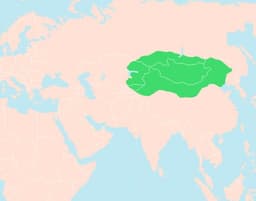
Zhizhi Chanyu
Emperor · Ancient
41.4Total
Basic Information
Born
-3100
-60
Died
-3050
-36
Era
Ancient
Ancient
Nationality
Egypt
Xiongnu
Occupation
Emperor
Emperor
Civilization
Middle Eastern
Eastern
Score Comparison
Military (10%)
52.5
40.0
Political (20%)
45.0
29.3
Influence (20%)
56.7
47.9
Legacy (20%)
40.0
40.0
Leadership (15%)
68.0
45.0
Strategy (15%)
60.0
43.3
TOTAL
52.4
41.4
Narmer — Complete Timeline
3100 BC
Unification of Upper and Lower EgyptPolitical Action
Narmer, as king of Upper Egypt, conquered Lower Egypt and unified the two lands. This event is recorded on the Narmer Palette, which depicts him wearing the crowns of both regions, establishing the first dynasty and the beginning of pharaonic civilization.
UnificationFoundingDynasty
Impact: regionalconstructive
Foundation of MemphisPolitical Action◆ Major
Narmer founded the city of Memphis at the junction of Upper and Lower Egypt. The city became the administrative and religious capital of the unified state, serving as a central hub for governance and trade for millennia.
City FoundationCapitalAdministration
Impact: regionalconstructive
Zhizhi Chanyu — Complete Timeline
53 BC
Rivalry with Huhanye ChanyuPolitical Action◆ Major
Zhizhi and his brother Huhanye fought for control of the Xiongnu confederation. Zhizhi defeated Huhanye initially, but Huhanye submitted to the Han dynasty, gaining their support. Zhizhi then moved west, splitting the Xiongnu.
Xiongnu Civil WarSuccession
Impact: regionaldestructive
43 BC
Conflict with the Wusun and KangjuWar
After moving west, Zhizhi Chanyu attacked the Wusun people and allied with the Kangju. He established a base in the Talas River valley, raiding neighboring tribes and disrupting trade routes, which provoked Han intervention.
Xiongnu ExpansionCentral Asia
Impact: regionaldestructive
36 BC
Defeated by Han forces at the Battle of ZhizhiWar◆ Major
Zhizhi Chanyu, having moved west into Central Asia, was attacked by a Han Chinese expeditionary force led by Chen Tang and Gan Yanshou. His fortified city was stormed, and Zhizhi was killed. This battle marked the furthest westward expansion of Han military power and ended Zhizhi's threat to the Han.
Han-Xiongnu WarBattleDeath
Impact: regionaldestructive
Expert Analysis
Origins
Narmer, also known as Menes, was born around 3100 BCE in Upper Egypt. He was a king of the early dynastic period, likely from the city of Thinis. His family background is obscure, but he inherited a position of power among the southern Egyptian chiefdoms. His formative experience involved consolidating control over Upper Egypt and preparing to confront the rival kingdom of Lower Egypt in the north.
Zhizhi Chanyu was a leader of the Xiongnu confederation, born in the 1st century BCE. He was the son of a Xiongnu chanyu and brother to Huhanye Chanyu. The Xiongnu were a nomadic confederation based in the Mongolian steppe. Zhizhi grew up in a context of intense rivalry with his brother and pressure from the Han dynasty of China. His early life was marked by the struggle for power within the Xiongnu elite.
Rise to Power
Narmer's rise culminated in the unification of Upper and Lower Egypt around 3100 BCE. As king of Upper Egypt, he led a military campaign northward, conquering the delta region. The Narmer Palette, a ceremonial artifact, depicts him wearing the white crown of Upper Egypt and the red crown of Lower Egypt, symbolizing his dominion over both lands. This event marked the beginning of the First Dynasty and the pharaonic state.
Zhizhi Chanyu rose to power by challenging his brother Huhanye for control of the Xiongnu confederation around 55 BCE. Initially, Zhizhi defeated Huhanye, but Huhanye submitted to the Han dynasty as a tributary ally, gaining Chinese support. Isolated and outmaneuvered, Zhizhi moved westward into Central Asia around 44 BCE, where he allied with the Kangju people and attacked the Wusun. He established a fortified base in the Talas River valley, asserting dominance over local tribes.
Leadership & Governance
Narmer's leadership style was autocratic and foundational. He established Memphis as the capital at the junction of Upper and Lower Egypt, which became the administrative and religious center for centuries. He implemented systems of taxation, irrigation management, and centralized rule. His governance relied on the divine authority of the pharaoh, as seen in the iconography of the Narmer Palette, where he is depicted as a god-king.
Zhizhi Chanyu's leadership was that of a nomadic warlord. He governed through personal alliances and military force, relying on the loyalty of his followers and the plunder of raids. He negotiated and fought with neighboring states like the Kangju and Wusun, but his rule was unstable. Unlike the institutionalized governance of Egypt, Zhizhi's power was personal and precarious, lacking the bureaucratic infrastructure of settled empires.
Triumph & Tragedy
Narmer's greatest success was the unification of Egypt, creating a single state that would endure for millennia. He founded the first dynasty and established the political and religious traditions of pharaonic Egypt. His tragedy is the obscurity of his later life and death; little is known beyond his founding achievements. The unification was likely violent, but it laid the groundwork for one of history's great civilizations.
Zhizhi Chanyu's triumph was his ability to carve out a domain in Central Asia after being driven from Mongolia. He successfully raided Wusun territories and allied with the Kangju, becoming a significant regional power. His tragedy came in 36 BCE when a Han expeditionary force led by Chen Tang and Gan Yanshou attacked his fortress on the Talas River. Zhizhi was killed, his forces annihilated, and his head sent to the Han capital. His defeat demonstrated the reach of Han power and the vulnerability of nomadic states to disciplined armies.
Character & Destiny
Narmer's character is inferred from his actions: ambitious, strategic, and capable of imposing order. He understood the symbolic power of kingship, as evidenced by the Narmer Palette's propaganda. His destiny was to become the archetypal founder of Egyptian civilization, revered for millennia.
Zhizhi Chanyu was aggressive and independent, refusing to submit to Han hegemony. His decision to move west rather than accept tributary status shaped his fate. He was a skilled warrior but lacked diplomatic flexibility. His destiny was to be a cautionary example of resistance against a superior imperial power, ending in violent death.
Legacy
Narmer's legacy is immense. He is credited with uniting Egypt, founding Memphis, and initiating the dynastic period. His name appears on king lists for thousands of years. The unification he achieved became the defining political act of ancient Egypt. His legacy score is 40.0, reflecting the foundational but somewhat mythologized nature of his achievements.
Zhizhi Chanyu's legacy is more limited. He is remembered as a Xiongnu leader who challenged Han authority and expanded into Central Asia. His defeat marked the furthest reach of Han military power. However, his legacy is overshadowed by his brother Huhanye, who submitted to Han and established the tributary system. His legacy score is also 40.0, but his impact is more regional and ephemeral.
Conclusion
Narmer had a greater impact on world history than Zhizhi Chanyu. While both scored similarly in legacy (40.0 each), Narmer's total score of 52.4 exceeds Zhizhi's 41.4. Narmer's unification of Egypt created a civilization that influenced the Mediterranean and the Near East for millennia. Zhizhi's westward movement, while notable, did not lead to lasting changes in Central Asia. His defeat cemented Han dominance but did not reshape the region's trajectory. Narmer's political and cultural achievements, though ancient, established a model of statehood that endured. Therefore, Narmer is the more significant historical figure.
Rankings
🥇
NarmerLeader
Mil: 52.5Pol: 45.0Inf: 56.7
52.4
🥈
Zhizhi Chanyu
Mil: 40.0Pol: 29.3Inf: 47.9
41.4
+11.0 behind
How This Comparison Works
Algorithm
Each figure is scored on 6 dimensions (0—100 scale) based on structured historical data: Military (10%), Political (20%), Influence (20%), Legacy (20%), Leadership (15%), Strategy (15%). The weighted total produces the final ranking.
Data Sources
Scores are computed from structured sub-indicators in the database. Scale factors adjust for era (Ancient ×0.85, Modern ×1.0) and civilization size (Eastern ×1.05, Other ×0.80) to account for differences in population and military scale.
Maximum 3 Figures
Comparisons are limited to 2—3 figures to ensure readability and statistical meaningfulness.
Error Margins
±5 points per dimension — Sub-scores are derived from historical records with inherent uncertainty. Two figures within 5 points on a dimension should be considered roughly equivalent in that area.
Total Score Accuracy
±3 points overall — The weighted combination of 6 dimensions produces a total score with approximately ±3 points of uncertainty. Differences of less than 3 points are not statistically significant— the figures are effectively tied.
Known Limitations
- Historical records are incomplete and uneven across civilizations
- Figures from oral-tradition societies may be underrepresented
- Occupation labels can misclassify multi-role figures
- Scores measure capability and impact, not moral character
- Quantitative scoring is a comparison tool, not absolute truth
Capability Radar
Military (10%) — Battles & Warfare
Battles
45
35
Win Rate
50
40
Expansion
60
50
Political (20%) — Governance & Reform
Reform
70
15
Diplomacy
60
35
Economy
50
20
Influence (20%) — Cultural & Global Reach
Cultural
75
20
Global
70
25
Legacy (20%) — Historical Impact
Historical
80
30
Longevity
85
20
Leadership (15%) — Power & Stability
Tenure
55
30
Stability
65
25
Strategy (15%) — Tactics & Innovation
Strategy
55
40
Tactics
40
45
Reform
30
20
Similar Comparisons
Comments & Discussion
No comments yet. Be the first to share your thoughts!