Loading...
Darius III vs Zhizhi Chanyu
Zhizhi Chanyu leads by 0.6 pts · 2 figures compared
…
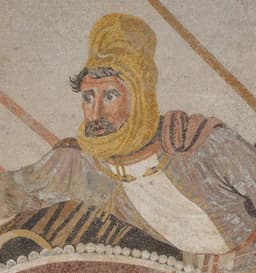
Darius III
Emperor · Ancient
40.8Total
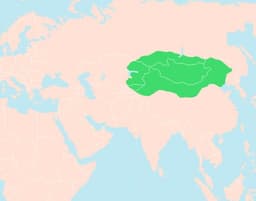
Zhizhi Chanyu
Emperor · Ancient
41.4Total
Basic Information
Born
-380
-60
Died
-330
-36
Era
Ancient
Ancient
Nationality
Persia
Xiongnu
Occupation
Emperor
Emperor
Civilization
Middle Eastern
Eastern
Score Comparison
Military (10%)
50.0
40.0
Political (20%)
25.0
29.3
Influence (20%)
47.9
47.9
Legacy (20%)
43.3
40.0
Leadership (15%)
38.1
45.0
Strategy (15%)
35.7
43.3
TOTAL
40.8
41.4
Darius III — Complete Timeline
333 BC
Battle of IssusWar◆ Major
Darius III commanded the Persian army against Alexander the Great at Issus in Cilicia. Alexander's forces defeated the larger Persian army, and Darius fled the battlefield, leaving his family and baggage train to be captured.
Wars of AlexanderBattlePersian Empire
Impact: global
331 BC
Battle of GaugamelaWar
Darius III assembled a massive army from across the empire to confront Alexander near Arbela. Alexander's tactical brilliance led to a decisive Persian defeat, and Darius again fled the field, effectively ending Achaemenid resistance.
Wars of AlexanderBattlePersian Empire
Impact: global
330 BC
Loss of the Persian Capital PersepolisWar◆ Major
Alexander the Great captured and sacked Persepolis, the ceremonial capital of the Achaemenid Empire. The palace complex was burned, symbolizing the end of Persian imperial power and the transfer of hegemony to Macedonia.
Wars of AlexanderSackPersepolis
Impact: globaldestructive
Flight and Death of Darius IIIPolitical Action◆ Major
After Gaugamela, Darius fled eastward through Media and Parthia. He was deposed and imprisoned by his own satrap Bessus, then murdered by Bessus's followers near Hecatompylos. Alexander later gave Darius a royal burial at Persepolis.
DeathSuccessionAchaemenid Empire
Impact: globaltragic
Zhizhi Chanyu — Complete Timeline
53 BC
Rivalry with Huhanye ChanyuPolitical Action◆ Major
Zhizhi and his brother Huhanye fought for control of the Xiongnu confederation. Zhizhi defeated Huhanye initially, but Huhanye submitted to the Han dynasty, gaining their support. Zhizhi then moved west, splitting the Xiongnu.
Xiongnu Civil WarSuccession
Impact: regionaldestructive
43 BC
Conflict with the Wusun and KangjuWar
After moving west, Zhizhi Chanyu attacked the Wusun people and allied with the Kangju. He established a base in the Talas River valley, raiding neighboring tribes and disrupting trade routes, which provoked Han intervention.
Xiongnu ExpansionCentral Asia
Impact: regionaldestructive
36 BC
Defeated by Han forces at the Battle of ZhizhiWar◆ Major
Zhizhi Chanyu, having moved west into Central Asia, was attacked by a Han Chinese expeditionary force led by Chen Tang and Gan Yanshou. His fortified city was stormed, and Zhizhi was killed. This battle marked the furthest westward expansion of Han military power and ended Zhizhi's threat to the Han.
Han-Xiongnu WarBattleDeath
Impact: regionaldestructive
Expert Analysis
Origins
Darius III, born circa 380 BCE as Codomannus, was a member of the Achaemenid royal family but not directly in line for the throne. He served as a satrap and rose to prominence after the assassination of Artaxerxes III. His early life was marked by administrative roles rather than military command. Zhizhi Chanyu, born circa 60 BCE, was a prince of the Xiongnu confederation, a nomadic empire on the Mongolian steppe. He was the son of Huhanye's predecessor and grew up in a culture of constant warfare and tribal politics.
Rise to Power
Darius III became king in 336 BCE after Bagoas poisoned Artaxerxes IV. He quickly eliminated Bagoas to secure his rule. His early reign faced the rising threat of Philip II of Macedon, but Philip's assassination in 336 gave Darius a brief respite. Zhizhi Chanyu rose to power around 56 BCE by defeating his brother Huhanye in a succession struggle. He initially controlled the eastern Xiongnu but faced pressure from the Han dynasty, which supported Huhanye. In 49 BCE, Zhizhi moved west into Central Asia, establishing a new base in the Talas River valley.
Leadership & Governance
Darius III's leadership was reactive; he lacked the strategic initiative of his predecessors. He governed through the traditional Achaemenid satrapy system but failed to inspire loyalty. His military command at Issus and Gaugamela showed tactical inflexibility. Zhizhi Chanyu led a nomadic confederation, relying on personal charisma and military prowess. He forged alliances with the Kangju and attacked the Wusun, but his aggression alienated potential allies. His governance was decentralized, based on tribal loyalty rather than bureaucracy.
Triumph & Tragedy
Darius III's greatest success was briefly uniting the empire against Alexander, assembling a massive army at Gaugamela. However, his failure to command effectively and his flight after defeat led to his downfall. He was betrayed and killed by his own satrap Bessus in 330 BCE. Zhizhi Chanyu's triumph was establishing a western Xiongnu state that resisted Han influence. His tragedy was the Battle of Zhizhi in 36 BCE, where a Han expeditionary force destroyed his fortress and killed him, ending his bid for power.
Character & Destiny
Darius III was cautious and indecisive, often avoiding direct confrontation until forced. His character led to a lack of trust among his subordinates, culminating in betrayal. Zhizhi Chanyu was aggressive and ambitious, but his inability to secure stable alliances left him isolated. Historians note his tactical skill but strategic shortsightedness. Both leaders faced empires in decline; Darius scored 38.1 in leadership, Zhizhi 45.0, reflecting Zhizhi's stronger personal command.
Legacy
Darius III is remembered as the last Achaemenid king, whose defeat paved the way for Hellenistic rule. His legacy is one of failure to adapt. Zhizhi Chanyu's legacy is more obscure; he represents Xiongnu resistance to Han expansion and is noted for his westward migration, which influenced later nomadic movements. In influence, both scored 47.9, but Zhizhi's legacy score of 40.0 slightly edges Darius's 43.3 due to the longer impact of nomadic traditions.
Conclusion
While Zhizhi Chanyu had a higher total score (41.4 vs 40.8), Darius III faced a more formidable opponent in Alexander and commanded larger forces. However, Zhizhi's leadership score (45.0) and his ability to carve out a new state in Central Asia demonstrate greater resilience. Ultimately, Zhizhi Chanyu had a marginally greater impact in terms of adapting to adversity, but neither left a lasting positive legacy. The comparison is close, but Zhizhi's strategic mobility and survival against a powerful empire give him the edge.
Rankings
🥇
Zhizhi ChanyuLeader
Mil: 40.0Pol: 29.3Inf: 47.9
41.4
🥈
Darius III
Mil: 50.0Pol: 25.0Inf: 47.9
40.8
+0.6 behind
How This Comparison Works
Algorithm
Each figure is scored on 6 dimensions (0—100 scale) based on structured historical data: Military (10%), Political (20%), Influence (20%), Legacy (20%), Leadership (15%), Strategy (15%). The weighted total produces the final ranking.
Data Sources
Scores are computed from structured sub-indicators in the database. Scale factors adjust for era (Ancient ×0.85, Modern ×1.0) and civilization size (Eastern ×1.05, Other ×0.80) to account for differences in population and military scale.
Maximum 3 Figures
Comparisons are limited to 2—3 figures to ensure readability and statistical meaningfulness.
Error Margins
±5 points per dimension — Sub-scores are derived from historical records with inherent uncertainty. Two figures within 5 points on a dimension should be considered roughly equivalent in that area.
Total Score Accuracy
±3 points overall — The weighted combination of 6 dimensions produces a total score with approximately ±3 points of uncertainty. Differences of less than 3 points are not statistically significant— the figures are effectively tied.
Known Limitations
- Historical records are incomplete and uneven across civilizations
- Figures from oral-tradition societies may be underrepresented
- Occupation labels can misclassify multi-role figures
- Scores measure capability and impact, not moral character
- Quantitative scoring is a comparison tool, not absolute truth
Capability Radar
Military (10%) — Battles & Warfare
Battles
15
35
Win Rate
10
40
Expansion
10
50
Political (20%) — Governance & Reform
Reform
10
15
Diplomacy
20
35
Economy
25
20
Influence (20%) — Cultural & Global Reach
Cultural
20
20
Global
25
25
Legacy (20%) — Historical Impact
Historical
40
30
Longevity
30
20
Leadership (15%) — Power & Stability
Tenure
30
30
Stability
15
25
Strategy (15%) — Tactics & Innovation
Strategy
15
40
Tactics
20
45
Reform
10
20
Similar Comparisons
Comments & Discussion
No comments yet. Be the first to share your thoughts!