Loading...
Nectanebo II vs Zhizhi Chanyu
Nectanebo II leads by 4.1 pts · 2 figures compared
…

Nectanebo II
Emperor · Ancient
45.5Total
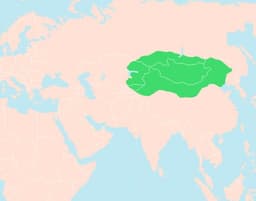
Zhizhi Chanyu
Emperor · Ancient
41.4Total
Basic Information
Born
-360
-60
Died
-343
-36
Era
Ancient
Ancient
Nationality
Egypt
Xiongnu
Occupation
Emperor
Emperor
Civilization
Middle Eastern
Eastern
Score Comparison
Military (10%)
25.0
40.0
Political (20%)
39.4
29.3
Influence (20%)
51.0
47.9
Legacy (20%)
44.2
40.0
Leadership (15%)
48.4
45.0
Strategy (15%)
60.0
43.3
TOTAL
45.5
41.4
Nectanebo II — Complete Timeline
350 BC
Suppression of the revolt in the DeltaWar
Nectanebo II suppressed a revolt in the Nile Delta led by local chieftains. The rebellion threatened his authority and required military action to restore order. This event highlighted the internal challenges facing Egypt during his reign.
RevoltDeltaInternal Conflict
Impact: national
Construction of the temple of EdfuCultural◆ Major
Nectanebo II began the construction of the temple of Horus at Edfu, one of the best-preserved temples in Egypt. The temple was completed during the Ptolemaic period. This project demonstrated his commitment to traditional Egyptian religion and architecture.
TempleEdfuArchitecture
Impact: regionalconstructive
343 BC
Battle of Pelusium (343 BC)War◆ Major
Nectanebo II's army was defeated by the Persian forces under Artaxerxes III at Pelusium. The Persians used a superior military strategy and siege tactics. This defeat led to the fall of Egypt to the Achaemenid Empire for the second time, ending native Egyptian rule.
PersiaConquestBattle
Impact: globaltragic
Flight to NubiaPolitical Action◆ Major
After the Persian conquest, Nectanebo II fled to Nubia (Kush) where he continued to resist Persian rule. He may have maintained a court in exile and attempted to rally support for a counter-invasion. His flight marked the end of the last native Egyptian dynasty.
ExileNubiaResistance
Impact: regionaltragic
Zhizhi Chanyu — Complete Timeline
53 BC
Rivalry with Huhanye ChanyuPolitical Action◆ Major
Zhizhi and his brother Huhanye fought for control of the Xiongnu confederation. Zhizhi defeated Huhanye initially, but Huhanye submitted to the Han dynasty, gaining their support. Zhizhi then moved west, splitting the Xiongnu.
Xiongnu Civil WarSuccession
Impact: regionaldestructive
43 BC
Conflict with the Wusun and KangjuWar
After moving west, Zhizhi Chanyu attacked the Wusun people and allied with the Kangju. He established a base in the Talas River valley, raiding neighboring tribes and disrupting trade routes, which provoked Han intervention.
Xiongnu ExpansionCentral Asia
Impact: regionaldestructive
36 BC
Defeated by Han forces at the Battle of ZhizhiWar◆ Major
Zhizhi Chanyu, having moved west into Central Asia, was attacked by a Han Chinese expeditionary force led by Chen Tang and Gan Yanshou. His fortified city was stormed, and Zhizhi was killed. This battle marked the furthest westward expansion of Han military power and ended Zhizhi's threat to the Han.
Han-Xiongnu WarBattleDeath
Impact: regionaldestructive
Expert Analysis
Origins
Nectanebo II (born c. 380 BCE) was the last native Egyptian pharaoh, a member of the 30th Dynasty. He came from Sebennytos in the Nile Delta, likely the son of a military officer. He seized power in 358 BCE after overthrowing his uncle Teos, who had launched a costly campaign against the Persians. His reign was defined by the need to defend Egypt from the Achaemenid Empire.
Zhizhi Chanyu (born c. 50 BCE) was a Xiongnu ruler, the brother of Huhanye Chanyu. The Xiongnu were a nomadic confederation based in the Mongolian steppe. Zhizhi grew up during a period of civil war between Xiongnu factions, with the Han dynasty exploiting their divisions. He was known for his martial skills and ambition to reunite the Xiongnu under his sole rule.
Rise to Power
Nectanebo II rose to power in 358 BCE by usurping his uncle Teos, who was unpopular due to heavy taxation and a failed campaign. He quickly secured the throne with support from the army and priesthood. His early reign focused on fortifying Egypt against Persian invasion, successfully repelling an attack in 351 BCE. He also undertook building projects to legitimize his rule.
Zhizhi Chanyu rose to power in 56 BCE after defeating his brother Huhanye in battle. However, Huhanye submitted to the Han dynasty, gaining their support. Outmaneuvered, Zhizhi moved westward into Central Asia around 44 BCE, establishing a base in the Talas River valley. He allied with the Kangju and attacked the Wusun, creating a small but formidable state.
Leadership & Governance
Nectanebo II ruled as a traditional pharaoh, emphasizing religious patronage and monumental construction. He began the temple of Edfu, one of Egypt's best-preserved, and added to other temples. He maintained a centralized bureaucracy and relied on Greek mercenaries. However, his military leadership was weak; he failed to secure the eastern frontier against Persia.
Zhizhi Chanyu led as a steppe warlord, relying on personal charisma and military prowess. He organized his followers into a mobile army, integrating cavalry and infantry. He built a fortified city on the Talas River, a rare sedentary settlement for a Xiongnu leader. His governance was decentralized, based on tribute and raids.
Triumph & Tragedy
Nectanebo II's greatest success was repelling the Persian invasion in 351 BCE, preserving Egypt's independence for nearly a decade. He also completed significant temple works. His greatest failure came in 343 BCE at the Battle of Pelusium, where his army was routed by Artaxerxes III's forces. He fled to Nubia, where he maintained a court in exile but never regained Egypt.
Zhizhi Chanyu's triumph was establishing a powerful western Xiongnu state, defeating local rivals and raiding the Wusun. His tragedy was the Battle of Zhizhi in 36 BCE, where a Han expeditionary force led by Chen Tang and Gan Yanshou attacked his fortress. He was defeated and beheaded, his head sent to Chang'an.
Character & Destiny
Nectanebo II was cautious and religious, focusing on traditional legitimacy. His flight to Nubia showed pragmatism, but his inability to mobilize Egyptian resistance after 343 BCE sealed his fate. He scored 48.4 in leadership, reflecting his mixed record.
Zhizhi Chanyu was aggressive and ambitious, unwilling to submit to Han authority. His westward move was bold but isolated him. His score of 45.0 in leadership indicates his strong command but poor strategic alliances.
Legacy
Nectanebo II is remembered as the last native Egyptian pharaoh, a symbol of Egypt's final stand before Persian and Greek rule. His temple at Edfu remains a tourist attraction. His legacy score is 44.2, reflecting his role as a tragic figure.
Zhizhi Chanyu is remembered in Chinese history as a defeated barbarian, but his westward expansion foreshadowed later Xiongnu migrations. His legacy score is 40.0, limited by his defeat and lack of lasting state.
Conclusion
While Zhizhi Chanyu had a higher military score (40.0 vs 25.0), Nectanebo II achieved a higher total score (45.5 vs 41.4) due to better political and influence scores. Nectanebo II's impact as the last native pharaoh of Egypt is more significant in world history than Zhizhi's brief western kingdom. The gap of 4.1 points reflects this. Nectanebo II had greater impact.
Rankings
🥇
Nectanebo IILeader
Mil: 25.0Pol: 39.4Inf: 51.0
45.5
🥈
Zhizhi Chanyu
Mil: 40.0Pol: 29.3Inf: 47.9
41.4
+4.1 behind
How This Comparison Works
Algorithm
Each figure is scored on 6 dimensions (0—100 scale) based on structured historical data: Military (10%), Political (20%), Influence (20%), Legacy (20%), Leadership (15%), Strategy (15%). The weighted total produces the final ranking.
Data Sources
Scores are computed from structured sub-indicators in the database. Scale factors adjust for era (Ancient ×0.85, Modern ×1.0) and civilization size (Eastern ×1.05, Other ×0.80) to account for differences in population and military scale.
Maximum 3 Figures
Comparisons are limited to 2—3 figures to ensure readability and statistical meaningfulness.
Error Margins
±5 points per dimension — Sub-scores are derived from historical records with inherent uncertainty. Two figures within 5 points on a dimension should be considered roughly equivalent in that area.
Total Score Accuracy
±3 points overall — The weighted combination of 6 dimensions produces a total score with approximately ±3 points of uncertainty. Differences of less than 3 points are not statistically significant— the figures are effectively tied.
Known Limitations
- Historical records are incomplete and uneven across civilizations
- Figures from oral-tradition societies may be underrepresented
- Occupation labels can misclassify multi-role figures
- Scores measure capability and impact, not moral character
- Quantitative scoring is a comparison tool, not absolute truth
Capability Radar
Military (10%) — Battles & Warfare
Battles
45
35
Win Rate
40
40
Expansion
20
50
Political (20%) — Governance & Reform
Reform
30
15
Diplomacy
40
35
Economy
35
20
Influence (20%) — Cultural & Global Reach
Cultural
40
20
Global
25
25
Legacy (20%) — Historical Impact
Historical
45
30
Longevity
30
20
Leadership (15%) — Power & Stability
Tenure
35
30
Stability
25
25
Strategy (15%) — Tactics & Innovation
Strategy
55
40
Tactics
50
45
Reform
30
20
Similar Comparisons
Comments & Discussion
No comments yet. Be the first to share your thoughts!