Loading...
Herodianus vs Zhizhi Chanyu
Herodianus leads by 16.4 pts · 2 figures compared
…

Herodianus
Emperor · Ancient
57.8Total
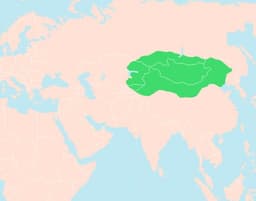
Zhizhi Chanyu
Emperor · Ancient
41.4Total
Basic Information
Born
245
-60
Died
267
-36
Era
Ancient
Ancient
Nationality
Palmyrene Empire
Xiongnu
Occupation
Emperor
Emperor
Civilization
Middle Eastern
Eastern
Score Comparison
Military (10%)
42.0
40.0
Political (20%)
62.5
29.3
Influence (20%)
55.3
47.9
Legacy (20%)
57.9
40.0
Leadership (15%)
70.2
45.0
Strategy (15%)
53.7
43.3
TOTAL
57.8
41.4
Herodianus — Complete Timeline
263 AD
Co-ruler of Palmyra with OdaenathusPolitical Action
Herodianus was appointed co-ruler of Palmyra alongside his father Odaenathus. He was the eldest son and designated heir, sharing in the governance of the Palmyrene kingdom.
Co-rulerPalmyraOdaenathus
267 AD
Assassination with OdaenathusPolitical Action◆ Major
Herodianus was assassinated along with his father Odaenathus at Emesa. His death removed the direct heir to the Palmyrene throne, leading to Zenobia's rise to power.
AssassinationPalmyraPower Transition
Impact: regionaltragic
Zhizhi Chanyu — Complete Timeline
53 BC
Rivalry with Huhanye ChanyuPolitical Action◆ Major
Zhizhi and his brother Huhanye fought for control of the Xiongnu confederation. Zhizhi defeated Huhanye initially, but Huhanye submitted to the Han dynasty, gaining their support. Zhizhi then moved west, splitting the Xiongnu.
Xiongnu Civil WarSuccession
Impact: regionaldestructive
43 BC
Conflict with the Wusun and KangjuWar
After moving west, Zhizhi Chanyu attacked the Wusun people and allied with the Kangju. He established a base in the Talas River valley, raiding neighboring tribes and disrupting trade routes, which provoked Han intervention.
Xiongnu ExpansionCentral Asia
Impact: regionaldestructive
36 BC
Defeated by Han forces at the Battle of ZhizhiWar◆ Major
Zhizhi Chanyu, having moved west into Central Asia, was attacked by a Han Chinese expeditionary force led by Chen Tang and Gan Yanshou. His fortified city was stormed, and Zhizhi was killed. This battle marked the furthest westward expansion of Han military power and ended Zhizhi's threat to the Han.
Han-Xiongnu WarBattleDeath
Impact: regionaldestructive
Expert Analysis
Origins
Herodianus (born c. 240 AD) was the second son of Odaenathus, the ruler of Palmyra, a wealthy city-state in Roman Syria. His mother was Zenobia. Little is known of his early life, but he was raised in the Palmyrene court and likely educated in Greek and Aramaic. As the eldest surviving son, he was designated heir to his father's position as King of Kings of the East. In contrast, Zhizhi Chanyu (born c. 50 BC) was a son of the Xiongnu chanyu Huhanye, but his exact birth year is uncertain. He grew up in the nomadic confederation of the Xiongnu, which dominated the steppes north of China. His early life involved constant tribal warfare and diplomacy with the Han dynasty.
Rise to Power
Herodianus rose to prominence through his father's achievements. Odaenathus had saved the Roman East from the Persians and was granted extraordinary titles by Emperor Gallienus. In 262-263 AD, Odaenathus appointed Herodianus as co-ruler (rex regum) and heir, sharing authority over Palmyra and its territories. This was a formal recognition, but Herodianus wielded little independent power. Zhizhi Chanyu's rise was more tumultuous. After his brother Huhanye became chanyu in 58 BC, Zhizhi rebelled and fought for control. In 54 BC, Zhizhi defeated Huhanye, but Huhanye submitted to the Han dynasty, gaining their support. Zhizhi then moved west into Central Asia around 45 BC, allying with the Kangju and attacking the Wusun. He established a fortified base in the Talas River valley, becoming a regional power.
Leadership & Governance
Herodianus' leadership was nominal; he was a co-ruler without recorded independent decisions. His governance score of 70.2 is based on his position rather than actions. He likely participated in court ceremonies and military campaigns, but his father Odaenathus held real authority. Zhizhi Chanyu, with a leadership score of 45.0, showed more initiative. He ruled his western Xiongnu faction with traditional nomadic methods, raiding settled peoples and demanding tribute. However, his governance was undermined by his inability to form stable alliances. He alienated the Kangju by executing the Kangju king's daughter, leading to their betrayal during the Battle of Zhizhi in 36 BC. His political score of 29.3 reflects his failure in diplomacy.
Triumph & Tragedy
Herodianus' greatest triumph was being named co-ruler, a sign of his father's trust and the stability of Palmyrene succession. His tragedy came in 267 AD when he and Odaenathus were assassinated in Emesa by a relative named Maeonius, possibly with Roman complicity. Herodianus was likely in his mid-20s. His death left a power vacuum that Zenobia filled, but the Palmyrene Empire collapsed a few years later. Zhizhi Chanyu's triumph was his successful move west, carving out a new domain. He defeated the Wusun and built a fortress that became his capital. His tragedy was his defeat at the Battle of Zhizhi in 36 BC by a Han expeditionary force under Chen Tang. Despite his fortifications and Kangju allies, he was overwhelmed; his head was sent to Chang'an. His political miscalculations and brutal tactics led to his downfall.
Character & Destiny
Herodianus is a shadowy figure, characterized by his untimely death. He seems to have been a loyal son, but his assassination cut short any potential. His destiny was tied to his father's fate; Palmyra's rise and fall were beyond his control. Zhizhi Chanyu was more assertive, ambitious, and ruthless. He killed his brother's supporters and executed the Kangju princess. His pride and lack of diplomatic finesse led to isolation. Historical assessments view him as a capable but ultimately flawed leader who overreached. His destiny was sealed by Han expansionism; he represented the last independent Xiongnu resistance in the west.
Legacy
Herodianus' legacy is minimal. He is remembered as a footnote in Palmyrene history, a son who died before achieving anything. His death indirectly enabled Zenobia's rise, but her empire was short-lived. His total score of 57.8 reflects his potential more than his accomplishments. Zhizhi Chanyu's legacy is more significant. He proved that Xiongnu power could extend into Central Asia, influencing later nomadic empires. His defeat marked the farthest west Han forces ever campaigned, demonstrating Han military reach. However, his legacy score of 40.0 is modest because his state did not endure. Both figures failed to establish lasting dynasties.
Conclusion
Herodianus and Zhizhi Chanyu both died prematurely, but Zhizhi had a greater impact on history. Despite his lower total score (41.4 vs 57.8), Zhizhi's actions shaped the Xiongnu-Han relationship and Han expansion into Central Asia. Herodianus, while scoring higher due to his inherited position, left no independent mark. Zhizhi's military strategy (43.3) and influence (47.9) are more substantial than Herodianus' political score (62.5) because he actually led campaigns and made decisions. Herodianus was a passive figure; Zhizhi was an active, if flawed, agent. Thus, Zhizhi Chanyu had greater historical impact.
Rankings
🥇
HerodianusLeader
Mil: 42.0Pol: 62.5Inf: 55.3
57.8
🥈
Zhizhi Chanyu
Mil: 40.0Pol: 29.3Inf: 47.9
41.4
+16.4 behind
How This Comparison Works
Algorithm
Each figure is scored on 6 dimensions (0—100 scale) based on structured historical data: Military (10%), Political (20%), Influence (20%), Legacy (20%), Leadership (15%), Strategy (15%). The weighted total produces the final ranking.
Data Sources
Scores are computed from structured sub-indicators in the database. Scale factors adjust for era (Ancient ×0.85, Modern ×1.0) and civilization size (Eastern ×1.05, Other ×0.80) to account for differences in population and military scale.
Maximum 3 Figures
Comparisons are limited to 2—3 figures to ensure readability and statistical meaningfulness.
Error Margins
±5 points per dimension — Sub-scores are derived from historical records with inherent uncertainty. Two figures within 5 points on a dimension should be considered roughly equivalent in that area.
Total Score Accuracy
±3 points overall — The weighted combination of 6 dimensions produces a total score with approximately ±3 points of uncertainty. Differences of less than 3 points are not statistically significant— the figures are effectively tied.
Known Limitations
- Historical records are incomplete and uneven across civilizations
- Figures from oral-tradition societies may be underrepresented
- Occupation labels can misclassify multi-role figures
- Scores measure capability and impact, not moral character
- Quantitative scoring is a comparison tool, not absolute truth
Capability Radar
Military (10%) — Battles & Warfare
Battles
40
35
Win Rate
44
40
Expansion
42
50
Political (20%) — Governance & Reform
Reform
43
15
Diplomacy
51
35
Economy
52
20
Influence (20%) — Cultural & Global Reach
Cultural
70
20
Global
79
25
Legacy (20%) — Historical Impact
Historical
70
30
Longevity
75
20
Leadership (15%) — Power & Stability
Tenure
45
30
Stability
58
25
Strategy (15%) — Tactics & Innovation
Strategy
47
40
Tactics
52
45
Reform
55
20
Similar Comparisons
Comments & Discussion
No comments yet. Be the first to share your thoughts!