Loading...
King Wen of Zhou vs Narmer
King Wen of Zhou leads by 5.1 pts · 2 figures compared
…
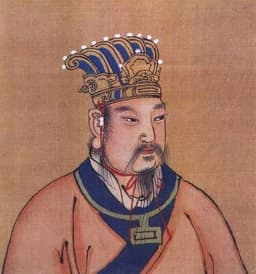
King Wen of Zhou
Emperor · Ancient
57.5Total

Narmer
Emperor · Ancient
52.4Total
Basic Information
Born
-1152
-3100
Died
-1056
-3050
Era
Ancient
Ancient
Nationality
China
Egypt
Occupation
Emperor
Emperor
Civilization
Eastern
Middle Eastern
Score Comparison
Military (10%)
38.3
52.5
Political (20%)
72.0
45.0
Influence (20%)
65.0
56.7
Legacy (20%)
65.0
40.0
Leadership (15%)
40.0
68.0
Strategy (15%)
43.3
60.0
TOTAL
57.5
52.4
King Wen of Zhou — Complete Timeline
1100 BC
Development of Zhou StatePolitical Action◆ Major
King Wen of Zhou expanded the Zhou state's territory and influence in the Wei River valley. He cultivated alliances with neighboring tribes and prepared the foundation for the eventual overthrow of the Shang dynasty, though he died before achieving it.
Zhou DynastyState BuildingPreparation
Impact: regionalconstructive
Imprisonment by King Zhou of ShangPolitical Action
King Wen was imprisoned by the last Shang ruler, King Zhou, at Youli. During his captivity, he is traditionally said to have studied the I Ching (Book of Changes) and expanded its hexagrams. He was later released after his followers paid tribute.
Shang DynastyImprisonmentI Ching
tragic
Narmer — Complete Timeline
3100 BC
Unification of Upper and Lower EgyptPolitical Action
Narmer, as king of Upper Egypt, conquered Lower Egypt and unified the two lands. This event is recorded on the Narmer Palette, which depicts him wearing the crowns of both regions, establishing the first dynasty and the beginning of pharaonic civilization.
UnificationFoundingDynasty
Impact: regionalconstructive
Foundation of MemphisPolitical Action◆ Major
Narmer founded the city of Memphis at the junction of Upper and Lower Egypt. The city became the administrative and religious capital of the unified state, serving as a central hub for governance and trade for millennia.
City FoundationCapitalAdministration
Impact: regionalconstructive
Expert Analysis
Origins
King Wen of Zhou, born as Chang around 1099 BC, was the son of Ji Li, a Zhou tribal leader in the Wei River valley. His family claimed descent from the legendary agricultural god Houji. Wen's early life was marked by his father's death at the hands of the Shang king, which fueled his ambition. He received a classical education, mastering ritual and divination. In contrast, Narmer, also known as Menes, emerged around 3100 BC as a king of Upper Egypt, likely from Thinis (near Abydos). Little is known of his early life, but he inherited a kingdom already culturally and politically advanced. His background was military, as Upper Egypt had been consolidating power under earlier rulers like Scorpion II.
Rise to Power
King Wen rose by carefully building the Zhou state's strength. He formed alliances with disaffected Shang vassals, such as the tribes of Lu and Shen. Around 1050 BC, he conquered the Li and Yu states, securing the Wei valley. However, his growing power alarmed the Shang king Di Xin, who imprisoned Wen at Youli for around two years. During captivity, Wen is said to have studied the I Ching, developing its hexagrams. After his release, Wen continued expansion but died before confronting the Shang directly. Narmer's rise was more direct: as king of Upper Egypt, he launched a military campaign northward, conquering Lower Egypt. The Narmer Palette, dated to 3100 BC, depicts him wearing the Red Crown of Lower Egypt on one side and the White Crown of Upper Egypt on the other, symbolizing unification. He founded Memphis as a capital, a strategic site controlling trade routes.
Leadership & Governance
King Wen's leadership was civil and diplomatic. His name 'Wen' means 'civil', reflecting his emphasis on culture, ritual, and law. He codified Zhou customs and promoted agricultural reforms, such as the well-field system, which organized land into communal plots. His governance was decentralized, relying on feudal ties with allied lords. In contrast, Narmer's rule was more military and centralized. He imposed pharaonic authority over the Two Lands, establishing the first dynasty. He likely introduced the concept of divine kingship, with the pharaoh as Horus incarnate. Narmer's palette shows him smiting enemies, emphasizing force. While Wen built alliances, Narmer conquered and consolidated.
Triumph & Tragedy
King Wen's greatest triumph was laying the foundation for the Zhou dynasty. He expanded territory, gathered allies, and his son Wu defeated the Shang at Muye (1046 BC). His posthumous recognition as founder secured his legacy. His tragedy was never seeing victory; he died before the conquest. Additionally, his imprisonment could have ended the Zhou cause. Narmer's triumph was unifying Egypt, a feat celebrated for millennia. The Narmer Palette is a triumph of propaganda. However, his tragedy is the lack of detailed records; his reign is obscure. Unification may not have been permanent, as later dynasties faced fragmentation. Narmer scored 52.4 overall, lower than Wen's 57.5.
Character & Destiny
King Wen was patient and strategic. His study of the I Ching during imprisonment shows a philosophical bent. He chose to build slowly rather than attack impulsively. His character shaped a destiny of posthumous honor. Narmer was decisive and militaristic, as shown by his swift conquest. He combined force with symbolism, creating a unified identity. Both men were founders, but Wen's indirect path contrasts with Narmer's direct action. Historians see Wen as a civil architect, Narmer as a warrior king.
Legacy
King Wen's legacy is immense: the Zhou dynasty lasted 790 years, longest in Chinese history. The concept of the Mandate of Heaven, justifying overthrowing a corrupt ruler, originated from this period. The I Ching became a core text of Chinese philosophy. His civil emphasis influenced Confucian ideals. Narmer's legacy is the unification of Egypt, which became a model for later pharaohs. Memphis remained a capital for centuries. The Narmer Palette is one of Egypt's oldest historical documents. However, Narmer's personal legacy is less detailed than Wen's. Wen scored 65.0 in legacy, Narmer 40.0.
Conclusion
King Wen of Zhou had a greater impact than Narmer. His total score of 57.5 surpasses Narmer's 52.4. Wen's legacy—the Zhou dynasty, Mandate of Heaven, and I Ching—shaped Chinese civilization for millennia. Narmer's unification was foundational but less enduring in specific cultural contributions. While Narmer's unification was a pivotal event, Wen's intellectual and political innovations had wider and longer influence. Therefore, King Wen of Zhou is the more significant historical figure.
Rankings
🥇
King Wen of ZhouLeader
Mil: 38.3Pol: 72.0Inf: 65.0
57.5
🥈
Narmer
Mil: 52.5Pol: 45.0Inf: 56.7
52.4
+5.1 behind
How This Comparison Works
Algorithm
Each figure is scored on 6 dimensions (0—100 scale) based on structured historical data: Military (10%), Political (20%), Influence (20%), Legacy (20%), Leadership (15%), Strategy (15%). The weighted total produces the final ranking.
Data Sources
Scores are computed from structured sub-indicators in the database. Scale factors adjust for era (Ancient ×0.85, Modern ×1.0) and civilization size (Eastern ×1.05, Other ×0.80) to account for differences in population and military scale.
Maximum 3 Figures
Comparisons are limited to 2—3 figures to ensure readability and statistical meaningfulness.
Error Margins
±5 points per dimension — Sub-scores are derived from historical records with inherent uncertainty. Two figures within 5 points on a dimension should be considered roughly equivalent in that area.
Total Score Accuracy
±3 points overall — The weighted combination of 6 dimensions produces a total score with approximately ±3 points of uncertainty. Differences of less than 3 points are not statistically significant— the figures are effectively tied.
Known Limitations
- Historical records are incomplete and uneven across civilizations
- Figures from oral-tradition societies may be underrepresented
- Occupation labels can misclassify multi-role figures
- Scores measure capability and impact, not moral character
- Quantitative scoring is a comparison tool, not absolute truth
Capability Radar
Military (10%) — Battles & Warfare
Battles
20
45
Win Rate
25
50
Expansion
45
60
Political (20%) — Governance & Reform
Reform
70
70
Diplomacy
75
60
Economy
60
50
Influence (20%) — Cultural & Global Reach
Cultural
80
75
Global
75
70
Legacy (20%) — Historical Impact
Historical
85
80
Longevity
90
85
Leadership (15%) — Power & Stability
Tenure
50
55
Stability
65
65
Strategy (15%) — Tactics & Innovation
Strategy
40
55
Tactics
30
40
Reform
35
30
Similar Comparisons
Comments & Discussion
No comments yet. Be the first to share your thoughts!