Loading...
Muhammadu Buhari vs Zhao Kuangyin
Zhao Kuangyin leads by 20.0 pts · 2 figures compared
…
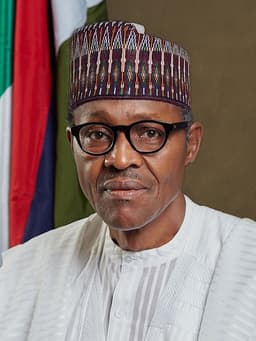
Muhammadu Buhari
General · Modern
51.5Total
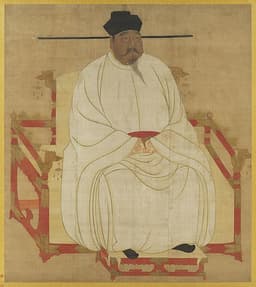
Zhao Kuangyin
Emperor · Medieval
71.5Total
Basic Information
Born
1942
927
Died
—
976
Era
Modern
Medieval
Nationality
Nigeria
China
Occupation
General
Emperor
Civilization
Other
Eastern
Score Comparison
Military (10%)
22.6
78.0
Political (20%)
68.0
84.0
Influence (20%)
53.3
68.0
Legacy (20%)
43.3
65.0
Leadership (15%)
72.0
74.0
Strategy (15%)
41.0
68.0
TOTAL
51.5
71.5
Muhammadu Buhari — Complete Timeline
1983 AD
1983 Nigerian coup d'étatPolitical Action
Major General Muhammadu Buhari led a military coup that overthrew the civilian government of President Shehu Shagari. Buhari cited corruption and economic mismanagement as justifications, and he became the head of state.
CoupMilitary RuleCorruption
Impact: nationaldestructive
1984 AD
War Against Indiscipline (WAI)Reform◆ Major
Buhari launched the War Against Indiscipline, a campaign to enforce discipline and order in Nigerian society. It included harsh penalties for minor offenses, such as queue-jumping, and was criticized for human rights abuses.
DisciplineSocial PolicyHuman Rights
Impact: nationaldestructive
1985 AD
Overthrow by Ibrahim BabangidaPolitical Action◆ Major
Buhari was overthrown in a palace coup led by his Chief of Army Staff, Ibrahim Babangida. Babangida cited Buhari's authoritarian style and failure to address the economy as reasons for the coup.
CoupOverthrowBabangida
Impact: national
2015 AD
Anti-corruption campaignReform◆ Major
Buhari launched a high-profile anti-corruption campaign, targeting government officials and recovering stolen assets. The campaign was praised internationally but criticized for being selective and politically motivated.
Anti-CorruptionReformGovernance
Impact: nationalconstructive
Election as President of NigeriaPolitical Action
Buhari won the 2015 Nigerian presidential election, defeating incumbent Goodluck Jonathan. This was the first time an opposition candidate had defeated a sitting president in Nigeria's history, marking a democratic milestone.
ElectionDemocracyOpposition Victory
Impact: nationalprogressive
Zhao Kuangyin — Complete Timeline
960 AD
Founded Song dynastyPolitical Action
Zhao Kuangyin, a general of Later Zhou, was proclaimed emperor by his troops at Chenqiao. He established the Song dynasty, ending the Five Dynasties period and beginning a new era of Chinese history.
Song dynastyFoundingChenqiao
Impact: globalconstructive
961 AD
Removed military power from generalsPolitical Action◆ Major
Zhao Kuangyin invited senior generals to a banquet and persuaded them to retire peacefully. This 'removal of military power over wine' prevented military coups and centralized control.
Song dynastyMilitary reformCentralization
Impact: nationalconstructive
963 AD
Unified southern ChinaWar◆ Major
Zhao Kuangyin launched campaigns to conquer the southern kingdoms, including Jingnan, Later Shu, and Southern Tang. By his death, most of China was reunified under Song rule.
Song unificationConquestSouthern kingdoms
Impact: national
Expert Analysis
Zhao Kuangyin vs Muhammadu Buhari
# The Emperor and the General: Two Paths to Power, Two Destinies
On a cold February morning in 960, a Chinese general named Zhao Kuangyin woke up to find a yellow imperial robe draped over his shoulders by mutinous troops. He accepted the mantle of emperor with practiced reluctance, and went on to found one of China's greatest dynasties. More than a thousand years later, in December 1983, another general—Muhammadu Buhari of Nigeria—seized power in a coup, vowing to cleanse his nation of corruption and indiscipline. Both men rose from military command to supreme authority. Both promised order and unity. But their stories diverged like rivers flowing from the same mountain: one into a tranquil lake, the other into a turbulent sea.
Origins
Zhao Kuangyin was born in 927, during the Five Dynasties and Ten Kingdoms period—an age of relentless warfare when China had splintered into rival states and generals overthrew emperors with alarming regularity. His father was a military officer, and young Zhao grew up in a world where loyalty was fleeting and power belonged to the man with the sharpest sword. He learned to fight, but also to read, and he absorbed the Confucian ideal that a ruler must govern by virtue, not force alone.
Muhammadu Buhari was born in 1942 in Daura, northern Nigeria, into a Fulani family with a tradition of service. Nigeria was then a British colony, but independence was coming. Buhari attended military school and rose through the ranks of the Nigerian Army, a institution that—like Zhao’s China—was increasingly entangled with politics. By the 1970s, Nigeria had suffered a civil war and a series of coups. Buhari saw firsthand how fragile civilian rule could be, and how easily corruption could rot a government from within.
Rise to Power
Zhao’s ascent was theatrical. In 959, the Later Zhou emperor died young, leaving a seven-year-old son on the throne. Zhao, as the most powerful general, was sent north to repel a rumored invasion. At Chenqiao, his troops staged a mutiny, draping him in that yellow robe and declaring him emperor. Zhao accepted—but only, he claimed, because the dynasty needed a strong hand. He returned to the capital, where the boy emperor abdicated without bloodshed. It was a coup, but a carefully choreographed one.
Buhari’s rise was more brutal. On December 31, 1983, he led a coup that overthrew President Shehu Shagari, whose government was widely seen as corrupt and incompetent. Soldiers seized airports, radio stations, and government buildings. The coup was swift and nearly bloodless, but it was unmistakably a seizure of power. Buhari justified it as a necessary intervention to save Nigeria from collapse.
Leadership & Governance
Zhao Kuangyin governed with a paradox: he was a military man who systematically dismantled military power. At a famous banquet in 961, he invited his most powerful generals to drink wine and reminisce. Then he told them bluntly that their ambitions threatened stability. He offered them wealth, land, and retirement—and they accepted. Zhao then reorganized the army, placing it under civilian control and rotating commanders to prevent them from building personal loyalties. He centralized tax collection, promoted Confucian scholars, and launched campaigns to reunify southern China, conquering Jingnan, Later Shu, and Southern Tang by 963. His strategy was patient and methodical: he once said, "To conquer a nation, you must first conquer the hearts of its people."
Buhari’s governance was harsh and uncompromising. He launched the "War Against Indiscipline" in 1984, a campaign that punished lateness, littering, and queue-jumping with public humiliation and jail time. He imprisoned journalists, banned strikes, and ordered soldiers to whip offenders in public squares. His anti-corruption efforts targeted former officials, but his methods alienated many Nigerians who felt they were being treated like children. His regime was efficient but authoritarian, and it bred resentment.
Triumph & Tragedy
Zhao’s greatest triumph was unifying China after decades of fragmentation. He laid the foundations for the Song dynasty, which would become a golden age of art, commerce, and technology. His tragedy was that he died suddenly in 976 at age 49, possibly murdered by his brother—a reminder that even the most careful ruler could not escape the violence of succession.
Buhari’s triumph came decades later. After being overthrown in a 1985 coup led by his own chief of army staff, Ibrahim Babangida, he spent years in detention, then in exile. But in 2015, he achieved what no Nigerian opposition candidate had done before: he won a democratic presidential election, defeating the incumbent Goodluck Jonathan. It was a stunning redemption. His tragedy, however, was that his second presidency struggled with the same problems as his first: an economy in crisis, insurgency in the northeast, and corruption that proved stubbornly resistant to his campaigns.
Character & Destiny
Zhao Kuangyin was pragmatic and self-aware. He understood that his power came from the army, but he also knew that the army could destroy him. So he chose persuasion over purge, reform over revenge. His personality—cautious, strategic, willing to share credit—shaped a dynasty that lasted three centuries.
Buhari was principled but rigid. He believed in discipline as a cure for societal ills, and he never wavered from that conviction, even when it made him unpopular. His integrity was unquestionable, but his inflexibility limited his effectiveness. He was a better moralist than politician.
Legacy
Zhao Kuangyin is remembered as a unifier and a reformer. His "removal of military power at a banquet" became a legendary example of peaceful consolidation. The Song dynasty he founded produced some of China’s greatest poets, painters, and philosophers. His legacy score of 75.1 reflects a leader who shaped civilization.
Buhari’s legacy is more contested. His first regime is remembered as a dark period of repression; his second, as a flawed but genuine attempt at democratic reform. His legacy score of 56.7 suggests a figure who tried but fell short—a general who became president, but never fully escaped the shadow of the coup that brought him to power.
Conclusion
What separates these two men is not ambition, but context and temperament. Zhao lived in a world where a general could become emperor and then choose to limit military power; Buhari lived in a world where a general could become president and then discover that democracy demanded compromises he could not make. One built a dynasty; the other built a cautionary tale. Both believed they could save their nations. One succeeded, at least for a time. The other learned that saving a nation is harder than seizing it.
Rankings
🥇
Zhao KuangyinLeader
Mil: 78.0Pol: 84.0Inf: 68.0
71.5
🥈
Muhammadu Buhari
Mil: 22.6Pol: 68.0Inf: 53.3
51.5
+20.0 behind
How This Comparison Works
Algorithm
Each figure is scored on 6 dimensions (0—100 scale) based on structured historical data: Military (10%), Political (20%), Influence (20%), Legacy (20%), Leadership (15%), Strategy (15%). The weighted total produces the final ranking.
Data Sources
Scores are computed from structured sub-indicators in the database. Scale factors adjust for era (Ancient ×0.85, Modern ×1.0) and civilization size (Eastern ×1.05, Other ×0.80) to account for differences in population and military scale.
Maximum 3 Figures
Comparisons are limited to 2—3 figures to ensure readability and statistical meaningfulness.
Error Margins
±5 points per dimension — Sub-scores are derived from historical records with inherent uncertainty. Two figures within 5 points on a dimension should be considered roughly equivalent in that area.
Total Score Accuracy
±3 points overall — The weighted combination of 6 dimensions produces a total score with approximately ±3 points of uncertainty. Differences of less than 3 points are not statistically significant— the figures are effectively tied.
Known Limitations
- Historical records are incomplete and uneven across civilizations
- Figures from oral-tradition societies may be underrepresented
- Occupation labels can misclassify multi-role figures
- Scores measure capability and impact, not moral character
- Quantitative scoring is a comparison tool, not absolute truth
Capability Radar
Military (10%) — Battles & Warfare
Battles
10
75
Win Rate
10
85
Expansion
5
75
Political (20%) — Governance & Reform
Reform
30
90
Diplomacy
25
85
Economy
20
80
Influence (20%) — Cultural & Global Reach
Cultural
25
70
Global
25
60
Legacy (20%) — Historical Impact
Historical
30
80
Longevity
20
75
Leadership (15%) — Power & Stability
Tenure
45
65
Stability
15
85
Strategy (15%) — Tactics & Innovation
Strategy
15
80
Tactics
15
70
Reform
20
90
Similar Comparisons
Comments & Discussion
THE_YELLOW_EMPEROR6/16/2026
As a classics scholar, I find this pairing absurd. Zhao Kuangyin embodied the Confucian ideal of legitimate rule: he accepted the mandate only after his soldiers forced him, and he famously treated the deposed Zhou emperor with respect. Buhari merely staged a textbook African coup, banning opposition and jailing journalists. One founded a dynasty that stabilized China for 300 years; the other was overthrown after 20 months. Apples and oranges, or perhaps jujubes and bitter kola nuts.
历史侦探老赵6/16/2026
作为军事史爱好者,我觉得这比较侮辱赵匡胤。赵匡胤"杯酒释兵权"展现的是政治智慧——他用宴席就解除了所有军阀威胁,没流一滴血。布哈里1983年政变后呢?搞了两年多的军事法庭审判,把政敌关进监狱,还推行人尽皆知的"战争状态"。一个是调兵遣将的艺术家,一个只是举枪的警察。别把他们相提并论。
STATS_BOY6/16/2026
Data skeptic here. You're cherry-picking, plain and simple. Zhao's "meritocratic" civil service exams didn't fully kick in until his successors. During his reign, he purged generals he deemed threats, including his own brother. Buhari, meanwhile, actually won a democratic election in 2015—something Zhao never did. So let's not pretend one path was morally superior. Both men concentrated power and crushed dissent. The only real difference is that Zhao's system lasted longer, but that's survivorsh
闽南老兵6/16/2026
我是福建闽南人,从小听陈桥兵变故事长大。赵匡胤最厉害的是"先南后北"战略:先灭荆南、后蜀、南汉,最后硬扛北汉。他用十五个年头统一了中国大部分地区。布哈里呢?当总统几年间,尼日利亚GDP增长率从2.7%跌到1.9%,博科圣地反而更猖狂了。一个真正统一国家,一个在位时国家更分裂。这不是比喻,这是考卷上的实打实战绩。
REVISIONIST_MIC6/16/2026
Oh please, let's drop the romanticized "Yellow Robe" narrative. Zhao didn't "reluctantly" accept power—he engineered the entire coup after his rivals were conveniently drunk at a banquet. And Buhari? He was Nigeria's most effective anti-corruption general. Under his "War Against Indiscipline," Nigeria actually worked: civil servants showed up on time, people cleaned their surroundings. The problem is Western media hates strong African leaders. Zhao gets called a "unifier"; Buhari gets called a "