Loading...
Muhammadu Buhari vs Yelu Abaoji
Yelu Abaoji leads by 11.2 pts · 2 figures compared
…
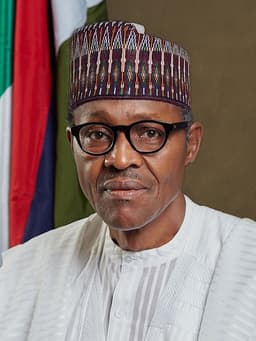
Muhammadu Buhari
General · Modern
51.5Total
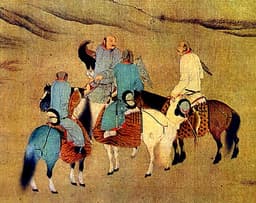
Yelu Abaoji
Emperor · Medieval
62.7Total
Basic Information
Born
1942
872
Died
—
926
Era
Modern
Medieval
Nationality
Nigeria
China
Occupation
General
Emperor
Civilization
Other
Eastern
Score Comparison
Military (10%)
22.6
77.2
Political (20%)
68.0
59.6
Influence (20%)
53.3
68.0
Legacy (20%)
43.3
40.0
Leadership (15%)
72.0
80.3
Strategy (15%)
41.0
69.6
TOTAL
51.5
62.7
Muhammadu Buhari — Complete Timeline
1983 AD
1983 Nigerian coup d'étatPolitical Action
Major General Muhammadu Buhari led a military coup that overthrew the civilian government of President Shehu Shagari. Buhari cited corruption and economic mismanagement as justifications, and he became the head of state.
CoupMilitary RuleCorruption
Impact: nationaldestructive
1984 AD
War Against Indiscipline (WAI)Reform◆ Major
Buhari launched the War Against Indiscipline, a campaign to enforce discipline and order in Nigerian society. It included harsh penalties for minor offenses, such as queue-jumping, and was criticized for human rights abuses.
DisciplineSocial PolicyHuman Rights
Impact: nationaldestructive
1985 AD
Overthrow by Ibrahim BabangidaPolitical Action◆ Major
Buhari was overthrown in a palace coup led by his Chief of Army Staff, Ibrahim Babangida. Babangida cited Buhari's authoritarian style and failure to address the economy as reasons for the coup.
CoupOverthrowBabangida
Impact: national
2015 AD
Anti-corruption campaignReform◆ Major
Buhari launched a high-profile anti-corruption campaign, targeting government officials and recovering stolen assets. The campaign was praised internationally but criticized for being selective and politically motivated.
Anti-CorruptionReformGovernance
Impact: nationalconstructive
Election as President of NigeriaPolitical Action
Buhari won the 2015 Nigerian presidential election, defeating incumbent Goodluck Jonathan. This was the first time an opposition candidate had defeated a sitting president in Nigeria's history, marking a democratic milestone.
ElectionDemocracyOpposition Victory
Impact: nationalprogressive
Yelu Abaoji — Complete Timeline
907 AD
Unified Khitan tribesPolitical Action◆ Major
Yelu Abaoji was elected khagan of the Khitan tribes, unifying them under his leadership. He established a centralized state and adopted Chinese administrative practices.
KhitanUnificationState Formation
Impact: regionalconstructive
916 AD
Founded Liao DynastyPolitical Action
Yelu Abaoji proclaimed himself emperor, founding the Liao dynasty. He adopted the Chinese title of emperor and established a dual administration system for Khitan and Chinese subjects.
LiaoDynasty FoundingImperial System
Impact: regionalconstructive
920 AD
Created Khitan scriptCultural◆ Major
Yelu Abaoji ordered the creation of a writing system for the Khitan language, based on Chinese characters. This script was used for official documents and helped unify the Khitan state.
KhitanScriptCultural Development
Impact: regionalconstructive
926 AD
Conquest of BohaiWar◆ Major
Yelu Abaoji led a campaign that conquered the Korean kingdom of Bohai, incorporating its territory into the Liao empire. This expanded Liao's influence into Manchuria and Korea.
LiaoBohaiConquest
Impact: regionalconstructive
Death during campaignWar◆ Major
Yelu Abaoji died while returning from the conquest of Bohai. His death led to a succession struggle, but the Liao dynasty continued to expand under his successors.
LiaoDeathSuccession
Impact: regionaltragic
Expert Analysis
Yelu Abaoji vs Muhammadu Buhari
### The Emperor and the General
On a windswept plain in what is now Inner Mongolia, sometime around the year 900, a young Khitan chieftain named Yelu Abaoji stood before a council of tribal elders. He had just been elected their khagan, but the ceremony was not a celebration of unity so much as a fragile truce. Across the centuries and half a world away, in a dusty barrack in Nigeria in December 1983, another soldier, Muhammadu Buhari, listened to the crackle of a radio as his men seized control of a government he deemed corrupt. Both men believed they could impose order on chaos. One would build an empire that lasted two centuries. The other would be overthrown within two years, only to return decades later, a ghost of his former ambition. Why did their paths diverge so sharply? The answer lies not just in their talents, but in the worlds they inherited.
### Origins
Yelu Abaoji was born into a world of shifting alliances and tribal warfare. The Khitan people were nomads of the Mongolian steppe, their power fragmented among eight clans. Abaoji’s father was a chieftain, but the boy grew up knowing that survival depended on cunning, not just strength. By the time he was a young man, the Tang dynasty in China was collapsing, leaving a power vacuum that the Khitan could exploit. Abaoji learned to read Chinese, studied its bureaucratic systems, and understood that the future belonged to those who could marry steppe ferocity with settled sophistication.
Muhammadu Buhari was born in 1942 in Daura, a city in northern Nigeria, into a Fulani family with a tradition of Islamic scholarship and military service. His world was one of colonial aftermath. Nigeria had been carved out by the British, a patchwork of rival ethnic groups—Hausa, Yoruba, Igbo—forced into a single state. Buhari grew up in a society where the military was often seen as the only institution capable of holding the nation together. His early career was a study in discipline: he attended military academies in Nigeria, India, and the United Kingdom, learning the mechanics of command in a nation already fractured by a civil war.
The difference in their starting points is crucial: Abaoji faced a world where he could create a new order from scratch; Buhari inherited a system designed by others, and his task was to fix it.
### Rise to Power
Abaoji’s rise was a masterclass in political patience. He did not seize the khaganate by force alone; he maneuvered. In 907, when the Khitan tribes elected him khagan, it was a ceremonial gesture. But Abaoji transformed the title into a tool of centralization. He systematically eliminated rival chieftains, absorbed their followers, and built a standing army loyal to him, not to the tribes. In 916, he proclaimed himself emperor, adopting the Chinese title of Tian Huang (Heavenly Emperor). He was not just a tribal leader; he was a dynastic founder.
Buhari’s rise was swifter and more violent. On December 31, 1983, while Nigerians slept off New Year’s celebrations, Buhari’s soldiers seized radio stations and government buildings. The coup was bloodless, and Buhari justified it by blaming the civilian government of Shehu Shagari for economic mismanagement and corruption. Unlike Abaoji, who built legitimacy over years, Buhari relied on the gun. His authority was immediate but brittle—a fact that would haunt him.
### Leadership & Governance
As emperor, Abaoji was a revolutionary. He understood that a nomadic empire could not survive on plunder alone. He established a dual administrative system: the Khitan tribes would be governed by traditional customs, while the conquered Chinese territories would be ruled by Confucian bureaucrats. In 920, he ordered the creation of a Khitan script, a writing system based on Chinese characters but adapted to the Khitan language. This was not mere vanity; it was state-building. He also built walled cities, promoted agriculture, and encouraged trade along the Silk Road. His leadership was a blend of iron fist and velvet glove—he executed rivals but also rewarded loyalty with land and titles.
Buhari, by contrast, governed through discipline. His signature policy was the War Against Indiscipline (WAI), launched in 1984. It was a campaign of social engineering: public servants were forced to stand in straight lines; traffic offenders were publicly flogged; "indiscipline" became a crime. On paper, it sounded noble—a crackdown on laziness and corruption. In practice, it was authoritarian and alienating. Buhari jailed journalists, banned strikes, and ruled by decree. Where Abaoji built institutions, Buhari built prisons. His economic policies—price controls and austerity—plunged Nigeria deeper into recession. Within two years, his own Chief of Army Staff, Ibrahim Babangida, overthrew him in a palace coup, citing Buhari’s "rigidity."
The contrast is stark: Abaoji’s reforms were designed to outlast him; Buhari’s were designed to control the moment.
### Triumph & Tragedy
Abaoji’s greatest triumph was the conquest of the Korean kingdom of Bohai in 926. It was a campaign of stunning efficiency: he marched his army through frozen terrain, besieged the capital, and absorbed the kingdom into the Liao empire. The conquest doubled his territory and secured his northern flank. But the triumph was also his tragedy. On the return journey, Abaoji fell ill and died. His death triggered a succession crisis, but the dynasty he built survived. The Liao would rule northern China for over 200 years.
Buhari’s greatest triumph came decades later, in 2015, when he was elected president of Nigeria in a democratic election. It was a stunning comeback: the former military dictator, now a civilian democrat, defeated an incumbent president, Goodluck Jonathan. This was the first time in Nigerian history that an opposition candidate had won a presidential election. Buhari’s victory was hailed as a triumph for African democracy. But his tragedy was that he could not govern as he had campaigned. His anti-corruption campaign, launched in 2015, was initially popular, but it soon became mired in accusations of selective justice—targeting political opponents while protecting allies. The economy stagnated, and Buhari’s health declined. By the end of his second term in 2023, his approval ratings had plummeted.
### Character & Destiny
Abaoji was a pragmatist who thought in centuries. He adopted Chinese culture not because he loved it, but because it worked. He was ruthless when necessary—he had his own son executed for plotting rebellion—but he was also a visionary. He once said, "The empire is not a piece of cloth that can be patched; it must be woven whole." He understood that power required legitimacy, and legitimacy required institutions.
Buhari was a moralist who thought in absolutes. He was known for his personal integrity—he lived modestly and was rarely accused of personal corruption—but his rigidity was his downfall. As a military ruler, he could not tolerate dissent. As a democratic president, he could not compromise. His famous quote, "I belong to everybody, and I belong to nobody," reflected his desire to be above faction, but it also revealed a detachment from political reality. He was a man of principles, but principles without flexibility are a recipe for failure in a democracy.
### Legacy
Abaoji is remembered as the founder of the Liao dynasty, a man who created a hybrid state that blended Chinese and steppe traditions. His script is studied by historians; his conquests reshaped the map of East Asia. In China, he is a footnote; among the Khitan, he is a legend.
Buhari’s legacy is more contested. To his supporters, he is a man who fought corruption and restored Nigeria’s dignity. To his critics, he is a failed autocrat who returned to power only to prove that he could not adapt. His War Against Indiscipline is now a historical curiosity; his anti-corruption campaign is seen as incomplete. He will be remembered as a transition figure—a bridge between military rule and democracy, but a bridge that wobbled.
### Conclusion
The difference between Abaoji and Buhari is not one of intelligence or will, but of context. Abaoji built a new world because the old one had collapsed. Buhari tried to fix a broken world, but the tools he had—the coup, the decree, the moral crusade—were inadequate for the task. One was a founder; the other was a fixer. And in the end, founders are remembered longer than fixers. Yet both men remind us that leadership is not just about power; it is about the world you are given and the world you leave behind.
Rankings
🥇
Yelu AbaojiLeader
Mil: 77.2Pol: 59.6Inf: 68.0
62.7
🥈
Muhammadu Buhari
Mil: 22.6Pol: 68.0Inf: 53.3
51.5
+11.2 behind
How This Comparison Works
Algorithm
Each figure is scored on 6 dimensions (0—100 scale) based on structured historical data: Military (10%), Political (20%), Influence (20%), Legacy (20%), Leadership (15%), Strategy (15%). The weighted total produces the final ranking.
Data Sources
Scores are computed from structured sub-indicators in the database. Scale factors adjust for era (Ancient ×0.85, Modern ×1.0) and civilization size (Eastern ×1.05, Other ×0.80) to account for differences in population and military scale.
Maximum 3 Figures
Comparisons are limited to 2—3 figures to ensure readability and statistical meaningfulness.
Error Margins
±5 points per dimension — Sub-scores are derived from historical records with inherent uncertainty. Two figures within 5 points on a dimension should be considered roughly equivalent in that area.
Total Score Accuracy
±3 points overall — The weighted combination of 6 dimensions produces a total score with approximately ±3 points of uncertainty. Differences of less than 3 points are not statistically significant— the figures are effectively tied.
Known Limitations
- Historical records are incomplete and uneven across civilizations
- Figures from oral-tradition societies may be underrepresented
- Occupation labels can misclassify multi-role figures
- Scores measure capability and impact, not moral character
- Quantitative scoring is a comparison tool, not absolute truth
Capability Radar
Military (10%) — Battles & Warfare
Battles
10
75
Win Rate
10
80
Expansion
5
82
Political (20%) — Governance & Reform
Reform
30
88
Diplomacy
25
75
Economy
20
70
Influence (20%) — Cultural & Global Reach
Cultural
25
60
Global
25
55
Legacy (20%) — Historical Impact
Historical
30
70
Longevity
20
65
Leadership (15%) — Power & Stability
Tenure
45
72
Stability
15
65
Strategy (15%) — Tactics & Innovation
Strategy
15
78
Tactics
15
70
Reform
20
85
Similar Comparisons
Comments & Discussion
草原刀锋6/16/2026
阿保机是真正的帝国建筑师,他不仅征服了部落,还创造了文字和制度。对比之下,布哈里只是个政变军官,执政20个月就被推翻,连基本改革都没完成。阿保机在位期间将契丹从散沙打造成两百年帝国,布哈里却让尼日利亚的腐败更深。这不是同一级别的较量,是建城者与掘墓人的区别。
DataSergeant6/16/2026
Let's be honest: comparing a 10th-century tribal leader to a 20th-century general is mixing apples and battle-axes. Buhari governed a modern nation with 120 million people, oil wealth, and coups every few years. Abaoji ruled a sparsely populated steppe with 12 clans. Their "success" is just different data sets. You can't use the same metrics. Buhari returned to win two democratic elections—Abapji never faced an opposition party. Apples. Battle-axes.
诡辩史官6/16/2026
布哈里的悲剧在于他1879年生于卡舒拉,自认是清廉的改革者,却在1984年镇压新闻自由。而阿保机916年称帝时直接声称"朕即国家",没人指责他独裁。时代不同,游戏规则不同。阿保机在部落民主中玩出帝制,布哈里在现代民主中重演军事统治——一个革新,一个倒退,结果自然南辕北辙。
CenturionEyes6/16/2026
Military historian here: Buhari's 1983 coup was textbook textbook—secure the radio station, arrest civilian leaders, promise to end corruption. It worked for 20 months. Abaoji's rise was a masterclass in slow-burn strategy: unite Khitan clans, adopt Chinese bureaucracy, invent script, expand borders methodically over a decade. Buhari had tanks and a playbook; Abaoji had diplomatic marriage alliances and literacy campaigns. The latter builds systems. The former just postpones collapse.
糊涂虫读史6/16/2026
我就直接说了:布哈里在1983年政变时说是为了"拯救尼日利亚",结果两年后自己就被推翻,2015年再当选却毫无建树。阿保机好歹建立了辽朝,定都临潢府,设南北面官制。布哈里连个像样的政策都没留下。评论说"两种天赋"?我倒觉得就是一个有能力,一个运气好。——别拿英雄和历史赌徒混为一谈。