Loading...
Muawiyah I vs Otto I the Great
Muawiyah I leads by 1.1 pts · 2 figures compared
…
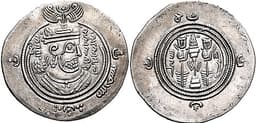
Muawiyah I
Emperor · Medieval
76.3Total
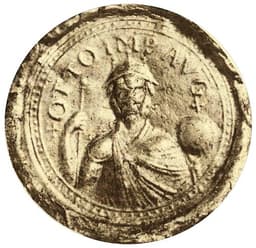
Otto I the Great
Emperor · Medieval
75.2Total
Basic Information
Born
602
912
Died
680
973
Era
Medieval
Medieval
Nationality
Umayyad Caliphate
Holy Roman Empire
Occupation
Emperor
Emperor
Civilization
Middle Eastern
Western
Score Comparison
Military (10%)
76.0
82.0
Political (20%)
75.0
70.0
Influence (20%)
75.0
88.0
Legacy (20%)
80.0
65.0
Leadership (15%)
78.0
78.0
Strategy (15%)
70.0
65.4
TOTAL
76.3
75.2
Muawiyah I — Complete Timeline
640 AD
Governorship of SyriaPolitical Action◆ Major
Muawiyah I was appointed governor of Syria by Caliph Umar. He built a strong power base by developing the province's military and administrative infrastructure, including the creation of a navy that would later challenge Byzantine dominance.
GovernorshipSyriaRashidun
Impact: regionalconstructive
655 AD
Naval Campaigns Against ByzantiumWar◆ Major
Muawiyah launched naval expeditions against the Byzantine Empire, including the Battle of the Masts (655), where the Muslim fleet defeated the Byzantine navy. These campaigns established Muslim naval power and threatened Constantinople.
Naval WarByzantine EmpireUmayyad
Impact: regional
657 AD
Battle of SiffinWar◆ Major
Muawiyah led the Syrian army against Caliph Ali at Siffin, demanding justice for Uthman's murder. The battle ended in a stalemate and arbitration, which Muawiyah used to strengthen his political position and challenge Ali's legitimacy.
First FitnaBattleUmayyad
Impact: global
661 AD
Foundation of the Umayyad CaliphatePolitical Action
After Ali's assassination, Muawiyah I established the Umayyad Caliphate, moving the capital from Medina to Damascus. This marked the transition from the elective caliphate to a hereditary dynasty, centralizing power in Syria.
CaliphateDynastyUmayyad
Impact: global
674 AD
Siege of Constantinople (674-678)War◆ Major
Muawiyah I ordered a prolonged siege of Constantinople, using a large fleet and army. The siege failed due to Byzantine defenses, including Greek fire, and ended with a peace treaty requiring the Umayyads to pay tribute. It was a rare setback.
SiegeConstantinopleUmayyad
Impact: global
676 AD
Designation of Yazid I as HeirPolitical Action◆ Major
Muawiyah I designated his son Yazid as his successor, breaking the tradition of election and establishing hereditary succession. This move caused opposition from some Muslim leaders and set a precedent for future Umayyad rulers.
SuccessionHereditaryUmayyad
Impact: global
Otto I the Great — Complete Timeline
951 AD
Diplomatic Marriage to Adelaide of ItalyPolitical Action◆ Major
Otto married Adelaide, the widowed queen of Italy, after intervening in Italian politics. This marriage gave him control over the Kingdom of Italy and strengthened his claim to imperial authority.
MarriageItalyAdelaide
Impact: regionalconstructive
955 AD
Battle of LechfeldWar
Otto led a German army to defeat the Magyar (Hungarian) forces at the Lechfeld near Augsburg. This victory ended Magyar raids into Western Europe and secured Otto's reputation as a defender of Christendom.
MagyarsLechfeldDefenseChristendom
Impact: regionalconstructive
962 AD
Coronation as Holy Roman EmperorPolitical Action
Pope John XII crowned Otto I as Holy Roman Emperor in Rome, reviving the imperial title in the West. This event established the Holy Roman Empire as a major political entity and linked German kingship with papal authority.
CoronationHoly Roman EmpirePapacy
Impact: globalconstructive
Expert Analysis
Origins
Muawiyah I (r. 661-680) was born into the Umayyad clan of the Quraysh tribe in Mecca. He embraced Islam early and served as a scribe for the Prophet Muhammad. His father, Abu Sufyan, was a prominent Meccan leader who initially opposed Muhammad but later converted. Muawiyah's early career included participation in the Muslim conquest of Syria, where he was appointed governor by Caliph Umar. He consolidated power through alliances with Christian Arab tribes and the Byzantine-style bureaucracy of Damascus.
Otto I (r. 936-973) was born into the Saxon Liudolfing dynasty, son of King Henry the Fowler. He inherited a nascent East Frankish kingdom threatened by Magyar raids and internal rebellions. Otto's early life was shaped by his father's consolidation of German duchies and the need to assert royal authority over powerful dukes.
Rise to Power
Muawiyah's rise culminated during the First Fitna (656-661), the first Islamic civil war. As governor of Syria, he refused to recognize Caliph Ali and demanded justice for the murder of his kinsman, Caliph Uthman. At the Battle of Siffin (657), Muawiyah's forces fought Ali to a stalemate, leading to arbitration that fragmented the Muslim community. After Ali's assassination in 661, Muawiyah secured the caliphate, founding the Umayyad dynasty. He moved the capital from Medina to Damascus, shifting the empire's center toward Syria and leveraging its Byzantine administrative heritage.
Otto I became king of East Francia in 936 after his father's death. He immediately faced rebellions from his brother Thankmar and Duke Eberhard of Franconia. Otto crushed these revolts and asserted his authority by appointing loyalists to key duchies. His major turning point was the Battle of Lechfeld (955), where he decisively defeated the Magyars, ending their raids and securing his reputation as a savior of Christendom. In 962, he was crowned Holy Roman Emperor by Pope John XII, reviving the imperial title in the West.
Leadership & Governance
Muawiyah I was a master politician who centralized the Umayyad state. He established a hereditary succession (appointing his son Yazid), created a professional army (including Syrian Arab troops), and developed a navy that challenged Byzantine dominance. His governance was pragmatic: he maintained existing Byzantine administrative structures, tolerated Christians (appointing them to high offices), and focused on stability over religious zeal. He also reformed the postal system (barid) and minted standardized coins.
Otto I strengthened royal authority by intertwining church and state. He appointed bishops and abbots as imperial officials, granting them lands and authority to counterbalance secular dukes. This "Ottonian system" ensured loyal administrators who were celibate and could not pass titles hereditarily. Otto also forged alliances through marriage, notably wedding Adelaide of Italy, which helped him claim the Italian throne. He intervened in papal politics, deposing Pope John XII and installing his own candidates.
Triumph & Tragedy
Muawiyah's greatest triumph was founding the Umayyad Caliphate, which expanded to its greatest territorial extent under his successors. His naval campaigns against Byzantium, including the Siege of Constantinople (674-678), demonstrated Muslim naval power. However, his decision to appoint his son Yazid as heir led to the Second Fitna after his death, as many Muslims opposed hereditary succession. The tragedy of his rule was the consolidation of dynastic autocracy at the expense of early Islamic consultative governance (shura).
Otto's triumph at Lechfeld ended the Magyar threat and cemented his authority. His coronation as emperor revived the Roman imperial tradition in the West and set a precedent for German kings to claim the imperial title. However, his later years were marred by conflict with the papacy and a failed campaign in southern Italy against the Byzantines. His empire remained a loose federation of duchies, lacking the centralization of the Umayyads.
Character & Destiny
Muawiyah was cunning, patient, and pragmatic. Known as "the clement" (al-Hilm), he avoided unnecessary bloodshed and used diplomacy and bribery effectively. He was a skilled orator and poet. His destiny was to transform the caliphate from a religiously guided community into a secular Arab monarchy, a shift that alienated pious Muslims but ensured stability.
Otto was determined, pious, and authoritarian. He saw himself as a Christian emperor chosen by God to defend the Church. His destiny was to create a German-centric empire that would dominate European politics for centuries. His legacy is the Holy Roman Empire, though it remained fragmented compared to the Umayyads.
Legacy
Muawiyah's Umayyad Caliphate laid the foundations for Islamic civilization, spreading Arabic language, coinage, and administration from Spain to Central Asia. The Dome of the Rock and Al-Aqsa Mosque were built under his successors. However, his dynasty is often criticized by Shia Muslims for usurping Ali's rights. Otto's Holy Roman Empire became the dominant power in medieval Europe, but its decentralized structure led to constant internal conflict. The Ottonian Renaissance promoted art and learning, but Otto's legacy is more political than cultural.
Conclusion
Muawiyah I edges out Otto I with a higher overall score (76.0 vs 74.9). Muawiyah's military and political scores are slightly higher, reflecting his successful consolidation of a vast empire through both warfare and diplomacy. Otto's higher intelligence (88) and similar leadership (80) are offset by lower military (82 vs 76) and strategy (65 vs 70). Muawiyah's empire was more centralized and expansive, while Otto's was fragmented. Ultimately, Muawiyah's foundation of the Umayyad Caliphate had a more profound and lasting impact on world history, shaping the Islamic Golden Age. Otto's Holy Roman Empire was significant but less coherent and enduring. Muawiyah wins this comparison.
Rankings
🥇
Muawiyah ILeader
Mil: 76.0Pol: 75.0Inf: 75.0
76.3
🥈
Otto I the Great
Mil: 82.0Pol: 70.0Inf: 88.0
75.2
+1.1 behind
How This Comparison Works
Algorithm
Each figure is scored on 6 dimensions (0—100 scale) based on structured historical data: Military (10%), Political (20%), Influence (20%), Legacy (20%), Leadership (15%), Strategy (15%). The weighted total produces the final ranking.
Data Sources
Scores are computed from structured sub-indicators in the database. Scale factors adjust for era (Ancient ×0.85, Modern ×1.0) and civilization size (Eastern ×1.05, Other ×0.80) to account for differences in population and military scale.
Maximum 3 Figures
Comparisons are limited to 2—3 figures to ensure readability and statistical meaningfulness.
Error Margins
±5 points per dimension — Sub-scores are derived from historical records with inherent uncertainty. Two figures within 5 points on a dimension should be considered roughly equivalent in that area.
Total Score Accuracy
±3 points overall — The weighted combination of 6 dimensions produces a total score with approximately ±3 points of uncertainty. Differences of less than 3 points are not statistically significant— the figures are effectively tied.
Known Limitations
- Historical records are incomplete and uneven across civilizations
- Figures from oral-tradition societies may be underrepresented
- Occupation labels can misclassify multi-role figures
- Scores measure capability and impact, not moral character
- Quantitative scoring is a comparison tool, not absolute truth
Capability Radar
Military (10%) — Battles & Warfare
Battles
75
75
Win Rate
80
80
Expansion
85
70
Political (20%) — Governance & Reform
Reform
90
80
Diplomacy
95
85
Economy
85
70
Influence (20%) — Cultural & Global Reach
Cultural
75
65
Global
75
70
Legacy (20%) — Historical Impact
Historical
85
80
Longevity
80
75
Leadership (15%) — Power & Stability
Tenure
85
85
Stability
80
75
Strategy (15%) — Tactics & Innovation
Strategy
85
75
Tactics
70
70
Reform
80
65
Similar Comparisons
Comments & Discussion
No comments yet. Be the first to share your thoughts!