Loading...
Modu Chanyu vs Seti I
Modu Chanyu leads by 2.8 pts · 2 figures compared
…
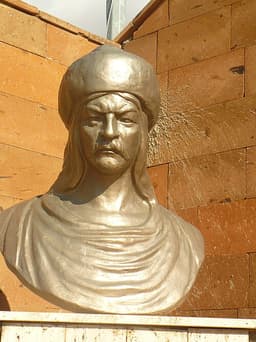
Modu Chanyu
Emperor · Ancient
61.1Total
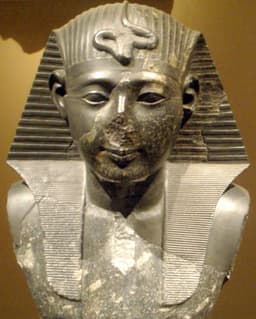
Seti I
Emperor · Ancient
58.3Total
Basic Information
Born
-234
-1290
Died
-174
-1279
Era
Ancient
Ancient
Nationality
Xiongnu
Egypt
Occupation
Emperor
Emperor
Civilization
Eastern
Middle Eastern
Score Comparison
Military (10%)
77.5
74.7
Political (20%)
62.7
62.7
Influence (20%)
56.7
56.7
Legacy (20%)
40.0
54.0
Leadership (15%)
78.0
53.2
Strategy (15%)
80.3
58.0
TOTAL
61.1
58.3
Modu Chanyu — Complete Timeline
209 BC
Unification of the Xiongnu TribesPolitical Action
Modu Chanyu unified the nomadic tribes of the Mongolian steppe into the Xiongnu Empire after killing his father, Touman. He established a centralized military and political structure, creating a powerful confederation that rivaled Han China.
UnificationXiongnu EmpireNomadic Confederation
Impact: regional
200 BC
Battle of BaidengWar
Modu Chanyu besieged Emperor Gaozu of Han at Baideng (modern Datong, Shanxi) for seven days. The Han emperor was forced to negotiate a peace treaty, agreeing to pay tribute and send a princess for marriage, establishing Xiongnu dominance over northern China.
BattleHan DynastyTribute System
Impact: regional
198 BC
Treaty of HeqinPolitical Action◆ Major
Modu Chanyu formalized the Heqin treaty with the Han Dynasty, which included annual tribute payments, marriage alliances, and the recognition of the Xiongnu as equals. This treaty maintained peace for decades and set a precedent for Han-Xiongnu relations.
TreatyHeqinDiplomacy
Impact: regional
176 BC
Expansion into Central AsiaWar◆ Major
Modu Chanyu expanded Xiongnu control westward, defeating the Yuezhi and other nomadic groups. He extended Xiongnu influence over the Tarim Basin and parts of Central Asia, controlling key trade routes and establishing a vast steppe empire.
ExpansionCentral AsiaYuezhi
Impact: regional
Seti I — Complete Timeline
1290 BC
Establishment of the 19th Dynasty's Power BasePolitical Action◆ Major
Seti I, son of Ramesses I, solidified the 19th Dynasty's rule by strengthening the military and administrative structures. He appointed his son Ramesses II as co-regent, ensuring a smooth succession and laying the foundation for Ramesses II's long reign.
DynastySuccessionRamesses II
Impact: nationalconstructive
1288 BC
Military Campaigns in Syria and LibyaWar◆ Major
Seti I led military campaigns into Syria to reassert Egyptian control over Canaan and against Libyan tribes in the west. He recaptured the city of Kadesh and defeated the Libyans, securing Egypt's borders and restoring its military reputation.
MilitarySyriaLibya
Impact: regional
1285 BC
Construction of the Temple of AbydosCultural◆ Major
Seti I built the magnificent Temple of Abydos, dedicated to Osiris. The temple features exquisite reliefs and the famous King List, which records the names of 76 pharaohs from Menes to Seti I, providing a crucial chronological record.
ArchitectureAbydosKing List
Impact: globalconstructive
1280 BC
Construction of the Great Hypostyle Hall at Karnak (Completion)Cultural◆ Major
Seti I completed the Great Hypostyle Hall at Karnak, begun by Horemheb. The hall's 134 columns are covered with reliefs depicting Seti I's military victories and religious ceremonies, making it a masterpiece of New Kingdom architecture.
ArchitectureKarnakHypostyle Hall
Impact: globalconstructive
Expert Analysis
Origins
Modu Chanyu, born around 234 BCE, was the son of Touman, a Xiongnu chieftain. His early life was marked by brutality: Touman sent him as a hostage to the Yuezhi and then attacked them to provoke Modu's execution. Modu escaped and killed his father in 209 BCE, seizing power. He united the fragmented nomadic tribes of the Mongolian steppe into the Xiongnu Empire, creating a centralized military state with a decimal-based army organization.
Seti I, born around 1323 BCE, was the son of Ramesses I, founder of the 19th Dynasty. His family was of military origin, with no royal blood. Seti served as a general under his father and inherited a stable but recently established dynasty. He was educated in military and administrative affairs, preparing him for rule. Unlike Modu, Seti's path was legitimized by his father's kingship.
Rise to Power
Modu's rise was through patricide and military innovation. After killing Touman, he defeated rival tribes like the Donghu and Yuezhi, consolidating power by 200 BCE. His key turning point was the Battle of Baideng (200 BCE), where he besieged Emperor Gaozu of Han for seven days, forcing a humiliating peace. This established the Xiongnu as a major power and led to the Heqin treaty (198 BCE), which secured annual silk and grain tributes from China.
Seti I rose as a consolidator. He was crowned after his father's short reign (1292–1290 BCE). He immediately launched campaigns to restore Egyptian influence in Canaan and Libya, securing trade routes. His major turning point was the recapture of Kadesh (around 1280 BCE), a city lost during the Amarna period. Seti's military successes were less transformative than Modu's, as he operated within an established empire.
Leadership & Governance
Modu ruled through a decentralized tribal federation with strict military discipline. He implemented a decimal system: units of 10, 100, 1000, and 10,000 warriors, with commanders loyal to him. He used terror to enforce obedience—ordering his own horse's death to test loyalty. His governance was pragmatic: he accepted Han princesses as brides but continued raiding when advantageous. His political score of 62.7 reflects his ability to maintain unity among diverse tribes.
Seti I governed as a traditional pharaoh, emphasizing temple building and religious legitimacy. He completed the Great Hypostyle Hall at Karnak, with 134 columns covered in reliefs of his victories. He also built the Temple of Abydos, featuring the Abydos King List that legitimized his dynasty. His leadership score of 53.2 suggests he was less innovative than Modu; he relied on existing Egyptian bureaucracy and priesthood.
Triumph & Tragedy
Modu's greatest triumph was founding the Xiongnu Empire, which dominated East Asia for centuries. His military score of 77.5 reflects his success at Baideng and expansion into Central Asia, defeating the Yuezhi and controlling the Tarim Basin. However, his legacy score of 40.0 is limited because the empire fragmented after his death. His tragedy was the lack of a stable succession system; his son Laoshang succeeded him but faced internal revolts.
Seti I's greatest success was the construction of the Temple of Abydos, a masterpiece of Egyptian art and religion. His military campaigns temporarily restored Egyptian power in Syria, but his recapture of Kadesh was soon lost to the Hittites. His tragedy was being overshadowed by his son Ramesses II, who built more monuments and fought the famous Battle of Kadesh. Seti's legacy score of 54.0 is higher than Modu's due to his architectural contributions.
Character & Destiny
Modu was ruthless and strategic. He killed his father and brothers to secure power, and his decision-making was coldly logical. His character shaped his destiny: his military brilliance created an empire, but his lack of institutionalization led to its decline. Historians note his ability to adapt Han Chinese tactics while maintaining nomadic mobility.
Seti I was a builder and restorer. He was less aggressive than Ramesses II but more focused on internal consolidation. His character led him to invest in religious infrastructure, which cemented his dynasty's legitimacy. However, his caution meant he did not achieve the lasting military fame of his son. His destiny was to be a transitional figure between the chaotic Amarna period and the glory of Ramesses II.
Legacy
Modu's legacy is the model of steppe empire. The Xiongnu system influenced later nomadic confederations like the Mongols. His military organization scored 77.5, but his political score of 62.7 shows limited state-building. The Heqin treaty set a precedent for Chinese-nomad relations. Today, he is remembered as a symbol of Xiongnu unity.
Seti I's legacy is primarily cultural. The Temple of Abydos and the Hypostyle Hall are UNESCO World Heritage sites. His king list is a key source for Egyptian chronology. However, his military achievements scored 74.7 but were ephemeral. His influence score of 56.7 reflects his role as Ramesses II's father, not an independent giant.
Conclusion
Modu Chanyu had greater impact than Seti I. With a total score of 61.1 versus 58.3, Modu's military and strategy scores (77.5 and 80.3) dwarf Seti's (74.7 and 58.0). Modu created a new political entity that reshaped East Asian history for centuries, while Seti operated within an existing civilization. Seti's architectural legacy is tangible, but Modu's empire building had more profound geopolitical consequences. Modu's unification of the steppe set the stage for later empires, making him the more significant historical figure.
Rankings
🥇
Modu ChanyuLeader
Mil: 77.5Pol: 62.7Inf: 56.7
61.1
🥈
Seti I
Mil: 74.7Pol: 62.7Inf: 56.7
58.3
+2.8 behind
How This Comparison Works
Algorithm
Each figure is scored on 6 dimensions (0—100 scale) based on structured historical data: Military (10%), Political (20%), Influence (20%), Legacy (20%), Leadership (15%), Strategy (15%). The weighted total produces the final ranking.
Data Sources
Scores are computed from structured sub-indicators in the database. Scale factors adjust for era (Ancient ×0.85, Modern ×1.0) and civilization size (Eastern ×1.05, Other ×0.80) to account for differences in population and military scale.
Maximum 3 Figures
Comparisons are limited to 2—3 figures to ensure readability and statistical meaningfulness.
Error Margins
±5 points per dimension — Sub-scores are derived from historical records with inherent uncertainty. Two figures within 5 points on a dimension should be considered roughly equivalent in that area.
Total Score Accuracy
±3 points overall — The weighted combination of 6 dimensions produces a total score with approximately ±3 points of uncertainty. Differences of less than 3 points are not statistically significant— the figures are effectively tied.
Known Limitations
- Historical records are incomplete and uneven across civilizations
- Figures from oral-tradition societies may be underrepresented
- Occupation labels can misclassify multi-role figures
- Scores measure capability and impact, not moral character
- Quantitative scoring is a comparison tool, not absolute truth
Capability Radar
Military (10%) — Battles & Warfare
Battles
85
70
Win Rate
90
75
Expansion
95
65
Political (20%) — Governance & Reform
Reform
90
60
Diplomacy
85
65
Economy
75
60
Influence (20%) — Cultural & Global Reach
Cultural
70
70
Global
75
55
Legacy (20%) — Historical Impact
Historical
85
65
Longevity
80
60
Leadership (15%) — Power & Stability
Tenure
80
55
Stability
80
65
Strategy (15%) — Tactics & Innovation
Strategy
92
70
Tactics
88
65
Reform
95
60
Similar Comparisons
Comments & Discussion
No comments yet. Be the first to share your thoughts!