Loading...
Moctezuma I vs Yuwen Yong
Yuwen Yong leads by 8.3 pts · 2 figures compared
…

Moctezuma I
Emperor · Medieval
58.9Total
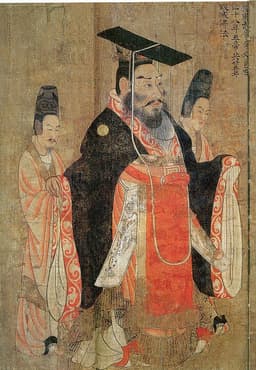
Yuwen Yong
Emperor · Medieval
67.2Total
Basic Information
Born
1398
543
Died
1469
578
Era
Medieval
Medieval
Nationality
Aztec Empire
China
Occupation
Emperor
Emperor
Civilization
Other
Eastern
Score Comparison
Military (10%)
82.0
78.0
Political (20%)
45.0
78.0
Influence (20%)
58.3
58.0
Legacy (20%)
56.0
54.0
Leadership (15%)
66.0
85.0
Strategy (15%)
55.0
69.1
TOTAL
58.9
67.2
Moctezuma I — Complete Timeline
1428 AD
Conquest of the TepanecsWar◆ Major
Itzcoatl led the Triple Alliance forces in a war against the Tepanecs of Azcapotzalco, the dominant power in the region. The victory broke Tepanec hegemony and established Tenochtitlan as the leading city-state in central Mexico.
WarTepanec WarAztec Expansion
Impact: regional
Formed the Triple AlliancePolitical Action
Itzcoatl, as tlatoani of Tenochtitlan, formed the Triple Alliance with Texcoco and Tlacopan. This military and political pact created the Aztec Empire, enabling coordinated conquests and the subjugation of neighboring city-states in the Valley of Mexico.
Aztec EmpireAlliancePolitical Foundation
Impact: regional
1430 AD
Burned Historical CodicesCultural◆ Major
Itzcoatl ordered the burning of historical codices from conquered peoples, rewriting Aztec history to legitimize his rule and the empire's divine origins. This act destroyed pre-Aztec records and reshaped Mesoamerican historical memory.
Cultural DestructionHistorical RevisionAztec Ideology
Impact: regionaldestructive
Yuwen Yong — Complete Timeline
574 AD
Suppression of Buddhism in Northern ZhouReform◆ Major
Emperor Wu of Northern Zhou (Yuwen Yong) ordered the suppression of Buddhism, confiscating monastic lands, forcing monks and nuns to return to lay life, and destroying temples. He aimed to increase state revenue and military manpower, strengthening the state.
Northern ZhouBuddhist PersecutionReform
Impact: nationaldestructive
577 AD
Conquest of Northern QiWar
Emperor Wu led a successful campaign against the rival Northern Qi dynasty, conquering its territory and unifying northern China under Northern Zhou. This victory ended the division of the north and set the stage for the Sui dynasty's unification of all China.
Northern ZhouUnificationNorthern Qi
Impact: regionalconstructive
578 AD
Death during campaign against the TurksWar◆ Major
Emperor Wu died of illness while leading a campaign against the G
Northern ZhouMilitary CampaignDeath
Impact: regionaltragic
Expert Analysis
Yuwen Yong vs Moctezuma I
# The Eagle and the Dragon
In the year 1428, on opposite sides of the world, two men were setting in motion events that would reshape their civilizations. In the Valley of Mexico, a young prince named Moctezuma watched as his uncle Itzcoatl forged the Triple Alliance with the city-states of Texcoco and Tlacopan—a pact that would birth the Aztec Empire. Half a world away, in the chaotic landscape of sixth-century China, a boy named Yuwen Yong grew up in the shadow of a crumbling dynasty, his family caught in the violent currents of warring kingdoms. Neither could have known that their names would one day be compared across centuries, their legacies weighed by historians who see in them two very different paths to power.
Origins
Moctezuma I was born in 1398 into the royal house of Tenochtitlan, a city of islands and canals that would become the heart of the Aztec world. His was a culture that breathed warfare—the Mexica believed their sun god Huitzilopochtli required human hearts to sustain the cosmos, and conquest was both a political necessity and a sacred duty. Moctezuma grew up in a world where every victory was a sacrifice to the gods, every defeat a cosmic failure.
Yuwen Yong, born in 543, entered a China fractured into northern and southern dynasties, with the north itself divided between the Western Wei and Eastern Wei. His father was a general, his family part of the Xianbei warrior aristocracy that had ruled northern China since the fall of the Han dynasty. Unlike Moctezuma, who inherited a world of ritualized warfare, Yuwen Yong inherited a world of political chaos—where loyalty was fleeting, and a single misstep meant death.
Rise to Power
Moctezuma did not seize power; he earned it. He served as a general under Itzcoatl during the conquest of the Tepanecs in 1428, proving his military worth in the campaign that broke Azcapotzalco’s dominance. When Itzcoatl died in 1440, Moctezuma was chosen as tlatoani—the speaker—by a council of nobles. His rise was orderly, legitimate, and deeply embedded in the rituals of his people.
Yuwen Yong’s path was far more treacherous. He became emperor of Northern Zhou in 560 at the age of seventeen, but real power lay in the hands of his cousin Yuwen Hu, a regent who had already murdered two previous emperors. For twelve years, Yuwen Yong played the role of a docile puppet, biding his time. In 572, he struck—luring Yuwen Hu into a trap and killing him with his own hands. It was an act of cold-blooded patience that Moctezuma, whose power came through inheritance and consensus, would never have needed to contemplate.
Leadership & Governance
Moctezuma’s genius lay in expansion through ritualized warfare. He led campaigns that pushed Aztec borders to the Gulf of Mexico and deep into Oaxaca, extracting tribute from conquered cities. But his most controversial act came in 1430, when he and Itzcoatl ordered the burning of historical codices from conquered peoples. They rewrote Aztec history to present the Mexica as a chosen people, erasing the past to forge a unified imperial identity. It was a political masterstroke—and an act of cultural destruction that still haunts historians.
Yuwen Yong faced a different challenge: how to unify a land torn by war and divided by faith. In 574, he ordered the suppression of Buddhism, confiscating monastic lands and forcing thousands of monks back into lay life. This was not religious fanaticism—it was statecraft. Buddhist monasteries had grown wealthy and powerful, draining tax revenues and manpower from the state. By crushing them, Yuwen Yong strengthened his treasury and his army. He also conquered the rival Northern Qi in 577, uniting northern China under a single rule for the first time in decades.
Triumph & Tragedy
Moctezuma’s greatest triumph was the consolidation of the Triple Alliance into a true empire. By the time of his death in 1469, Tenochtitlan was the most powerful city in Mesoamerica, its tribute networks stretching across hundreds of miles. Yet his legacy is shadowed by the knowledge that this system of tribute and sacrifice would eventually provoke rebellion and, ultimately, the Spanish conquest.
Yuwen Yong’s triumph was the conquest of Northern Qi in 577—a campaign that showcased his strategic brilliance and personal courage. He led his armies from the front, a practice that would prove his undoing. In 578, while campaigning against the Göktürks, he fell ill and died at the age of thirty-five. His son, a weak and dissolute emperor, lost everything within three years. The Northern Zhou collapsed, and China was reunified by the Sui dynasty—but Yuwen Yong had laid the groundwork.
Character & Destiny
Moctezuma was a builder and a believer. He expanded the Great Temple of Tenochtitlan, codified laws, and deepened the religious rituals that bound his people to the gods. He saw himself as the servant of a cosmic order that demanded blood and conquest. His decisions flowed from faith as much as from strategy.
Yuwen Yong was a pragmatist and a survivor. He had learned patience in the shadow of a murderer, and he ruled with a cold clarity that saw religion as a tool, not a truth. His suppression of Buddhism was not about belief—it was about power. He died too young, but his reforms outlived him, providing the administrative and military foundation for the Sui and Tang dynasties.
Legacy
Moctezuma is remembered as a great conqueror, but his legacy is inseparable from the Aztec Empire’s ultimate destruction. The codices he burned cannot be recovered, and the tribute system he perfected would become the source of Spanish wealth. In Mexico today, he is a figure of pride and pain—a reminder of what was built and what was lost.
Yuwen Yong is less famous in the West but revered in Chinese history as a decisive ruler who ended centuries of division. His suppression of Buddhism is controversial, but his unification of the north is seen as a necessary step toward the golden age of the Tang. He died before he could finish his work, but he set the stage for one of the greatest empires in world history.
Conclusion
Two emperors, two worlds, two paths to power. Moctezuma expanded an empire through ritual and sacrifice, binding his people to the gods through blood. Yuwen Yong unified a land through patience and ruthlessness, bending religion to the will of the state. One died in old age, his empire intact but fragile; the other died young, his empire soon to fall but his reforms to endure. In their different fates, we see the same truth: that history remembers not what leaders intended, but what they left behind—and that the greatest victories can be undone by the smallest failures.
Rankings
🥇
Yuwen YongLeader
Mil: 78.0Pol: 78.0Inf: 58.0
67.2
🥈
Moctezuma I
Mil: 82.0Pol: 45.0Inf: 58.3
58.9
+8.3 behind
How This Comparison Works
Algorithm
Each figure is scored on 6 dimensions (0—100 scale) based on structured historical data: Military (10%), Political (20%), Influence (20%), Legacy (20%), Leadership (15%), Strategy (15%). The weighted total produces the final ranking.
Data Sources
Scores are computed from structured sub-indicators in the database. Scale factors adjust for era (Ancient ×0.85, Modern ×1.0) and civilization size (Eastern ×1.05, Other ×0.80) to account for differences in population and military scale.
Maximum 3 Figures
Comparisons are limited to 2—3 figures to ensure readability and statistical meaningfulness.
Error Margins
±5 points per dimension — Sub-scores are derived from historical records with inherent uncertainty. Two figures within 5 points on a dimension should be considered roughly equivalent in that area.
Total Score Accuracy
±3 points overall — The weighted combination of 6 dimensions produces a total score with approximately ±3 points of uncertainty. Differences of less than 3 points are not statistically significant— the figures are effectively tied.
Known Limitations
- Historical records are incomplete and uneven across civilizations
- Figures from oral-tradition societies may be underrepresented
- Occupation labels can misclassify multi-role figures
- Scores measure capability and impact, not moral character
- Quantitative scoring is a comparison tool, not absolute truth
Capability Radar
Military (10%) — Battles & Warfare
Battles
65
75
Win Rate
70
80
Expansion
80
80
Political (20%) — Governance & Reform
Reform
60
85
Diplomacy
65
70
Economy
70
75
Influence (20%) — Cultural & Global Reach
Cultural
60
40
Global
50
40
Legacy (20%) — Historical Impact
Historical
65
65
Longevity
55
50
Leadership (15%) — Power & Stability
Tenure
70
60
Stability
65
70
Strategy (15%) — Tactics & Innovation
Strategy
75
75
Tactics
60
70
Reform
55
85
Similar Comparisons
Comments & Discussion
Yumeng the Undertaker6/16/2026
Yuwen Yong was the real deal. He didn't just expand a dynasty—he rebuilt a failed state from the ground up. While Moctezuma inherited a Triple Alliance already on the rise, Yuwen took over the Northern Zhou when it was a weak puppet kingdom. His military reforms, especially the *fu-bing* militia system, directly enabled the Sui and Tang to reunify China. Moctezuma collected tribute with flowery wars; Yuwen raised armies that conquered history.
阳光黑曜石6/16/2026
别拿蒙特苏马跟宇文邕比。阿兹特克那套“荣冠战争”其实就是仪式化的抢劫,专门抓俘虏献祭,根本不像宇文邕那样搞府兵制改革、废佛抑豪、统一北方。蒙特苏马一世最狠的也就是修了条十公里长的大堤防洪,放在中国顶多算地方官政绩。宇文邕是真正的国家重构者,蒙特苏马只是个部落酋长升级版。
Crunch the Numbers6/16/2026
The scale difference here is absurd. Yuwen Yong commanded a population base of roughly 20 million and directly unified a region of about 1.5 million square kilometers. Montezuma I ruled over maybe 5 million people across 200,000 square kilometers, most of it tributary and loosely controlled. The conquest of the Triple Alliance wasn't empire—it was a tribute network. Yuwen was building an actual bureaucratic state with census rolls, tax registers, and standing armies.
鹰隼与秃鹫6/16/2026
宇文邕一生都在硬碰硬:灭北齐、打突厥、废佛教、压门阀。每一次都是刀刃向内的血腥改革。蒙特苏马一世干过什么?巩固了一下阿兹特克对特斯科科湖的控制,顺便搞了几次大规模人祭,砍了大概两万个脑袋。一个是把病入膏肓的帝国救活的手术刀,一个是往尸体上涂香料的化妆师。高下立判。