Loading...
Michael the Brave vs Prajadhipok
Michael the Brave leads by 4.9 pts · 2 figures compared
…
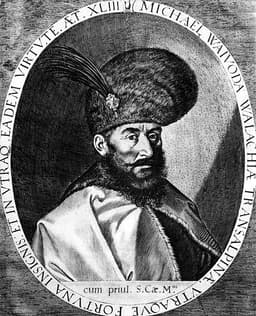
Michael the Brave
Emperor · Modern
54.9Total
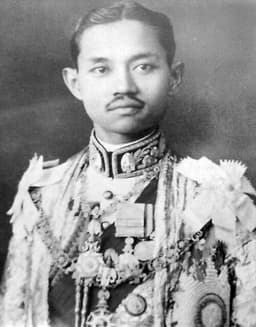
Prajadhipok
Emperor · Modern
50.0Total
Basic Information
Born
1558
1893
Died
1601
1941
Era
Modern
Modern
Nationality
Wallachia
Thailand
Occupation
Emperor
Emperor
Civilization
Western
Eastern
Score Comparison
Military (10%)
60.0
53.8
Political (20%)
54.7
48.0
Influence (20%)
54.9
49.4
Legacy (20%)
46.7
40.0
Leadership (15%)
62.2
62.2
Strategy (15%)
60.0
57.2
TOTAL
54.9
50.0
Michael the Brave — Complete Timeline
1595 AD
Battle of CălugăreniWar◆ Major
Michael the Brave defeated an Ottoman army at C
BattleOttoman WarsWallachia
Impact: regional
1599 AD
Conquest of TransylvaniaWar◆ Major
Michael the Brave invaded Transylvania and defeated the forces of Andrew B
ConquestTransylvaniaȘelimbăr
Impact: regional
1600 AD
Union of the Three PrincipalitiesPolitical Action
Michael the Brave united Wallachia, Moldavia, and Transylvania under his rule, creating a short-lived union of the three Romanian principalities. This was the first time the regions were unified.
UnificationRomanian PrincipalitiesTransylvania
Impact: regionalconstructive
1601 AD
AssassinationOther◆ Major
Michael the Brave was assassinated by agents of the Habsburg general Giorgio Basta near Turda. His death ended the union of the principalities, which collapsed shortly after.
AssassinationHabsburgsEnd of Union
Impact: regionaltragic
Prajadhipok — Complete Timeline
1925 AD
Became the last absolute monarch of SiamPolitical Action◆ Major
Prajadhipok ascended the throne as King Rama VII, becoming the last absolute monarch of Siam. His reign began during economic difficulties and growing demands for constitutional reform.
CoronationAbsolute MonarchyEnd of Era
Impact: national
1932 AD
Granted a constitution after the 1932 revolutionPolitical Action◆ Major
Following a bloodless coup by the People's Party, Prajadhipok agreed to end absolute monarchy and granted a constitution. He became a constitutional monarch, retaining the throne but with limited powers.
Constitutional Monarchy1932 RevolutionReform
Impact: national
1935 AD
Abdicated the thronePolitical Action◆ Major
Prajadhipok abdicated the throne due to disagreements with the government over his powers and the treatment of royalists. He went into exile in England, where he died in 1941.
AbdicationExileEnd of Reign
Impact: nationaltragic
Expert Analysis
Origins
Michael the Brave was born in 1558 in Wallachia, the son of Pătrașcu the Good, a former voivode. His early life was shaped by the volatile politics of the Romanian principalities under Ottoman suzerainty. He rose to become the ban of Mehedinți and later, in 1593, he became the voivode of Wallachia with Ottoman support. His formative experiences included military campaigns against the Ottomans and navigating the complex alliances of the Habsburgs and Transylvanian nobility.
Prajadhipok was born on November 8, 1893, in Bangkok, Siam, as the youngest son of King Chulalongkorn (Rama V). He was educated in England at Eton and the Royal Military Academy, Woolwich, and served in the British Army. His background was one of privilege and exposure to Western ideas, but he never expected to become king until the sudden death of his brother, King Vajiravudh, in 1925. His upbringing emphasized duty and modernization, yet he lacked the political acumen of his predecessors.
Rise to Power
Michael the Brave's rise began when he secured the throne of Wallachia in 1593. He quickly aligned with the Holy League against the Ottomans, led by the Habsburgs. His first major turning point was the Battle of Călugăreni on August 23, 1595, where he defeated an Ottoman army despite being outnumbered. This victory boosted his reputation. In 1599, he invaded Transylvania and defeated Andrew Báthory at the Battle of Șelimbăr, taking control of the region. In 1600, he entered Moldavia and ousted its voivode, Ieremia Movilă, uniting Wallachia, Moldavia, and Transylvania under his rule for a brief period.
Prajadhipok ascended the throne in November 1925 after the death of his brother. He inherited a kingdom facing economic troubles and growing demands for democracy. The world was changing, and Siam was under pressure from Western powers. His reign was defined by the 1932 revolution, a bloodless coup by the People's Party, which forced him to accept a constitution on June 24, 1932, ending absolute monarchy. He initially cooperated but later resisted efforts to reduce his powers further, leading to his abdication in 1935.
Leadership & Governance
Michael the Brave's leadership was characterized by military ambition and strategic alliances. He scored 62.2 in leadership and 60.0 in strategy. He governed through force and personal authority, imposing his rule over the united principalities without establishing lasting institutions. His governance relied on the support of the Habsburgs and local boyars, but he failed to create a stable administrative framework. For example, he alienated Transylvanian nobles by imposing his own officials.
Prajadhipok's leadership style was more conciliatory but indecisive. He scored 62.2 in leadership and 48.0 in political skill. He attempted to modernize Siam by promoting education and infrastructure, but he struggled with the demands of the People's Party. As a constitutional monarch, he tried to balance royal prerogatives with democratic reforms, but his reluctance to fully surrender power led to conflict. He eventually abdicated rather than accept a diminished role, choosing exile in England.
Triumph & Tragedy
Michael the Brave's greatest triumph was the union of the three Romanian principalities in 1600, a feat that symbolized Romanian unity. His victory at Călugăreni (where he scored 60.0 in military) demonstrated his tactical skill. However, his tragedy was the brevity of his achievement. The union lasted less than a year; he was assassinated on August 9, 1601, near Turda by agents of the Habsburg general Giorgio Basta. His death ended the union and plunged the region back into fragmentation.
Prajadhipok's triumph was his peaceful transition to constitutional monarchy, avoiding bloodshed in 1932. He granted a constitution and allowed Siam to modernize politically. His tragedy was his abdication in 1935, which left the monarchy weakened and led to a period of military dominance. He lived in exile in England until his death in 1941, largely forgotten by his people. His score of 40.0 in legacy reflects his limited long-term impact compared to other Thai monarchs.
Character & Destiny
Michael the Brave was a decisive and ambitious leader, driven by a vision of Romanian unity. His personality was bold, as seen in his swift military campaigns. However, his lack of political finesse (scoring 54.7 in political) made him vulnerable to betrayal. He trusted the Habsburgs too much, leading to his assassination. His destiny was shaped by the volatile politics of the region, where short-lived unions were common.
Prajadhipok was a cautious and reluctant monarch. He was intelligent but indecisive, often trying to please all sides. His character led him to compromise initially, but he later resisted change, causing his downfall. Historical assessments describe him as a tragic figure caught between tradition and modernity. His fate was to be the last absolute monarch, a role he did not seek and could not sustain.
Legacy
Michael the Brave's legacy is monumental in Romanian history. He is celebrated as a national hero who first united the Romanian principalities. His union, though brief, inspired later movements for Romanian unification in the 19th century. He scores 46.7 in legacy, reflecting his symbolic importance. Statues, holidays, and schools bear his name. However, his actual political impact was limited; the union did not last.
Prajadhipok's legacy is more ambiguous. He is remembered as the king who gave up absolute power, but his abdication and exile diminished his stature. In Thailand, he is often overshadowed by his predecessors, especially King Chulalongkorn. His legacy score of 40.0 indicates a relatively low historical influence. The 1932 revolution and subsequent political instability are more associated with other figures.
Conclusion
Michael the Brave had a greater historical impact than Prajadhipok, despite their similar total scores (54.9 vs 50.0). Michael's achievement of uniting the Romanian principalities, however brief, created a powerful symbol that resonated for centuries and contributed to the eventual formation of modern Romania. Prajadhipok's transition to constitutional monarchy was important, but his abdication and exile weakened his legacy. Michael's military and strategic actions (60.0 in strategy) had more lasting consequences than Prajadhipok's political reforms. Therefore, Michael the Brave's impact on national identity and history surpasses that of Prajadhipok.
Rankings
🥇
Michael the BraveLeader
Mil: 60.0Pol: 54.7Inf: 54.9
54.9
🥈
Prajadhipok
Mil: 53.8Pol: 48.0Inf: 49.4
50.0
+4.9 behind
How This Comparison Works
Algorithm
Each figure is scored on 6 dimensions (0—100 scale) based on structured historical data: Military (10%), Political (20%), Influence (20%), Legacy (20%), Leadership (15%), Strategy (15%). The weighted total produces the final ranking.
Data Sources
Scores are computed from structured sub-indicators in the database. Scale factors adjust for era (Ancient ×0.85, Modern ×1.0) and civilization size (Eastern ×1.05, Other ×0.80) to account for differences in population and military scale.
Maximum 3 Figures
Comparisons are limited to 2—3 figures to ensure readability and statistical meaningfulness.
Error Margins
±5 points per dimension — Sub-scores are derived from historical records with inherent uncertainty. Two figures within 5 points on a dimension should be considered roughly equivalent in that area.
Total Score Accuracy
±3 points overall — The weighted combination of 6 dimensions produces a total score with approximately ±3 points of uncertainty. Differences of less than 3 points are not statistically significant— the figures are effectively tied.
Known Limitations
- Historical records are incomplete and uneven across civilizations
- Figures from oral-tradition societies may be underrepresented
- Occupation labels can misclassify multi-role figures
- Scores measure capability and impact, not moral character
- Quantitative scoring is a comparison tool, not absolute truth
Capability Radar
Military (10%) — Battles & Warfare
Battles
55
53
Win Rate
60
56
Expansion
55
59
Political (20%) — Governance & Reform
Reform
30
40
Diplomacy
50
30
Economy
30
20
Influence (20%) — Cultural & Global Reach
Cultural
40
20
Global
30
15
Legacy (20%) — Historical Impact
Historical
50
30
Longevity
40
20
Leadership (15%) — Power & Stability
Tenure
40
25
Stability
20
15
Strategy (15%) — Tactics & Innovation
Strategy
50
63
Tactics
55
65
Reform
30
69
Similar Comparisons
Comments & Discussion
No comments yet. Be the first to share your thoughts!