Loading...
Dawit III vs Prajadhipok
Prajadhipok leads by 2.1 pts · 2 figures compared
…
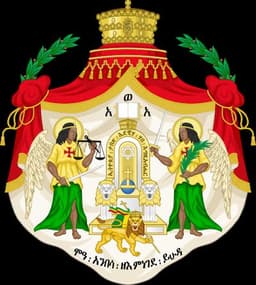
Dawit III
Emperor · Modern
47.9Total
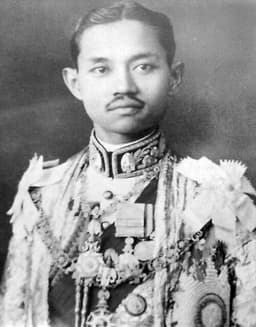
Prajadhipok
Emperor · Modern
50.0Total
Basic Information
Born
1695
1893
Died
1721
1941
Era
Modern
Modern
Nationality
Ethiopia
Thailand
Occupation
Emperor
Emperor
Civilization
Other
Eastern
Score Comparison
Military (10%)
20.0
53.8
Political (20%)
46.6
48.0
Influence (20%)
57.2
49.4
Legacy (20%)
45.0
40.0
Leadership (15%)
53.2
62.2
Strategy (15%)
54.3
57.2
TOTAL
47.9
50.0
Dawit III — Complete Timeline
1716 AD
Cultural Patronage of Dawit IIICultural
Dawit III became a notable patron of Ethiopian literature and art during his reign. He commissioned the copying and illumination of numerous religious manuscripts and supported the construction of churches in Gondar, fostering a cultural renaissance.
PatronageManuscriptsArt
Impact: nationalconstructive
Prajadhipok — Complete Timeline
1925 AD
Became the last absolute monarch of SiamPolitical Action◆ Major
Prajadhipok ascended the throne as King Rama VII, becoming the last absolute monarch of Siam. His reign began during economic difficulties and growing demands for constitutional reform.
CoronationAbsolute MonarchyEnd of Era
Impact: national
1932 AD
Granted a constitution after the 1932 revolutionPolitical Action◆ Major
Following a bloodless coup by the People's Party, Prajadhipok agreed to end absolute monarchy and granted a constitution. He became a constitutional monarch, retaining the throne but with limited powers.
Constitutional Monarchy1932 RevolutionReform
Impact: national
1935 AD
Abdicated the thronePolitical Action◆ Major
Prajadhipok abdicated the throne due to disagreements with the government over his powers and the treatment of royalists. He went into exile in England, where he died in 1941.
AbdicationExileEnd of Reign
Impact: nationaltragic
Expert Analysis
Origins
Dawit III (born c. 1695) was a member of the Solomonic dynasty of Ethiopia. He ascended the throne in 1716 following the death of his brother, Emperor Yostos. Little is known about his early life, but he was raised in the imperial court, steeped in the traditions of the Ethiopian Orthodox Church and the feudal politics of the empire. His reign occurred during the Zemene Mesafint (Era of the Princes), a period of decentralization and noble rivalry.
Prajadhipok (born 1893) was the youngest son of King Chulalongkorn (Rama V) of Siam. He was educated in England, attending Eton and the Royal Military Academy at Woolwich. He served in the British Army and later returned to Siam. His upbringing was cosmopolitan, exposed to Western ideas of governance and military strategy. He ascended the throne in 1925 as Rama VII, inheriting a kingdom facing economic strain and growing demands for political reform.
Rise to Power
Dawit III became emperor after a period of instability following the death of Emperor Yostos. His rise was facilitated by the powerful noble Ras Bejat, who helped secure the throne. However, Dawit III's reign was marked by conflict with regional lords, particularly the powerful Ras Mikael Sehul of Tigray. His authority was constantly challenged, and he was eventually deposed in 1721 after a coup led by Ras Mikael.
Prajadhipok's rise was more straightforward as a prince of the Chakri dynasty. He became king after the death of his brother, King Vajiravudh (Rama VI), who had no male heir. Prajadhipok was initially reluctant to take the throne but accepted. His reign began during a severe economic crisis, exacerbated by the Great Depression. He attempted to implement financial reforms but faced opposition from the aristocracy and military.
Leadership & Governance
Dawit III's leadership was characterized by a focus on cultural patronage rather than military or political consolidation. He commissioned the copying and illumination of religious manuscripts, supporting the Ethiopian Orthodox Church. Politically, he scored 46.6, reflecting his inability to assert control over the nobility. His military score of 20.0 indicates a lack of martial ambition, as he relied on alliances with powerful lords. His governance was weak, leading to the erosion of imperial authority.
Prajadhipok's leadership style was more modern and conciliatory. He scored 62.2 in leadership, reflecting his willingness to negotiate and adapt. He faced the 1932 revolution, a bloodless coup by the People's Party, and chose to grant a constitution rather than resist. He became a constitutional monarch, accepting limits on his power. His political score of 48.0 shows his attempts to balance reform with tradition. However, his military score of 53.8 indicates his background in military affairs, though he did not use force to suppress dissent.
Triumph & Tragedy
Dawit III's greatest success was his cultural patronage, which enriched Ethiopian religious art and literature. He scored 57.2 in influence, partly due to these contributions. However, his greatest failure was his inability to govern effectively. He was deposed and imprisoned, spending his final years in captivity. His reign did not stabilize the empire, and the Zemene Mesafint continued after his fall.
Prajadhipok's triumph was overseeing a peaceful transition from absolute to constitutional monarchy, avoiding bloodshed. His legacy score of 40.0 is modest, but his actions allowed Siam to modernize politically. However, his tragedy was his abdication in 1935 after disagreements with the government over royal powers and treatment of royalists. He went into exile in England, never returning to Siam. His reign ended with him feeling betrayed by the very reforms he had approved.
Character & Destiny
Dawit III was a patron of the arts, more interested in culture than power. His character was passive, leading to his downfall. He lacked the strategic acumen (score 54.3) to navigate the treacherous politics of the Ethiopian court. His destiny was to be a footnote in Ethiopian history, overshadowed by more warlike emperors.
Prajadhipok was intelligent and principled, but perhaps too idealistic. He believed in gradual reform and compromise, but the forces of change were stronger. His character was cautious and diplomatic, but he ultimately felt compelled to abdicate when his vision of a constitutional monarchy was not respected. His destiny was to be the last absolute king, a symbol of an ended era.
Legacy
Dawit III's legacy is primarily cultural. The manuscripts he commissioned are preserved in Ethiopian monasteries, contributing to the country's religious heritage. However, his political legacy is minimal; he is remembered as a weak ruler during a period of decline.
Prajadhipok's legacy is more significant. He is remembered as the king who peacefully surrendered absolute power, setting Siam on a path to democracy. Despite his abdication, his decision to grant a constitution is a key moment in Thai history. His influence score of 49.4 reflects his role in this transition, though later political instability has complicated his legacy.
Conclusion
While Dawit III contributed to Ethiopian culture, Prajadhipok had a greater impact on the political development of his nation. Prajadhipok's total score of 50.0 versus Dawit III's 47.9 reflects this. Prajadhipok's willingness to embrace constitutional change, even at the cost of his throne, was a pivotal moment for Siam. Dawit III, despite his cultural patronage, failed to address the political challenges of his time. Therefore, Prajadhipok is the more consequential figure in terms of historical impact.
Rankings
🥇
PrajadhipokLeader
Mil: 53.8Pol: 48.0Inf: 49.4
50.0
🥈
Dawit III
Mil: 20.0Pol: 46.6Inf: 57.2
47.9
+2.1 behind
How This Comparison Works
Algorithm
Each figure is scored on 6 dimensions (0—100 scale) based on structured historical data: Military (10%), Political (20%), Influence (20%), Legacy (20%), Leadership (15%), Strategy (15%). The weighted total produces the final ranking.
Data Sources
Scores are computed from structured sub-indicators in the database. Scale factors adjust for era (Ancient ×0.85, Modern ×1.0) and civilization size (Eastern ×1.05, Other ×0.80) to account for differences in population and military scale.
Maximum 3 Figures
Comparisons are limited to 2—3 figures to ensure readability and statistical meaningfulness.
Error Margins
±5 points per dimension — Sub-scores are derived from historical records with inherent uncertainty. Two figures within 5 points on a dimension should be considered roughly equivalent in that area.
Total Score Accuracy
±3 points overall — The weighted combination of 6 dimensions produces a total score with approximately ±3 points of uncertainty. Differences of less than 3 points are not statistically significant— the figures are effectively tied.
Known Limitations
- Historical records are incomplete and uneven across civilizations
- Figures from oral-tradition societies may be underrepresented
- Occupation labels can misclassify multi-role figures
- Scores measure capability and impact, not moral character
- Quantitative scoring is a comparison tool, not absolute truth
Capability Radar
Military (10%) — Battles & Warfare
Battles
5
53
Win Rate
5
56
Expansion
5
59
Political (20%) — Governance & Reform
Reform
40
40
Diplomacy
30
30
Economy
30
20
Influence (20%) — Cultural & Global Reach
Cultural
55
20
Global
20
15
Legacy (20%) — Historical Impact
Historical
40
30
Longevity
30
20
Leadership (15%) — Power & Stability
Tenure
60
25
Stability
40
15
Strategy (15%) — Tactics & Innovation
Strategy
5
63
Tactics
5
65
Reform
5
69
Similar Comparisons
Comments & Discussion
No comments yet. Be the first to share your thoughts!