Loading...
Kamehameha II vs Prajadhipok
Prajadhipok leads by 9.3 pts · 2 figures compared
…

Kamehameha II
Emperor · Modern
40.7Total
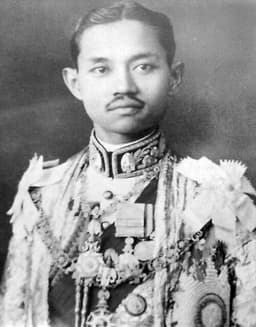
Prajadhipok
Emperor · Modern
50.0Total
Basic Information
Born
1797
1893
Died
1824
1941
Era
Modern
Modern
Nationality
Hawaii
Thailand
Occupation
Emperor
Emperor
Civilization
Other
Eastern
Score Comparison
Military (10%)
23.0
53.8
Political (20%)
46.6
48.0
Influence (20%)
51.0
49.4
Legacy (20%)
43.3
40.0
Leadership (15%)
34.6
62.2
Strategy (15%)
26.2
57.2
TOTAL
40.7
50.0
Kamehameha II — Complete Timeline
1819 AD
Abolished the Kapu SystemReform◆ Major
Kamehameha II, influenced by his mother Ka
Religious reformKapu
Impact: nationalprogressive
Ascended to the Throne as Kamehameha IIPolitical Action◆ Major
Upon the death of his father Kamehameha I, Liholiho became King Kamehameha II. He inherited a unified Hawaiian kingdom but faced challenges from traditional religious and political structures.
SuccessionMonarchy
Impact: national
1820 AD
Allowed Christian Missionaries to Enter HawaiiCultural◆ Major
Kamehameha II permitted the first company of American Protestant missionaries from the American Board of Commissioners for Foreign Missions to settle in Hawaii. This decision had profound effects on Hawaiian religion, education, and society.
MissionariesCultural change
Impact: national
1823 AD
Traveled to England and Died of MeaslesOther◆ Major
Kamehameha II traveled to England with his wife Queen Kam
DiplomacyDeath
Impact: nationaltragic
Prajadhipok — Complete Timeline
1925 AD
Became the last absolute monarch of SiamPolitical Action◆ Major
Prajadhipok ascended the throne as King Rama VII, becoming the last absolute monarch of Siam. His reign began during economic difficulties and growing demands for constitutional reform.
CoronationAbsolute MonarchyEnd of Era
Impact: national
1932 AD
Granted a constitution after the 1932 revolutionPolitical Action◆ Major
Following a bloodless coup by the People's Party, Prajadhipok agreed to end absolute monarchy and granted a constitution. He became a constitutional monarch, retaining the throne but with limited powers.
Constitutional Monarchy1932 RevolutionReform
Impact: national
1935 AD
Abdicated the thronePolitical Action◆ Major
Prajadhipok abdicated the throne due to disagreements with the government over his powers and the treatment of royalists. He went into exile in England, where he died in 1941.
AbdicationExileEnd of Reign
Impact: nationaltragic
Expert Analysis
Origins
Kamehameha II, born Liholiho in 1797, was the son of Kamehameha I, the conqueror who unified the Hawaiian Islands. Raised in a traditional Hawaiian court, he was groomed for kingship but lacked his father's military experience. His mother, Keōpūolani, and stepmother, Kaʻahumanu, were powerful kuhina nui (regents) who deeply influenced him. Prajadhipok, born in 1893 as Prince Sukhumala, was the youngest son of King Chulalongkorn (Rama V) of Siam. Educated at Eton and the Royal Military Academy, Woolwich, he never expected to rule, as he was seventh in line. His upbringing in a reform-minded royal family prepared him for a role in a modernizing state.
Rise to Power
Kamehameha II ascended the throne in 1819 at age 22 after his father's death. He inherited a unified kingdom but faced immediate pressure from traditionalists and reformers. His defining act came within months: encouraged by Kaʻahumanu and Keōpūolani, he publicly ate with women, breaking the kapu system that had governed Hawaiian life for centuries. This bold move ended the ancient religion and paved the way for change. Prajadhipok became king in 1925 after his brother Vajiravudh (Rama VI) died without a male heir. He was the last absolute monarch of Siam, ascending during economic hardship and rising demands for democracy. The 1932 Siamese Revolution, a bloodless coup by the People's Party, forced him to accept a constitution, transforming him into a constitutional monarch. Unlike Kamehameha II, who initiated change, Prajadhipok reacted to external pressure.
Leadership & Governance
Kamehameha II's leadership was marked by decisive cultural reform. By abolishing the kapu system (scoring 46.6 in political), he dismantled the religious and social order that had sustained Hawaiian society. He then permitted American Protestant missionaries to enter in 1820, opening Hawaii to Western influence. However, he delegated much governance to Kaʻahumanu, who served as kuhina nui and effectively ruled. Prajadhipok, with a leadership score of 62.2, had a more modern approach. He attempted to stabilize Siam's economy during the Great Depression, cutting government spending and reforming the civil service. After the 1932 revolution, he worked with the new constitutional government, but struggled with the loss of royal prerogatives. His governance was collaborative but ultimately frustrated.
Triumph & Tragedy
Kamehameha II's greatest triumph was the abolition of the kapu system, a radical act that ended centuries of tradition and opened Hawaii to new ideas. However, his tragedy was his untimely death: he and his wife Kamāmalu traveled to England in 1824 to seek an alliance with King George IV, but both died of measles in London. This left Hawaii without a strong ruler, leading to a regency and eventual annexation. Prajadhipok's triumph was granting a constitution peacefully, avoiding civil war and setting Siam on a path to constitutional monarchy. His tragedy was his abdication in 1935 after disputes with the government over royal powers and the treatment of royalists. He spent his remaining years in exile in England, dying in 1941. Both men saw their reforms undermined by events beyond their control.
Character & Destiny
Kamehameha II, with a total score of 40.7, was a young king willing to break tradition but lacked the political acumen to consolidate power. His decision to travel to England was a strategic error that cost him his life and destabilized his kingdom. Prajadhipok, scoring 50.0, was a cautious, well-educated monarch who valued legality and compromise. His reluctance to use force during the 1932 revolution reflected his character, but his inability to adapt to the new political reality led to his abdication. Historical assessments often view Kamehameha II as a transitional figure, while Prajadhipok is seen as a tragic symbol of a dying order.
Legacy
Kamehameha II's abolition of the kapu system had immediate and lasting effects: it allowed Christian missionaries to reshape Hawaiian society, leading to widespread literacy and conversion, but also to the erosion of Hawaiian culture and eventual loss of sovereignty. His legacy is mixed: a reformer who inadvertently accelerated colonization. Prajadhipok's legacy is more concrete: he is remembered as the king who ended absolute monarchy in Siam. The 1932 constitution, though later abrogated, established a precedent for democratic governance. His abdication highlighted the tensions between tradition and modernity. Both men scored low on legacy (43.3 and 40.0 respectively), reflecting their limited long-term impact.
Conclusion
While Kamehameha II's abolition of the kapu was a transformative event, his reign was too short and his governance too dependent on others to have lasting impact. Prajadhipok, despite his abdication, played a crucial role in Siam's peaceful transition to constitutional monarchy, a feat that preserved the monarchy itself. With a higher total score (50.0 vs 40.7) and stronger leadership (62.2 vs 34.6), Prajadhipok had greater impact in shaping modern Thailand. Kamehameha II's legacy is more symbolic, but Prajadhipok's actions directly influenced the political structure of a nation that survives today.
Rankings
🥇
PrajadhipokLeader
Mil: 53.8Pol: 48.0Inf: 49.4
50.0
🥈
Kamehameha II
Mil: 23.0Pol: 46.6Inf: 51.0
40.7
+9.3 behind
How This Comparison Works
Algorithm
Each figure is scored on 6 dimensions (0—100 scale) based on structured historical data: Military (10%), Political (20%), Influence (20%), Legacy (20%), Leadership (15%), Strategy (15%). The weighted total produces the final ranking.
Data Sources
Scores are computed from structured sub-indicators in the database. Scale factors adjust for era (Ancient ×0.85, Modern ×1.0) and civilization size (Eastern ×1.05, Other ×0.80) to account for differences in population and military scale.
Maximum 3 Figures
Comparisons are limited to 2—3 figures to ensure readability and statistical meaningfulness.
Error Margins
±5 points per dimension — Sub-scores are derived from historical records with inherent uncertainty. Two figures within 5 points on a dimension should be considered roughly equivalent in that area.
Total Score Accuracy
±3 points overall — The weighted combination of 6 dimensions produces a total score with approximately ±3 points of uncertainty. Differences of less than 3 points are not statistically significant— the figures are effectively tied.
Known Limitations
- Historical records are incomplete and uneven across civilizations
- Figures from oral-tradition societies may be underrepresented
- Occupation labels can misclassify multi-role figures
- Scores measure capability and impact, not moral character
- Quantitative scoring is a comparison tool, not absolute truth
Capability Radar
Military (10%) — Battles & Warfare
Battles
8
53
Win Rate
9
56
Expansion
14
59
Political (20%) — Governance & Reform
Reform
70
40
Diplomacy
20
30
Economy
10
20
Influence (20%) — Cultural & Global Reach
Cultural
30
20
Global
15
15
Legacy (20%) — Historical Impact
Historical
40
30
Longevity
20
20
Leadership (15%) — Power & Stability
Tenure
5
25
Stability
15
15
Strategy (15%) — Tactics & Innovation
Strategy
13
63
Tactics
18
65
Reform
21
69
Similar Comparisons
Comments & Discussion
No comments yet. Be the first to share your thoughts!