Loading...
Merzifonlu Kara Mustafa Pasha vs Sarit Thanarat
Merzifonlu Kara Mustafa Pasha leads by 6.9 pts · 2 figures compared
…

Merzifonlu Kara Mustafa Pasha
General · Modern
62.0Total
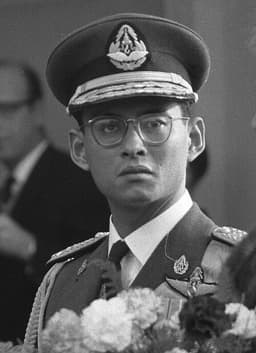
Sarit Thanarat
General · Modern
55.1Total
Basic Information
Born
1634
1908
Died
1683
1963
Era
Modern
Modern
Nationality
Ottoman Empire
Thailand
Occupation
General
General
Civilization
Middle Eastern
Eastern
Score Comparison
Military (10%)
80.8
47.5
Political (20%)
68.0
72.0
Influence (20%)
56.7
53.3
Legacy (20%)
58.0
44.2
Leadership (15%)
62.0
72.0
Strategy (15%)
57.5
43.3
TOTAL
62.0
55.1
Merzifonlu Kara Mustafa Pasha — Complete Timeline
1683 AD
Siege of ViennaWar
Merzifonlu Kara Mustafa Pasha led the Ottoman army in the siege of Vienna. The campaign failed when a Polish-led relief force under King John III Sobieski defeated the Ottomans at the Battle of Vienna. The defeat marked the end of Ottoman expansion into Europe.
Ottoman-Habsburg WarSiegeTurning Point
Impact: globaltragic
Execution by Order of Sultan Mehmed IVPolitical Action◆ Major
After the failed siege of Vienna, Sultan Mehmed IV ordered the execution of Merzifonlu Kara Mustafa Pasha. He was strangled in Belgrade on the sultan's orders, held responsible for the disastrous campaign and the loss of Ottoman prestige.
ExecutionOttoman PoliticsScapegoat
Impact: nationaltragic
Sarit Thanarat — Complete Timeline
1957 AD
Seized power in a coupPolitical Action◆ Major
Sarit Thanarat led a bloodless coup that overthrew the government of Phibun. He established a military dictatorship, dissolved parliament, and imposed martial law.
CoupDictatorshipMilitary Rule
Impact: national
Restored the monarchy's prestigePolitical Action◆ Major
Sarit revived the role of the monarchy, promoting King Bhumibol as a symbol of national unity. He reversed the anti-royalist policies of previous regimes and strengthened the king's ceremonial and political influence.
MonarchyRoyal RestorationNational Unity
Impact: nationalconstructive
1958 AD
Suppressed political opposition and dissentPolitical Action
Sarit cracked down on political opponents, including communists, intellectuals, and journalists. He arrested hundreds, closed newspapers, and banned political parties, consolidating his authoritarian rule.
RepressionAuthoritarianismHuman Rights
Impact: nationaldestructive
1961 AD
Launched the National Economic Development PlanReform◆ Major
Sarit initiated Thailand's first National Economic Development Plan, focusing on infrastructure, industrialization, and agriculture. This plan laid the foundation for Thailand's rapid economic growth in the following decades.
Economic DevelopmentPlanningModernization
Impact: nationalconstructive
Expert Analysis
Origins
**Merzifonlu Kara Mustafa Pasha** was born around 1634 in Merzifon, Ottoman Empire, into a family of the devşirme system. He was adopted by the influential Köprülü family, receiving education in statecraft and military command under Grand Vizier Köprülü Mehmed Pasha. His early career included administrative posts and military campaigns, rising through the ranks due to his foster family's patronage.
**Sarit Thanarat** was born on June 16, 1908, in Bangkok, Thailand, into a modest family. He attended the Chulachomklao Royal Military Academy, graduating in 1929. His early career involved military service, where he developed skills in organization and command. By the 1940s, he had become a key figure in the Thai army, involved in suppressing rebellions and coups.
Rise to Power
**Mustafa Pasha** became Grand Vizier in 1676 after the death of his foster brother Köprülü Fazıl Ahmed Pasha. His appointment was partly due to the Köprülü family's dominance. He quickly sought to emulate his predecessors' military successes by launching a campaign against the Habsburgs. In 1683, he led a massive Ottoman army to besiege Vienna, aiming to capture the Habsburg capital. The siege lasted two months but failed due to logistical issues and the arrival of a Polish-led relief army under King John III Sobieski on September 12, 1683.
**Sarit Thanarat** climbed the military hierarchy during the 1940s and 1950s. He played a key role in suppressing the 1949 rebellion and became commander of the 1st Army. In 1957, he led a bloodless coup against Prime Minister Phibun Songkhram, citing corruption and mismanagement. He initially installed a civilian government but seized full power in a second coup in 1958, establishing a military dictatorship with himself as prime minister.
Leadership & Governance
**Mustafa Pasha** governed the Ottoman Empire with a focus on military expansion. His leadership style was autocratic and ambitious, but he lacked the administrative acumen of his predecessors. During the Vienna campaign, he made strategic errors, such as failing to secure supply lines and underestimating the Polish relief force. His governance was marked by a short tenure (1676–1683) with few domestic reforms.
**Sarit Thanarat** ruled Thailand from 1958 until his death in 1963. He imposed martial law, disbanded parliament, and banned political parties. He suppressed dissent, arresting hundreds of opponents. However, he also launched Thailand's first National Economic Development Plan (1961–1966), focusing on infrastructure, industrialization, and agriculture. He restored the monarchy's prestige, promoting King Bhumibol as a national symbol. His leadership scored 72.0 in political and leadership metrics, compared to Mustafa's 68.0 political score.
Triumph & Tragedy
**Mustafa Pasha's** greatest triumph was his rapid rise to Grand Vizier and the initial success of the Vienna campaign, capturing key fortresses. His tragedy was the catastrophic failure at Vienna, leading to his execution by strangulation on December 25, 1683, on the sultan's orders. The defeat marked the end of Ottoman expansion into Europe.
**Sarit Thanarat's** greatest success was modernizing Thailand's economy and infrastructure, laying foundations for future growth. He also stabilized the country amidst Cold War tensions. His tragedy was his authoritarian repression; his regime jailed thousands and stifled political freedom. He died of liver failure in 1963, leaving a mixed legacy.
Character & Destiny
**Mustafa Pasha** was ambitious and confident, but his arrogance and poor strategic judgment led to his downfall. He ignored advice from subordinates, leading to the Vienna defeat. His execution was a direct consequence of his failure.
**Sarit Thanarat** was pragmatic and authoritarian. He used his power to modernize Thailand but also to crush opposition. His character reflected a desire for order and development, but at the cost of civil liberties. He died in power, not deposed, but his regime's repressive aspects tarnished his image.
Legacy
**Mustafa Pasha** is remembered as the grand vizier who lost Vienna, precipitating Ottoman decline. His military score of 80.8 contrasts with his low legacy score of 58.0. The siege's failure halted Ottoman expansion and shifted European power dynamics.
**Sarit Thanarat's** legacy is complex: he is credited with economic development and restoring the monarchy, but condemned for authoritarianism. His political score of 72.0 and leadership score of 72.0 reflect his effectiveness, but his legacy score is only 44.2 due to his repressive methods. Thailand's subsequent economic growth owes much to his plans.
Conclusion
While Mustafa Pasha scored higher overall (62.0 vs. 55.1), Sarit Thanarat had more lasting positive impact on his nation's development. Mustafa's failure at Vienna ended Ottoman expansion, but his negative legacy is more about what he lost than what he built. Sarit's economic plans transformed Thailand, even if his methods were dictatorial. In terms of constructive national impact, Sarit Thanarat surpasses Mustafa Pasha, despite the latter's higher military score. Thus, Sarit Thanarat had greater impact on his country's trajectory.
Rankings
🥇
Merzifonlu Kara Mustafa PashaLeader
Mil: 80.8Pol: 68.0Inf: 56.7
62.0
🥈
Sarit Thanarat
Mil: 47.5Pol: 72.0Inf: 53.3
55.1
+6.9 behind
How This Comparison Works
Algorithm
Each figure is scored on 6 dimensions (0—100 scale) based on structured historical data: Military (10%), Political (20%), Influence (20%), Legacy (20%), Leadership (15%), Strategy (15%). The weighted total produces the final ranking.
Data Sources
Scores are computed from structured sub-indicators in the database. Scale factors adjust for era (Ancient ×0.85, Modern ×1.0) and civilization size (Eastern ×1.05, Other ×0.80) to account for differences in population and military scale.
Maximum 3 Figures
Comparisons are limited to 2—3 figures to ensure readability and statistical meaningfulness.
Error Margins
±5 points per dimension — Sub-scores are derived from historical records with inherent uncertainty. Two figures within 5 points on a dimension should be considered roughly equivalent in that area.
Total Score Accuracy
±3 points overall — The weighted combination of 6 dimensions produces a total score with approximately ±3 points of uncertainty. Differences of less than 3 points are not statistically significant— the figures are effectively tied.
Known Limitations
- Historical records are incomplete and uneven across civilizations
- Figures from oral-tradition societies may be underrepresented
- Occupation labels can misclassify multi-role figures
- Scores measure capability and impact, not moral character
- Quantitative scoring is a comparison tool, not absolute truth
Capability Radar
Military (10%) — Battles & Warfare
Battles
75
20
Win Rate
65
25
Expansion
78
15
Political (20%) — Governance & Reform
Reform
50
60
Diplomacy
45
50
Economy
40
65
Influence (20%) — Cultural & Global Reach
Cultural
55
30
Global
60
20
Legacy (20%) — Historical Impact
Historical
65
40
Longevity
50
25
Leadership (15%) — Power & Stability
Tenure
55
55
Stability
30
45
Strategy (15%) — Tactics & Innovation
Strategy
72
35
Tactics
70
30
Reform
60
40
Similar Comparisons
Comments & Discussion
No comments yet. Be the first to share your thoughts!