Loading...
Andre Massena vs Sarit Thanarat
Andre Massena leads by 4.3 pts · 2 figures compared
…

Andre Massena
General · Modern
59.4Total
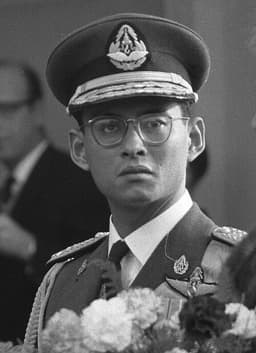
Sarit Thanarat
General · Modern
55.1Total
Basic Information
Born
1758
1908
Died
1817
1963
Era
Modern
Modern
Nationality
France
Thailand
Occupation
General
General
Civilization
Western
Eastern
Score Comparison
Military (10%)
77.2
47.5
Political (20%)
68.0
72.0
Influence (20%)
56.7
53.3
Legacy (20%)
52.0
44.2
Leadership (15%)
48.8
72.0
Strategy (15%)
69.6
43.3
TOTAL
59.4
55.1
Andre Massena — Complete Timeline
1797 AD
Battle of RivoliWar◆ Major
Masséna commanded the French division that held the center against Austrian attacks. His timely counterattack broke the Austrian line, leading to a decisive French victory. This battle secured French control of northern Italy and forced Austria to sue for peace.
French Revolutionary WarsBattleItalian Campaign
Impact: regional
1799 AD
Battle of ZurichWar◆ Major
Masséna defeated a combined Russian-Austrian army under General Korsakov, preventing the Allies from invading France. He used aggressive tactics and interior lines to defeat a larger force. This victory saved the French Republic from collapse during the War of the Second Coalition.
French Revolutionary WarsBattleSwiss Campaign
Impact: regional
1800 AD
Siege of GenoaWar◆ Major
Masséna held Genoa against an Austrian siege for 60 days with his army starving. He surrendered only after exhausting all supplies, but his defense tied down Austrian forces, allowing Napoleon to win the Battle of Marengo. This sacrifice was crucial for Napoleon's Italian campaign.
Napoleonic WarsSiegeSacrifice
Impact: regional
1809 AD
Battle of Aspern-EsslingWar◆ Major
Masséna commanded the French II Corps in the first major defeat of Napoleon. He held the villages of Aspern and Essling against Austrian attacks, but the French were forced to retreat across the Danube. This was Napoleon's first personal defeat and a major setback.
Napoleonic WarsBattleDefeat
Impact: regional
Battle of WagramWar◆ Major
Masséna led the French left wing in the decisive victory over Austria. His corps suffered heavy casualties but held the line, allowing Napoleon to break the Austrian center. The victory led to the Treaty of Schönbrunn and ended the War of the Fifth Coalition.
Napoleonic WarsBattleDecisive Victory
Impact: regional
1810 AD
Invasion of Portugal (Peninsular War)War◆ Major
Masséna led the French invasion of Portugal with 65,000 men. He captured Ciudad Rodrigo and Almeida, but was stopped by Wellington's Lines of Torres Vedras. His army starved and retreated, losing 25,000 men. This failure marked the turning point in the Peninsular War.
Peninsular WarInvasionFailure
Impact: regionaldestructive
Sarit Thanarat — Complete Timeline
1957 AD
Seized power in a coupPolitical Action◆ Major
Sarit Thanarat led a bloodless coup that overthrew the government of Phibun. He established a military dictatorship, dissolved parliament, and imposed martial law.
CoupDictatorshipMilitary Rule
Impact: national
Restored the monarchy's prestigePolitical Action◆ Major
Sarit revived the role of the monarchy, promoting King Bhumibol as a symbol of national unity. He reversed the anti-royalist policies of previous regimes and strengthened the king's ceremonial and political influence.
MonarchyRoyal RestorationNational Unity
Impact: nationalconstructive
1958 AD
Suppressed political opposition and dissentPolitical Action
Sarit cracked down on political opponents, including communists, intellectuals, and journalists. He arrested hundreds, closed newspapers, and banned political parties, consolidating his authoritarian rule.
RepressionAuthoritarianismHuman Rights
Impact: nationaldestructive
1961 AD
Launched the National Economic Development PlanReform◆ Major
Sarit initiated Thailand's first National Economic Development Plan, focusing on infrastructure, industrialization, and agriculture. This plan laid the foundation for Thailand's rapid economic growth in the following decades.
Economic DevelopmentPlanningModernization
Impact: nationalconstructive
Expert Analysis
Origins
Andre Massena was born in 1758 in Nice, then part of the Kingdom of Sardinia. He came from a modest family; his father was a wine merchant. Massena ran away to sea at a young age and later joined the French army in 1775. He rose from the ranks, becoming a sergeant before the Revolution. His early military experience was in the Italian campaigns, where he developed his tactical skills.
Sarit Thanarat was born in 1908 in Bangkok, Thailand. His father was a military officer, which influenced his career. Sarit attended the Chulachomklao Royal Military Academy and began his military service in the artillery. He rose through the ranks during World War II and the post-war period, aligning with conservative factions.
Rise to Power
Massena's rise came during the French Revolutionary Wars. He was promoted to general in 1793 after distinguishing himself at the Siege of Toulon. His key turning point was the Battle of Rivoli in 1797, where his division held the center and counterattacked, leading to a decisive French victory. This earned him the nickname "Dear Child of Victory." By 1799, he was commanding armies independently, winning the Second Battle of Zurich.
Sarit seized power in a bloodless coup on September 17, 1957, overthrowing Prime Minister Phibun Songkhram. He had been a key military figure and used his position as army commander to stage the coup. He initially installed a civilian government but took full control in 1958, dissolving parliament and imposing martial law.
Leadership & Governance
Massena's leadership style was aggressive and inspirational on the battlefield. He led from the front, often in the thick of fighting. His governance approach was less developed; he was primarily a military commander. He scored 48.8 in leadership, reflecting his tactical prowess but limited political acumen. His strategy score of 69.6 shows his effectiveness in planning campaigns.
Sarit's leadership score of 72.0 reflects his authoritarian but effective governance. He centralized power, suppressed dissent, and promoted economic development. His National Economic Development Plan, launched in 1961, focused on infrastructure and industrialization. He also restored the monarchy's prestige, using King Bhumibol as a symbol of unity. However, his suppression of political opposition scored low in political freedom.
Triumph & Tragedy
Massena's greatest triumphs include the Battle of Zurich (1799), where he defeated a larger Russian-Austrian army, and the Siege of Genoa (1800), where he held out for 60 days despite starvation. His greatest failure was at the Battle of Aspern-Essling (1809), where he was unable to prevent Austrian counterattacks, leading to Napoleon's first defeat. He also demonstrated weakness in political maneuvering, failing to secure lasting influence.
Sarit's greatest success was the economic transformation of Thailand. His development plans doubled the country's GDP growth rate. He also strengthened the monarchy, which became a stabilizing force. His tragedy was his authoritarian rule: he arrested thousands, closed newspapers, and banned political parties. His legacy is mixed, as his economic gains came at the cost of civil liberties.
Character & Destiny
Massena was known for his courage and tactical innovation. He was often reckless, leading to high casualties. His character shaped his fate: he was a brilliant commander but not a strategic thinker at the highest level. He scored 77.2 in military but only 52.0 in legacy, as his achievements were overshadowed by Napoleon.
Sarit was pragmatic and ruthless. He understood power and used it effectively to modernize Thailand. His authoritarian streak ensured stability but also created long-term political repression. His destiny was to be a transitional figure who modernized the economy but left a weak democratic foundation.
Legacy
Massena's legacy is primarily as one of Napoleon's marshals. His tactics influenced later military thought, but he is not widely remembered outside France. His score of 52.0 in legacy reflects this limited enduring impact.
Sarit's legacy is more tangible in Thailand's infrastructure and economic policies. His development plans set the stage for Thailand's industrialization. However, his authoritarian legacy also contributed to cycles of military coups. His influence score of 53.3 is slightly higher than Massena's.
Conclusion
Andre Massena had a greater impact in his domain (military) with a higher total score (59.4 vs 55.1). His military achievements in the Napoleonic Wars were significant, though his legacy is limited. Sarit Thanarat transformed Thailand's economy and political structure, but his authoritarian methods constrained his positive impact. Massena's clear military superiority (77.2 vs 47.5) and strategic contributions outweigh Sarit's political and leadership scores. Therefore, Massena had the greater overall impact.
Rankings
🥇
Andre MassenaLeader
Mil: 77.2Pol: 68.0Inf: 56.7
59.4
🥈
Sarit Thanarat
Mil: 47.5Pol: 72.0Inf: 53.3
55.1
+4.3 behind
How This Comparison Works
Algorithm
Each figure is scored on 6 dimensions (0—100 scale) based on structured historical data: Military (10%), Political (20%), Influence (20%), Legacy (20%), Leadership (15%), Strategy (15%). The weighted total produces the final ranking.
Data Sources
Scores are computed from structured sub-indicators in the database. Scale factors adjust for era (Ancient ×0.85, Modern ×1.0) and civilization size (Eastern ×1.05, Other ×0.80) to account for differences in population and military scale.
Maximum 3 Figures
Comparisons are limited to 2—3 figures to ensure readability and statistical meaningfulness.
Error Margins
±5 points per dimension — Sub-scores are derived from historical records with inherent uncertainty. Two figures within 5 points on a dimension should be considered roughly equivalent in that area.
Total Score Accuracy
±3 points overall — The weighted combination of 6 dimensions produces a total score with approximately ±3 points of uncertainty. Differences of less than 3 points are not statistically significant— the figures are effectively tied.
Known Limitations
- Historical records are incomplete and uneven across civilizations
- Figures from oral-tradition societies may be underrepresented
- Occupation labels can misclassify multi-role figures
- Scores measure capability and impact, not moral character
- Quantitative scoring is a comparison tool, not absolute truth
Capability Radar
Military (10%) — Battles & Warfare
Battles
85
20
Win Rate
82
25
Expansion
75
15
Political (20%) — Governance & Reform
Reform
40
60
Diplomacy
50
50
Economy
45
65
Influence (20%) — Cultural & Global Reach
Cultural
60
30
Global
55
20
Legacy (20%) — Historical Impact
Historical
70
40
Longevity
55
25
Leadership (15%) — Power & Stability
Tenure
55
55
Stability
50
45
Strategy (15%) — Tactics & Innovation
Strategy
85
35
Tactics
88
30
Reform
60
40
Similar Comparisons
Comments & Discussion
No comments yet. Be the first to share your thoughts!