Loading...
Osman Digna vs Sarit Thanarat
Sarit Thanarat leads by 0.4 pts · 2 figures compared
…

Osman Digna
General · Modern
54.7Total
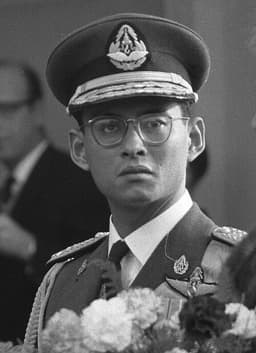
Sarit Thanarat
General · Modern
55.1Total
Basic Information
Born
1840
1908
Died
1926
1963
Era
Modern
Modern
Nationality
Sudan
Thailand
Occupation
General
General
Civilization
Other
Eastern
Score Comparison
Military (10%)
67.5
47.5
Political (20%)
39.4
72.0
Influence (20%)
61.0
53.3
Legacy (20%)
50.0
44.2
Leadership (15%)
62.0
72.0
Strategy (15%)
50.0
43.3
TOTAL
54.7
55.1
Osman Digna — Complete Timeline
1884 AD
Command at the Battle of TamaiWar◆ Major
Osman Digna led Mahdist forces to victory against a British-Egyptian army at the Battle of Tamai in eastern Sudan. The defeat forced British forces to retreat and secured Mahdist control over the Red Sea coast region.
Mahdist WarBattle of TamaiRed Sea
Impact: regional
Siege of SuakinWar◆ Major
Osman Digna besieged the British-held port of Suakin from 1884 to 1885. Although he failed to capture the city, his forces repeatedly defeated British relief columns and tied down significant British military resources.
Siege of SuakinMahdist WarBritish Blockade
Impact: regional
1891 AD
Defeat at the Battle of TokarWar◆ Major
Osman Digna's forces were decisively defeated by British-Egyptian troops at the Battle of Tokar. This loss ended Mahdist control over the eastern Sudan region and forced Digna to retreat into the interior.
Mahdist WarBattle of TokarBritish Victory
Impact: regional
1900 AD
Capture and ImprisonmentWar◆ Major
Osman Digna was captured by British forces in January 1900 after years of guerrilla warfare. He was imprisoned in Egypt, first in Cairo and later in Alexandria, where he remained until his death in 1926.
CaptureImprisonmentMahdist Defeat
Impact: regionaltragic
Sarit Thanarat — Complete Timeline
1957 AD
Seized power in a coupPolitical Action◆ Major
Sarit Thanarat led a bloodless coup that overthrew the government of Phibun. He established a military dictatorship, dissolved parliament, and imposed martial law.
CoupDictatorshipMilitary Rule
Impact: national
Restored the monarchy's prestigePolitical Action◆ Major
Sarit revived the role of the monarchy, promoting King Bhumibol as a symbol of national unity. He reversed the anti-royalist policies of previous regimes and strengthened the king's ceremonial and political influence.
MonarchyRoyal RestorationNational Unity
Impact: nationalconstructive
1958 AD
Suppressed political opposition and dissentPolitical Action
Sarit cracked down on political opponents, including communists, intellectuals, and journalists. He arrested hundreds, closed newspapers, and banned political parties, consolidating his authoritarian rule.
RepressionAuthoritarianismHuman Rights
Impact: nationaldestructive
1961 AD
Launched the National Economic Development PlanReform◆ Major
Sarit initiated Thailand's first National Economic Development Plan, focusing on infrastructure, industrialization, and agriculture. This plan laid the foundation for Thailand's rapid economic growth in the following decades.
Economic DevelopmentPlanningModernization
Impact: nationalconstructive
Expert Analysis
Origins
Osman Digna was born around 1840 in the Hadendoa tribe of eastern Sudan. Little is known of his early life, but he emerged as a follower of the Mahdi, Muhammad Ahmad, who proclaimed a jihad against Egyptian and British rule. Digna's tribal connections and guerrilla skills made him a natural leader. Sarit Thanarat was born on June 16, 1908, in Bangkok, Thailand, into a military family. He attended the Chulachomklao Royal Military Academy and served in the army, rising through the ranks. His formative years were shaped by the 1932 revolution that ended absolute monarchy and his subsequent loyalty to Field Marshal Phibunsongkhram.
Rise to Power
Osman Digna rose to prominence in the 1880s as a Mahdist commander in eastern Sudan. He won the Battle of Tamai in 1884, forcing British forces to retreat. His siege of Suakin (1884-1885) failed to capture the port, but his repeated victories against British columns solidified his reputation. Sarit Thanarat's rise culminated in the 1957 coup, when he overthrew Phibun and established a military dictatorship. He dissolved parliament, imposed martial law, and ruled as prime minister from 1959 until his death in 1963. His power base was the army and his alliance with King Bhumibol.
Leadership & Governance
Osman Digna led through tribal loyalty and guerrilla tactics. He maintained Mahdist control over eastern Sudan for years, using hit-and-run attacks against superior British firepower. However, his governance was limited to military command; he never established a civil administration. Sarit Thanarat, by contrast, centralized power and launched Thailand's first National Economic Development Plan in 1961, focusing on infrastructure and industrialization. He revived the monarchy's prestige, positioning King Bhumibol as a unifying symbol. His regime also suppressed dissent, arresting hundreds of communists and intellectuals.
Triumph & Tragedy
Osman Digna's greatest success was the Battle of Tamai (1884), where he inflicted heavy casualties on a British-Egyptian force. His greatest failure was the Siege of Suakin (1884-1885), where he failed to capture the port, and ultimately his capture in 1900 after years of guerrilla warfare. He died in exile in 1926. Sarit Thanarat's triumph was his economic development plan, which laid the foundation for Thailand's growth. His tragedy was his authoritarian crackdown, which stifled political freedoms and created a culture of corruption. He died in 1963 of liver disease, leaving a mixed legacy.
Character & Destiny
Osman Digna was tenacious and adaptable, using the terrain to his advantage. His religious fervor and tribal leadership kept his forces motivated, but his inability to adapt to conventional warfare led to his downfall. Sarit Thanarat was pragmatic and ruthless, prioritizing national development over democracy. His character was shaped by a desire for order and progress, but his authoritarian methods alienated many. Both men's destinies were tied to their eras: Digna's resistance against colonialism and Sarit's Cold War authoritarianism.
Legacy
Osman Digna is remembered as a symbol of Sudanese resistance against British imperialism. His military tactics influenced later guerrilla movements, but his overall impact is limited to the Mahdist period. Sarit Thanarat's legacy is more substantial: his economic plan transformed Thailand from an agrarian to an industrializing economy, and his restoration of the monarchy's role shaped Thai politics for decades. However, his suppression of democracy set a precedent for military intervention. In numerical terms, Sarit Thanarat scores 72.0 in political leadership and 72.0 in leadership, while Osman Digna scores 67.5 in military and 62.0 in leadership.
Conclusion
While Osman Digna was a skilled guerrilla commander, his impact was confined to a specific region and period. Sarit Thanarat, with a total score of 55.1 against Digna's 54.7, had a broader and more enduring impact on Thailand's development. His economic policies and monarchical revival reshaped a nation, whereas Digna's resistance, though heroic, ultimately failed to prevent colonial domination. Therefore, Sarit Thanarat had greater historical impact.
Rankings
🥇
Sarit ThanaratLeader
Mil: 47.5Pol: 72.0Inf: 53.3
55.1
🥈
Osman Digna
Mil: 67.5Pol: 39.4Inf: 61.0
54.7
+0.4 behind
How This Comparison Works
Algorithm
Each figure is scored on 6 dimensions (0—100 scale) based on structured historical data: Military (10%), Political (20%), Influence (20%), Legacy (20%), Leadership (15%), Strategy (15%). The weighted total produces the final ranking.
Data Sources
Scores are computed from structured sub-indicators in the database. Scale factors adjust for era (Ancient ×0.85, Modern ×1.0) and civilization size (Eastern ×1.05, Other ×0.80) to account for differences in population and military scale.
Maximum 3 Figures
Comparisons are limited to 2—3 figures to ensure readability and statistical meaningfulness.
Error Margins
±5 points per dimension — Sub-scores are derived from historical records with inherent uncertainty. Two figures within 5 points on a dimension should be considered roughly equivalent in that area.
Total Score Accuracy
±3 points overall — The weighted combination of 6 dimensions produces a total score with approximately ±3 points of uncertainty. Differences of less than 3 points are not statistically significant— the figures are effectively tied.
Known Limitations
- Historical records are incomplete and uneven across civilizations
- Figures from oral-tradition societies may be underrepresented
- Occupation labels can misclassify multi-role figures
- Scores measure capability and impact, not moral character
- Quantitative scoring is a comparison tool, not absolute truth
Capability Radar
Military (10%) — Battles & Warfare
Battles
65
20
Win Rate
60
25
Expansion
55
15
Political (20%) — Governance & Reform
Reform
20
60
Diplomacy
40
50
Economy
15
65
Influence (20%) — Cultural & Global Reach
Cultural
40
30
Global
35
20
Legacy (20%) — Historical Impact
Historical
50
40
Longevity
45
25
Leadership (15%) — Power & Stability
Tenure
55
55
Stability
30
45
Strategy (15%) — Tactics & Innovation
Strategy
65
35
Tactics
70
30
Reform
30
40
Similar Comparisons
Comments & Discussion
No comments yet. Be the first to share your thoughts!