Loading...
Fernando Alvarez de Toledo Duke of Alba vs Merzifonlu Kara Mustafa Pasha
Fernando Alvarez de Toledo Duke of Alba leads by 3.3 pts · 2 figures compared
…
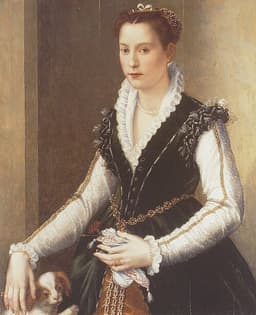
Fernando Alvarez de Toledo Duke of Alba
General · Modern
65.3Total

Merzifonlu Kara Mustafa Pasha
General · Modern
62.0Total
Basic Information
Born
1507
1634
Died
1582
1683
Era
Modern
Modern
Nationality
Spain
Ottoman Empire
Occupation
General
General
Civilization
Western
Middle Eastern
Score Comparison
Military (10%)
74.0
80.8
Political (20%)
48.0
68.0
Influence (20%)
65.0
56.7
Legacy (20%)
72.0
58.0
Leadership (15%)
62.0
62.0
Strategy (15%)
72.0
57.5
TOTAL
65.3
62.0
Fernando Alvarez de Toledo Duke of Alba — Complete Timeline
1567 AD
Established the Council of TroublesPolitical Action◆ Major
Alba established the Council of Troubles, also known as the Blood Council, to prosecute those involved in the Dutch Revolt. This tribunal sentenced thousands to death, including the Counts of Egmont and Horne, intensifying resistance.
RepressionDutch RevoltInquisition
Impact: regionaldestructive
1568 AD
Battle of JemmingenWar◆ Major
Alba's Spanish army decisively defeated the rebel forces of Louis of Nassau at Jemmingen. The rebel army was destroyed, with thousands killed or drowned in the Ems River, temporarily crushing the revolt's military strength.
BattleDutch RevoltSpanish Army
Impact: regionaldestructive
1571 AD
Imposed the Tenth Penny TaxReform◆ Major
Alba attempted to impose a 10% sales tax (the Tenth Penny) on all movable goods in the Netherlands. This tax was deeply unpopular and sparked widespread economic disruption and renewed rebellion, undermining Spanish control.
TaxationRevoltEconomic Policy
Impact: regionaldestructive
1573 AD
Recalled from the NetherlandsPolitical Action◆ Major
King Philip II recalled Alba from his governorship of the Netherlands after his policies failed to suppress the revolt. Alba's harsh rule had alienated both Catholics and Protestants, and his military campaigns had stalled.
RecallNetherlandsSpanish Empire
Impact: regional
Merzifonlu Kara Mustafa Pasha — Complete Timeline
1683 AD
Siege of ViennaWar
Merzifonlu Kara Mustafa Pasha led the Ottoman army in the siege of Vienna. The campaign failed when a Polish-led relief force under King John III Sobieski defeated the Ottomans at the Battle of Vienna. The defeat marked the end of Ottoman expansion into Europe.
Ottoman-Habsburg WarSiegeTurning Point
Impact: globaltragic
Execution by Order of Sultan Mehmed IVPolitical Action◆ Major
After the failed siege of Vienna, Sultan Mehmed IV ordered the execution of Merzifonlu Kara Mustafa Pasha. He was strangled in Belgrade on the sultan's orders, held responsible for the disastrous campaign and the loss of Ottoman prestige.
ExecutionOttoman PoliticsScapegoat
Impact: nationaltragic
Expert Analysis
Origins
Fernando Álvarez de Toledo, Duke of Alba (1507–1582), was born into Spanish nobility. His grandfather was the second Duke of Alba, and he was raised in the court of King Charles I. He received military training from a young age, participating in campaigns against the French and the Ottoman Empire. Alba's early career included service in the Battle of Mühlberg (1547) and the Siege of Metz (1552). His upbringing in a martial environment shaped his rigid, authoritarian worldview.
Merzifonlu Kara Mustafa Pasha (1634/35–1683) was born in Merzifon, Anatolia, likely of Albanian or Turkish origin. He was adopted into the household of the powerful Köprülü family, who dominated Ottoman politics. He was educated as a devşirme recruit, rising through the ranks of the Janissary corps. His mentor was Grand Vizier Köprülü Fazıl Ahmed Pasha, whose death in 1676 left Kara Mustafa as the next grand vizier. His background as a state slave and military officer instilled ambition and a sense of destiny.
Rise to Power
Alba's rise was gradual, rooted in his military successes and his loyalty to the Spanish Habsburgs. He became a trusted commander of King Philip II, leading campaigns in Italy, France, and Africa. In 1567, Philip appointed him governor of the Spanish Netherlands with the mission to suppress the Dutch Revolt. Alba arrived with an army of 10,000 veteran troops and immediately established the Council of Troubles, a tribunal that executed thousands (including Counts Egmont and Horn) and confiscated property. His ruthlessness earned him the title "Iron Duke."
Kara Mustafa's rise was meteoric due to the Köprülü patronage. He became grand vizier in 1676, succeeding his adoptive father. He quickly sought to prove himself by expanding Ottoman territory. He launched campaigns against the Polish-Lithuanian Commonwealth, capturing key fortresses in Ukraine. His greatest ambition was to capture Vienna, the Habsburg capital, which he saw as the culmination of Ottoman expansion into Central Europe. In 1683, he led an army of over 100,000 men towards Vienna, confident of victory.
Leadership & Governance
Alba's governance in the Netherlands was characterized by military occupation and fiscal oppression. He imposed the Tenth Penny tax (a 10% sales tax on all movable goods) to fund his army, which sparked widespread resistance. He relied on terror: the Council of Troubles sentenced over 1,000 people to death in its first year alone. His leadership score of 62.0 reflects his inability to adapt to political realities; he viewed the revolt purely as a rebellion to be crushed by force, ignoring the underlying grievances of the Dutch nobility and merchants.
Kara Mustafa's leadership was ambitious but flawed. He was a capable administrator but overconfident in military matters. He failed to secure the support of other Ottoman vassals (like the Crimean Tatars) during the Vienna campaign. He also neglected to bring sufficient siege artillery, believing the city would surrender quickly. His political score of 68.0 indicates some skill in court politics, but his strategic score of 57.5 reveals his poor decision-making during the siege. He allowed the relief army to approach without disrupting its march, a fatal error.
Triumph & Tragedy
Alba's greatest triumph was the Battle of Jemmingen (1568), where his Spanish army decisively defeated the rebel forces of Louis of Nassau, killing thousands and scattering the rebels. This victory temporarily secured the southern Netherlands. However, his greatest tragedy was the failure of his overall policy. The Tenth Penny tax united all classes against Spanish rule, leading to the Dutch Revolt's escalation. In 1573, King Philip II recalled Alba, admitting his approach had failed. Alba left the Netherlands more rebellious than when he arrived.
Kara Mustafa's greatest triumph was the successful siege of Kamianets-Podilskyi (1672) and the subsequent Treaty of Buchach, which expanded Ottoman control over Podolia. His tragedy was the Siege of Vienna (1683). After surrounding the city for two months, his army was routed by a Polish-led relief force under King John III Sobieski. The defeat was catastrophic: the Ottomans lost 15,000 men and all their siege equipment. Kara Mustafa was executed on the sultan's orders in Belgrade, his head presented to Mehmed IV. He died a scapegoat for a campaign he had mismanaged.
Character & Destiny
Alba was a disciplinarian and a zealot. He believed in absolute obedience and the divine right of the king. His character was rigid; he saw compromise as weakness. This inflexibility led to his downfall, as he could not grasp the political dimensions of the Dutch Revolt. Historians note his cruelty but also his personal courage and loyalty. He scored 72.0 in Legacy and 74.0 in Military, reflecting his lasting reputation as a fearsome general.
Kara Mustafa was ambitious, proud, and impatient. He craved glory and underestimated his enemies. His decision to besiege Vienna late in the season and his failure to coordinate with allies were acts of hubris. His destiny was sealed by his own strategic blunders. He scored 80.8 in Military, the highest among his scores, but his Legacy score of 58.0 indicates that his defeat defined his memory. He is remembered as the man who lost the Ottoman Empire's best chance to capture Vienna.
Legacy
Alba's legacy is mixed. In Spain, he is remembered as a loyal general who upheld Habsburg power. In the Netherlands, he is a symbol of tyranny. The Council of Troubles became a byword for oppression. His military tactics influenced Spanish warfare, but his political failures contributed to the Dutch Republic's independence. His overall score of 65.3 places him above Kara Mustafa.
Kara Mustafa's legacy is overwhelmingly negative in Ottoman history. The failed siege of Vienna marked the beginning of the Ottoman Empire's long decline. It shattered the myth of Ottoman invincibility and triggered a series of wars that weakened the empire. His execution was a turning point, leading to reforms in the Janissary corps. However, his earlier successes in Ukraine are largely forgotten. His score of 62.0 reflects his lesser impact.
Conclusion
While both men were capable military commanders, Alba had a greater overall impact. His score of 65.3 versus Kara Mustafa's 62.0 reflects his more enduring legacy, even if largely negative. Alba's actions in the Netherlands shaped the course of European history by fueling the Dutch Revolt, which resulted in the Dutch Republic's independence—a major economic and naval power. Kara Mustafa's defeat at Vienna, while significant, was a single event that accelerated a decline already underway. Alba's methods influenced colonial repression for centuries, whereas Kara Mustafa's failures were more personal. Therefore, Alba edges out Kara Mustafa in historical significance, though neither achieved greatness in the positive sense.
Rankings
🥇
Fernando Alvarez de Toledo Duke of AlbaLeader
Mil: 74.0Pol: 48.0Inf: 65.0
65.3
🥈
Merzifonlu Kara Mustafa Pasha
Mil: 80.8Pol: 68.0Inf: 56.7
62.0
+3.3 behind
How This Comparison Works
Algorithm
Each figure is scored on 6 dimensions (0—100 scale) based on structured historical data: Military (10%), Political (20%), Influence (20%), Legacy (20%), Leadership (15%), Strategy (15%). The weighted total produces the final ranking.
Data Sources
Scores are computed from structured sub-indicators in the database. Scale factors adjust for era (Ancient ×0.85, Modern ×1.0) and civilization size (Eastern ×1.05, Other ×0.80) to account for differences in population and military scale.
Maximum 3 Figures
Comparisons are limited to 2—3 figures to ensure readability and statistical meaningfulness.
Error Margins
±5 points per dimension — Sub-scores are derived from historical records with inherent uncertainty. Two figures within 5 points on a dimension should be considered roughly equivalent in that area.
Total Score Accuracy
±3 points overall — The weighted combination of 6 dimensions produces a total score with approximately ±3 points of uncertainty. Differences of less than 3 points are not statistically significant— the figures are effectively tied.
Known Limitations
- Historical records are incomplete and uneven across civilizations
- Figures from oral-tradition societies may be underrepresented
- Occupation labels can misclassify multi-role figures
- Scores measure capability and impact, not moral character
- Quantitative scoring is a comparison tool, not absolute truth
Capability Radar
Military (10%) — Battles & Warfare
Battles
85
75
Win Rate
80
65
Expansion
70
78
Political (20%) — Governance & Reform
Reform
40
50
Diplomacy
30
45
Economy
35
40
Influence (20%) — Cultural & Global Reach
Cultural
55
55
Global
65
60
Legacy (20%) — Historical Impact
Historical
70
65
Longevity
60
50
Leadership (15%) — Power & Stability
Tenure
65
55
Stability
20
30
Strategy (15%) — Tactics & Innovation
Strategy
85
72
Tactics
90
70
Reform
75
60
Similar Comparisons
Fernando Alvarez de Toledo Duke of Alba vs Julius CaesarMerzifonlu Kara Mustafa Pasha vs Napoleon BonaparteFernando Alvarez de Toledo Duke of Alba vs Napoleon BonaparteLakshmibai vs Merzifonlu Kara Mustafa PashaMerzifonlu Kara Mustafa Pasha vs Sarit ThanaratFernando Alvarez de Toledo Duke of Alba vs George S. Patton
Comments & Discussion
No comments yet. Be the first to share your thoughts!