Loading...
Joseph Arthur Ankrah vs Sarit Thanarat
Sarit Thanarat leads by 13.6 pts · 2 figures compared
…
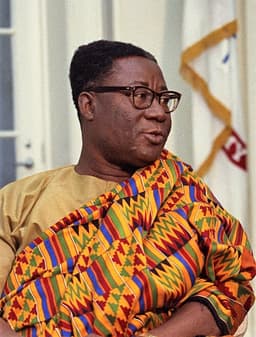
Joseph Arthur Ankrah
General · Modern
41.5Total
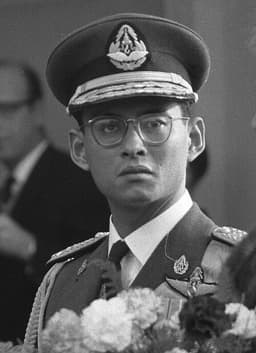
Sarit Thanarat
General · Modern
55.1Total
Basic Information
Born
1915
1908
Died
1992
1963
Era
Modern
Modern
Nationality
Ghana
Thailand
Occupation
General
General
Civilization
Other
Eastern
Score Comparison
Military (10%)
10.2
47.5
Political (20%)
46.6
72.0
Influence (20%)
48.6
53.3
Legacy (20%)
40.0
44.2
Leadership (15%)
55.3
72.0
Strategy (15%)
30.3
43.3
TOTAL
41.5
55.1
Joseph Arthur Ankrah — Complete Timeline
1966 AD
Appointment as Chairman of the National Liberation CouncilPolitical Action◆ Major
After the coup that overthrew Kwame Nkrumah, Ankrah was appointed Chairman of the National Liberation Council (NLC), Ghana's military government. He led the country during the transition from Nkrumah's rule.
Military GovernmentCoupNLC
Impact: national
1969 AD
Resignation due to corruption scandalPolitical Action◆ Major
Ankrah resigned as NLC Chairman after a scandal involving funds from a Nigerian businessman. The scandal undermined the NLC's credibility and led to his replacement by Akwasi Afrifa.
CorruptionResignationScandal
Impact: nationaldestructive
Sarit Thanarat — Complete Timeline
1957 AD
Seized power in a coupPolitical Action◆ Major
Sarit Thanarat led a bloodless coup that overthrew the government of Phibun. He established a military dictatorship, dissolved parliament, and imposed martial law.
CoupDictatorshipMilitary Rule
Impact: national
Restored the monarchy's prestigePolitical Action◆ Major
Sarit revived the role of the monarchy, promoting King Bhumibol as a symbol of national unity. He reversed the anti-royalist policies of previous regimes and strengthened the king's ceremonial and political influence.
MonarchyRoyal RestorationNational Unity
Impact: nationalconstructive
1958 AD
Suppressed political opposition and dissentPolitical Action
Sarit cracked down on political opponents, including communists, intellectuals, and journalists. He arrested hundreds, closed newspapers, and banned political parties, consolidating his authoritarian rule.
RepressionAuthoritarianismHuman Rights
Impact: nationaldestructive
1961 AD
Launched the National Economic Development PlanReform◆ Major
Sarit initiated Thailand's first National Economic Development Plan, focusing on infrastructure, industrialization, and agriculture. This plan laid the foundation for Thailand's rapid economic growth in the following decades.
Economic DevelopmentPlanningModernization
Impact: nationalconstructive
Expert Analysis
Origins
Joseph Arthur Ankrah was born on August 18, 1915, in Accra, Gold Coast (now Ghana), into a Ga family. He attended the Government Boys School and later the Accra Academy. He enlisted in the Gold Coast Regiment of the British Army in 1939, serving in World War II. After the war, he rose through the ranks, becoming a lieutenant colonel by 1956. His military career was steady but unremarkable, with no major combat commands.
Sarit Thanarat was born on June 16, 1908, in Bangkok, Thailand, to a military family. His father was a major in the Royal Thai Army. Sarit attended the Chulachomklao Royal Military Academy, graduating in 1928. He served in various infantry units and gained experience in suppressing rebellions. His early career was marked by loyalty to the military hierarchy, but he also developed political ambitions.
Rise to Power
Ankrah's rise came through the 1966 coup that overthrew President Kwame Nkrumah. On February 24, 1966, while Nkrumah was visiting China, the military seized power. Ankrah, then a major general, was appointed Chairman of the National Liberation Council (NLC), the ruling junta. He had no prior political experience and was chosen for his seniority and perceived neutrality. His leadership was accepted by the public initially, as Nkrumah's regime had become increasingly authoritarian.
Sarit seized power in a bloodless coup on September 17, 1957, overthrowing Prime Minister Phibun Songkhram. Sarit had been a key military commander under Phibun but grew dissatisfied with his rule. After the coup, Sarit dissolved parliament, imposed martial law, and established himself as the absolute leader. He later staged a second coup in 1958 to consolidate power, becoming prime minister and field marshal. His rise was driven by his control over the army and his alliance with the monarchy.
Leadership & Governance
Ankrah's leadership style was cautious and conciliatory. The NLC focused on restoring civilian rule and stabilizing the economy. They devalued the currency, cut public spending, and invited foreign investment. Ankrah also released political prisoners and allowed exiles to return. However, his government was criticized for failing to address corruption and for its close ties to Western powers. His political score of 46.6 reflects his limited impact.
Sarit ruled as a dictator with absolute authority. He launched Thailand's first National Economic Development Plan in 1961, emphasizing infrastructure, industrialization, and agriculture. His regime built roads, dams, and schools, boosting economic growth. He also restored the prestige of the monarchy, promoting King Bhumibol as a symbol of unity. However, he suppressed dissent brutally, arresting hundreds of opponents and closing newspapers. His political score of 72.0 reflects his strong control and governance impact.
Triumph & Tragedy
Ankrah's greatest success was overseeing a relatively peaceful transition from Nkrumah's rule. The NLC organized elections in 1969, returning Ghana to civilian government. His failure was his involvement in a corruption scandal: in 1969, it was revealed he had accepted funds from a Nigerian businessman. He resigned on April 2, 1969, discrediting the NLC. His legacy score of 40.0 reflects this tarnished record.
Sarit's triumph was transforming Thailand's economy and strengthening the monarchy. His development plans laid the foundation for decades of growth. His tragedy was his authoritarianism: his regime's brutality alienated many Thais and set a precedent for military intervention in politics. His military score of 47.5 is modest, but his leadership score of 72.0 shows his effectiveness.
Character & Destiny
Ankrah was known as a modest and honest man, but his indecisiveness and lack of political acumen led to his downfall. He was not corrupt personally but failed to prevent corruption in his administration. His resignation showed a sense of responsibility, but it also highlighted his weakness.
Sarit was ruthless and pragmatic. He was a heavy drinker and womanizer, but his charisma and decisiveness commanded loyalty. He believed in strong central authority and used the monarchy to legitimize his rule. His death from liver failure in 1963 at age 55 left a power vacuum, but his policies endured.
Legacy
Ankrah is remembered as a transitional figure who ended Nkrumah's rule but failed to establish lasting reforms. His brief tenure (1966-1969) is often overshadowed by the corruption scandal. Ghana's political instability continued after him. His influence score of 48.6 reflects this limited impact.
Sarit's legacy is more significant. His economic development plans transformed Thailand, and his restoration of the monarchy shaped Thai politics for decades. However, his authoritarian methods also entrenched military influence. His influence score of 53.3 is higher, but his legacy is mixed: he is both praised as a modernizer and condemned as a dictator.
Conclusion
Sarit Thanarat had a greater impact than Joseph Arthur Ankrah. With a total score of 55.1 against Ankrah's 41.5, Sarit's governance and economic reforms reshaped Thailand, while Ankrah's rule was brief and ended in scandal. Sarit's political score of 72.0 far exceeds Ankrah's 46.6, reflecting his stronger control and policy achievements. Although both were military rulers, Sarit's development plans and monarchy revival had lasting effects, whereas Ankrah's legacy is largely negative. Thus, Sarit's influence on Thailand's modernization outweighs Ankrah's transient role in Ghana.
Rankings
🥇
Sarit ThanaratLeader
Mil: 47.5Pol: 72.0Inf: 53.3
55.1
🥈
Joseph Arthur Ankrah
Mil: 10.2Pol: 46.6Inf: 48.6
41.5
+13.6 behind
How This Comparison Works
Algorithm
Each figure is scored on 6 dimensions (0—100 scale) based on structured historical data: Military (10%), Political (20%), Influence (20%), Legacy (20%), Leadership (15%), Strategy (15%). The weighted total produces the final ranking.
Data Sources
Scores are computed from structured sub-indicators in the database. Scale factors adjust for era (Ancient ×0.85, Modern ×1.0) and civilization size (Eastern ×1.05, Other ×0.80) to account for differences in population and military scale.
Maximum 3 Figures
Comparisons are limited to 2—3 figures to ensure readability and statistical meaningfulness.
Error Margins
±5 points per dimension — Sub-scores are derived from historical records with inherent uncertainty. Two figures within 5 points on a dimension should be considered roughly equivalent in that area.
Total Score Accuracy
±3 points overall — The weighted combination of 6 dimensions produces a total score with approximately ±3 points of uncertainty. Differences of less than 3 points are not statistically significant— the figures are effectively tied.
Known Limitations
- Historical records are incomplete and uneven across civilizations
- Figures from oral-tradition societies may be underrepresented
- Occupation labels can misclassify multi-role figures
- Scores measure capability and impact, not moral character
- Quantitative scoring is a comparison tool, not absolute truth
Capability Radar
Military (10%) — Battles & Warfare
Battles
5
20
Win Rate
5
25
Expansion
5
15
Political (20%) — Governance & Reform
Reform
40
60
Diplomacy
30
50
Economy
30
65
Influence (20%) — Cultural & Global Reach
Cultural
10
30
Global
10
20
Legacy (20%) — Historical Impact
Historical
20
40
Longevity
10
25
Leadership (15%) — Power & Stability
Tenure
30
55
Stability
20
45
Strategy (15%) — Tactics & Innovation
Strategy
10
35
Tactics
10
30
Reform
20
40
Similar Comparisons
Comments & Discussion
No comments yet. Be the first to share your thoughts!