Loading...
Matsudaira Nobutsuna vs Nicolas Sarkozy
Matsudaira Nobutsuna leads by 1.1 pts · 2 figures compared
…
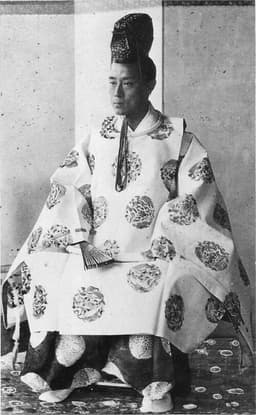
Matsudaira Nobutsuna
Politician · Modern
52.5Total

Nicolas Sarkozy
Politician · Modern
51.4Total
Basic Information
Born
1596
1955
Died
1662
—
Era
Modern
Modern
Nationality
Japan
France
Occupation
Politician
Politician
Civilization
Eastern
Western
Score Comparison
Military (10%)
30.0
10.0
Political (20%)
68.0
62.7
Influence (20%)
51.8
61.0
Legacy (20%)
45.0
46.7
Leadership (15%)
72.0
68.0
Strategy (15%)
43.3
38.3
TOTAL
52.5
51.4
Matsudaira Nobutsuna — Complete Timeline
1633 AD
Appointment as Senior Councilor (Roju)Political Action◆ Major
Nobutsuna was appointed to the powerful position of roju under Shogun Tokugawa Iemitsu. This role made him one of the highest-ranking officials in the Tokugawa shogunate, responsible for major policy decisions and military command.
AppointmentTokugawa shogunateRoju
Impact: nationalconstructive
1638 AD
Suppression of the Shimabara RebellionWar◆ Major
As a senior councilor, Matsudaira Nobutsuna commanded shogunate forces in the siege of Hara Castle, crushing the Christian-led peasant uprising. The rebellion's suppression led to the finalization of Japan's national seclusion policy and the persecution of Christians.
Shimabara RebellionChristian persecutionSiege
Impact: nationaldestructive
1642 AD
Oversight of the Kan'ei Great Famine ReliefReform
During the severe Kan'ei famine, Nobutsuna implemented relief measures including rice distribution and tax reductions in domains under his control. His actions mitigated some suffering but the famine still caused widespread death across Japan.
Famine reliefKan'ei eraDisaster response
Impact: nationalconstructive
Nicolas Sarkozy — Complete Timeline
2007 AD
Election as President of FrancePolitical Action
Sarkozy defeated Socialist candidate S
French ElectionUMPPresidency
Impact: national
2010 AD
Reform of the French Pension SystemReform◆ Major
Sarkozy's government raised the minimum retirement age from 60 to 62 and the full-pension age from 65 to 67. The reform sparked massive strikes and protests across France but was passed to address the system's long-term financial sustainability.
Pension ReformLabor PolicyProtests
Impact: nationaldestructive
2011 AD
Leadership in the 2011 Libyan InterventionWar◆ Major
Sarkozy played a leading role in the NATO-led military intervention in Libya, launching airstrikes against Muammar Gaddafi's forces. The intervention helped topple Gaddafi but led to prolonged instability and civil war in Libya.
LibyaNATOMilitary Intervention
Impact: regional
Expert Analysis
Origins
Matsudaira Nobutsuna was born in 1596 into a prominent samurai family serving the Tokugawa shogunate. His father, Matsudaira Yasunaga, was a daimyo, and Nobutsuna grew up immersed in the warrior ethos of early Edo-period Japan. He received education in Confucian classics and military strategy, preparing him for a career in shogunal administration.
Nicolas Sarkozy was born on January 28, 1955, in Paris, to a Hungarian immigrant father and a French mother. His father abandoned the family when Nicolas was young, leaving them in modest circumstances. Sarkozy studied law and political science at Sciences Po and later earned a degree in private law. He entered politics early, becoming mayor of Neuilly-sur-Seine at age 28.
Rise to Power
Nobutsuna rose through the ranks of the Tokugawa bureaucracy, earning the trust of Shogun Tokugawa Iemitsu. In 1633, he was appointed as a junior councilor (wakadoshiyori), and by 1635 he became a senior councilor (roju), one of the highest positions in the shogunate. His decisive moment came in 1637-1638 during the Shimabara Rebellion, where he commanded shogunate forces against 37,000 Christian peasants and ronin at Hara Castle. After a brutal siege, the rebellion was crushed, and Nobutsuna's reputation as a loyal enforcer was cemented.
Sarkozy's rise began in the 1980s as a protégé of Jacques Chirac. He served as minister of budget in 1993 and later as minister of interior in 2002, where he gained popularity for a tough stance on crime. In 2007, he won the presidency with 53% of the vote against Socialist Ségolène Royal, campaigning on a platform of reform and rupture with the past. His energetic style and media savvy propelled him to the top of French politics.
Leadership & Governance
Nobutsuna governed as a traditional shogunate official, focusing on maintaining order and enforcing Tokugawa authority. He oversaw relief efforts during the Kan'ei Great Famine (1642-1643), distributing rice and implementing tax reductions in domains under his control. However, his governance was primarily reactive, upholding the existing feudal system rather than innovating. His political score of 68.0 reflects his effectiveness within the shogunate, but his military score of 30.0 shows limited direct combat role.
Sarkozy pursued aggressive reforms, particularly in the economy and social policy. He raised the retirement age from 60 to 62 and the full-pension age from 65 to 67, sparking massive protests. He also introduced tax breaks for overtime work and stricter immigration controls. His leadership score of 68.0 indicates decisive action, but his strategy score of 38.3 suggests poor long-term planning, as many reforms were rolled back later.
Triumph & Tragedy
Nobutsuna's greatest triumph was the suppression of the Shimabara Rebellion, which eliminated the last major Christian threat in Japan and solidified shogunate control. However, the siege was costly: over 10,000 rebels died, and the shogunate's heavy-handed tactics alienated local populations. His famine relief efforts were modestly successful but did not prevent widespread suffering.
Sarkozy's triumph was his role in the 2011 Libyan intervention, where he led NATO airstrikes that helped topple Muammar Gaddafi. This boosted his international standing. However, the intervention led to Libya's collapse into civil war and a migrant crisis, tarnishing his legacy. Domestically, his pension reform passed but at the cost of public trust, and his presidency ended with low approval ratings.
Character & Destiny
Nobutsuna was methodical, loyal, and ruthless when necessary. His decision to besiege Hara Castle and massacre its defenders reflected the shogunate's zero-tolerance policy toward Christianity. His character aligned with the rigid hierarchical society of Edo Japan, ensuring his rise but limiting his adaptability. He died in 1662, having served under four shoguns.
Sarkozy was energetic, ambitious, and confrontational. His hyperactive style earned him the nickname "the American president" and polarized French politics. His tendency to centralize power and alienate allies led to his defeat in the 2012 election. His character drove his reforms but also his downfall.
Legacy
Nobutsuna's legacy is tied to the Tokugawa shogunate's stabilization. The Shimabara Rebellion's suppression led to stricter isolationist policies (sakoku) and the persecution of Christians, shaping Japan's closed society for over two centuries. His administrative work helped maintain shogunate authority, but he is largely forgotten outside specialist circles. His influence score of 51.8 reflects moderate impact within Japan's feudal context.
Sarkozy's legacy is mixed: he modernized aspects of the French economy and pension system, but his confrontational style damaged political cohesion. The Libyan intervention remains controversial, with many blaming him for the subsequent chaos. He is remembered as a transformative but divisive figure. His influence score of 61.0 shows greater global impact compared to Nobutsuna.
Conclusion
While Matsudaira Nobutsuna scores slightly higher overall (52.5 vs 51.4), Nicolas Sarkozy had greater impact on the modern world. Nobutsuna's actions reinforced an isolationist system that eventually collapsed, whereas Sarkozy's reforms and international interventions shaped contemporary French and European politics. Sarkozy's 61.0 influence score and his role in global affairs give him an edge in lasting significance. However, within their own contexts, Nobutsuna was more effective in achieving his goals, as reflected in his higher leadership score (72.0 vs 68.0). Ultimately, Sarkozy's broader reach and the enduring debates around his policies make him the more impactful figure.
Rankings
🥇
Matsudaira NobutsunaLeader
Mil: 30.0Pol: 68.0Inf: 51.8
52.5
🥈
Nicolas Sarkozy
Mil: 10.0Pol: 62.7Inf: 61.0
51.4
+1.1 behind
How This Comparison Works
Algorithm
Each figure is scored on 6 dimensions (0—100 scale) based on structured historical data: Military (10%), Political (20%), Influence (20%), Legacy (20%), Leadership (15%), Strategy (15%). The weighted total produces the final ranking.
Data Sources
Scores are computed from structured sub-indicators in the database. Scale factors adjust for era (Ancient ×0.85, Modern ×1.0) and civilization size (Eastern ×1.05, Other ×0.80) to account for differences in population and military scale.
Maximum 3 Figures
Comparisons are limited to 2—3 figures to ensure readability and statistical meaningfulness.
Error Margins
±5 points per dimension — Sub-scores are derived from historical records with inherent uncertainty. Two figures within 5 points on a dimension should be considered roughly equivalent in that area.
Total Score Accuracy
±3 points overall — The weighted combination of 6 dimensions produces a total score with approximately ±3 points of uncertainty. Differences of less than 3 points are not statistically significant— the figures are effectively tied.
Known Limitations
- Historical records are incomplete and uneven across civilizations
- Figures from oral-tradition societies may be underrepresented
- Occupation labels can misclassify multi-role figures
- Scores measure capability and impact, not moral character
- Quantitative scoring is a comparison tool, not absolute truth
Capability Radar
Military (10%) — Battles & Warfare
Battles
45
0
Win Rate
60
0
Expansion
20
0
Political (20%) — Governance & Reform
Reform
50
55
Diplomacy
55
65
Economy
45
50
Influence (20%) — Cultural & Global Reach
Cultural
25
40
Global
15
55
Legacy (20%) — Historical Impact
Historical
40
40
Longevity
30
30
Leadership (15%) — Power & Stability
Tenure
65
60
Stability
60
45
Strategy (15%) — Tactics & Innovation
Strategy
50
0
Tactics
55
0
Reform
30
10
Similar Comparisons
Comments & Discussion
No comments yet. Be the first to share your thoughts!