Loading...
Nicolas Sarkozy vs Sauli Niinisto
Sauli Niinisto leads by 5.7 pts · 2 figures compared
…

Nicolas Sarkozy
Politician · Modern
51.4Total
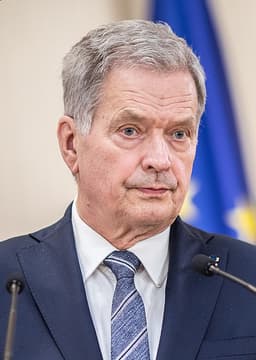
Sauli Niinisto
Politician · Modern
57.1Total
Basic Information
Born
1955
1948
Died
—
—
Era
Modern
Modern
Nationality
France
Finland
Occupation
Politician
Politician
Civilization
Western
Western
Score Comparison
Military (10%)
10.0
50.0
Political (20%)
62.7
72.0
Influence (20%)
61.0
56.4
Legacy (20%)
46.7
43.3
Leadership (15%)
68.0
80.0
Strategy (15%)
38.3
43.4
TOTAL
51.4
57.1
Nicolas Sarkozy — Complete Timeline
2007 AD
Election as President of FrancePolitical Action
Sarkozy defeated Socialist candidate S
French ElectionUMPPresidency
Impact: national
2010 AD
Reform of the French Pension SystemReform◆ Major
Sarkozy's government raised the minimum retirement age from 60 to 62 and the full-pension age from 65 to 67. The reform sparked massive strikes and protests across France but was passed to address the system's long-term financial sustainability.
Pension ReformLabor PolicyProtests
Impact: nationaldestructive
2011 AD
Leadership in the 2011 Libyan InterventionWar◆ Major
Sarkozy played a leading role in the NATO-led military intervention in Libya, launching airstrikes against Muammar Gaddafi's forces. The intervention helped topple Gaddafi but led to prolonged instability and civil war in Libya.
LibyaNATOMilitary Intervention
Impact: regional
Sauli Niinisto — Complete Timeline
1996 AD
Served as Minister of FinancePolitical Action◆ Major
Niinistö served as Minister of Finance from 1996 to 2003, overseeing Finland's economic policy during the dot-com boom and the introduction of the euro. He was known for fiscal conservatism and budget surpluses.
FinanceEconomyEuro
Impact: nationalconstructive
2012 AD
Elected President of FinlandPolitical Action◆ Major
Sauli Niinist
PresidencyElectionFinland
Impact: nationalconstructive
2018 AD
Re-elected for a second termPolitical Action◆ Major
Niinistö was re-elected with 62.7% of the vote in the first round, a strong mandate. His re-election reflected public confidence in his handling of foreign policy and security issues.
Re-electionPresidencyMandate
Impact: nationalconstructive
2020 AD
Managed the COVID-19 pandemic responsePolitical Action◆ Major
Niinistö declared a state of emergency in Finland in March 2020, implementing lockdowns and travel restrictions. He coordinated with the government to manage the health crisis, though the response faced criticism for economic impacts.
COVID-19PandemicEmergency
Impact: national
2023 AD
Led Finland's accession to NATOPolitical Action
Niinistö oversaw Finland's historic decision to join NATO in response to the Russian invasion of Ukraine. The accession process was completed in April 2023, ending Finland's long-standing policy of military non-alignment.
NATOSecurityForeign Policy
Impact: globalconstructive
Expert Analysis
Origins
Nicolas Sarkozy was born on 28 January 1955 in Paris, France, to a Hungarian immigrant father and a French mother. His father abandoned the family when Sarkozy was young, leaving them in modest circumstances. Sarkozy studied law and political science at the University of Paris Nanterre, but did not graduate. He entered politics early, becoming mayor of Neuilly-sur-Seine at age 28.
Sauli Niinistö was born on 24 August 1948 in Salo, Finland, to a lawyer father and a homemaker mother. He studied law at the University of Turku, earning a master's degree in 1974. Niinistö worked as a lawyer and entered local politics in the 1970s, serving on the Salo city council. His early career was marked by a focus on economic and legal affairs.
Rise to Power
Sarkozy rose through the ranks of the conservative Rally for the Republic (RPR) party. He served as Minister of the Interior under President Jacques Chirac from 2002 to 2004, gaining a reputation for a tough stance on crime and immigration. He then served as Minister of Finance in 2004. In 2007, he won the presidency by defeating Socialist candidate Ségolène Royal with 53% of the vote, campaigning on a platform of reform and a break with the past.
Niinistö served as Minister of Justice from 1995 to 1996, then as Minister of Finance from 1996 to 2003. In that role, he oversaw Finland's economic policy during the dot-com boom and the introduction of the euro. He was also a member of the European Parliament. He was elected President of Finland in 2012, defeating Pekka Haavisto in the second round. He was re-elected in 2018 with 62.7% of the vote in the first round.
Leadership & Governance
Sarkozy's leadership style was energetic and interventionist. He pushed through controversial reforms, including raising the minimum retirement age from 60 to 62 and the full-pension age from 65 to 67, sparking massive strikes and protests. He also introduced stricter immigration controls and a crackdown on crime. His governance was characterized by a hands-on, often confrontational approach, both domestically and internationally.
Niinistö's leadership style is calm, pragmatic, and consensus-oriented. He managed Finland's response to the COVID-19 pandemic by declaring a state of emergency in March 2020, implementing lockdowns and travel restrictions in coordination with the government. His most significant act was leading Finland's accession to NATO in response to the Russian invasion of Ukraine, a historic shift from decades of neutrality. He scored 80.0 in leadership, compared to Sarkozy's 68.0.
Triumph & Tragedy
Sarkozy's greatest triumph was his role in the 2011 Libyan intervention, where he led NATO airstrikes that helped topple Muammar Gaddafi. However, the intervention led to a power vacuum and ongoing instability. His domestic reforms, particularly pension reform, were divisive and contributed to his unpopularity. He lost his re-election bid in 2012 to François Hollande. His political score of 62.7 reflects his mixed record.
Niinistö's greatest triumph is the successful negotiation of Finland's NATO membership, completed in April 2023, which enhanced national security. His management of the pandemic was also praised. However, his legacy score is 43.3, partly because his tenure is still ongoing and the long-term consequences of NATO accession are uncertain. He faced criticism for his handling of the economy during the 1990s recession as finance minister.
Character & Destiny
Sarkozy was known for his high energy, impatience, and desire for control. His character led him to pursue ambitious reforms but also alienated allies and the public. His confrontational style contributed to his defeat in 2012. He scored 38.3 in strategy, indicating a lack of long-term planning.
Niinistö is seen as steady, cautious, and analytical. His character suited Finland's need for stability during crises. His strategic score of 43.4 is modest, but his political score of 72.0 reflects his ability to navigate complex situations. His destiny was to lead Finland into NATO, a decision that will define his legacy.
Legacy
Sarkozy's legacy is mixed: he is remembered for his energy and reforms, but also for his divisiveness and the failure to secure re-election. His pension reform remains in place, and his role in Libya is debated. His total score of 51.4 places him below Niinistö.
Niinistö's legacy is still being shaped, but his decision to join NATO will have lasting impact on Finnish security and European geopolitics. He is likely to be remembered as a steady hand during a turbulent period. His total score of 57.1 reflects his higher political and leadership scores.
Conclusion
Sauli Niinistö had a greater impact than Nicolas Sarkozy, as evidenced by his higher total score (57.1 vs. 51.4). Niinistö's leadership during Finland's NATO accession and the pandemic required strategic patience and consensus-building, while Sarkozy's confrontational style produced mixed results. Niinistö's legacy, though still developing, promises to be more transformative for his country's position in the world.
Rankings
🥇
Sauli NiinistoLeader
Mil: 50.0Pol: 72.0Inf: 56.4
57.1
🥈
Nicolas Sarkozy
Mil: 10.0Pol: 62.7Inf: 61.0
51.4
+5.7 behind
How This Comparison Works
Algorithm
Each figure is scored on 6 dimensions (0—100 scale) based on structured historical data: Military (10%), Political (20%), Influence (20%), Legacy (20%), Leadership (15%), Strategy (15%). The weighted total produces the final ranking.
Data Sources
Scores are computed from structured sub-indicators in the database. Scale factors adjust for era (Ancient ×0.85, Modern ×1.0) and civilization size (Eastern ×1.05, Other ×0.80) to account for differences in population and military scale.
Maximum 3 Figures
Comparisons are limited to 2—3 figures to ensure readability and statistical meaningfulness.
Error Margins
±5 points per dimension — Sub-scores are derived from historical records with inherent uncertainty. Two figures within 5 points on a dimension should be considered roughly equivalent in that area.
Total Score Accuracy
±3 points overall — The weighted combination of 6 dimensions produces a total score with approximately ±3 points of uncertainty. Differences of less than 3 points are not statistically significant— the figures are effectively tied.
Known Limitations
- Historical records are incomplete and uneven across civilizations
- Figures from oral-tradition societies may be underrepresented
- Occupation labels can misclassify multi-role figures
- Scores measure capability and impact, not moral character
- Quantitative scoring is a comparison tool, not absolute truth
Capability Radar
Military (10%) — Battles & Warfare
Battles
0
29
Win Rate
0
30
Expansion
0
35
Political (20%) — Governance & Reform
Reform
55
60
Diplomacy
65
75
Economy
50
55
Influence (20%) — Cultural & Global Reach
Cultural
40
30
Global
55
50
Legacy (20%) — Historical Impact
Historical
40
40
Longevity
30
20
Leadership (15%) — Power & Stability
Tenure
60
65
Stability
45
70
Strategy (15%) — Tactics & Innovation
Strategy
0
38
Tactics
0
41
Reform
10
46
Similar Comparisons
Comments & Discussion
No comments yet. Be the first to share your thoughts!