Loading...
Mary of Guise vs Nicholas I of Russia
Nicholas I of Russia leads by 6.1 pts · 2 figures compared
…
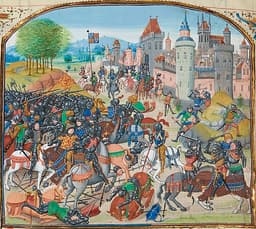
Mary of Guise
Emperor · Modern
51.7Total
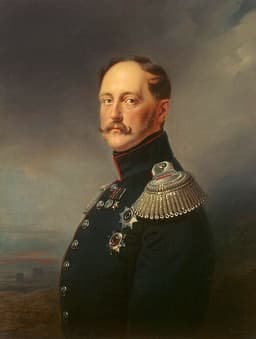
Nicholas I of Russia
Emperor · Modern
57.8Total
Basic Information
Born
1515
1796
Died
1560
1855
Era
Modern
Modern
Nationality
Scotland
Russia
Occupation
Emperor
Emperor
Civilization
Western
Western
Score Comparison
Military (10%)
35.0
50.0
Political (20%)
68.0
61.3
Influence (20%)
51.8
58.0
Legacy (20%)
43.3
49.2
Leadership (15%)
65.0
72.0
Strategy (15%)
45.0
60.0
TOTAL
51.7
57.8
Mary of Guise — Complete Timeline
1554 AD
Regency of Mary of GuisePolitical Action◆ Major
Mary of Guise became regent of Scotland for her daughter Mary, Queen of Scots. She governed with French support, increasing French influence in Scottish affairs and alienating Protestant lords. Her rule saw growing tension between Catholic and Protestant factions.
RegencyFrench InfluenceReligious Conflict
Impact: national
1560 AD
Siege of LeithWar◆ Major
Mary of Guise defended Leith against a combined force of Scottish Protestant lords and English troops. The siege ended with the Treaty of Edinburgh, which removed French troops from Scotland. Mary of Guise died during the siege.
SiegeReligious WarFrench Withdrawal
Impact: nationaltragic
Nicholas I of Russia — Complete Timeline
1825 AD
Suppression of the Decembrist RevoltPolitical Action
Upon ascending the throne, Nicholas I faced a revolt by army officers demanding constitutional reforms. He ordered artillery fire against the rebels in Senate Square, killing hundreds and arresting the leaders. This event set the repressive tone of his reign.
Decembrist RevoltRepressionAutocracy
Impact: nationaldestructive
1826 AD
Establishment of the Third SectionReform◆ Major
Nicholas I created the Third Section of His Imperial Majesty's Own Chancellery, a secret police force tasked with suppressing dissent and monitoring political subversion. This institution became a symbol of state surveillance and repression in Russia.
Secret PoliceRepressionAutocracy
Impact: nationaldestructive
1833 AD
Codification of Russian LawsReform◆ Major
Under Nicholas I, Mikhail Speransky completed the Full Collection of Laws of the Russian Empire, a 45-volume compilation. This codification systematized Russian law for the first time, providing a legal foundation for the autocratic state.
Legal ReformCodificationSperansky
Impact: nationalconstructive
1853 AD
Crimean WarWar
Nicholas I's aggressive expansionism led to war with the Ottoman Empire, Britain, France, and Sardinia. The conflict exposed Russia's military and technological backwardness, culminating in the Siege of Sevastopol and Russia's defeat. The war ended with the Treaty of Paris in 1856.
Crimean WarMilitary DefeatTreaty of Paris
Impact: globaldestructive
Expert Analysis
Origins
Mary of Guise was born in 1515 into the powerful House of Guise in France. Her father, Claude of Lorraine, was a prominent military commander. She received a thorough education in politics and courtly manners, marrying first Louis d'Orléans, Duke of Longueville, and later King James V of Scotland in 1538. After James V's death in 1542, she became regent for her infant daughter Mary, Queen of Scots. Her French upbringing and ties made her a natural conduit for French influence in Scotland.
Nicholas I was born in 1796 in Tsarskoye Selo, the third son of Emperor Paul I. His early education emphasized military engineering and discipline, overseen by his mother Maria Feodorovna. Unlike his older brother Alexander I, Nicholas was not groomed for the throne, but after Alexander's death and the abdication of his brother Constantine, he ascended in 1825. His military training shaped his autocratic worldview.
Rise to Power
Mary of Guise's rise came through marriage and motherhood. As queen consort to James V, she bore a male heir who died shortly after birth, then Mary. Upon James V's death, the Scots initially appointed James Hamilton, Earl of Arran, as regent. However, Mary of Guise maneuvered to gain control, leveraging French support and her own political acumen. In 1554, she formally became regent, ruling with the backing of French troops and advisors. Her key event was the Regency of Mary of Guise, which increased French influence in Scotland.
Nicholas I's rise was abrupt and violent. The Decembrist Revolt on December 26, 1825, occurred as he took the throne. Army officers, inspired by Western constitutional ideas, demanded reforms. Nicholas responded with force, ordering artillery fire that killed hundreds. By suppressing the revolt, he established his authority as an iron autocrat. This turning point defined his reign: he would tolerate no dissent.
Leadership & Governance
Mary of Guise governed as regent with a focus on maintaining French influence and Catholic dominance. She relied on French military support and appointed French officials to key positions. Her governance was pragmatic but alienated Protestant Scottish nobles. She failed to compromise with the growing Protestant movement, leading to conflict. Her leadership score is 65.0, reflecting her ability to maintain power but her lack of strategic flexibility.
Nicholas I's leadership was autocratic and centralized. He created the Third Section, a secret police force to monitor and suppress dissent. He also oversaw the codification of Russian laws, a massive 45-volume set by Mikhail Speransky. However, his rigid control stifled reform and modernization. His leadership score of 72.0 indicates his firm hand, but his political score of 61.3 reflects the inefficiency of his system.
Triumph & Tragedy
Mary of Guise's greatest success was holding Scotland for her daughter amid religious turmoil. She managed to keep the throne Catholic for a time. Her tragedy was the Siege of Leith in 1560, where she defended Leith against Protestant lords and English troops. The siege ended with the Treaty of Edinburgh, which removed French forces and effectively ended her regency. She died in June 1560, just after the treaty, her cause lost.
Nicholas I's triumph was the codification of laws and the suppression of the Decembrist revolt, which stabilized his rule. He also expanded Russian influence in the Caucasus and Central Asia. His tragedy was the Crimean War (1853-1856), where his aggressive expansionism led to a disastrous war against Britain, France, and the Ottoman Empire. Russia's military weakness was exposed, and Nicholas died in 1855 before the war ended, his legacy tarnished.
Character & Destiny
Mary of Guise was intelligent and politically astute, but her French ties made her a target for nationalist Scots. She was determined to preserve Catholic rule, but her inflexibility in the face of Protestant growth led to her downfall. Her character—pragmatic yet loyal to French interests—shaped her destiny as a regent who ultimately lost control.
Nicholas I was disciplined, autocratic, and suspicious of change. He believed in absolute monarchy and saw himself as a father to his people. His character led him to crush dissent and resist reform, which left Russia backward. His destiny was to rule over a repressive regime that collapsed into war and humiliation.
Legacy
Mary of Guise's legacy is mixed. She is remembered as a capable regent who fought for her daughter's inheritance, but her reliance on France and failure to accommodate Protestantism contributed to the Scottish Reformation. Her influence score of 51.8 reflects her limited long-term impact. In Scotland, she is a figure of controversy, often overshadowed by her daughter.
Nicholas I's legacy is that of a reactionary autocrat. His Third Section became a model for later secret police. The codification of laws remained a foundation for Russian legal system. However, his reign is often seen as a period of stagnation that set the stage for Russia's defeat in the Crimean War. His legacy score of 49.2 indicates a mixed assessment: he maintained order but at the cost of progress.
Conclusion
Nicholas I had a greater impact on history than Mary of Guise. His total score of 57.8 surpasses her 51.7, a gap of 6.1 points. While both were rulers in turbulent times, Nicholas I's actions shaped the trajectory of a major European empire. His suppression of the Decembrists and creation of the Third Section reinforced autocracy in Russia for decades, influencing the country's path to revolution. Mary of Guise, though competent, was a regent in a small kingdom whose influence faded quickly after her death. Therefore, Nicholas I holds the stronger position in historical impact.
Rankings
🥇
Nicholas I of RussiaLeader
Mil: 50.0Pol: 61.3Inf: 58.0
57.8
🥈
Mary of Guise
Mil: 35.0Pol: 68.0Inf: 51.8
51.7
+6.1 behind
How This Comparison Works
Algorithm
Each figure is scored on 6 dimensions (0—100 scale) based on structured historical data: Military (10%), Political (20%), Influence (20%), Legacy (20%), Leadership (15%), Strategy (15%). The weighted total produces the final ranking.
Data Sources
Scores are computed from structured sub-indicators in the database. Scale factors adjust for era (Ancient ×0.85, Modern ×1.0) and civilization size (Eastern ×1.05, Other ×0.80) to account for differences in population and military scale.
Maximum 3 Figures
Comparisons are limited to 2—3 figures to ensure readability and statistical meaningfulness.
Error Margins
±5 points per dimension — Sub-scores are derived from historical records with inherent uncertainty. Two figures within 5 points on a dimension should be considered roughly equivalent in that area.
Total Score Accuracy
±3 points overall — The weighted combination of 6 dimensions produces a total score with approximately ±3 points of uncertainty. Differences of less than 3 points are not statistically significant— the figures are effectively tied.
Known Limitations
- Historical records are incomplete and uneven across civilizations
- Figures from oral-tradition societies may be underrepresented
- Occupation labels can misclassify multi-role figures
- Scores measure capability and impact, not moral character
- Quantitative scoring is a comparison tool, not absolute truth
Capability Radar
Military (10%) — Battles & Warfare
Battles
35
55
Win Rate
30
50
Expansion
15
55
Political (20%) — Governance & Reform
Reform
40
30
Diplomacy
50
45
Economy
35
40
Influence (20%) — Cultural & Global Reach
Cultural
30
40
Global
20
50
Legacy (20%) — Historical Impact
Historical
40
55
Longevity
30
50
Leadership (15%) — Power & Stability
Tenure
55
70
Stability
25
50
Strategy (15%) — Tactics & Innovation
Strategy
45
45
Tactics
40
40
Reform
20
60
Similar Comparisons
Comments & Discussion
No comments yet. Be the first to share your thoughts!