Loading...
Kamehameha I vs Nicholas I of Russia
Kamehameha I leads by 2.1 pts · 2 figures compared
…
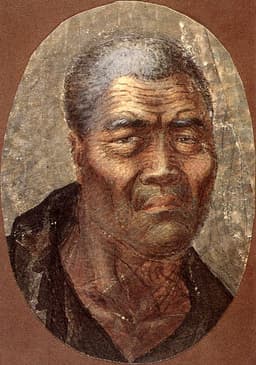
Kamehameha I
Emperor · Modern
59.9Total
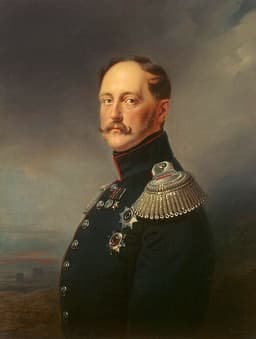
Nicholas I of Russia
Emperor · Modern
57.8Total
Basic Information
Born
1758
1796
Died
1819
1855
Era
Modern
Modern
Nationality
Hawaii
Russia
Occupation
Emperor
Emperor
Civilization
Other
Western
Score Comparison
Military (10%)
60.0
50.0
Political (20%)
59.3
61.3
Influence (20%)
60.0
58.0
Legacy (20%)
49.2
49.2
Leadership (15%)
85.0
72.0
Strategy (15%)
50.0
60.0
TOTAL
59.9
57.8
Kamehameha I — Complete Timeline
1778 AD
Opened Hawaii to foreign tradePolitical Action◆ Major
Following the arrival of Captain James Cook in 1778, Kamehameha I engaged with European explorers and traders. He acquired firearms and ships, which he used to conquer and unify the islands, while also establishing trade relations with the West.
HawaiiTradeEuropean Contact
Impact: regional
1797 AD
Implemented the Law of the Splintered PaddleReform◆ Major
After a near-fatal incident where he was struck by a paddle, Kamehameha I enacted a law protecting civilians during wartime. The law stated that women, children, and the elderly should not be harmed in conflicts, reflecting a humanitarian code.
HawaiiLawHuman Rights
Impact: regionalconstructive
1804 AD
Established the Kingdom of Hawaii's capital at HonoluluPolitical Action◆ Major
Kamehameha I moved his court to Honolulu on O'ahu, establishing it as the political and economic center of the unified Hawaiian Kingdom. This decision shaped Hawaii's development as a central port for trade.
HawaiiCapitalUrbanization
Impact: regionalconstructive
1810 AD
Unified the Hawaiian IslandsWar
Kamehameha I completed the unification of the Hawaiian Islands after a series of battles, including the Battle of Nu'uanu in 1795 and the peaceful cession of Kaua'i in 1810. He established the Kingdom of Hawaii as a single political entity.
HawaiiUnificationKingdom
Impact: regionalconstructive
Nicholas I of Russia — Complete Timeline
1825 AD
Suppression of the Decembrist RevoltPolitical Action
Upon ascending the throne, Nicholas I faced a revolt by army officers demanding constitutional reforms. He ordered artillery fire against the rebels in Senate Square, killing hundreds and arresting the leaders. This event set the repressive tone of his reign.
Decembrist RevoltRepressionAutocracy
Impact: nationaldestructive
1826 AD
Establishment of the Third SectionReform◆ Major
Nicholas I created the Third Section of His Imperial Majesty's Own Chancellery, a secret police force tasked with suppressing dissent and monitoring political subversion. This institution became a symbol of state surveillance and repression in Russia.
Secret PoliceRepressionAutocracy
Impact: nationaldestructive
1833 AD
Codification of Russian LawsReform◆ Major
Under Nicholas I, Mikhail Speransky completed the Full Collection of Laws of the Russian Empire, a 45-volume compilation. This codification systematized Russian law for the first time, providing a legal foundation for the autocratic state.
Legal ReformCodificationSperansky
Impact: nationalconstructive
1853 AD
Crimean WarWar
Nicholas I's aggressive expansionism led to war with the Ottoman Empire, Britain, France, and Sardinia. The conflict exposed Russia's military and technological backwardness, culminating in the Siege of Sevastopol and Russia's defeat. The war ended with the Treaty of Paris in 1856.
Crimean WarMilitary DefeatTreaty of Paris
Impact: globaldestructive
Expert Analysis
Origins
Kamehameha I was born around 1758 in Kohala, Hawaii, into a royal lineage. His birth coincided with Halley's Comet, an omen of greatness. He was hidden after birth to protect him from rival chiefs and raised in seclusion, learning warfare and statecraft. His uncle Kalaniopu'u trained him in combat and navigation.
Nicholas I was born in 1796 in Gatchina, Russia, the third son of Emperor Paul I. He was overshadowed by his older brothers Alexander and Constantine. His education emphasized military engineering and autocratic principles. The assassination of his father Paul I in 1801 instilled in him a fear of revolution and a commitment to absolute rule.
Rise to Power
Kamehameha rose through military conquest. After his uncle's death, he gained control of the island of Hawaii. He used Western firearms and ships acquired from traders to defeat rival chiefs. The turning point was the Battle of Nu'uanu in 1795, where he drove Oahu's forces over a cliff. By 1810, through diplomacy and war, he unified all islands under one rule.
Nicholas ascended unexpectedly in 1825 after his brother Constantine renounced the throne. His accession was marred by the Decembrist Revolt on December 26, 1825, when army officers demanded a constitution. Nicholas ordered artillery fire, killing hundreds and securing his rule. This event defined his reign: he became a staunch autocrat, suppressing any dissent.
Leadership & Governance
Kamehameha governed with a blend of force and law. He implemented the Law of the Splintered Paddle (Mamalahoe Kanawai), protecting civilians in wartime. He established a centralized government, appointed governors, and promoted trade with Europeans. He preserved traditional Hawaiian religion but adapted to new technologies. His leadership score of 85.0 reflects his ability to unite diverse islands.
Nicholas I ruled as an autocrat, centralizing power through bureaucracy and repression. He created the Third Section, a secret police, to monitor dissent. He codified Russian laws under Mikhail Speransky, producing 45 volumes. His military score of 50.0 is lower due to the Crimean War's failures. His political score of 61.3 shows his effectiveness in maintaining control, but his rigidity stifled reform.
Triumph & Tragedy
Kamehameha's greatest triumph was unifying Hawaii, ending centuries of inter-island warfare. He established a stable kingdom that lasted for a century. His tragedy was the introduction of foreign diseases and influence, which after his death decimated the population and led to loss of sovereignty.
Nicholas's triumph was the codification of laws and suppression of the Decembrist revolt, maintaining autocracy. His tragedy was the Crimean War (1853-1856), which exposed Russia's backwardness and led to defeat. His policies of repression created a police state, hindering modernization.
Character & Destiny
Kamehameha was pragmatic and adaptive, using both Hawaiian traditions and Western innovations. His character was shaped by the need to unify and protect his people. He was decisive in battle but also merciful in law, as shown by the Splintered Paddle law. His destiny was to be the father of modern Hawaii.
Nicholas was rigid, suspicious, and committed to autocracy. He believed in divine right and saw any reform as a threat. His personality led to a reactive, conservative rule. His destiny was to preside over a regime that collapsed under his successors. Historians assess him as a competent administrator but a failed modernizer.
Legacy
Kamehameha's legacy is monumental in Hawaii: he is revered as the unifier and founder of the kingdom. His law of the splintered paddle is enshrined in Hawaii's constitution. His influence score of 60.0 reflects his lasting impact on Hawaiian identity. The kingdom he built lasted until 1893.
Nicholas's legacy is mixed. He strengthened autocracy but set Russia on a path to revolution. The Third Section foreshadowed later secret police. The Crimean War spurred reforms under his son Alexander II. His legacy score of 49.2 indicates limited positive impact; he is remembered as a reactionary.
Conclusion
Kamehameha I had greater impact relative to his context. He unified a fragmented archipelago, established a legal framework, and created a nation that endured. Nicholas I maintained an empire but failed to adapt, leading to its eventual collapse. Kamehameha's total score of 59.9 surpasses Nicholas's 57.8, reflecting his more constructive leadership. While both were autocrats, Kamehameha's legacy is one of creation, Nicholas's of stagnation.
Rankings
🥇
Kamehameha ILeader
Mil: 60.0Pol: 59.3Inf: 60.0
59.9
🥈
Nicholas I of Russia
Mil: 50.0Pol: 61.3Inf: 58.0
57.8
+2.1 behind
How This Comparison Works
Algorithm
Each figure is scored on 6 dimensions (0—100 scale) based on structured historical data: Military (10%), Political (20%), Influence (20%), Legacy (20%), Leadership (15%), Strategy (15%). The weighted total produces the final ranking.
Data Sources
Scores are computed from structured sub-indicators in the database. Scale factors adjust for era (Ancient ×0.85, Modern ×1.0) and civilization size (Eastern ×1.05, Other ×0.80) to account for differences in population and military scale.
Maximum 3 Figures
Comparisons are limited to 2—3 figures to ensure readability and statistical meaningfulness.
Error Margins
±5 points per dimension — Sub-scores are derived from historical records with inherent uncertainty. Two figures within 5 points on a dimension should be considered roughly equivalent in that area.
Total Score Accuracy
±3 points overall — The weighted combination of 6 dimensions produces a total score with approximately ±3 points of uncertainty. Differences of less than 3 points are not statistically significant— the figures are effectively tied.
Known Limitations
- Historical records are incomplete and uneven across civilizations
- Figures from oral-tradition societies may be underrepresented
- Occupation labels can misclassify multi-role figures
- Scores measure capability and impact, not moral character
- Quantitative scoring is a comparison tool, not absolute truth
Capability Radar
Military (10%) — Battles & Warfare
Battles
45
55
Win Rate
70
50
Expansion
55
55
Political (20%) — Governance & Reform
Reform
65
30
Diplomacy
60
45
Economy
55
40
Influence (20%) — Cultural & Global Reach
Cultural
55
40
Global
45
50
Legacy (20%) — Historical Impact
Historical
55
55
Longevity
50
50
Leadership (15%) — Power & Stability
Tenure
60
70
Stability
60
50
Strategy (15%) — Tactics & Innovation
Strategy
65
45
Tactics
60
40
Reform
55
60
Similar Comparisons
Comments & Discussion
No comments yet. Be the first to share your thoughts!