Loading...
Mary of Guise vs Wilhelm II
Wilhelm II leads by 4.8 pts · 2 figures compared
…
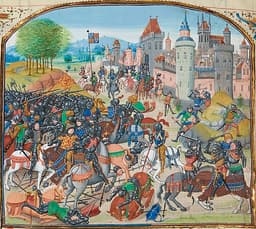
Mary of Guise
Emperor · Modern
51.7Total

Wilhelm II
Emperor · Modern
56.5Total
Basic Information
Born
1515
1859
Died
1560
1941
Era
Modern
Modern
Nationality
Scotland
Germany
Occupation
Emperor
Emperor
Civilization
Western
Western
Score Comparison
Military (10%)
35.0
50.0
Political (20%)
68.0
61.3
Influence (20%)
51.8
61.0
Legacy (20%)
43.3
52.0
Leadership (15%)
65.0
65.0
Strategy (15%)
45.0
43.3
TOTAL
51.7
56.5
Mary of Guise — Complete Timeline
1554 AD
Regency of Mary of GuisePolitical Action◆ Major
Mary of Guise became regent of Scotland for her daughter Mary, Queen of Scots. She governed with French support, increasing French influence in Scottish affairs and alienating Protestant lords. Her rule saw growing tension between Catholic and Protestant factions.
RegencyFrench InfluenceReligious Conflict
Impact: national
1560 AD
Siege of LeithWar◆ Major
Mary of Guise defended Leith against a combined force of Scottish Protestant lords and English troops. The siege ended with the Treaty of Edinburgh, which removed French troops from Scotland. Mary of Guise died during the siege.
SiegeReligious WarFrench Withdrawal
Impact: nationaltragic
Wilhelm II — Complete Timeline
1890 AD
Dismissed Otto von Bismarck as ChancellorPolitical Action
Wilhelm II forced Otto von Bismarck to resign as Chancellor of Germany, ending Bismarck's 28-year tenure. Wilhelm sought to rule personally and disagreed with Bismarck's domestic and foreign policies, particularly the Anti-Socialist Laws and alliance system.
BismarckChancellorshipPolicy Change
Impact: globaldestructive
1898 AD
Launched the Naval Arms Race with BritainWar◆ Major
Wilhelm II initiated a massive naval expansion program under Admiral Tirpitz, aiming to build a fleet capable of challenging the British Royal Navy. This policy, embodied in the Naval Laws of 1898 and 1900, intensified Anglo-German rivalry and contributed to World War I.
Naval Arms RaceAnglo-German RivalryWorld War I
Impact: globaldestructive
1914 AD
Ordered the Schlieffen Plan ImplementationWar◆ Major
Wilhelm II authorized the implementation of the Schlieffen Plan, a military strategy for a two-front war against France and Russia. The plan involved invading neutral Belgium, which brought Britain into the war and set the stage for the Western Front's trench warfare.
World War ISchlieffen PlanMilitary Strategy
Impact: globaldestructive
Issued the Blank Check to Austria-HungaryPolitical Action◆ Major
Wilhelm II assured Austria-Hungary of Germany's full support in its conflict with Serbia following the assassination of Archduke Franz Ferdinand. This blank check encouraged Austria-Hungary to issue an ultimatum to Serbia, escalating the July Crisis into World War I.
World War IJuly CrisisDiplomacy
Impact: globaldestructive
1918 AD
Abdicated the Throne and Fled to the NetherlandsPolitical Action
Wilhelm II abdicated as German Emperor and King of Prussia on November 9, 1918, following the German Revolution and military defeat in World War I. He fled to exile in the Netherlands, ending the Hohenzollern monarchy and the German Empire.
AbdicationGerman RevolutionWorld War I
Impact: globaltragic
Expert Analysis
Origins
Mary of Guise was born in 1515 into the powerful House of Guise, a leading Catholic family in France. Her father was Claude, Duke of Guise, and she received a thorough education in courtly and political affairs. In 1534, she married Louis II d'Orléans, Duke of Longueville, but he died in 1537. She then married King James V of Scotland in 1538, becoming Queen consort. After James V's death in 1542, she became regent for her infant daughter, Mary, Queen of Scots, from 1554 until her death in 1560.
Wilhelm II was born in 1859 in Berlin, the eldest grandson of Queen Victoria. He was the son of Crown Prince Frederick and Princess Victoria, and was raised with a strict Prussian military education. His birth was traumatic, leaving him with a withered left arm, which he constantly tried to conceal. He became German Emperor and King of Prussia in 1888 after the brief reign of his father, who died of cancer after only 99 days.
Rise to Power
Mary of Guise's rise was through marriage and inheritance. As queen consort, she gained influence, but after James V's death, she initially served as regent for her daughter under the authority of the Scottish Parliament. In 1554, she formally assumed the regency, backed by French support. Her key turning point was the Treaty of Haddington (1548), which promised Mary, Queen of Scots, to the French dauphin, securing French military aid against English invasions.
Wilhelm II rose to power abruptly upon his father's death. He immediately sought to assert personal rule, dismissing Chancellor Otto von Bismarck in 1890. Bismarck had dominated German politics for 28 years, and Wilhelm's decision marked a shift to more aggressive, nationalist policies. Wilhelm aimed to be a 'personal monarch' and surrounded himself with sycophants who would not challenge his authority.
Leadership & Governance
Mary of Guise governed Scotland with a focus on maintaining Catholic rule and French alliance. She appointed French officials to key positions, which alienated Scottish nobles. She managed to suppress Protestant rebellions initially, but her reliance on French troops and taxes to support them bred resentment. Her leadership score of 65.0 reflects her ability to hold power for six years in a turbulent environment, but her political score of 68.0 is tempered by her failure to secure lasting Catholic dominance.
Wilhelm II's leadership was erratic and autocratic. He dismissed Bismarck and took direct control of foreign and military policy. His 'New Course' included a massive naval buildup (the Tirpitz Plan), which alienated Britain and contributed to the arms race. He also issued the 'Blank Check' to Austria-Hungary in 1914, escalating the July Crisis into World War I. His political score of 61.3 reflects his inability to manage alliances and his tendency to make impulsive decisions. His leadership score of 65.0 is similar to Mary's, but his strategic score of 43.3 is lower than Mary's 45.0.
Triumph & Tragedy
Mary of Guise's greatest triumph was securing the Treaty of Edinburgh (1560) which ended the Siege of Leith and removed English troops from Scotland, though it also led to the withdrawal of French forces. Her greatest failure was the alienation of the Scottish Protestant lords, which culminated in the Lords of the Congregation rising against her. She died in 1560, just as the Protestant Reformation was triumphing in Scotland, leaving her daughter to face an uncertain future.
Wilhelm II's greatest triumph was the rapid economic and industrial growth of Germany during his reign, as well as the initial successes of the Schlieffen Plan in 1914. However, his greatest failures were the naval arms race that antagonized Britain, the dismissal of Bismarck that destabilized German diplomacy, and his role in triggering World War I. He abdicated in 1918 and fled to the Netherlands, spending the rest of his life in exile.
Character & Destiny
Mary of Guise was pragmatic and determined, but her French connections made her seem foreign to many Scots. She was a capable administrator but lacked the military skill to defend her regime. Her character led her to rely on French support, which ultimately backfired as the French withdrew after the Treaty of Edinburgh.
Wilhelm II was insecure and bombastic, compensating for his physical disability with aggressive posturing. He was intelligent but impulsive, often making decisions without consulting advisors. His character contributed to the isolation of Germany and the escalation of tensions that led to war. Historians assess him as a poor judge of character and a leader who contributed significantly to his own downfall.
Legacy
Mary of Guise's legacy is mixed. She is remembered as a staunch Catholic regent who fought to preserve the old religion in Scotland, but her failure paved the way for the Protestant Reformation. She left a daughter, Mary, Queen of Scots, whose tragic life became legendary. Her influence score of 51.8 and legacy score of 43.3 reflect her limited long-term impact compared to her daughter.
Wilhelm II's legacy is overwhelmingly negative. He is often blamed for the outbreak of World War I and the collapse of the German Empire. His naval policies and diplomatic blunders are studied as examples of how not to conduct foreign policy. However, his reign also saw significant cultural and scientific achievements in Germany. His legacy score of 52.0 is slightly higher than Mary's, reflecting the global impact of his actions.
Conclusion
Wilhelm II had a greater impact on world history due to his direct role in the outbreak of World War I, which reshaped the 20th century. While Mary of Guise influenced Scottish history, her impact was regional and temporary. Wilhelm's total score of 56.5 vs Mary's 51.7 reflects his broader influence, even if negative. The war he helped unleash caused tens of millions of deaths and redrew the map of Europe. Therefore, Wilhelm II, despite his flaws, had a greater historical impact.
Rankings
🥇
Wilhelm IILeader
Mil: 50.0Pol: 61.3Inf: 61.0
56.5
🥈
Mary of Guise
Mil: 35.0Pol: 68.0Inf: 51.8
51.7
+4.8 behind
How This Comparison Works
Algorithm
Each figure is scored on 6 dimensions (0—100 scale) based on structured historical data: Military (10%), Political (20%), Influence (20%), Legacy (20%), Leadership (15%), Strategy (15%). The weighted total produces the final ranking.
Data Sources
Scores are computed from structured sub-indicators in the database. Scale factors adjust for era (Ancient ×0.85, Modern ×1.0) and civilization size (Eastern ×1.05, Other ×0.80) to account for differences in population and military scale.
Maximum 3 Figures
Comparisons are limited to 2—3 figures to ensure readability and statistical meaningfulness.
Error Margins
±5 points per dimension — Sub-scores are derived from historical records with inherent uncertainty. Two figures within 5 points on a dimension should be considered roughly equivalent in that area.
Total Score Accuracy
±3 points overall — The weighted combination of 6 dimensions produces a total score with approximately ±3 points of uncertainty. Differences of less than 3 points are not statistically significant— the figures are effectively tied.
Known Limitations
- Historical records are incomplete and uneven across civilizations
- Figures from oral-tradition societies may be underrepresented
- Occupation labels can misclassify multi-role figures
- Scores measure capability and impact, not moral character
- Quantitative scoring is a comparison tool, not absolute truth
Capability Radar
Military (10%) — Battles & Warfare
Battles
35
20
Win Rate
30
15
Expansion
15
30
Political (20%) — Governance & Reform
Reform
40
40
Diplomacy
50
20
Economy
35
55
Influence (20%) — Cultural & Global Reach
Cultural
30
30
Global
20
65
Legacy (20%) — Historical Impact
Historical
40
70
Longevity
30
40
Leadership (15%) — Power & Stability
Tenure
55
65
Stability
25
15
Strategy (15%) — Tactics & Innovation
Strategy
45
25
Tactics
40
10
Reform
20
60
Similar Comparisons
Comments & Discussion
No comments yet. Be the first to share your thoughts!