Loading...
Emperor Meiji vs Mary of Guise
Emperor Meiji leads by 17.5 pts · 2 figures compared
…
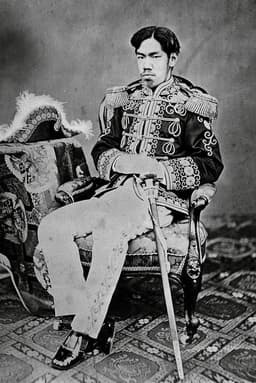
Emperor Meiji
Emperor · Modern
69.2Total
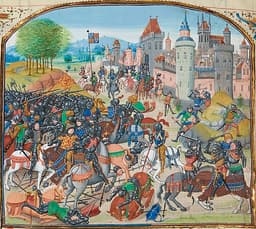
Mary of Guise
Emperor · Modern
51.7Total
Basic Information
Born
1852
1515
Died
1912
1560
Era
Modern
Modern
Nationality
Japan
Scotland
Occupation
Emperor
Emperor
Civilization
Eastern
Western
Score Comparison
Military (10%)
25.0
35.0
Political (20%)
82.0
68.0
Influence (20%)
75.0
51.8
Legacy (20%)
68.0
43.3
Leadership (15%)
80.0
65.0
Strategy (15%)
66.3
45.0
TOTAL
69.2
51.7
Emperor Meiji — Complete Timeline
1868 AD
Meiji RestorationPolitical Action
Emperor Meiji was restored to political power after the fall of the Tokugawa shogunate. The new government, led by young samurai, abolished the feudal system and began modernizing Japan along Western lines, marking the start of the Meiji era.
RestorationModernizationPolitical Change
Impact: globalconstructive
Charter OathPolitical Action◆ Major
Emperor Meiji issued the Charter Oath, a five-article document outlining the principles of the new government. It promised deliberative assemblies, public participation, abolition of outdated customs, and the pursuit of knowledge worldwide.
ReformGovernment PolicyModernization
Impact: nationalprogressive
1871 AD
Abolition of the Han SystemReform◆ Major
The Meiji government abolished the feudal domains (han) and replaced them with prefectures under central control. This reform eliminated the power of the daimyo and created a unified, centralized state.
Administrative ReformCentralizationFeudalism
Impact: nationalconstructive
1889 AD
Promulgation of the Meiji ConstitutionPolitical Action
Emperor Meiji promulgated the Constitution of the Empire of Japan, establishing a constitutional monarchy with a bicameral parliament (Diet). The constitution granted the emperor supreme authority while creating a modern legal framework.
ConstitutionGovernmentLaw
Impact: nationalconstructive
1895 AD
Sino-Japanese War VictoryWar◆ Major
Japan defeated Qing China in the First Sino-Japanese War, gaining Taiwan, the Pescadores, and influence over Korea. The victory demonstrated Japan's military modernization and established it as a major Asian power.
WarVictoryImperial Expansion
Impact: regional
1902 AD
Anglo-Japanese AlliancePolitical Action◆ Major
Japan signed a military alliance with the United Kingdom, its first equal treaty with a Western power. The alliance recognized Japan's interests in Korea and provided diplomatic support, enhancing Japan's international standing.
DiplomacyAllianceInternational Relations
Impact: globalconstructive
1905 AD
Russo-Japanese War VictoryWar
Japan defeated Russia in the Russo-Japanese War, gaining control of Port Arthur, the Liaodong Peninsula, and southern Sakhalin. The victory shocked the world and marked the first time an Asian power defeated a European empire in modern warfare.
WarVictoryImperial Expansion
Impact: global
Mary of Guise — Complete Timeline
1554 AD
Regency of Mary of GuisePolitical Action◆ Major
Mary of Guise became regent of Scotland for her daughter Mary, Queen of Scots. She governed with French support, increasing French influence in Scottish affairs and alienating Protestant lords. Her rule saw growing tension between Catholic and Protestant factions.
RegencyFrench InfluenceReligious Conflict
Impact: national
1560 AD
Siege of LeithWar◆ Major
Mary of Guise defended Leith against a combined force of Scottish Protestant lords and English troops. The siege ended with the Treaty of Edinburgh, which removed French troops from Scotland. Mary of Guise died during the siege.
SiegeReligious WarFrench Withdrawal
Impact: nationaltragic
Expert Analysis
Origins
Emperor Meiji, born Mutsuhito on November 3, 1852, in Kyoto, was the 122nd emperor of Japan according to traditional order. He was the son of Emperor Kōmei and a court lady, Nakayama Yoshiko. Raised in the secluded imperial court, he received a traditional education in Confucian classics and poetry, but his early life was shielded from the political turmoil that engulfed Japan after Commodore Perry's arrival in 1853. The Meiji Restoration of 1868, which ended the Tokugawa shogunate, thrust the young emperor into a symbolic and political role as the figurehead of modernization.
Mary of Guise, born on November 22, 1515, in Bar-le-Duc, Lorraine, France, was the daughter of Claude, Duke of Guise, and Antoinette de Bourbon. She was part of the powerful Guise family, a leading Catholic house in France. Mary received a thorough education in French, Latin, and household management. In 1538, she married James V of Scotland, becoming queen consort. After James V's death in 1542, her infant daughter Mary, Queen of Scots, inherited the throne. Mary of Guise served as regent from 1554 until her death in 1560, navigating the turbulent Scottish Reformation.
Rise to Power
Emperor Meiji ascended the throne in February 1867 at age 14, following his father's death. His rise to power was not of his own making but orchestrated by a coalition of reform-minded samurai from the Satsuma, Chōshū, and other domains. The Meiji Restoration began in January 1868 with the imperial decree restoring direct imperial rule. The young emperor moved from Kyoto to Tokyo (formerly Edo) in 1869, symbolizing the new order. Key turning points include the abolition of the feudal domains in 1871 and the adoption of a modern conscription army in 1873. Meiji's role was largely ceremonial and unifying, but his presence legitimized the sweeping changes.
Mary of Guise's rise to regency was through marriage and maternal authority. After James V's death, she initially acted as regent for her infant daughter from 1543, but the regency was contested by the pro-English Earl of Arran. In 1554, she formally became regent, backed by French support. Her political acumen and French connections allowed her to centralize authority and counter Protestant rebellion. She secured French troops to maintain order and married her daughter to the French Dauphin in 1558, strengthening the Franco-Scottish alliance. Her reign peaked with the Siege of Leith in 1560, where she defended the Catholic cause against the Protestant Lords of the Congregation and English intervention.
Leadership & Governance
Emperor Meiji's leadership style was that of a constitutional monarch who reigned but did not rule directly. The Meiji Constitution of 1889 established a bicameral Diet, but the emperor held supreme command of the military and could veto legislation. In practice, Meiji delegated governance to the oligarchs (genrō) like Itō Hirobumi and Yamagata Aritomo. His key reforms included the abolition of the samurai class, land tax reform, compulsory education, and rapid industrialization. For example, the Charter Oath of 1868 outlined principles of deliberative assemblies and seeking knowledge worldwide. Meiji's score of 82.0 in political governance reflects his success in overseeing a peaceful transition to modernity.
Mary of Guise governed as regent with authoritarian tendencies, relying on French military and financial support. She attempted to centralize control by appointing French officials and suppressing Protestant sermons. Her governance score of 68.0 indicates moderate effectiveness. She faced resistance from Protestant nobles like John Knox, who criticized her rule as tyrannical. Her policies, such as the Treaty of Edinburgh in 1560, which required French troops to leave Scotland, undermined her position. Unlike Meiji's broad-based reforms, Mary's governance was narrowly focused on preserving Catholic rule and French influence, alienating the Scottish nobility.
Triumph & Tragedy
Emperor Meiji's greatest triumph was the transformation of Japan from a feudal backwater into a modern imperial power. The victory in the Russo-Japanese War (1904-1905) scored 25.0 in military, but the war demonstrated Japan's military modernization. The Anglo-Japanese Alliance of 1902 elevated Japan's international status. Domestically, the Meiji Constitution and educational system created a unified nation. However, his reign also saw tragedies: the rapid industrialization led to social dislocation and poverty among peasants. The First Sino-Japanese War (1894-1895) brought territorial gains but also sowed seeds of militarism. The unequal treaties with Western powers were only fully revised after his death.
Mary of Guise's triumph was her ability to maintain French influence in Scotland for nearly a decade, securing the marriage of her daughter to the French heir. Her defense of Leith in 1560 was a tactical stand, but the subsequent Treaty of Edinburgh forced her to withdraw French troops and recognize Elizabeth I's legitimacy. Her greatest tragedy was the failure to prevent the Protestant Reformation in Scotland. The Scottish Parliament adopted Protestantism in 1560, just months after her death. Her regency was marked by financial strain and factional conflict, leading to a legacy of instability. Her score of 43.3 in legacy reflects the short-lived nature of her achievements.
Character & Destiny
Emperor Meiji was characterized by his reserved, dignified demeanor. He was known for his interest in Western technology and culture, often wearing Western clothes and eating Western food. His personal habits, such as composing waka poetry, reflected a blend of tradition and modernity. His decision to elevate the imperial position above politics allowed the oligarchs to implement reforms without direct blame. His character shaped Japan's destiny by providing a stable symbol of continuity amidst radical change. Meiji's leadership score of 80.0 indicates his ability to inspire loyalty and trust.
Mary of Guise was intelligent, determined, and politically astute, but also stubborn and overly reliant on French support. She was a devout Catholic, which alienated the Protestant majority. Her character was marked by a willingness to use force, as seen in her suppression of Protestant rebels. However, her lack of flexibility and failure to compromise with the Protestant lords led to her downfall. Her destiny was to be the last Catholic regent of Scotland, unable to stem the tide of Reformation. Her strategy score of 45.0 reflects poor long-term planning.
Legacy
Emperor Meiji's legacy is immense: he presided over Japan's emergence as a modern state. The Meiji period (1868-1912) saw the creation of a centralized government, industrial economy, and powerful military. Japan's victory over Russia in 1905 inspired anti-colonial movements across Asia. The emperor's posthumous title, Meiji (meaning 'enlightened rule'), encapsulates his era. His legacy score of 68.0 is tempered by the subsequent militarism that led to World War II, but his reforms laid the foundation for modern Japan. The Meiji Constitution remained in effect until 1947.
Mary of Guise's legacy is more limited. She is remembered primarily as the mother of Mary, Queen of Scots, and as a regent who failed to preserve Catholic Scotland. Her reign accelerated the Protestant Reformation by polarizing the religious conflict. The Treaty of Edinburgh ended French military presence, strengthening England's influence. Her legacy score of 43.3 reflects her role as a transitional figure. She is often portrayed negatively in Scottish Protestant historiography. Her impact was largely negative for the Catholic cause, and her policies did not endure beyond her death.
Conclusion
Emperor Meiji had a far greater impact than Mary of Guise, with a total score of 69.2 versus 51.7. Meiji oversaw the transformation of a nation from feudal isolation to a world power, affecting millions of lives and reshaping global geopolitics. Mary of Guise, while a capable regent, was ultimately a defender of a losing cause, and her influence was confined to a short period and a small country. Meiji's political and leadership scores (82.0 and 80.0) dwarf Mary's (68.0 and 65.0), reflecting the scale and success of his governance. While Mary's military score (35.0) is higher than Meiji's (25.0), this reflects her direct involvement in conflict, not strategic success. In the balance of history, Emperor Meiji stands as a transformative figure, while Mary of Guise is a footnote in the Scottish Reformation. Japan's modernization under Meiji set a template for other nations, whereas Mary's regency ended in failure. Thus, Emperor Meiji is the more significant historical figure.
Rankings
🥇
Emperor MeijiLeader
Mil: 25.0Pol: 82.0Inf: 75.0
69.2
🥈
Mary of Guise
Mil: 35.0Pol: 68.0Inf: 51.8
51.7
+17.5 behind
How This Comparison Works
Algorithm
Each figure is scored on 6 dimensions (0—100 scale) based on structured historical data: Military (10%), Political (20%), Influence (20%), Legacy (20%), Leadership (15%), Strategy (15%). The weighted total produces the final ranking.
Data Sources
Scores are computed from structured sub-indicators in the database. Scale factors adjust for era (Ancient ×0.85, Modern ×1.0) and civilization size (Eastern ×1.05, Other ×0.80) to account for differences in population and military scale.
Maximum 3 Figures
Comparisons are limited to 2—3 figures to ensure readability and statistical meaningfulness.
Error Margins
±5 points per dimension — Sub-scores are derived from historical records with inherent uncertainty. Two figures within 5 points on a dimension should be considered roughly equivalent in that area.
Total Score Accuracy
±3 points overall — The weighted combination of 6 dimensions produces a total score with approximately ±3 points of uncertainty. Differences of less than 3 points are not statistically significant— the figures are effectively tied.
Known Limitations
- Historical records are incomplete and uneven across civilizations
- Figures from oral-tradition societies may be underrepresented
- Occupation labels can misclassify multi-role figures
- Scores measure capability and impact, not moral character
- Quantitative scoring is a comparison tool, not absolute truth
Capability Radar
Military (10%) — Battles & Warfare
Battles
20
35
Win Rate
30
30
Expansion
75
15
Political (20%) — Governance & Reform
Reform
95
40
Diplomacy
85
50
Economy
90
35
Influence (20%) — Cultural & Global Reach
Cultural
85
30
Global
85
20
Legacy (20%) — Historical Impact
Historical
90
40
Longevity
80
30
Leadership (15%) — Power & Stability
Tenure
85
55
Stability
70
25
Strategy (15%) — Tactics & Innovation
Strategy
70
45
Tactics
25
40
Reform
95
20
Similar Comparisons
Comments & Discussion
No comments yet. Be the first to share your thoughts!