Loading...
Mao Zedong vs Yuan Shikai
Mao Zedong leads by 19.4 pts · 2 figures compared
…
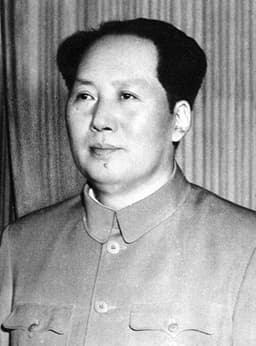
Mao Zedong
Politician · Modern
79.4Total
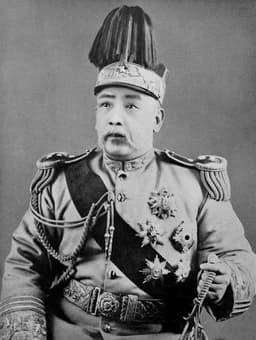
Yuan Shikai
Politician · Modern
60.0Total
Basic Information
Born
1893
1859
Died
1976
1916
Era
Modern
Modern
Nationality
China
China
Occupation
Politician
Politician
Civilization
Eastern
Eastern
Score Comparison
Military (10%)
75.0
45.0
Political (20%)
88.0
72.0
Influence (20%)
85.0
57.2
Legacy (20%)
70.0
54.0
Leadership (15%)
85.0
72.0
Strategy (15%)
72.0
61.2
TOTAL
79.4
60.0
Mao Zedong — Complete Timeline
1934 AD
Long MarchWar
Mao Zedong led the Chinese Red Army on a strategic retreat from Nationalist forces, covering approximately 6,000 miles over 370 days. The march solidified Mao's leadership within the Chinese Communist Party and became a foundational myth of the Communist revolution.
Chinese Civil WarCommunist RevolutionRetreat
Impact: national
1949 AD
Proclamation of the People's Republic of ChinaPolitical Action
Mao Zedong declared the founding of the People's Republic of China from Tiananmen Gate in Beijing. This ended the Chinese Civil War and established Communist rule over mainland China, with Mao as Chairman of the Central People's Government.
Founding of PRCCommunist VictoryRevolution
Impact: global
1958 AD
Great Leap ForwardReform◆ Major
Mao launched a campaign to rapidly industrialize China and collectivize agriculture. The policy led to widespread mismanagement, resulting in a famine that caused an estimated 15-45 million deaths between 1959 and 1961.
FamineIndustrializationCollectivization
Impact: nationaldestructive
1960 AD
Sino-Soviet SplitPolitical Action◆ Major
Mao's ideological differences with Soviet leader Nikita Khrushchev led to a breakdown in relations between China and the Soviet Union. The split ended the Sino-Soviet alliance and reshaped global Cold War dynamics, with China pursuing an independent path.
Cold WarIdeological ConflictAlliance Breakdown
Impact: global
1966 AD
Cultural RevolutionPolitical Action
Mao initiated a sociopolitical movement to purge capitalist and traditional elements from Chinese society. The Red Guard youth groups attacked intellectuals and officials, leading to widespread violence, destruction of cultural artifacts, and an estimated 1-2 million deaths.
Political PurgeSocial UpheavalRed Guard
Impact: nationaldestructive
1971 AD
Ping-Pong DiplomacyCultural◆ Major
Mao approved an invitation for the U.S. table tennis team to visit China, initiating a thaw in Sino-American relations. This cultural exchange paved the way for President Nixon's visit to China in 1972 and the eventual normalization of diplomatic ties.
DiplomacyU.S.-China RelationsCultural Exchange
Impact: globalconstructive
Yuan Shikai — Complete Timeline
1901 AD
Command of the Beiyang ArmyReform◆ Major
Yuan Shikai took command of the Beiyang Army, the most modern military force in late Qing China. He expanded and trained the army, which became the basis for his political power and later dominated Chinese politics.
Military reformBeiyang Army
Impact: national
1912 AD
Appointed First President of the Republic of ChinaPolitical Action
Yuan Shikai became the first president of the Republic of China after negotiating the abdication of the Qing emperor. He used his control of the Beiyang Army to pressure the revolutionary government into accepting his leadership.
PresidencyRepublic of China
Impact: national
1915 AD
Declaration of the Empire of ChinaPolitical Action◆ Major
Yuan Shikai declared himself emperor of the Empire of China, attempting to restore the monarchy. This move sparked widespread opposition from provincial leaders and foreign powers, leading to the collapse of his regime.
Monarchy restorationPolitical crisis
Impact: nationaldestructive
Signing of the Twenty-One DemandsPolitical Action◆ Major
Yuan Shikai accepted most of Japan's Twenty-One Demands, which expanded Japanese influence in China. The agreement granted Japan economic rights in Manchuria and Shandong, and was seen as a national humiliation.
DiplomacyJapanese imperialism
Impact: globaltragic
1916 AD
Death and Collapse of the Beiyang GovernmentPolitical Action◆ Major
Yuan Shikai died of uremia, leaving no clear successor. His death led to the fragmentation of the Beiyang Army into warlord factions, plunging China into a period of civil war and political instability.
Warlord eraPolitical fragmentation
Impact: nationaltragic
Expert Analysis
Mao Zedong vs Yuan Shikai
# The Two Foundings of Modern China
On a September morning in 1949, Mao Zedong stood atop the Tiananmen Gate in Beijing and declared the birth of the People’s Republic of China. Thirty-seven years earlier, in the same city, Yuan Shikai had sworn an oath as the first president of the Republic of China, promising to uphold the very democratic ideals he would later betray. Two men, two republics, and one question that haunts Chinese history: why did one founding endure while the other collapsed into warlord chaos?
Origins
Yuan Shikai was born in 1859 into a world that was already crumbling. The Qing Dynasty, ancient and brittle, had suffered humiliating defeats at the hands of Western powers. Yuan came from a minor military family in Henan Province, and his education was practical rather than classical—he failed the civil service examinations twice, a failure that shaped his lifelong disdain for traditional scholar-officials. He learned by doing, first in Korea as a Qing military attaché, then in the training grounds of the new armies.
Mao Zedong, born in 1893 in the rural village of Shaoshan, grew up in a China that had been carved into spheres of influence. His father was a prosperous farmer who beat him; his mother was a devout Buddhist who prayed for him. Mao escaped into books—Chinese classics, translated Western philosophy, and eventually Marxist pamphlets. Where Yuan learned from military drill and diplomatic maneuvering, Mao learned from rebellions and revolutions. The Boxer Uprising, the fall of the Qing, the warlord chaos—all of it burned into his young mind the lesson that China needed not reform but destruction and rebirth.
Rise to Power
Yuan Shikai’s path to power was paved by the Qing Dynasty’s desperation. In 1901, after the Boxer Rebellion disaster, the Empress Dowager Cixi handed him command of the Beiyang Army. He turned it into the most modern fighting force in China—trained by German instructors, armed with Western rifles, loyal to him personally rather than to the dynasty. When the 1911 Revolution erupted, Yuan held the balance between the dying monarchy and the fledgling republic. He negotiated the Qing abdication, then extracted the presidency from Sun Yat-sen. He did not seize power; he was begged to take it.
Mao’s rise was the opposite—a long, bloody climb from obscurity. In 1934, during the Long March, he was not even the leader of the Communist Party; he was a strategist in the wilderness. But as the Red Army retreated six thousand miles through some of China’s most brutal terrain, Mao’s vision crystallized. He understood that China’s revolution would not come from urban workers, as Marx predicted, but from peasants in the countryside. By the time the Long March ended, Mao had transformed a military retreat into a political triumph. He did not inherit power; he earned it, step by step, through war.
Leadership & Governance
Yuan Shikai governed through patronage and fear. He kept the Beiyang Army loyal with generous pay and personal connections, but he never built institutions. His political wisdom was tactical, not strategic—he could outmaneuver rivals in Beijing but had no vision for China’s future. When he signed the Twenty-One Demands in 1915, accepting Japanese control over Shandong and other concessions, he did so to preserve his own position. It was the act of a man who saw China not as a nation to be built but as a chessboard to be played.
Mao governed through ideology and mobilization. He understood that a country of four hundred million peasants could not be ruled by deals and bribes alone. He gave them a story—a narrative of humiliation, struggle, and redemption—and he gave them enemies. The Great Leap Forward of 1958 was his attempt to industrialize China overnight, a catastrophic miscalculation that led to famine and millions of deaths. Yet Mao survived this disaster because he had built a party, a military, and a bureaucracy that were loyal not to his person but to his idea of revolution.
Triumph & Tragedy
Yuan Shikai’s greatest triumph was also the seed of his tragedy. In 1912, he unified China without war, a feat that seemed impossible. But he could not resist the temptation of monarchy. In 1915, he declared himself emperor of the Empire of China, a move so nakedly ambitious that it united everyone against him—republicans, warlords, even his own generals. He died of uremia in 1916, broken and reviled, leaving behind a country that fragmented into warlord fiefdoms.
Mao’s greatest triumph was 1949, the moment he stood on Tiananmen and declared a new China. But his tragedy was that he could not stop making revolutions. The Cultural Revolution, launched in 1966, was meant to purge the party of capitalist tendencies. Instead, it unleashed the Red Guards—millions of young people who destroyed temples, beat teachers, and turned neighbor against neighbor. Mao had unified China, then set it against itself.
Character & Destiny
Yuan Shikai was cautious, suspicious, and deeply conservative. He wanted order, not transformation. When faced with a choice between democracy and stability, he chose stability every time—until he chose monarchy, which destroyed both. His personality was that of a warlord in a president’s clothing: he could command but could not inspire.
Mao was visionary, ruthless, and endlessly restless. He wanted not just to rule China but to remake it. When faced with a choice between human suffering and ideological purity, he chose purity—again and again. His personality was that of a prophet in a revolutionary’s body: he could inspire millions but could not count the cost.
Legacy
Yuan Shikai is remembered today as a cautionary tale—the man who could have been China’s George Washington but chose to be its Napoleon. His scores reflect this: high in leadership (81.3) but low in legacy (65.9), because he built nothing that outlasted him.
Mao’s legacy is more complex. His political score (82.0) and influence (79.7) are undeniable, but his legacy (69.9) is contested. He brought China unity, sovereignty, and industrialization—but at a terrible price. The China he left behind was poor, isolated, and traumatized. Yet the China that emerged after him—economically powerful, globally engaged—was built on foundations he laid.
Conclusion
In the end, these two men represent the two faces of modern China. Yuan Shikai tried to modernize China by preserving its old forms; Mao tried to destroy everything and start anew. Both failed in their own ways—Yuan because he could not change, Mao because he could not stop changing. But together, they tell us something profound about history: that nations are not built by cautious men who manage decline, nor by visionaries who demand perfection, but by something in between that neither of them found. The search for that middle way is the unfinished business of modern China.
Rankings
🥇
Mao ZedongLeader
Mil: 75.0Pol: 88.0Inf: 85.0
79.4
🥈
Yuan Shikai
Mil: 45.0Pol: 72.0Inf: 57.2
60.0
+19.4 behind
How This Comparison Works
Algorithm
Each figure is scored on 6 dimensions (0—100 scale) based on structured historical data: Military (10%), Political (20%), Influence (20%), Legacy (20%), Leadership (15%), Strategy (15%). The weighted total produces the final ranking.
Data Sources
Scores are computed from structured sub-indicators in the database. Scale factors adjust for era (Ancient ×0.85, Modern ×1.0) and civilization size (Eastern ×1.05, Other ×0.80) to account for differences in population and military scale.
Maximum 3 Figures
Comparisons are limited to 2—3 figures to ensure readability and statistical meaningfulness.
Error Margins
±5 points per dimension — Sub-scores are derived from historical records with inherent uncertainty. Two figures within 5 points on a dimension should be considered roughly equivalent in that area.
Total Score Accuracy
±3 points overall — The weighted combination of 6 dimensions produces a total score with approximately ±3 points of uncertainty. Differences of less than 3 points are not statistically significant— the figures are effectively tied.
Known Limitations
- Historical records are incomplete and uneven across civilizations
- Figures from oral-tradition societies may be underrepresented
- Occupation labels can misclassify multi-role figures
- Scores measure capability and impact, not moral character
- Quantitative scoring is a comparison tool, not absolute truth
Capability Radar
Military (10%) — Battles & Warfare
Battles
85
45
Win Rate
80
55
Expansion
85
50
Political (20%) — Governance & Reform
Reform
95
55
Diplomacy
80
70
Economy
70
50
Influence (20%) — Cultural & Global Reach
Cultural
90
40
Global
90
35
Legacy (20%) — Historical Impact
Historical
95
65
Longevity
85
40
Leadership (15%) — Power & Stability
Tenure
95
60
Stability
60
30
Strategy (15%) — Tactics & Innovation
Strategy
85
65
Tactics
75
60
Reform
90
80
Similar Comparisons
Comments & Discussion
守墓老兵6/16/2026
袁世凯再失败,至少让中国有了现代国家的骨架。他练新军、废科举、办警察,这些都是实打实的功绩。毛主席当然伟大,但1949年的新中国是在袁氏留下的北洋体系和统一意识上重建的。最讽刺的是:骂袁世凯最狠的国民党,他们的军校和军队体系全是抄袁世凯新军的。革命者永远比建设者更受崇拜,这是历史的残酷。