Loading...
Mangal Pandey vs Pushpa Kamal Dahal
Pushpa Kamal Dahal leads by 1.4 pts · 2 figures compared
…
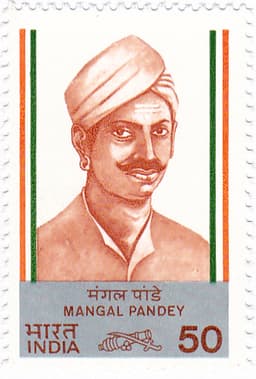
Mangal Pandey
Revolutionary · Modern
48.6Total
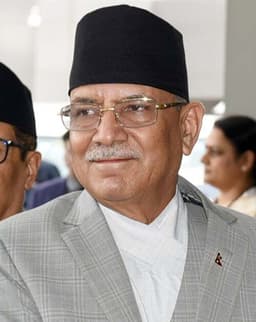
Pushpa Kamal Dahal
Revolutionary · Modern
50.0Total
Basic Information
Born
1827
1954
Died
1857
—
Era
Modern
Modern
Nationality
India
Nepal
Occupation
Revolutionary
Revolutionary
Civilization
Indian
Indian
Score Comparison
Military (10%)
39.9
35.0
Political (20%)
35.0
54.7
Influence (20%)
51.8
51.0
Legacy (20%)
46.7
40.8
Leadership (15%)
62.6
62.0
Strategy (15%)
53.8
60.0
TOTAL
48.6
50.0
Mangal Pandey — Complete Timeline
1857 AD
Attack on British officers at BarrackporePolitical Action◆ Major
Mangal Pandey attacked two British officers at the Barrackpore military cantonment. He was arrested after the attack, and his actions sparked widespread unrest among Indian sepoys, leading to the 1857 rebellion.
Indian Rebellion of 1857Trigger Event
Impact: regional
Execution by hangingPolitical Action◆ Major
Mangal Pandey was tried by a British military court and executed by hanging at Barrackpore. His execution made him a martyr and a symbol of resistance against British rule in India.
Indian Rebellion of 1857ExecutionMartyr
Impact: regionaltragic
Pushpa Kamal Dahal — Complete Timeline
1996 AD
Launch of People's WarWar
Prachanda, as leader of the Communist Party of Nepal (Maoist), initiated a armed insurgency against the Nepalese state. The People's War began with attacks on police posts and government offices, escalating into a decade-long civil war.
InsurgencyCivil WarMaoist
Impact: nationaldestructive
2006 AD
Signing of Comprehensive Peace AccordPolitical Action◆ Major
Prachanda signed the Comprehensive Peace Accord with Prime Minister Girija Prasad Koirala, ending the civil war. The agreement committed the Maoists to lay down arms and join mainstream politics in exchange for integration into state institutions.
Peace TreatyCivil WarNepal
Impact: nationalconstructive
2008 AD
Election as Prime MinisterPolitical Action◆ Major
Following the Maoist victory in the Constituent Assembly elections, Prachanda became the first prime minister of the Federal Democratic Republic of Nepal. His tenure focused on integrating former Maoist combatants into the national army.
ElectionGovernmentRepublic
Impact: national
2009 AD
Resignation as Prime MinisterPolitical Action
Prachanda resigned as prime minister after a dispute with President Ram Baran Yadav over the dismissal of the army chief. The crisis highlighted tensions between the Maoists and the established political order.
ResignationPoliticsCrisis
Impact: national
Expert Analysis
Pushpa Kamal Dahal vs Mangal Pandey
# The Revolutionary’s Path: Two Men, One Civilization, Two Destinies
On a spring morning in 1857, a sepoy named Mangal Pandey loaded his musket and turned it not toward an enemy of the empire, but toward his own British officers. The shot that rang out at Barrackpore did not kill its intended target, but it echoed across a continent. Nearly a century and a half later, in the rugged hills of western Nepal, a former schoolteacher named Pushpa Kamal Dahal—known to the world as Prachanda—lit the fuse of a different kind of war. Both men were revolutionaries. Both sought to shatter an old order. But one became a martyr in a single, desperate act, while the other lived to negotiate peace, become prime minister, and reshape a nation. Why such different ends from such similar beginnings?
Origins
Mangal Pandey was born in 1827 in a Brahmin family in the village of Nagwa, in what is now Uttar Pradesh, India. The British East India Company had already swallowed most of the subcontinent, and young men of his caste often found their only path to livelihood in the Company’s army. Pandey was a sepoy—a cog in a vast imperial machine—but he carried with him the simmering grievances of a conquered people. The greased cartridge controversy, which forced sepoys to bite cartridges rumored to be coated with cow and pig fat, was the spark that turned his resentment into rage.
Prachanda, born in 1954 in Kaski District, Nepal, grew up in a world shaped by a different kind of colonialism. Nepal was never formally colonized, but its monarchy had long been a feudal landlord system, and by the 1990s, the country was one of the poorest in Asia. The son of a peasant family, Prachanda was educated in the Nepali school system and became a teacher. But the poverty and inequality he witnessed drove him toward the Maoist ideology that was sweeping through rural South Asia. Where Pandey saw a foreign oppressor, Prachanda saw a domestic one—the monarchy, the landlords, and the feudal state.
Rise to Power
Pandey’s rise was not a rise at all; it was a flash. On March 29, 1857, at the Barrackpore military cantonment, he walked onto the parade ground, shouted to his fellow sepoys, and attacked Lieutenant Baugh, a British officer. He was quickly subdued, tried by a military court, and hanged on April 8. His entire revolutionary career lasted less than two weeks. He had no organization, no strategy, no plan beyond the act itself. Yet that act became the fuse for the Indian Rebellion of 1857, a massive uprising that shook British rule to its foundations.
Prachanda’s path was the opposite. He spent decades building a party, the Communist Party of Nepal (Maoist), and a guerrilla army. On February 13, 1996, he launched the “People’s War” with coordinated attacks on police posts and government offices across Nepal. It was not a single dramatic act but the beginning of a decade-long civil war that would claim over 17,000 lives. Where Pandey was a spark, Prachanda was a fire that he carefully fed.
Leadership & Governance
As a military leader, Prachanda was no Napoleon. His score of 25.6 in military prowess reflects the reality that he was not a battlefield commander in the classical sense. Instead, he was a strategist of insurgency—using hit-and-run tactics, controlling rural areas, and building a parallel state. His political score of 61.5 and leadership score of 75.7 tell a different story: he was a master of negotiation and coalition-building. In 2006, he signed the Comprehensive Peace Accord with Prime Minister Girija Prasad Koirala, ending the war. In 2008, after the Maoists won the Constituent Assembly elections, he became the first prime minister of the Federal Democratic Republic of Nepal.
Pandey, by contrast, had no opportunity to govern. His political score of 32.3 and leadership score of 28.5 reflect the tragedy of a man who acted alone, without a movement behind him. He was a symbol, not a statesman.
Triumph & Tragedy
Pandey’s greatest moment was also his last: the attack at Barrackpore. His execution made him a martyr, and his name became a rallying cry for the rebellion that followed. But he did not live to see it. His tragedy was that he could not control the forces he unleashed.
Prachanda’s triumph was the peace accord and his election as prime minister. But his tragedy came quickly: in 2009, he resigned after a dispute with President Ram Baran Yadav over the dismissal of the army chief. The revolutionary who had toppled a monarchy found himself hamstrung by the very democratic institutions he had helped create. His legacy score of 54.7 reflects a man who achieved much but could not consolidate it.
Character & Destiny
Pandey was a man of action, not of words. His personality was forged in the crucible of caste pride, religious outrage, and personal honor. He could not tolerate the insult of the greased cartridges, and he acted. His destiny was to be a martyr—a name on the lips of later generations, but a man who never held power.
Prachanda was a man of calculation. He could wait, negotiate, and compromise. He could lead a war for a decade and then shake hands with his enemies. His destiny was to be a ruler—flawed, controversial, but ultimately a shaper of history. The difference between them was not just circumstance but temperament: one was a bullet, the other a strategist.
Legacy
Mangal Pandey is remembered as a folk hero in India, a symbol of resistance against colonialism. His image appears on stamps, in films, and in the collective memory of a nation. But his legacy is more emotional than institutional. He inspired a rebellion but did not build a state.
Prachanda’s legacy is more complex. He is still alive, and his political career continues. He has been prime minister three times, and his Maoist party remains a force in Nepali politics. But his reputation is contested: to some, he is a liberator who ended the monarchy; to others, he is a warlord who plunged Nepal into a bloody civil war. His influence score of 68.8 and legacy score of 54.7 capture this ambiguity.
Conclusion
In the end, these two revolutionaries from the same civilization traveled opposite arcs. Mangal Pandey died so that others could rise. Pushpa Kamal Dahal rose so that he could rule. One became a martyr, the other a politician. Both sought to overturn an unjust order, but the tools they used—and the times they lived in—shaped their fates. Perhaps the deepest lesson is this: revolutions need both the spark and the fire, the martyr and the strategist. But history remembers the martyr with a clean heart, while the strategist must live with the compromises of power.
Rankings
🥇
Pushpa Kamal DahalLeader
Mil: 35.0Pol: 54.7Inf: 51.0
50.0
🥈
Mangal Pandey
Mil: 39.9Pol: 35.0Inf: 51.8
48.6
+1.4 behind
How This Comparison Works
Algorithm
Each figure is scored on 6 dimensions (0—100 scale) based on structured historical data: Military (10%), Political (20%), Influence (20%), Legacy (20%), Leadership (15%), Strategy (15%). The weighted total produces the final ranking.
Data Sources
Scores are computed from structured sub-indicators in the database. Scale factors adjust for era (Ancient ×0.85, Modern ×1.0) and civilization size (Eastern ×1.05, Other ×0.80) to account for differences in population and military scale.
Maximum 3 Figures
Comparisons are limited to 2—3 figures to ensure readability and statistical meaningfulness.
Error Margins
±5 points per dimension — Sub-scores are derived from historical records with inherent uncertainty. Two figures within 5 points on a dimension should be considered roughly equivalent in that area.
Total Score Accuracy
±3 points overall — The weighted combination of 6 dimensions produces a total score with approximately ±3 points of uncertainty. Differences of less than 3 points are not statistically significant— the figures are effectively tied.
Known Limitations
- Historical records are incomplete and uneven across civilizations
- Figures from oral-tradition societies may be underrepresented
- Occupation labels can misclassify multi-role figures
- Scores measure capability and impact, not moral character
- Quantitative scoring is a comparison tool, not absolute truth
Capability Radar
Military (10%) — Battles & Warfare
Battles
5
35
Win Rate
5
40
Expansion
5
25
Political (20%) — Governance & Reform
Reform
5
40
Diplomacy
5
50
Economy
5
35
Influence (20%) — Cultural & Global Reach
Cultural
40
40
Global
40
35
Legacy (20%) — Historical Impact
Historical
60
45
Longevity
50
30
Leadership (15%) — Power & Stability
Tenure
5
55
Stability
5
30
Strategy (15%) — Tactics & Innovation
Strategy
5
50
Tactics
10
45
Reform
5
30
Similar Comparisons
Comments & Discussion
MARTYR’S SHADOW6/16/2026
Mangal Pandey was a true revolutionary—one bullet, one moment that changed India forever. Prachanda? He’s a political chameleon who traded Maoist ideals for a prime minister’s chair. Pandey’s sacrifice ignited the 1857 Rebellion; Dahal’s “revolution” ended in backroom deals and a $2 billion peace package. One man died for his cause; the other lived to compromise it. History doesn’t forget the difference.
数据侦探6/16/2026
别急着拔高Pandey——他开枪那一瞬间根本没计划,纯粹情绪崩溃。巴拉克波尔兵变只有他一个人拿枪,4个连队没人响应。Prachanda呢?他领导了十年内战,1.3万人死亡,最后谈判桌上拿到的比子弹多。一个冲动英雄,一个冷血战略家。别扯道德,只看结果。
CLASSICAL ECHO6/16/2026
Both men were Brahmin rebels in an age of empire, but their fates diverge like tragic verse from political farce. Pandey’s single musket shot in Barrackpore (March 29, 1857) was the first spark of the Great Rebellion—a martyr’s gesture. Prachanda, with his 1996 “People’s War,” engineered a decade-long insurgency, then became prime minister in 2008. One died on the gallows; the other dines with ministers. Revolutionary purity? Pandey kept it; Prachanda spent it.
历史毒舌6/16/2026
Prachanda是“革命的讽刺”最佳代言人:他用死亡威胁推翻君主制,结果自己当了总理还连任三次。Pandey至少敢在军官面前咬牙装弹,Dahal连面对土地改革都含糊其辞。别忘了:Mangal Pandey死时还喊着“杀死英国人”,而Prachanda2017年和中国签了个条约为啥?为了点基建贷款。革命者变卖家产,真讽刺。