Loading...
Mahatma Gandhi vs Peter the Great
Peter the Great leads by 4.5 pts · 2 figures compared
…
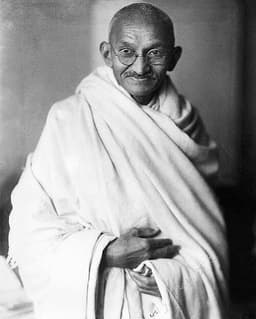
Mahatma Gandhi
Politician · Modern
68.7Total
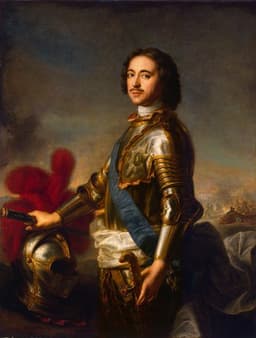
Peter the Great
Emperor · Modern
73.2Total
Basic Information
Born
1869
1672
Died
1948
1725
Era
Modern
Modern
Nationality
India
Russia
Occupation
Politician
Emperor
Civilization
Indian
Western
Score Comparison
Military (10%)
42.3
75.0
Political (20%)
65.0
90.0
Influence (20%)
80.0
68.0
Legacy (20%)
75.0
65.0
Leadership (15%)
70.0
78.0
Strategy (15%)
55.0
72.0
TOTAL
68.7
73.2
Mahatma Gandhi — Complete Timeline
1917 AD
Champaran SatyagrahaPolitical Action
Gandhi led his first nonviolent protest in India, supporting indigo farmers in Champaran, Bihar, against exploitative British planters. He organized a campaign of civil disobedience and negotiations, resulting in the abolition of the oppressive tinkathia system.
Civil disobedienceFarmers' rightsBritish Raj
Impact: nationalprogressive
1919 AD
Jallianwala Bagh massacre aftermathPolitical Action◆ Major
After British troops killed hundreds of unarmed civilians in Amritsar, Gandhi organized a nationwide hartal (strike) and nonviolent protests. He returned his medals and launched the Rowlatt Satyagraha, marking a shift from cooperation to non-cooperation with British rule.
ProtestBritish RajMassacre
Impact: nationaltragic
1930 AD
Salt MarchPolitical Action
Gandhi led a 240-mile march from Sabarmati to Dandi, Gujarat, to defy the British salt monopoly. Thousands joined him, making salt from seawater. This act of civil disobedience sparked mass protests across India and drew global attention to the independence movement.
Civil disobedienceSalt taxIndependence movement
Impact: globalprogressive
1942 AD
Quit India Movement launchPolitical Action◆ Major
Gandhi launched the Quit India Movement, calling for an end to British rule with the slogan 'Do or Die'. The British arrested him and other leaders, but the movement led to widespread protests and repression, accelerating the end of colonial rule.
IndependenceCivil disobedienceBritish Raj
Impact: nationalprogressive
1948 AD
AssassinationPolitical Action
Gandhi was shot and killed by Nathuram Godse, a Hindu nationalist, during a prayer meeting in New Delhi. His assassination shocked the world and led to a wave of grief and violence, but also reinforced his legacy as a martyr for nonviolence.
AssassinationMartyrdomNonviolence
Impact: globaltragic
Peter the Great — Complete Timeline
1697 AD
Grand EmbassyPolitical Action◆ Major
Peter the Great traveled incognito to Western Europe as part of a diplomatic mission. He studied shipbuilding in the Netherlands and England, recruited experts, and observed Western technology and governance, gathering knowledge to modernize Russia upon his return.
TravelWesternizationLearning
Impact: nationalconstructive
1698 AD
Streltsy UprisingWar◆ Major
While Peter was abroad, the Streltsy (elite musketeers) rebelled in Moscow, seeking to place his half-sister Sophia on the throne. Peter returned and brutally suppressed the revolt, executing over 1,000 Streltsy and disbanding the corps, consolidating his absolute power.
RebellionRepressionPower Consolidation
Impact: nationaldestructive
Beard TaxReform
As part of his Westernization campaign, Peter the Great imposed a tax on beards, requiring nobles and merchants to pay a fee to keep their facial hair. Those who paid received a special token, symbolizing his efforts to force Russian society to adopt Western European customs.
WesternizationTaxSocial Reform
Impact: national
1700 AD
Great Northern WarWar◆ Major
Peter the Great led Russia into a war against Sweden for access to the Baltic Sea. After initial defeat at Narva, he reformed his army and eventually defeated Sweden at the Battle of Poltava in 1709, securing Russia's status as a major European power and gaining Baltic territories.
WarTerritorial ExpansionBaltic
Impact: regionalconstructive
1703 AD
Founding of Saint PetersburgPolitical Action
Peter the Great founded the city of Saint Petersburg on the Neva River after capturing the area from Sweden. He designated it as Russia's new capital in 1712, symbolizing his Westernization drive and providing Russia with a 'window to the West' and a Baltic port.
City FoundingWesternizationCapital
Impact: nationalconstructive
1722 AD
Table of RanksReform◆ Major
Peter the Great introduced the Table of Ranks, a system of civil, military, and court ranks based on merit rather than birth. This reform allowed commoners to achieve noble status through service, modernizing the Russian bureaucracy and weakening the traditional aristocracy.
BureaucracyMeritocracySocial Reform
Impact: nationalprogressive
Expert Analysis
Peter the Great vs Mahatma Gandhi
# The Reformer and the Saint: Two Paths to Transform a Nation
On a cold October morning in 1697, a towering Russian of twenty-five, disguised as a common carpenter named Pyotr Mikhailov, climbed the scaffolding of a Dutch shipyard in Zaandam. He swung an axe alongside the workers, learning the craft of shipbuilding with his own hands. Two centuries later, in 1930, a slight, bare-chested Indian lawyer in a loincloth walked to the edge of the Arabian Sea, bent down, and picked up a lump of natural salt. Both gestures—one of sweat and iron, the other of salt and sand—changed the world. But how could two men, each driven by a vision to free their people from subjugation, arrive at such opposite methods? The answer lies in the soil they were born from, the enemies they faced, and the gods they chose to serve.
Origins
Peter Alekseyevich Romanov was born in 1672 into a Kremlin of intrigue and blood. His father, Tsar Alexis, died when Peter was four, and the boy grew up watching the Streltsy guards butcher his relatives before his eyes. The Russia of his childhood was a land of boyars with floor-length beards, women confined to terems, and a calendar that still began with the creation of the world. Peter’s half-sister Sophia ruled as regent, and young Peter found refuge in the German Quarter of Moscow, where he befriended Scots, Dutchmen, and Swiss adventurers. They taught him mathematics, fortification, and the intoxicating idea that Europe had already left Russia behind.
Mohandas Karamchand Gandhi, born in 1869 in the coastal town of Porbandar, grew up in a very different cage—not of iron but of custom. His father was a prime minister to a minor prince, his mother a devout Vaishnava who fasted obsessively. A shy, mediocre student who once stole a bit of gold from his brother, Gandhi married at thirteen and later sailed to London to study law, where he tried desperately to become an English gentleman, taking dancing lessons and buying a silk hat. The humiliation he faced on a train in South Africa—thrown out of a first-class carriage despite holding a valid ticket—would become the crucible of his soul.
Rise to Power
Peter seized power at seventeen by overthrowing Sophia. But his true ascension came not through a coup but a journey. In 1697, he launched the Grand Embassy, a diplomatic mission that was really a spy mission. He traveled incognito, visited shipyards in Holland and England, hired hundreds of European engineers, and returned to Moscow with a plan. When the Streltsy rebelled in his absence, Peter returned and personally beheaded them. He forced his nobles to shave their beards, imposed a tax on those who refused, and began dragging Russia into the modern world by the scruff of its neck.
Gandhi’s rise was slower, more inward. In South Africa, he organized the Indian community against discriminatory laws, developed the philosophy of Satyagraha—truth-force—and spent years in jail reading Tolstoy, Ruskin, and the Bhagavad Gita. His turning point came in 1917 in Champaran, Bihar, where he led indigo farmers against British landlords. The British ordered him to leave; he refused. The magistrate summoned him to court; the courtroom filled with thousands. Gandhi pleaded guilty and asked for the maximum penalty. The British blinked. From that moment, he was no longer a lawyer—he was a leader.
Leadership & Governance
Peter governed through terror and decree. He built a new capital, Saint Petersburg, in 1703 on a swamp, forcing tens of thousands of serfs to die building its foundations. He introduced the Table of Ranks in 1722, a system that allowed commoners to rise to nobility through merit—but only if they served the state. His military reforms turned a ragtag army into a professional force that defeated Sweden in the Great Northern War, giving Russia its coveted Baltic coastline. Yet his was a reign of absolutism: he tortured his own son Alexei to death for opposing his reforms.
Gandhi governed through moral persuasion. He never held a political office, yet he reshaped a nation of 300 million. His leadership was paradoxical: he demanded discipline but refused to command, insisting that every follower act from inner conviction. When he led the Salt March in 1930, walking 240 miles to the sea, he turned a tax on salt into a symbol of cosmic injustice. He launched the Quit India Movement in 1942 with the slogan “Do or Die,” and when the British arrested him, he simply fasted until they feared he would die in their custody. His weapon was his own body.
Triumph & Tragedy
Peter’s greatest triumph was the founding of Saint Petersburg—a window to Europe, a city of palaces and canals that announced Russia’s arrival as a great power. His tragedy came in the human cost: the serfs who died in the marshes, the Old Believers burned at the stake, the son he killed. When he died in 1725, he left behind a modern army and navy, but also a country ruled by fear.
Gandhi’s greatest triumph was India’s independence in 1947. His tragedy was that the nation he freed immediately tore itself apart in the communal violence of Partition. As Hindus and Muslims slaughtered each other, Gandhi walked through the burning streets of Noakhali and Calcutta, fasting until the killing stopped. On January 30, 1948, a Hindu nationalist named Nathuram Godse shot him three times at a prayer meeting. Gandhi’s last words were “Hey Ram”—“Oh God.”
Character & Destiny
Peter was a giant—six feet seven inches in an age when the average man stood five-four. He had a violent temper, a crude sense of humor, and a relentless curiosity. He pulled teeth, dissected corpses, and personally commanded his armies. His personality drove Russia forward because he could imagine no other way. For him, change was a war.
Gandhi was slight, with a voice so soft that crowds had to strain to hear him. He was stubborn beyond reason, often impractical, and deeply manipulative in his own way—he used his fasts as a weapon that no opponent could counter. His personality shaped India’s destiny because he believed that power flowed not from violence but from suffering willingly endured. For him, change was a prayer.
Legacy
Today, Peter the Great stands in bronze in Saint Petersburg, his horse trampling a serpent. He is remembered as the father of modern Russia, but also as a tyrant who built greatness on bones. Gandhi’s face adorns every Indian currency note, and his philosophy inspired Martin Luther King Jr. and Nelson Mandela. Yet modern India has largely abandoned his economic vision of village self-sufficiency, chasing the very industrialization Peter would have admired.
Conclusion
In the end, these two men faced the same question: How do you free a people who have been conquered—one by history, the other by empire? Peter answered by becoming the conqueror himself, dragging his nation forward with iron chains. Gandhi answered by refusing to become anything but a mirror, forcing his oppressors to see their own reflection. One built a city of stone; the other walked a path of salt. Both changed the world, but they remind us that transformation can come through the sword or through the soul—and that the choice between them is written not in destiny, but in the wounds of a man’s own childhood.
Rankings
🥇
Peter the GreatLeader
Mil: 75.0Pol: 90.0Inf: 68.0
73.2
🥈
Mahatma Gandhi
Mil: 42.3Pol: 65.0Inf: 80.0
68.7
+4.5 behind
How This Comparison Works
Algorithm
Each figure is scored on 6 dimensions (0—100 scale) based on structured historical data: Military (10%), Political (20%), Influence (20%), Legacy (20%), Leadership (15%), Strategy (15%). The weighted total produces the final ranking.
Data Sources
Scores are computed from structured sub-indicators in the database. Scale factors adjust for era (Ancient ×0.85, Modern ×1.0) and civilization size (Eastern ×1.05, Other ×0.80) to account for differences in population and military scale.
Maximum 3 Figures
Comparisons are limited to 2—3 figures to ensure readability and statistical meaningfulness.
Error Margins
±5 points per dimension — Sub-scores are derived from historical records with inherent uncertainty. Two figures within 5 points on a dimension should be considered roughly equivalent in that area.
Total Score Accuracy
±3 points overall — The weighted combination of 6 dimensions produces a total score with approximately ±3 points of uncertainty. Differences of less than 3 points are not statistically significant— the figures are effectively tied.
Known Limitations
- Historical records are incomplete and uneven across civilizations
- Figures from oral-tradition societies may be underrepresented
- Occupation labels can misclassify multi-role figures
- Scores measure capability and impact, not moral character
- Quantitative scoring is a comparison tool, not absolute truth
Capability Radar
Military (10%) — Battles & Warfare
Battles
45
85
Win Rate
46
80
Expansion
51
90
Political (20%) — Governance & Reform
Reform
85
95
Diplomacy
80
80
Economy
40
85
Influence (20%) — Cultural & Global Reach
Cultural
85
85
Global
90
85
Legacy (20%) — Historical Impact
Historical
90
90
Longevity
85
85
Leadership (15%) — Power & Stability
Tenure
60
90
Stability
55
70
Strategy (15%) — Tactics & Innovation
Strategy
52
85
Tactics
56
75
Reform
55
95
Similar Comparisons
Comments & Discussion
RealpolitikReaper6/16/2026
Peters's pragmatism wins every time. Gandhi's moral high ground looks nice in textbooks, but try winning a war against Sweden with salt—oh wait, you can't. Peter built Russia into a European power through sheer will and iron. Gandhi's India? Still dealing with partition scars and caste wounds. Give me concrete results over pretty words any day.
TsarAxeman6/16/2026
Sure, Peter learned some carpentry in Holland, but real historical impact isn't measured in calluses. Gandhi's salt march dismantled an empire through moral authority; Peter's shipbuilding binge built a navy to bully Sweden. One inspired centuries of civil disobedience, the other just expanded serfdom faster. I'd rather have salt in my hand than blood on my axe.
数据屠夫6/16/2026
这个比较从头到尾都在美化彼得大帝的"务实"。他砍树造船,甘地捡盐,但前者巩固了农奴制还让俄国人继续当炮灰,后者直接动摇了殖民统治根基。要我说,彼得的数据"进步"用死亡和压迫换来的,不值得歌颂。
ClassicsQuibbler6/16/2026
Both men rewrote their nations' scripts, but let's not confuse a shipwright with a sage. Peter's methods were brutal efficiency—his tax on beards literally shaved away tradition. Gandhi's power came from symbolic sacrifice, not forcing change on bayonets. The real lesson? You need both the hammer and the gentle touch, but history favors the loudest.
历史窥镜6/16/2026
说彼得和甘地"都改变了世界"是对历史的粗暴简化。甘地用不合作让大英帝国血本无归,彼得大帝用瑞典人的鲜血浇灌他的窗口。一个对抗的是制度上的压迫,一个对抗的是自身的落后。放在同一天平上称量,简直是侮辱了圣雄的哲学。