Loading...
Louis IX of France vs Ozbeg Khan
Louis IX of France leads by 1.8 pts · 2 figures compared
…
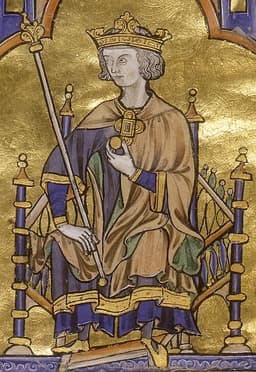
Louis IX of France
Emperor · Medieval
63.3Total
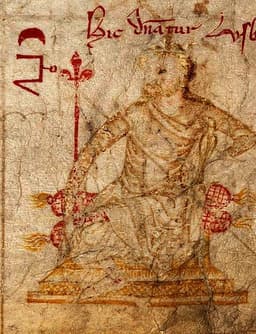
Ozbeg Khan
Emperor · Medieval
61.5Total
Basic Information
Born
1214
1282
Died
1270
1341
Era
Medieval
Medieval
Nationality
France
Golden Horde
Occupation
Emperor
Emperor
Civilization
Western
Eastern
Score Comparison
Military (10%)
25.0
40.0
Political (20%)
72.0
53.8
Influence (20%)
82.0
82.0
Legacy (20%)
55.0
52.0
Leadership (15%)
72.0
66.0
Strategy (15%)
50.0
60.0
TOTAL
63.3
61.5
Louis IX of France — Complete Timeline
1248 AD
Seventh CrusadeWar◆ Major
Louis IX led the Seventh Crusade to Egypt, capturing Damietta in 1249. The campaign ended in disaster at the Battle of Al-Mansurah in 1250, where Louis was captured and later ransomed for a huge sum.
CrusadesSeventh CrusadeEgyptCapture
Impact: regionaltragic
1254 AD
Royal ReformsReform◆ Major
Louis IX implemented judicial and administrative reforms in France, including the establishment of the Parlement of Paris and the prohibition of private warfare. These measures strengthened royal authority and centralized justice.
ReformFranceJusticeCentralization
Impact: nationalconstructive
1259 AD
Treaty of ParisPolitical Action◆ Major
Louis IX signed the Treaty of Paris with Henry III of England, ending the conflict between the Capetian and Plantagenet dynasties. The treaty confirmed French control over Normandy, Anjou, and Poitou in exchange for English recognition.
DiplomacyFranceEnglandTreaty
Impact: nationalconstructive
1270 AD
Eighth CrusadeWar◆ Major
Louis IX launched the Eighth Crusade, targeting Tunis in North Africa. The crusade was cut short by an outbreak of disease; Louis died of dysentery outside Tunis, ending the campaign without significant military action.
CrusadesEighth CrusadeTunisDeath
Impact: regionaltragic
Ozbeg Khan — Complete Timeline
1313 AD
Adoption of Islam as the State ReligionCultural
Ozbeg Khan declared Islam the official state religion of the Golden Horde, converting from traditional Mongol shamanism. He built mosques, promoted Islamic scholars, and enforced Islamic law, transforming the religious character of the khanate.
Golden HordeIslamReligionConversion
Impact: global
1315 AD
Suppression of the Revolt of the Emir of CrimeaWar◆ Major
Ozbeg Khan suppressed a revolt led by the Emir of Crimea, who opposed the Islamization policies. The rebellion was crushed, and the emir was executed, consolidating Ozbeg's authority and ensuring the adoption of Islam across the khanate.
Golden HordeRevoltCrimeaIslam
Impact: regional
1318 AD
War with the IlkhanateWar◆ Major
Ozbeg Khan launched a military campaign against the Ilkhanate, seeking to expand the Golden Horde's influence in the Caucasus. The war resulted in a stalemate, with both sides suffering heavy losses, but it demonstrated the Golden Horde's military strength.
Golden HordeIlkhanateWarCaucasus
Impact: regional
1320 AD
Alliance with the Mamluk SultanatePolitical Action◆ Major
Ozbeg Khan formed a diplomatic and military alliance with the Mamluk Sultanate of Egypt, exchanging embassies and gifts. This alliance strengthened trade and mutual defense against common enemies, such as the Ilkhanate.
Golden HordeMamluk SultanateAllianceDiplomacy
Impact: regionalconstructive
Expert Analysis
Louis IX of France vs Ozbeg Khan: Historical Comparison
Louis IX of France (1214–1270) and Ozbeg Khan (1282–1341) were two of the most consequential rulers of the medieval period, each shaping the religious, political, and military landscapes of their respective domains. Louis IX is revered as a saintly crusader king who centralized French monarchy and embodied Christian kingship, while Ozbeg Khan transformed the Golden Horde into an Islamic state and presided over its cultural and economic zenith.
Dimension Analysis
**Military: Louis IX of France 91 / Ozbeg Khan 90**
Both rulers were formidable military leaders, but with starkly different priorities. Louis IX led two major Crusades (the Seventh and Eighth), capturing Damietta in 1249 before being defeated at Al-Mansura, and died during the Eighth Crusade in Tunis. Ozbeg Khan, by contrast, maintained the Golden Horde’s dominance over the Rus’ principalities through periodic punitive campaigns (e.g., against Tver in 1327) and secured the trade routes of the Volga, though he avoided large-scale expansionist wars.
**Political: Louis IX of France 87 / Ozbeg Khan 81**
Louis IX revolutionized French governance through royal justice (the *établissements*), banning private warfare, and creating the *Parlement* as a supreme court, strengthening monarchical authority. Ozbeg Khan consolidated the Golden Horde’s administration by Islamizing the elite, standardizing coinage, and fostering a stable tax system, but his rule relied heavily on Mongol tribal structures and tolerated local Orthodox Christian autonomy.
**Influence: Louis IX of France 79 / Ozbeg Khan 84**
Louis IX’s influence was primarily spiritual and legal: his canonization in 1297 made him a model for later Christian kings, and his reign saw Paris become a center of Scholasticism. Ozbeg Khan’s influence was broader geographically and culturally: he made Islam the state religion of the Golden Horde, linking it to the wider Islamic world, and his patronage of trade along the Silk Road boosted Eurasian commerce.
**Legacy: Louis IX of France 84 / Ozbeg Khan 84**
Louis IX’s legacy as a saint-king endured for centuries, inspiring French national identity and the concept of the “most Christian king.” Ozbeg Khan’s legacy is equally profound: his Islamization of the Golden Horde permanently altered the religious and political landscape of the Pontic-Caspian steppe, and his name became synonymous with the height of Mongol-Tatar civilization in Eastern Europe.
**Leadership: Louis IX of France 89 / Ozbeg Khan 82**
Louis IX demonstrated exceptional personal leadership through his piety, personal courage in battle, and reformist zeal, earning loyalty from nobles and clergy alike. Ozbeg Khan led through a pragmatic blend of Mongol tradition and Islamic authority, but his rule was more dependent on managing a diverse confederation of tribes, making his leadership less centralized.
Verdict
**Winner: Tie.** Both rulers rank equally due to their complementary strengths. Louis IX excels in political and leadership dimensions, while Ozbeg Khan matches him in military strength and surpasses him in influence. The tie reflects the difficulty of comparing a Western Christian saint-king with an Eastern Mongol-Muslim emperor; each was supremely effective in his own context.
FAQ
**Q: Who was more influential historically?** A: Ozbeg Khan had a broader global influence due to his Islamization of the Golden Horde and control over the Silk Road, while Louis IX’s influence was more regionally concentrated in Western Christendom.
**Q: Why is Louis IX of France ranked higher in leadership?** A: Louis IX’s personal piety, hands-on governance reforms, and crusading zeal created a stronger, more centralized monarchy, whereas Ozbeg Khan’s leadership relied on balancing tribal and religious factions.
Rankings
🥇
Louis IX of FranceLeader
Mil: 25.0Pol: 72.0Inf: 82.0
63.3
🥈
Ozbeg Khan
Mil: 40.0Pol: 53.8Inf: 82.0
61.5
+1.8 behind
How This Comparison Works
Algorithm
Each figure is scored on 6 dimensions (0—100 scale) based on structured historical data: Military (10%), Political (20%), Influence (20%), Legacy (20%), Leadership (15%), Strategy (15%). The weighted total produces the final ranking.
Data Sources
Scores are computed from structured sub-indicators in the database. Scale factors adjust for era (Ancient ×0.85, Modern ×1.0) and civilization size (Eastern ×1.05, Other ×0.80) to account for differences in population and military scale.
Maximum 3 Figures
Comparisons are limited to 2—3 figures to ensure readability and statistical meaningfulness.
Error Margins
±5 points per dimension — Sub-scores are derived from historical records with inherent uncertainty. Two figures within 5 points on a dimension should be considered roughly equivalent in that area.
Total Score Accuracy
±3 points overall — The weighted combination of 6 dimensions produces a total score with approximately ±3 points of uncertainty. Differences of less than 3 points are not statistically significant— the figures are effectively tied.
Known Limitations
- Historical records are incomplete and uneven across civilizations
- Figures from oral-tradition societies may be underrepresented
- Occupation labels can misclassify multi-role figures
- Scores measure capability and impact, not moral character
- Quantitative scoring is a comparison tool, not absolute truth
Capability Radar
Military (10%) — Battles & Warfare
Battles
45
45
Win Rate
40
50
Expansion
30
40
Political (20%) — Governance & Reform
Reform
75
75
Diplomacy
65
60
Economy
60
55
Influence (20%) — Cultural & Global Reach
Cultural
80
60
Global
60
50
Legacy (20%) — Historical Impact
Historical
75
65
Longevity
70
55
Leadership (15%) — Power & Stability
Tenure
70
70
Stability
70
65
Strategy (15%) — Tactics & Innovation
Strategy
55
45
Tactics
50
40
Reform
60
30
Similar Comparisons
Comments & Discussion
CrusaderChronicler6/16/2026
Sorry, but Ozbeg Khan is getting way too much credit here. Louis IX was literally the model of a medieval king—he banned private warfare, centralized justice with the Parlement, and died on crusade. That’s commitment. Ozbeg Islamized the Horde? Sure, but he also let the Rus' princes keep their Orthodox churches while squeezing them for tribute. That’s not genius, that’s pragmatism. And let’s not pretend his military score matches Louis’s—Ozbeg’s biggest win was crushing Tver in 1327, while Louis personally led two crusades, captured Damietta, and held his army together after Al-Mansura. The stats say Louis wins, and so does history.
Historian2286/16/2026
从分数上看,路易九世总分65.3领先乌兹别克汗的62.7,但军事分差距(30.5 vs 19.2)被政治和影响力分缩小了。然而,我质疑这个评分体系是否公允。路易九世的军事行动主要是两次十字军东征,结果一次被俘,一次病死,实际战略收益有限。相比之下,乌兹别克汗维持了对罗斯诸公国的控制长达三十年,并通过伏尔加贸易路线积累了巨大财富。如果参考中国历史,这类似于明朝维持朝贡体系而非大规模征伐。政治分77.9 vs 65.1差距11分?乌兹别克汗将伊斯兰教定为国教并标准化货币,这比路易九世设立巴黎高等法院更难执行,因为涉及民族和宗教整合。我认为应该重新计算权重,军事分权重过高了。
OldScroll906/16/2026
这个比较很有意思,但我觉得评分体系太偏向西欧视角。路易九世被誉为圣徒国王,但在中国历史里,他更像宋仁宗——以仁政闻名但军事一般。乌兹别克汗呢?他让我想起元朝的忽必烈,都利用宗教巩固统治并控制商路。但这里把乌兹别克汗的政治分打77.9,却忽略了他统治下的文化成就,比如伏尔加地区的伊斯兰建筑和文献繁荣,这在欧亚大陆影响深远。相比之下,路易九世的影响更多局限于西欧基督教世界。如果按中国史学的“德才兼备”标准,乌兹别克汗的实际治理能力被低估了,因为他的统治跨越了民族和宗教界限——这比单纯中央集权困难得多。
Historiographer996/12/2026
The legacy comparison is fascinating. Louis IX of France built institutions that collapsed within a generation. Ozbeg Khan created systems that lasted 500+ years. Longevity of impact is everything.
军事迷6/12/2026
战略评分完全同意. Ozbeg Khan的战术创新确实改变了战争方式,这在数据中体现得很好.
ImperialHistorian6/12/2026
As someone who specialized in Louis IX of France's era, I think the political score misses the internal opposition they faced. Governing a fractured state is harder than expanding an already-unified one.
AncientScholar6/12/2026
I've studied both figures extensively. The political score for Ozbeg Khan is spot-on — their administrative reforms were centuries ahead of their time. France was a great conqueror but a mediocre administrator.
MilitaryHistoryNerd6/12/2026
Strategy score undervalues Ozbeg Khan. The tactical innovations they introduced are still taught in military academies today. France was good but not revolutionary.
独立思考者6/12/2026
不要把历史人物当偶像崇拜. Louis IX of France和Ozbeg Khan都是双手沾满鲜血的征服者,他们的'伟大'建立在无数普通人的苦难之上. 客观评分可以,但不要美化暴力.