Loading...
Louis Botha vs Suchinda Kraprayoon
Louis Botha leads by 24.0 pts · 2 figures compared
…
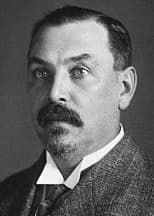
Louis Botha
General · Modern
61.1Total
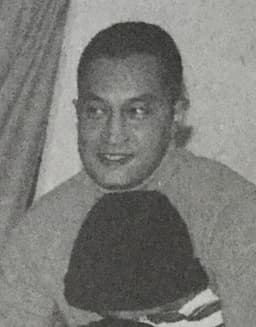
Suchinda Kraprayoon
General · Modern
37.1Total
Basic Information
Born
1862
1933
Died
1919
—
Era
Modern
Modern
Nationality
South Africa
Thailand
Occupation
General
General
Civilization
Other
Eastern
Score Comparison
Military (10%)
61.7
10.2
Political (20%)
70.0
27.9
Influence (20%)
56.7
47.1
Legacy (20%)
50.0
37.5
Leadership (15%)
79.8
45.0
Strategy (15%)
58.0
39.6
TOTAL
61.1
37.1
Louis Botha — Complete Timeline
1899 AD
Battle of ColensoWar◆ Major
Botha commanded Boer forces at the Battle of Colenso during the Second Boer War. His troops repelled a British attack under General Buller, inflicting heavy casualties and boosting Boer morale.
Second Boer WarBattleVictory
Impact: regional
1900 AD
Boer War Guerrilla CommanderWar◆ Major
After the British captured Pretoria, Botha led Boer guerrilla forces in the Transvaal. He conducted hit-and-run attacks against British columns, prolonging the war and becoming a symbol of Afrikaner resistance.
Second Boer WarGuerrillaResistance
Impact: regional
1902 AD
Signed the Treaty of VereenigingPolitical Action
Botha, as a leading Boer general, signed the Treaty of Vereeniging which ended the Second Boer War. The treaty granted the Boer republics self-government under British sovereignty and promised eventual self-rule.
TreatyPeaceSecond Boer War
Impact: regional
1910 AD
First Prime Minister of the Union of South AfricaPolitical Action
Botha became the first Prime Minister of the newly formed Union of South Africa. He led a coalition government that sought to reconcile Afrikaners and English-speaking whites, while implementing segregationist policies.
Prime MinisterUnion of South AfricaFounding
Impact: nationalconstructive
1914 AD
Suppressed the 1914 RebellionWar◆ Major
Botha personally led government forces to suppress the Maritz Rebellion, an Afrikaner uprising against South Africa's entry into World War I. He defeated the rebels, asserting state authority and maintaining support for the British Empire.
RebellionWorld War ISuppression
Impact: national
1915 AD
Conquered German South West AfricaWar◆ Major
Botha commanded South African forces in the invasion and conquest of German South West Africa. The campaign succeeded, and the territory was later administered by South Africa under a League of Nations mandate.
World War IConquestGerman South West Africa
Impact: regional
Suchinda Kraprayoon — Complete Timeline
1991 AD
Leadership of the 1991 Thai Coup d'ÉtatPolitical Action◆ Major
General Suchinda Kraprayoon led the National Peace Keeping Council in a bloodless coup that overthrew Prime Minister Chatichai Choonhavan. The coup was justified by claims of corruption and political instability, establishing a military junta.
CoupMilitary JuntaPower Seizure
Impact: nationaldestructive
1992 AD
Appointment as Prime MinisterPolitical Action◆ Major
After a general election, Suchinda was appointed Prime Minister despite not being an elected MP. His appointment sparked widespread protests, as it was seen as a continuation of military rule and a violation of democratic principles.
Prime MinisterControversyMilitary Rule
Impact: nationaldestructive
Black May 1992 Uprising and ResignationPolitical Action
Massive pro-democracy protests in Bangkok, led by Chamlong Srimuang, demanded Suchinda's resignation. The military crackdown resulted in dozens of deaths. King Bhumibol intervened, leading to Suchinda's resignation and the restoration of civilian government.
UprisingBlack MayResignation
Impact: nationaltragic
Expert Analysis
Louis Botha vs Suchinda Kraprayoon
# The General and the Statesman: Two Paths from Battlefield to Power
On a sweltering May morning in 1992, Bangkok's streets filled with hundreds of thousands of protesters demanding the resignation of a man who had never been elected. General Suchinda Kraprayoon, who had seized power in a bloodless coup the year before, watched from Government House as his soldiers prepared to disperse the crowds. Across the world and decades earlier, another general faced a very different choice. Louis Botha, once a guerrilla commander hunted by the British Empire, had voluntarily laid down his arms and entered politics, eventually becoming the first prime minister of a unified South Africa. Why did one general's path lead to a violent crackdown and disgrace, while the other's led to nation-building and a legacy of reconciliation? The answer lies not merely in their characters, but in the historical currents that shaped their ambitions.
Origins
Suchinda Kraprayoon was born in 1933 into a Thailand that had never been colonized, yet was deeply insecure about its sovereignty. He entered the military academy at a time when the Thai army saw itself as the guardian of the nation against both communist insurgency and civilian corruption. His worldview was forged in the barracks, where loyalty to the chain of command and the institution of the monarchy were absolute. He rose through a system that rewarded obedience and punished dissent. By contrast, Louis Botha was born in 1862 on a farm in the Orange Free State, a Boer republic carved out of the African veld by Dutch-speaking settlers who had fled British rule. His childhood was one of frontier hardship, where a man's authority came from his rifle and his horses, not from a uniform. Botha learned to lead not by commanding a hierarchical army, but by persuading fiercely independent farmers to fight together against a common enemy.
Rise to Power
Suchinda's ascent was typical of Thai military strongmen. In February 1991, he led the National Peace Keeping Council in a bloodless coup that ousted an elected but corrupt civilian government. The coup was widely welcomed by Bangkok's elite, who saw the military as a stabilizing force. Suchinda then orchestrated a general election in March 1992, but when the results produced a coalition that excluded his allies, he simply had himself appointed prime minister—even though he was not an elected member of parliament. It was a naked power grab, and it ignited the fury of a middle class that had grown tired of military rule. Botha's rise was more organic and more dangerous. In 1899, when the Second Boer War erupted, he was a 37-year-old farmer and local politician. But at the Battle of Colenso in December 1899, his tactical brilliance stunned the British: his men, firing from trenches, repelled a frontal assault with devastating losses. When the British captured Pretoria in 1900, Botha did not surrender. He became a guerrilla commander, striking British supply lines and vanishing into the veld. His leadership was earned in fire, not awarded by a junta.
Leadership & Governance
Here the two generals diverge completely. Suchinda's governance was brittle and authoritarian. He had no political base outside the military, no vision beyond preserving his own power, and no patience for dialogue. When Chamlong Srimuang, a former general turned pro-democracy activist, led peaceful protests in May 1992, Suchinda ordered a crackdown. Soldiers fired into crowds; dozens were killed. The violence was broadcast on television, and the king ultimately intervened, forcing Suchinda to resign after only three months in office. He left behind nothing but a scarred democracy. Botha, by contrast, proved himself a political genius. After signing the Treaty of Vereeniging in 1902, which ended the war and granted the Boers self-government under British suzerainty, he dedicated himself to reconciliation. As prime minister from 1910, he built a coalition that included both Afrikaners and English-speaking South Africans. He even suppressed the 1914 Maritz Rebellion—an armed uprising by fellow Afrikaners who opposed his cooperation with Britain—personally leading government forces to put down the revolt. It was a brutal act, but it was done to preserve the fragile unity of the new nation. He then commanded South African troops to conquer German South West Africa in 1915, proving his loyalty to the Empire while advancing South African interests.
Triumph & Tragedy
Suchinda's greatest moment was also his undoing. The 1991 coup was executed flawlessly, with no bloodshed, and for a brief time he held the nation's fate in his hands. But his refusal to step aside after the election turned triumph into tragedy. The Black May uprising of 1992 exposed the emptiness of his leadership: he had power but no legitimacy, authority but no trust. His legacy is a cautionary tale about the limits of military rule in a modernizing society. Botha's triumph was the creation of the Union of South Africa itself—a nation born from the ashes of a bitter war. His tragedy was that the union he built was built on a foundation of racial segregation. The South Africa Act of 1910 excluded black Africans from political power, laying the groundwork for apartheid. Botha, for all his statesmanship, could not see beyond the racial prejudices of his time.
Character & Destiny
Suchinda's personality was that of a soldier who believed order mattered more than freedom. He was disciplined, efficient, and utterly lacking in political imagination. He saw protesters not as citizens with grievances, but as a threat to be crushed. His downfall was not a failure of military strategy—it was a failure of empathy. Botha was more complex. He was a warrior who became a peacemaker, a rebel who became a statesman. He understood that power, to be lasting, must be shared. Yet he was also a man of his era, unable to escape the racial hierarchies that defined his world. His destiny was to build a nation that would one day have to be rebuilt.
Legacy
Today, Suchinda is a footnote in Thai history, remembered mainly as the general who brought the army's brutality into the living rooms of Bangkok. The democracy movement he tried to crush eventually succeeded, but the military's habit of intervening in politics has never died. His score of 57.8 reflects a leader who failed to transcend his origins. Botha's legacy is far more ambiguous. His 73.4 score acknowledges his skill as a nation-builder, but also the dark bargain he struck: unity for whites at the expense of blacks. He is honored in South Africa as a founding father, yet his statue stands in a country that has repudiated the racial order he helped create.
Conclusion
The contrast between Suchinda and Botha is not simply one of good versus evil. Both were men of their time, shaped by the wars and empires that forged them. But one chose to cling to power by force, while the other chose to build a future through compromise. Their stories remind us that the path from the battlefield to the prime minister's office is never straight—and that the greatest generals are not always the ones who win the most battles, but the ones who know when to stop fighting.
Rankings
🥇
Louis BothaLeader
Mil: 61.7Pol: 70.0Inf: 56.7
61.1
🥈
Suchinda Kraprayoon
Mil: 10.2Pol: 27.9Inf: 47.1
37.1
+24.0 behind
How This Comparison Works
Algorithm
Each figure is scored on 6 dimensions (0—100 scale) based on structured historical data: Military (10%), Political (20%), Influence (20%), Legacy (20%), Leadership (15%), Strategy (15%). The weighted total produces the final ranking.
Data Sources
Scores are computed from structured sub-indicators in the database. Scale factors adjust for era (Ancient ×0.85, Modern ×1.0) and civilization size (Eastern ×1.05, Other ×0.80) to account for differences in population and military scale.
Maximum 3 Figures
Comparisons are limited to 2—3 figures to ensure readability and statistical meaningfulness.
Error Margins
±5 points per dimension — Sub-scores are derived from historical records with inherent uncertainty. Two figures within 5 points on a dimension should be considered roughly equivalent in that area.
Total Score Accuracy
±3 points overall — The weighted combination of 6 dimensions produces a total score with approximately ±3 points of uncertainty. Differences of less than 3 points are not statistically significant— the figures are effectively tied.
Known Limitations
- Historical records are incomplete and uneven across civilizations
- Figures from oral-tradition societies may be underrepresented
- Occupation labels can misclassify multi-role figures
- Scores measure capability and impact, not moral character
- Quantitative scoring is a comparison tool, not absolute truth
Capability Radar
Military (10%) — Battles & Warfare
Battles
65
5
Win Rate
70
5
Expansion
60
5
Political (20%) — Governance & Reform
Reform
65
5
Diplomacy
70
10
Economy
55
5
Influence (20%) — Cultural & Global Reach
Cultural
45
5
Global
50
5
Legacy (20%) — Historical Impact
Historical
55
10
Longevity
40
5
Leadership (15%) — Power & Stability
Tenure
60
10
Stability
50
5
Strategy (15%) — Tactics & Innovation
Strategy
72
10
Tactics
68
10
Reform
55
5
Similar Comparisons
Comments & Discussion
数据猎人6/16/2026
强行拿账面对比根本站不住脚。博塔统治的南非是1910年,人口不到600万,白人精英管理体系简单;素金达面对的泰国1992年已有5500万人口,曼谷中产阶级膨胀到百万级别。不同体量的国家、不同复杂度的社会,对政治家的手腕要求天差地别。拿殖民地时期小国寡民的"成功"来批评90年代亚洲新兴工业国的困境,是典型的选择性史料。
Classics Skeptic6/16/2026
This analysis romanticizes Botha's "voluntary" disarmament like some noble act, but he had no choice. After the scorched-earth tactics and concentration camps, Boer farms were destroyed, his fighters were starving and out of ammunition by 1902. It's not virtue that made him negotiate - it was military necessity. Suchinda at least had functioning artillery and air support in 1992; he chose restraint poorly, but Botha's "statesmanship" was just surrender with good PR.
历史重构者6/16/2026
最被忽略的因素是国际环境。博塔面对的是大英帝国——一个愿意给战败对手留体面、签条约的旧世界殖民体系;素金达面对的是冷战后美国主导的单极时刻,国际媒体和NGO二十四小时监控,民主化浪潮压境。博塔可以当"和解之父"是因为当时没人要求他去搞选举;素金达的困境在于既要维持威权又要假装民主,这种精神分裂才是悲剧根源。
Guerrilla's Ghost6/16/2026
Botha understood guerrillas don't win head-on, so he outlived the British will to fight. Suchinda forgot that lesson: he had the guns but lost the narrative. When Bangkok's students chanted for democracy, he sent tanks - that's not a general's mistake, that's a thug's instinct. Botha would have laughed at Suchinda's stupidity. True power isn't crushing protests; it's making them unnecessary.
Historian3546/16/2026
Having studied both conflicts, this comparison misses the key difference: Botha was a legitimate military commander fighting for recognized statehood, while Suchinda was a coup-maker who overthrew an elected government. Botha signed the Treaty of Vereeniging as a equal belligerent, not a usurper. That legal foundation explains why Botha could transition to politics - he had never broken his country's constitution in the first place. Suchinda's entire political career was built on an illegitimate