Loading...
Louis Botha vs Soe Win
Louis Botha leads by 19.4 pts · 2 figures compared
…
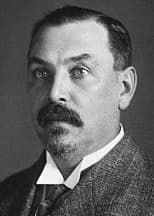
Louis Botha
General · Modern
61.1Total
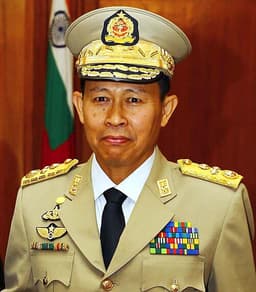
Soe Win
General · Modern
41.7Total
Basic Information
Born
1862
1947
Died
1919
—
Era
Modern
Modern
Nationality
South Africa
Myanmar
Occupation
General
General
Civilization
Other
Eastern
Score Comparison
Military (10%)
61.7
25.9
Political (20%)
70.0
30.8
Influence (20%)
56.7
48.6
Legacy (20%)
50.0
40.0
Leadership (15%)
79.8
57.6
Strategy (15%)
58.0
36.8
TOTAL
61.1
41.7
Louis Botha — Complete Timeline
1899 AD
Battle of ColensoWar◆ Major
Botha commanded Boer forces at the Battle of Colenso during the Second Boer War. His troops repelled a British attack under General Buller, inflicting heavy casualties and boosting Boer morale.
Second Boer WarBattleVictory
Impact: regional
1900 AD
Boer War Guerrilla CommanderWar◆ Major
After the British captured Pretoria, Botha led Boer guerrilla forces in the Transvaal. He conducted hit-and-run attacks against British columns, prolonging the war and becoming a symbol of Afrikaner resistance.
Second Boer WarGuerrillaResistance
Impact: regional
1902 AD
Signed the Treaty of VereenigingPolitical Action
Botha, as a leading Boer general, signed the Treaty of Vereeniging which ended the Second Boer War. The treaty granted the Boer republics self-government under British sovereignty and promised eventual self-rule.
TreatyPeaceSecond Boer War
Impact: regional
1910 AD
First Prime Minister of the Union of South AfricaPolitical Action
Botha became the first Prime Minister of the newly formed Union of South Africa. He led a coalition government that sought to reconcile Afrikaners and English-speaking whites, while implementing segregationist policies.
Prime MinisterUnion of South AfricaFounding
Impact: nationalconstructive
1914 AD
Suppressed the 1914 RebellionWar◆ Major
Botha personally led government forces to suppress the Maritz Rebellion, an Afrikaner uprising against South Africa's entry into World War I. He defeated the rebels, asserting state authority and maintaining support for the British Empire.
RebellionWorld War ISuppression
Impact: national
1915 AD
Conquered German South West AfricaWar◆ Major
Botha commanded South African forces in the invasion and conquest of German South West Africa. The campaign succeeded, and the territory was later administered by South Africa under a League of Nations mandate.
World War IConquestGerman South West Africa
Impact: regional
Soe Win — Complete Timeline
2004 AD
Appointed Prime Minister of MyanmarPolitical Action◆ Major
Soe Win was appointed Prime Minister of Myanmar by the State Peace and Development Council, succeeding Khin Nyunt. He served as a key figure in the military junta's government.
Military JuntaGovernment Appointment
Impact: national
2007 AD
Saffron Revolution CrackdownPolitical Action
As Prime Minister, Soe Win oversaw the military's violent suppression of the Saffron Revolution, a series of anti-government protests led by Buddhist monks. The crackdown resulted in numerous deaths, arrests, and international condemnation.
Saffron RevolutionHuman RightsRepression
Impact: nationaldestructive
Death in OfficeOther
Soe Win died in office on October 12, 2007, from leukemia. His death occurred shortly after the Saffron Revolution crackdown, and he was succeeded by Thein Sein.
DeathSuccession
Impact: national
Expert Analysis
Louis Botha vs Soe Win
# The General as Statesman: Two Paths from Battlefield to Power
On a dusty South African hillside in December 1899, a Boer farmer named Louis Botha watched British soldiers march into a killing field at Colenso. He had never commanded a major battle before, yet his instincts proved flawless: the British suffered over a thousand casualties while his own men lost barely forty. Half a world away and more than a century later, in the sweltering heat of a Myanmar summer, General Soe Win sat in his office in Naypyidaw, ordering troops to crush protests led by Buddhist monks—a decision that would seal his reputation as a man who chose bullets over dialogue. Both men were generals who became prime ministers. Both faced moments that defined not only their careers but their nations. Why did one build a unified state while the other deepened a cycle of repression?
Origins
Louis Botha was born in 1862 on a farm in the Orange Free State, a child of the Boer frontier. His family were Voortrekkers—descendants of Dutch settlers who had fled British rule—and he grew up speaking Afrikaans, hunting game, and learning the harsh realities of African life. The Boer republics he knew were fragile, surrounded by British imperial ambition and African kingdoms. This world taught him pragmatism: survival required negotiation as much as rifles. Soe Win, born in 1947 in British Burma, came of age in a nation emerging from colonial rule into a chaos of ethnic conflict and military coups. He joined the army young, rising through the ranks of a junta that viewed any dissent as treason. Where Botha’s upbringing instilled a farmer’s patience, Soe Win’s bred a soldier’s suspicion.
Rise to Power
Botha’s path to leadership was forged in war. After Colenso, he became a guerrilla commander, leading hit-and-run attacks across the Transvaal after the British captured Pretoria in 1900. His men knew him as a leader who shared their rations and slept on the same hard ground. When peace came in 1902, Botha signed the Treaty of Vereeniging—a bitter compromise that ended Boer independence but preserved Afrikaner identity. He then pivoted from war to politics, becoming the first Prime Minister of the Union of South Africa in 1910. Soe Win’s rise was quieter, more bureaucratic. He served in the military intelligence apparatus, loyal to the junta, and in 2004 replaced Khin Nyunt as prime minister after a power struggle. His promotion owed less to popular support than to his reliability as a regime insider.
Leadership & Governance
Botha governed as a unifier. He led a coalition government that sought to reconcile Boers and Britons, Afrikaners and English-speakers. His political wisdom lay in understanding that South Africa could not survive as two warring camps. He also crushed the 1914 Maritz Rebellion—an Afrikaner uprising against his own government—personally leading forces to put down his former comrades. It was a brutal act of state-building, but one that prioritized the union over tribal loyalty. His military acumen shone again in 1915 when he conquered German South West Africa, expanding South African influence. Soe Win faced a different challenge: a nation already fractured by decades of military rule. His governance was reactive, centered on preserving the State Peace and Development Council’s grip. When the Saffron Revolution erupted in 2007—led by monks demanding democracy—he ordered a violent crackdown. Thousands were arrested, dozens killed, and monasteries raided. Where Botha used force to build a state, Soe Win used it to preserve a regime.
Triumph & Tragedy
Botha’s greatest triumph was the Union itself—a fragile but functioning state that survived its first decade. His tragedy lay in what he could not do: the land, rights, and dignity of South Africa’s black majority remained untouched by his vision. The union he built was white-only, setting the stage for apartheid. Soe Win’s tragedy was more immediate. The Saffron Revolution crackdown made Myanmar a pariah state, deepening international isolation. His death from leukemia in October 2007, just weeks after the protests, left a legacy of blood. He never saw the reforms that would come a decade later.
Character & Destiny
Botha was a man of contradictions: a warrior who sought peace, a nationalist who built a union with his former enemies. His character—pragmatic, resilient, willing to compromise—allowed him to navigate the treacherous currents of post-war South Africa. Soe Win was a product of his system: rigid, paranoid, incapable of imagining power sharing. The junta’s ideology left no room for the flexibility Botha showed. Their destinies were shaped not just by personal choices but by the eras they inhabited. Botha’s South Africa, though brutal, had space for political negotiation. Soe Win’s Myanmar had none.
Legacy
Louis Botha is remembered as a founding father of South Africa—a flawed one, but a builder. His statue stands in Pretoria, his name on streets and schools. Soe Win is forgotten outside Myanmar, and within it, he is a symbol of repression. The Saffron Revolution’s monks are remembered; their persecutor is not. Botha’s legacy is complex, debated, but enduring. Soe Win’s is a cautionary tale of how power, when wielded without vision, collapses into silence.
Conclusion
Two generals, two prime ministers, two nations. Botha faced the challenge of building something new from the ashes of war; Soe Win faced the challenge of reforming something rotten. One chose the long, painful work of statecraft; the other chose the short, brutal path of control. Their stories remind us that leadership is not merely about winning battles or holding office. It is about the courage to imagine a different future—and the wisdom to know that the future belongs to those who build, not to those who merely hold on.
Rankings
🥇
Louis BothaLeader
Mil: 61.7Pol: 70.0Inf: 56.7
61.1
🥈
Soe Win
Mil: 25.9Pol: 30.8Inf: 48.6
41.7
+19.4 behind
How This Comparison Works
Algorithm
Each figure is scored on 6 dimensions (0—100 scale) based on structured historical data: Military (10%), Political (20%), Influence (20%), Legacy (20%), Leadership (15%), Strategy (15%). The weighted total produces the final ranking.
Data Sources
Scores are computed from structured sub-indicators in the database. Scale factors adjust for era (Ancient ×0.85, Modern ×1.0) and civilization size (Eastern ×1.05, Other ×0.80) to account for differences in population and military scale.
Maximum 3 Figures
Comparisons are limited to 2—3 figures to ensure readability and statistical meaningfulness.
Error Margins
±5 points per dimension — Sub-scores are derived from historical records with inherent uncertainty. Two figures within 5 points on a dimension should be considered roughly equivalent in that area.
Total Score Accuracy
±3 points overall — The weighted combination of 6 dimensions produces a total score with approximately ±3 points of uncertainty. Differences of less than 3 points are not statistically significant— the figures are effectively tied.
Known Limitations
- Historical records are incomplete and uneven across civilizations
- Figures from oral-tradition societies may be underrepresented
- Occupation labels can misclassify multi-role figures
- Scores measure capability and impact, not moral character
- Quantitative scoring is a comparison tool, not absolute truth
Capability Radar
Military (10%) — Battles & Warfare
Battles
65
10
Win Rate
70
10
Expansion
60
10
Political (20%) — Governance & Reform
Reform
65
10
Diplomacy
70
10
Economy
55
10
Influence (20%) — Cultural & Global Reach
Cultural
45
10
Global
50
10
Legacy (20%) — Historical Impact
Historical
55
20
Longevity
40
10
Leadership (15%) — Power & Stability
Tenure
60
30
Stability
50
10
Strategy (15%) — Tactics & Innovation
Strategy
72
10
Tactics
68
10
Reform
55
10
Similar Comparisons
Comments & Discussion
GENERAL'S ECHO6/16/2026
Botha's genius wasn't in slaughter but timing. At Colenso, he let British arrogance do the work—1,138 casualties against his 38, a ratio any modern staff college would kill for. Soe Win's crackdown on the Saffron Revolution? That wasn't military acumen; it was panic. He faced unarmed monks and still needed days to crush them. Botha knew when to fight and when to talk; Soe Win only knew how to squeeze.|
战场书呆子6/16/2026
比两人伤亡比?幼稚。数据从不撒谎,但选谁说谎。布尔战争里英军死一千多就崩了,因为那是殖民战争没人在乎。缅甸2007年,僧侣抗议背后是2000万民心。苏温赢在控制数字,输在历史账簿。博塔把敌人当对手,苏温只当蝼蚁。一个下棋,一个砸棋盘。|
REVISIONIST SCRIBE6/16/2026
Let's not whitewash Botha: he built South Africa's racial segregation foundations. Sure, he unified Boers and Brits after 1902, but that "pragmatism" meant excluding 80% of the population from power. Soe Win's sin was cruder—violence in plain sight. But Botha's legacy is more dangerous: a polite, legalized tyranny that lasted decades. Which general truly deepened repression? Check the pass laws, not the body count.|
战略伪君子6/16/2026
博塔的「统一」是给白人分蛋糕时顺手安抚英国人。他当总理建立联邦,却把黑人锁在保留地——1913年土地法,天才之作啊。苏温至少没装:枪毙僧侣、关押昂山素季,赤裸裸的军政府。一个用《采矿法》勒死黑人,一个用步枪。我选后者,至少不用解读法律条文。|
AFRIKAANER'S GHOST6/16/2026
My great-grandfather fought under Botha at Spion Kop. He'd say Soe Win lacked the Boer's final lesson: knowing when power isn't yours. Botha surrendered at Vereeniging—bitter, yes, but he saved his people from extinction. Soe Win clung to power until cancer took him, leaving Myanmar more fragmented than 1962. Leadership isn't about crushing enemies; it's about building a future your enemies can live in.|
墓碑比较学6/16/2026
博塔墓在比勒陀利亚,墓碑刻「和解」;苏温墓在哪?内比都军营里的无名坟吧。两人都死在办公室——博塔心梗前还在调整宪法,苏温白血病前在清洗异议。区别是博塔的宪法活了百年,苏温的「路线」活不过雨季。政治遗产不是杀人多少,是死后多少人骂