Loading...
Louis Botha vs Shi Dakai
Louis Botha leads by 1.5 pts · 2 figures compared
…
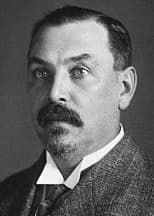
Louis Botha
General · Modern
61.1Total
Shi Dakai
General · Modern
59.6Total
Basic Information
Born
1862
1831
Died
1919
1863
Era
Modern
Modern
Nationality
South Africa
China
Occupation
General
General
Civilization
Other
Eastern
Score Comparison
Military (10%)
61.7
76.0
Political (20%)
70.0
45.0
Influence (20%)
56.7
56.7
Legacy (20%)
50.0
54.0
Leadership (15%)
79.8
72.0
Strategy (15%)
58.0
68.1
TOTAL
61.1
59.6
Louis Botha — Complete Timeline
1899 AD
Battle of ColensoWar◆ Major
Botha commanded Boer forces at the Battle of Colenso during the Second Boer War. His troops repelled a British attack under General Buller, inflicting heavy casualties and boosting Boer morale.
Second Boer WarBattleVictory
Impact: regional
1900 AD
Boer War Guerrilla CommanderWar◆ Major
After the British captured Pretoria, Botha led Boer guerrilla forces in the Transvaal. He conducted hit-and-run attacks against British columns, prolonging the war and becoming a symbol of Afrikaner resistance.
Second Boer WarGuerrillaResistance
Impact: regional
1902 AD
Signed the Treaty of VereenigingPolitical Action
Botha, as a leading Boer general, signed the Treaty of Vereeniging which ended the Second Boer War. The treaty granted the Boer republics self-government under British sovereignty and promised eventual self-rule.
TreatyPeaceSecond Boer War
Impact: regional
1910 AD
First Prime Minister of the Union of South AfricaPolitical Action
Botha became the first Prime Minister of the newly formed Union of South Africa. He led a coalition government that sought to reconcile Afrikaners and English-speaking whites, while implementing segregationist policies.
Prime MinisterUnion of South AfricaFounding
Impact: nationalconstructive
1914 AD
Suppressed the 1914 RebellionWar◆ Major
Botha personally led government forces to suppress the Maritz Rebellion, an Afrikaner uprising against South Africa's entry into World War I. He defeated the rebels, asserting state authority and maintaining support for the British Empire.
RebellionWorld War ISuppression
Impact: national
1915 AD
Conquered German South West AfricaWar◆ Major
Botha commanded South African forces in the invasion and conquest of German South West Africa. The campaign succeeded, and the territory was later administered by South Africa under a League of Nations mandate.
World War IConquestGerman South West Africa
Impact: regional
Shi Dakai — Complete Timeline
1851 AD
Jintian UprisingWar◆ Major
Shi Dakai joined the Taiping Rebellion at its inception in Jintian, Guangxi. As a core leader, he helped organize the rebel forces and was appointed Wing King, becoming one of the key military commanders of the Taiping Heavenly Kingdom.
Taiping RebellionUprisingMilitary Command
Impact: national
1854 AD
Battle of XiangtanWar◆ Major
Shi Dakai led Taiping forces to a major victory at Xiangtan, Hunan, defeating Qing imperial troops. This battle secured Taiping control over key territories in the Yangtze River valley and demonstrated his military skill.
Taiping RebellionBattleVictory
Impact: regional
1856 AD
Tianjing IncidentPolitical Action
Shi Dakai returned to Tianjing (Nanjing) after the internal purge of the Eastern King Yang Xiuqing and the murder of the Northern King Wei Changhui. He condemned the violence and was forced to flee, leading to a split in Taiping leadership.
Taiping RebellionInternal ConflictPurge
Impact: nationaltragic
1858 AD
Campaign in Zhejiang and FujianWar
Shi Dakai led a separate Taiping army into Zhejiang and Fujian provinces, capturing several cities. This campaign expanded Taiping influence into southeastern China but also isolated his forces from the main Taiping base.
Taiping RebellionCampaignExpansion
Impact: regional
1863 AD
Battle of Baishui RiverWar◆ Major
Shi Dakai's army was trapped and defeated by Qing forces at the Baishui River in Sichuan. He was captured and executed shortly after, marking the end of his military career and a significant loss for the Taiping cause.
Taiping RebellionBattleDefeatDeath
Impact: nationaltragic
Expert Analysis
Louis Botha vs Shi Dakai
# The General Who Could Not Be King
On a summer morning in 1863, a thirty-two-year-old man knelt by the Baishui River in Sichuan, China. His arms were bound, his uniform torn, his army destroyed. Moments later, the executioner’s blade fell—and with it, the brightest military star of the Taiping Rebellion was extinguished. Half a world away and half a century later, another general stood before a cheering crowd in Pretoria, South Africa, in 1910. Louis Botha, once a guerrilla fighter in the veld, had just been sworn in as the first prime minister of the Union of South Africa. Two men, both born into eras of upheaval, both masters of war, both destined for leadership—yet one died a rebel’s death, the other a statesman’s triumph. What made the difference?
Origins
Shi Dakai was born in 1831 into a Hakka farming family in Guangxi, southern China. The Qing Dynasty was crumbling—corrupt, weakened by opium wars with foreign powers, and plagued by famine. Shi grew up in a world where the emperor seemed distant and the heavens indifferent. He was literate, well-read in Chinese classics, and deeply influenced by the heterodox Christian teachings of Hong Xiuquan, who claimed to be the younger brother of Jesus Christ. Shi joined Hong’s movement in 1851 at the Jintian Uprising, when he was barely twenty years old. For him, the Taiping Rebellion was not just a war—it was a crusade to establish a “Heavenly Kingdom” on earth, a vision that demanded total sacrifice.
Louis Botha was born in 1862 in the Boer republic of the Orange Free State, a child of Dutch-speaking farmers who had trekked into the African interior to escape British rule. The Boers were a stubborn, independent people—hardened by frontier life, suspicious of British imperialism, and deeply religious in a Calvinist way. Botha learned to ride and shoot before he could read; his school was the veld, his teachers the elders who told stories of the Great Trek. Unlike Shi, Botha did not fight for a new heaven, but for a familiar earth: the right of his people to govern themselves without interference from London.
Rise to Power
Shi Dakai’s rise was meteoric. By 1854, at the Battle of Xiangtan in Hunan, he had proven himself a commander of extraordinary skill. His tactics were aggressive yet disciplined: he used speed and surprise to outmaneuver Qing forces, often attacking from unexpected directions. The victory at Xiangtan secured the Taiping’s western flank and made Shi a legend among the rebels. He was promoted to “Wing King,” one of the highest ranks in the Heavenly Kingdom, and became the movement’s most reliable general.
Louis Botha’s path was slower but steadier. He was not born into command; he earned it. During the Second Boer War (1899–1902), he distinguished himself at the Battle of Colenso, where his Boer marksmen shattered a British assault under General Redvers Buller. When the British captured Pretoria in 1900, Botha did not surrender—he melted into the countryside and waged guerrilla war. For two years, he led hit-and-run attacks that frustrated the world’s most powerful army. By the war’s end, he was the face of Boer resistance.
Leadership & Governance
Shi Dakai was a battlefield genius but a political naïf. His military score of 84.6 and strategy score of 81.6 reflect his tactical brilliance, but his political score of 64.8 reveals a man ill-suited for the treacherous court of the Taiping capital, Tianjing (Nanjing). In 1856, the Tianjing Incident tore the rebellion apart: Hong Xiuquan ordered the murder of the Eastern King Yang Xiuqing, then turned on other leaders. Shi returned to the capital to mediate, only to find himself suspected and nearly killed. He fled, taking a separate army into Zhejiang and Fujian, effectively abandoning the central cause. He was a general, not a politician—and in a movement that demanded both, that flaw proved fatal.
Louis Botha, by contrast, was a master of politics. His military score of 62.0 is modest, but his leadership score of 89.6 and political score of 83.0 tell the real story. After the Boer War, he understood that military defeat did not have to mean total loss. He signed the Treaty of Vereeniging in 1902, accepting British sovereignty in exchange for promises of self-government. Then he worked within the system. In 1910, he became prime minister, forging a coalition between Boers and English-speaking whites. He even suppressed the 1914 Maritz Rebellion—an Afrikaner uprising against his own government—because he believed in building a unified South Africa, not a Boer republic.
Triumph & Tragedy
Shi Dakai’s greatest triumph was his campaign in Zhejiang and Fujian from 1858 onward, where he captured cities and expanded Taiping influence. But his greatest tragedy was the Battle of Baishui River in 1863. Surrounded by Qing forces, his army exhausted and starving, he surrendered in the hope that his captors would spare his men. They did not. He was executed by slow slicing—a death reserved for the worst rebels. His loyalty to the Taiping cause, his refusal to compromise, led to annihilation.
Botha’s triumph was the conquest of German South West Africa in 1915, a campaign that showcased his strategic adaptability. His tragedy was more subtle: the Union of South Africa he helped create was built on racial segregation, laying the foundations for apartheid. He died in 1919, a respected statesman, but his legacy is stained by the system he enabled.
Character & Destiny
Shi Dakai was a man of principle—unwavering, idealistic, and ultimately rigid. He believed in the Heavenly Kingdom until the end, even when that kingdom had become a bloody farce. His personality drove him to fight, but also to isolate himself. He could not bend, and so he broke.
Botha was pragmatic. He knew when to fight, when to negotiate, and when to compromise. His character was shaped by the Boer experience—survival depended on flexibility. He traded the dream of a Boer republic for the reality of political power. He bent, and so he endured.
Legacy
Shi Dakai is remembered in China as a tragic hero—a brilliant general whose loyalty outran his wisdom. His story is taught in schools, sung in folk songs, and debated by historians who wonder what might have been. His legacy score of 65.9 reflects a figure more romanticized than understood.
Botha is a controversial figure in South Africa—celebrated by some as a founding father, condemned by others as an architect of white supremacy. His legacy score of 66.8 is similar to Shi’s, but for opposite reasons: one is remembered for what he failed to achieve, the other for what he achieved.
Conclusion
Two generals, two fates. Shi Dakai fought for a vision so pure it could not survive the world; Louis Botha fought for a compromise so practical it could not escape its flaws. One died a rebel, the other a leader of nations. But both were prisoners of their times—the one trapped by his faith, the other by his pragmatism. In the end, history judges not only what men fight for, but what they are willing to give up. Shi gave up everything and lost everything. Botha gave up much and gained much. Which was the wiser? The answer, like the men themselves, depends on where you stand.
Rankings
🥇
Louis BothaLeader
Mil: 61.7Pol: 70.0Inf: 56.7
61.1
🥈
Shi Dakai
Mil: 76.0Pol: 45.0Inf: 56.7
59.6
+1.5 behind
How This Comparison Works
Algorithm
Each figure is scored on 6 dimensions (0—100 scale) based on structured historical data: Military (10%), Political (20%), Influence (20%), Legacy (20%), Leadership (15%), Strategy (15%). The weighted total produces the final ranking.
Data Sources
Scores are computed from structured sub-indicators in the database. Scale factors adjust for era (Ancient ×0.85, Modern ×1.0) and civilization size (Eastern ×1.05, Other ×0.80) to account for differences in population and military scale.
Maximum 3 Figures
Comparisons are limited to 2—3 figures to ensure readability and statistical meaningfulness.
Error Margins
±5 points per dimension — Sub-scores are derived from historical records with inherent uncertainty. Two figures within 5 points on a dimension should be considered roughly equivalent in that area.
Total Score Accuracy
±3 points overall — The weighted combination of 6 dimensions produces a total score with approximately ±3 points of uncertainty. Differences of less than 3 points are not statistically significant— the figures are effectively tied.
Known Limitations
- Historical records are incomplete and uneven across civilizations
- Figures from oral-tradition societies may be underrepresented
- Occupation labels can misclassify multi-role figures
- Scores measure capability and impact, not moral character
- Quantitative scoring is a comparison tool, not absolute truth
Capability Radar
Military (10%) — Battles & Warfare
Battles
65
75
Win Rate
70
70
Expansion
60
75
Political (20%) — Governance & Reform
Reform
65
50
Diplomacy
70
45
Economy
55
40
Influence (20%) — Cultural & Global Reach
Cultural
45
55
Global
50
40
Legacy (20%) — Historical Impact
Historical
55
60
Longevity
40
45
Leadership (15%) — Power & Stability
Tenure
60
55
Stability
50
35
Strategy (15%) — Tactics & Innovation
Strategy
72
80
Tactics
68
85
Reform
55
60
Similar Comparisons
Comments & Discussion
WhiteRose6/16/2026
Shi's fatal flaw wasn't strategy—it was doctrine. You can't win a "Heavenly Kingdom" with millenarian fever and no logistics. Botha understood power is carved, not revealed. Shi spent his final campaign trying to cross a river while the Qing just waited. Botha crossed every river with a treaty in one hand and a Mauser in the other. One died at thirty-two with his head in a box; the other died as prime minister. That's not fate—that's political realism vs religious fanaticism.
落日铁骑6/16/2026
别拿Botha的“政客转型”来捧高踩低。Shi Dakai的真实悲剧在于他拒绝内斗——天京事变后他本可以学Botha抢地盘,却选择西征流亡,带着几十万军民走到绝路。Botha是英帝国的合作者,Shi是清帝国的死敌。评价一个将军,先看看他面对的敌人是什么档次:Boer战争本质是殖民纠纷,太平天国是种族灭绝级的内战。Shi死得悲壮,但死得干净;Botha活得风光,但活得肮脏。
SkepticalSphinx6/16/2026
Let's pause the hagiography. Botha's "statesmanship" was propped up by British gold and Boer blood. The Union of South Africa he led was a whites-only deal that set the stage for apartheid. Shi Dakai lost, yes, but he never sold out his people for a desk in the capital. Botha traded guerrilla mobility for ministerial privilege. The difference between them isn't generalship—it's moral luck. Botha had the luxury of defeat-with-a-negotiated-exit; Shi faced extermination or suicide. That's the only
红巾旧部6/16/2026
Shi Dakai不是输在战术——他在宝庆、桂林以少胜多的战例,Botha这辈子都打不出来。问题是太平天国这个“国家”本身就是个纸壳子,没有稳定后方,没有财政体系,连曾国藩都承认“贼势虽盛,粮械不继”。Botha背后有布尔人农场主撑腰,有英帝国谈判空间。Shi被清军围死在大渡河时,身边只剩七千人,Botha扫荡德兰士瓦土著时有几万斤弹药补给。拿军阀比农民起义领袖,这是降维打击。
DataDriven6/16/2026
Let's crunch the numbers. Botha's Boer War force peaked at maybe 40,000 men and had access to modern Mausers, artillery, and railway mobility. Shi Dakai's Western Expedition fielded up to 300,000 but was armed with matchlocks, farm tools, and captured weapons. Botha surrendered with negotiated amnesty; Shi was executed by slow slicing. The casualty ratio: Botha