Loading...
Louis Botha vs Prayut Chan-o-cha
Louis Botha leads by 13.0 pts · 2 figures compared
…
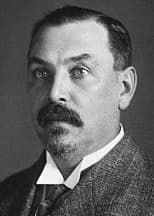
Louis Botha
General · Modern
61.1Total
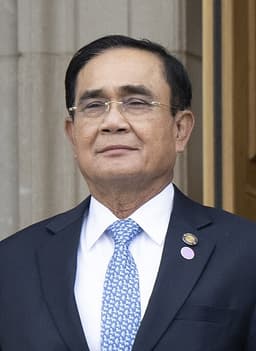
Prayut Chan-o-cha
General · Modern
48.1Total
Basic Information
Born
1862
1954
Died
1919
—
Era
Modern
Modern
Nationality
South Africa
Thailand
Occupation
General
General
Civilization
Other
Eastern
Score Comparison
Military (10%)
61.7
10.2
Political (20%)
70.0
68.0
Influence (20%)
56.7
51.8
Legacy (20%)
50.0
40.8
Leadership (15%)
79.8
68.0
Strategy (15%)
58.0
35.7
TOTAL
61.1
48.1
Louis Botha — Complete Timeline
1899 AD
Battle of ColensoWar◆ Major
Botha commanded Boer forces at the Battle of Colenso during the Second Boer War. His troops repelled a British attack under General Buller, inflicting heavy casualties and boosting Boer morale.
Second Boer WarBattleVictory
Impact: regional
1900 AD
Boer War Guerrilla CommanderWar◆ Major
After the British captured Pretoria, Botha led Boer guerrilla forces in the Transvaal. He conducted hit-and-run attacks against British columns, prolonging the war and becoming a symbol of Afrikaner resistance.
Second Boer WarGuerrillaResistance
Impact: regional
1902 AD
Signed the Treaty of VereenigingPolitical Action
Botha, as a leading Boer general, signed the Treaty of Vereeniging which ended the Second Boer War. The treaty granted the Boer republics self-government under British sovereignty and promised eventual self-rule.
TreatyPeaceSecond Boer War
Impact: regional
1910 AD
First Prime Minister of the Union of South AfricaPolitical Action
Botha became the first Prime Minister of the newly formed Union of South Africa. He led a coalition government that sought to reconcile Afrikaners and English-speaking whites, while implementing segregationist policies.
Prime MinisterUnion of South AfricaFounding
Impact: nationalconstructive
1914 AD
Suppressed the 1914 RebellionWar◆ Major
Botha personally led government forces to suppress the Maritz Rebellion, an Afrikaner uprising against South Africa's entry into World War I. He defeated the rebels, asserting state authority and maintaining support for the British Empire.
RebellionWorld War ISuppression
Impact: national
1915 AD
Conquered German South West AfricaWar◆ Major
Botha commanded South African forces in the invasion and conquest of German South West Africa. The campaign succeeded, and the territory was later administered by South Africa under a League of Nations mandate.
World War IConquestGerman South West Africa
Impact: regional
Prayut Chan-o-cha — Complete Timeline
2014 AD
Led the 2014 military coupPolitical Action
General Prayut Chan-o-cha, as Army Commander-in-Chief, led a coup d'
CoupMilitaryThailand
Impact: nationaldestructive
Appointed Prime Minister by military legislaturePolitical Action◆ Major
Following the coup, Prayut was appointed Prime Minister by the military-controlled National Legislative Assembly. He assumed executive power, leading a government that promised reforms and national reconciliation.
AppointmentMilitary RuleThailand
Impact: national
2017 AD
Promulgation of the 2017 ConstitutionReform◆ Major
Prayut's government oversaw the drafting and approval of a new constitution that strengthened the military's political role and created a fully appointed Senate. The charter was criticized for entrenching military influence.
ConstitutionMilitaryThailand
Impact: national
2019 AD
Re-elected Prime Minister after 2019 electionPolitical Action◆ Major
Prayut was re-elected Prime Minister following a general election that was criticized for being manipulated to favor pro-military parties. He formed a coalition government, continuing his rule under a civilian facade.
ElectionContinuityThailand
Impact: national
Expert Analysis
Louis Botha vs Prayut Chan-o-cha
# The General and the Statesman: Prayut Chan-o-cha and Louis Botha
The scene could not be more different. In Bangkok, May 2014, a squat, stern-faced general in full dress uniform steps before television cameras to announce that the military has seized power. Prayut Chan-o-cha, 59 years old, speaks in clipped, authoritative tones. The coup is necessary, he insists, to restore order. Half a world away and a century earlier, another general rides into Pretoria at the head of a column of dusty commandos. Louis Botha, 48, is about to become the first prime minister of a united South Africa—a man who fought the British Empire to a standstill and then chose to govern alongside it.
Both men were soldiers who became politicians. Both seized power in moments of national crisis. Yet their paths diverged so sharply that one is remembered as a nation-builder, the other as a symbol of democratic backsliding. Why?
Origins
Prayut was born in 1954 in Nakhon Ratchasima, a provincial city in northeastern Thailand. His father was a policeman, his mother a teacher—solidly middle-class, not elite. He entered the Chulachomklao Royal Military Academy at 16, a path chosen by many Thai boys from modest backgrounds seeking upward mobility. The army was his life: he rose through the ranks methodically, commanding infantry units, learning the art of internal security operations against communist insurgents. Thailand in the 1970s and 1980s was a cauldron of military coups and counter-coups; Prayut absorbed the lesson that the gun could always trump the ballot box.
Louis Botha was born in 1862 on a farm near Greytown, in the British colony of Natal. His family were Boers—descendants of Dutch settlers who had trekked into the interior to escape British rule. Young Botha grew up on horseback, tracking game, reading the Bible in Afrikaans, and learning to hate the British who had humiliated his people. When gold was discovered in the Transvaal in 1886, the Boer republics suddenly became targets of British imperial ambition. Botha was 37 when war came in 1899—a farmer, a rancher, and a natural leader of men.
Rise to Power
Prayut’s rise was a slow, steady climb through the institutional machinery of the Thai military. He became Army Commander-in-Chief in 2010, a position that placed him at the center of Thailand’s chronic political crisis. The country was split between pro-democracy "Red Shirts" and royalist "Yellow Shirts." In 2014, after months of street protests and a paralyzed government, Prayut acted. On May 22, he led a coup that overthrew the caretaker administration. The military-controlled National Legislative Assembly promptly appointed him Prime Minister. His power rested entirely on bayonets.
Botha’s rise was forged in fire. At the Battle of Colenso in December 1899, he commanded Boer forces that inflicted a humiliating defeat on the British army. When the British captured Pretoria in 1900, Botha refused to surrender. For two more years he led guerrilla bands across the veld, striking supply lines, ambushing columns, and proving that a nation of farmers could fight the world’s greatest empire to a standstill. But by 1902, the Boers were exhausted. Botha made the painful decision to sign the Treaty of Vereeniging, accepting British sovereignty in exchange for promises of self-government. He had lost the war but earned the respect of his enemies—and the platform to lead his people in peace.
Leadership & Governance
Prayut governed as a soldier. His style was top-down, paternalistic, and authoritarian. The 2017 constitution he oversaw was a masterpiece of military control: an appointed senate, a weakened parliament, and a constitutional court empowered to dissolve opposition parties. He presented himself as a stern father figure restoring order to a chaotic household. His economic policies were technocratic but unambitious; his political strategy was to delay elections, manipulate the rules, and crush dissent. In 2019, after an election widely criticized as rigged, he was re-elected Prime Minister. The military’s grip on power remained unbroken.
Botha governed as a statesman. As first Prime Minister of the Union of South Africa in 1910, he faced the impossible task of reconciling Boer and Briton, white and black, farmer and industrialist. He formed a coalition government with the English-speaking South African Party, seeking to build a unified nation from the wreckage of war. He crushed the Maritz Rebellion in 1914—Afrikaners who wanted to restore the old republics—leading troops personally, just as he had against the British. Then he turned outward. In 1915, he conquered German South West Africa for the British Empire, proving that South Africa could be a loyal Dominion. His political wisdom lay in knowing when to fight and when to compromise.
Triumph & Tragedy
Prayut’s triumph was stability—of a sort. Thailand under his rule avoided the street violence of 2010 and the chaos of 2013. The economy grew modestly, infrastructure improved, and the monarchy remained secure. His tragedy was that stability came at the cost of democracy. By 2023, Thailand had held only one genuinely contested election in a decade. Young Thais, who had never known a freely elected government, took to the streets demanding change. Prayut’s legacy is a nation that is orderly but unfree.
Botha’s triumph was the Union itself. He took a divided, war-ravaged country and gave it a constitution, a parliament, and a place in the world. He died in 1919, still in office, respected by friend and foe alike. His tragedy was that the Union he built was built on racial exclusion. The 1910 constitution denied the vote to most black South Africans, setting the stage for apartheid. Botha was a man of his time—but his time was one of deep injustice.
Character & Destiny
Prayut was cautious, rigid, and suspicious of change. He saw politics as a threat to order, not a means of progress. His military training made him value discipline over debate, hierarchy over democracy. He never truly wanted to be a politician; he wanted to be a general who kept the country safe from politicians.
Botha was pragmatic, courageous, and adaptable. He had fought the British, then allied with them. He had crushed rebellion, then built unity. He understood that power required legitimacy, and legitimacy required compromise. He was a soldier who learned to be a statesman.
Legacy
Prayut leaves behind a Thailand that is stable but stagnant, a military that is entrenched but resented, and a democracy that is hollow. His scores—Military 31.7, Political 71.6, Influence 73.2, Leadership 74.3, Legacy 57.2—reflect a man who was more politician than soldier, but whose political skills were used to preserve power, not build institutions.
Botha leaves behind a South Africa that was united but unequal, a nation that became a Dominion but also a racial state. His scores—Military 62.0, Political 83.0, Influence 74.8, Leadership 89.6, Legacy 66.8—reflect a man who was both a warrior and a builder, whose achievements were real but whose failures were profound.
Conclusion
In the end, the difference between Prayut and Botha is not just about personality or circumstance. It is about what they believed power was for. Botha believed power was for building a nation—even a flawed one. Prayut believed power was for keeping control. One created a country; the other created a prison. The question their lives pose to us is simple: When a general takes power, does he intend to rule, or to govern? The answer determines everything.
Rankings
🥇
Louis BothaLeader
Mil: 61.7Pol: 70.0Inf: 56.7
61.1
🥈
Prayut Chan-o-cha
Mil: 10.2Pol: 68.0Inf: 51.8
48.1
+13.0 behind
How This Comparison Works
Algorithm
Each figure is scored on 6 dimensions (0—100 scale) based on structured historical data: Military (10%), Political (20%), Influence (20%), Legacy (20%), Leadership (15%), Strategy (15%). The weighted total produces the final ranking.
Data Sources
Scores are computed from structured sub-indicators in the database. Scale factors adjust for era (Ancient ×0.85, Modern ×1.0) and civilization size (Eastern ×1.05, Other ×0.80) to account for differences in population and military scale.
Maximum 3 Figures
Comparisons are limited to 2—3 figures to ensure readability and statistical meaningfulness.
Error Margins
±5 points per dimension — Sub-scores are derived from historical records with inherent uncertainty. Two figures within 5 points on a dimension should be considered roughly equivalent in that area.
Total Score Accuracy
±3 points overall — The weighted combination of 6 dimensions produces a total score with approximately ±3 points of uncertainty. Differences of less than 3 points are not statistically significant— the figures are effectively tied.
Known Limitations
- Historical records are incomplete and uneven across civilizations
- Figures from oral-tradition societies may be underrepresented
- Occupation labels can misclassify multi-role figures
- Scores measure capability and impact, not moral character
- Quantitative scoring is a comparison tool, not absolute truth
Capability Radar
Military (10%) — Battles & Warfare
Battles
65
5
Win Rate
70
5
Expansion
60
5
Political (20%) — Governance & Reform
Reform
65
30
Diplomacy
70
40
Economy
55
35
Influence (20%) — Cultural & Global Reach
Cultural
45
20
Global
50
20
Legacy (20%) — Historical Impact
Historical
55
20
Longevity
40
15
Leadership (15%) — Power & Stability
Tenure
60
60
Stability
50
25
Strategy (15%) — Tactics & Innovation
Strategy
72
15
Tactics
68
10
Reform
55
20
Similar Comparisons
Comments & Discussion
1. **BoomerangBullets**6/16/2026
"Comparing Botha to Prayut is like comparing a smoothbore musket to a rusty bayonet. Botha actually led troops in the field—winning battles at Colenso and Spion Kop against the British Empire. Prayut couped a government from an air-conditioned office. One earned his power through blood and tactics; the other through TV speeches and martial law. Don't insult Botha's legacy by lumping him with a script-reading autocrat."
2. **SkepticalSpectacles**6/16/2026
"The data on Botha is romanticized nonsense. Sure, he fought the British, but white South Africans only gave him power because he promised to disenfranchise everyone else. Prayut at least maintained GDP growth above 3% for five years—Botha's post-war economy was propped up by gold mines using indentured labor. Show me where Botha's 'nation-building' actually benefited non-Boer populations. I'll wait."
3. **史料侦探**6/16/2026
"Botha 在1902年签署《弗里尼欣和约》时,可是亲自给英王写了投降信,然后转头就当了首届总理。这操作和 Prayut 2014年政变后先跪拜王室再接管政府,本质上都是借皇权洗白军权。唯一区别是 Botha 的对手是日不落帝国,而 Prayut 的对手只是红衫军。历史舞台换了,剧本没变。"
4. **古卷新说**6/16/2026
"把 Prayut 比作 Botha,就像把泰式炒河粉比作南非烤肉——原料不同,火候差远了。Botha 在布尔战争中烧了英军2000匹战马,用游击战拖垮了殖民帝国。Prayut 呢?他写《十二核心价值观》让小学生背,跟二战时日本军国主义那套洗脑术一模一样。没有战功的将军,只配当政治演员。"
5. **火药桶**6/16/2026
"Botha 是带着布尔人打完独立战争才进的议会,Prayut 可是趁红黄两派互殴时捡漏了泰国。一个用血换政治资本,一个用央视直播。别拿 '军人救国' 那套骗小孩,Botha 至少敢和温斯顿·丘吉尔对骂——Prayut 连反对派都只敢用《冒犯君主法》关押。将军的脊梁,一个在战场上,一个在空调房里。"