Loading...
Louis Botha vs Pedro I of Brazil
Louis Botha leads by 6.5 pts · 2 figures compared
…
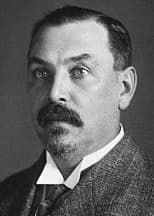
Louis Botha
General · Modern
61.1Total
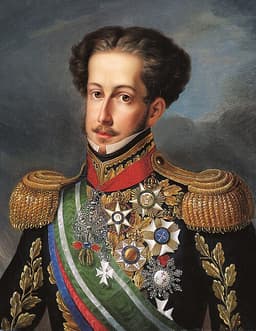
Pedro I of Brazil
Emperor · Modern
54.6Total
Basic Information
Born
1862
1798
Died
1919
1834
Era
Modern
Modern
Nationality
South Africa
Brazil
Occupation
General
Emperor
Civilization
Other
Western
Score Comparison
Military (10%)
61.7
55.0
Political (20%)
70.0
62.7
Influence (20%)
56.7
59.0
Legacy (20%)
50.0
50.0
Leadership (15%)
79.8
53.2
Strategy (15%)
58.0
45.0
TOTAL
61.1
54.6
Louis Botha — Complete Timeline
1899 AD
Battle of ColensoWar◆ Major
Botha commanded Boer forces at the Battle of Colenso during the Second Boer War. His troops repelled a British attack under General Buller, inflicting heavy casualties and boosting Boer morale.
Second Boer WarBattleVictory
Impact: regional
1900 AD
Boer War Guerrilla CommanderWar◆ Major
After the British captured Pretoria, Botha led Boer guerrilla forces in the Transvaal. He conducted hit-and-run attacks against British columns, prolonging the war and becoming a symbol of Afrikaner resistance.
Second Boer WarGuerrillaResistance
Impact: regional
1902 AD
Signed the Treaty of VereenigingPolitical Action
Botha, as a leading Boer general, signed the Treaty of Vereeniging which ended the Second Boer War. The treaty granted the Boer republics self-government under British sovereignty and promised eventual self-rule.
TreatyPeaceSecond Boer War
Impact: regional
1910 AD
First Prime Minister of the Union of South AfricaPolitical Action
Botha became the first Prime Minister of the newly formed Union of South Africa. He led a coalition government that sought to reconcile Afrikaners and English-speaking whites, while implementing segregationist policies.
Prime MinisterUnion of South AfricaFounding
Impact: nationalconstructive
1914 AD
Suppressed the 1914 RebellionWar◆ Major
Botha personally led government forces to suppress the Maritz Rebellion, an Afrikaner uprising against South Africa's entry into World War I. He defeated the rebels, asserting state authority and maintaining support for the British Empire.
RebellionWorld War ISuppression
Impact: national
1915 AD
Conquered German South West AfricaWar◆ Major
Botha commanded South African forces in the invasion and conquest of German South West Africa. The campaign succeeded, and the territory was later administered by South Africa under a League of Nations mandate.
World War IConquestGerman South West Africa
Impact: regional
Pedro I of Brazil — Complete Timeline
1822 AD
Declaration of Independence of BrazilPolitical Action
Pedro I declared Brazil's independence from Portugal on September 7, 1822, at the Ipiranga River in S
Impact: globalprogressive
Coronation as Emperor of BrazilPolitical Action◆ Major
Pedro I was crowned Emperor of Brazil on December 1, 1822, in Rio de Janeiro. The coronation formalized the new imperial government, with Pedro I as constitutional monarch, though he retained significant executive powers.
Impact: nationalconstructive
1823 AD
War of Independence of BrazilWar◆ Major
Pedro I led Brazilian forces against Portuguese loyalists in the War of Independence. Key battles occurred in Bahia, Maranh
Impact: national
Dissolution of the Constituent AssemblyPolitical Action◆ Major
Pedro I dissolved the Constituent Assembly after conflicts over the constitution's limits on imperial power. He then imposed the 1824 Constitution, which granted the emperor extensive powers, including the Moderating Power, centralizing authority.
Impact: nationaldestructive
1831 AD
Abdication of the Brazilian ThronePolitical Action
Pedro I abdicated the Brazilian throne in favor of his five-year-old son Pedro II on April 7, 1831. He returned to Portugal to claim the Portuguese throne, leaving Brazil under a regency until his son came of age.
Impact: national
Expert Analysis
Louis Botha vs Pedro I of Brazil
### The Emperor and the General: Two Paths to Nationhood
In 1822, a young Portuguese prince stood on the banks of the Ipiranga River in São Paulo, drew his sword, and shouted “Independence or Death!” In 1902, a grizzled Boer commander sat across a table from British generals in Pretoria, signing a treaty that surrendered his people’s dream of a sovereign republic. Pedro I of Brazil and Louis Botha of South Africa both fought to free their lands from European empires, yet one became a founding emperor, the other a reconciling prime minister. Why did their trajectories diverge so dramatically? The answer lies not merely in their choices, but in the crucibles of their times—and the very different worlds they were born to rule.
### Origins
Pedro I was born into royalty, the son of King John VI of Portugal, who fled Napoleon’s armies in 1807 and set up court in Rio de Janeiro. Growing up in a tropical palace, Pedro absorbed the pomp of European monarchy but also the raw energy of a colony on the verge of transformation. He was impulsive, romantic, and fiercely proud—a prince who learned to ride before he could read, and who preferred action to deliberation. His era was the age of revolutions: the American and French upheavals had reshaped the Atlantic world, and the winds of change were blowing south.
Louis Botha, born in 1862, came from a very different soil. He was a Boer—a descendant of Dutch, German, and French Huguenot settlers who had trekked into the interior of southern Africa to escape British rule. His family farmed the harsh veld of the Orange Free State, a life of isolation, self-reliance, and deep Calvinist faith. Botha grew up speaking Afrikaans, hunting game, and learning the art of guerrilla warfare from skirmishes with African kingdoms. His world was one of small republics, not empires; of farmers who saw themselves as a chosen people, not as subjects of a crown.
### Rise to Power
Pedro’s path to power was both inherited and seized. In 1821, his father returned to Portugal under pressure from a liberal revolution, leaving Pedro as regent in Brazil. The Portuguese parliament then tried to reduce Brazil back to colonial status, stripping away the autonomy it had enjoyed. Pedro refused. On September 7, 1822, at age twenty-four, he declared independence and, within months, crowned himself emperor. His rise was a coup—a prince turning against his own dynasty to create a new nation.
Botha’s rise was forged in fire. He was not born to rule; he earned it on the battlefield. During the Second Boer War (1899–1902), he emerged as a brilliant commander, leading Boer forces to a stunning victory at the Battle of Colenso in December 1899, where his men repelled a British assault with devastating rifle fire. When the British captured Pretoria in 1900, Botha transformed into a guerrilla leader, striking supply lines and vanishing into the veld. His reputation grew not from birthright but from courage and cunning.
### Leadership & Governance
As emperor, Pedro I governed with a mix of idealism and authoritarianism. He drafted Brazil’s first constitution in 1824, establishing a centralized monarchy with a strong executive, but he dissolved the Constituent Assembly in 1823 when it tried to limit his power. His rule was personal and volatile: he lavished attention on his mistress, the Marchioness of Santos, while his wife, Empress Leopoldina, withered in neglect. He fought the War of Independence against Portuguese loyalists, securing Brazil’s borders, but his political instincts were erratic. He was a warrior-king, not a statesman.
Botha, by contrast, became a master of compromise. After signing the Treaty of Vereeniging in 1902—which ended the war and placed the Boer republics under British sovereignty—he surprised the world by embracing reconciliation. As first prime minister of the Union of South Africa in 1910, he built a coalition government that sought to unite Boers and English-speakers. He crushed the Maritz Rebellion of 1914, a Boer uprising against his own government, and led South African forces to conquer German South West Africa in 1915. Botha understood that survival required pragmatism, not pride.
### Triumph & Tragedy
Pedro’s greatest triumph was the independence of Brazil itself—a vast, peaceful transition from colony to empire that avoided the bloody fragmentation of Spanish America. Yet his tragedy was his own character. He could not adapt to the demands of constitutional rule, and his authoritarian tendencies alienated elites and the military. On April 7, 1831, after mounting unrest, he abdicated in favor of his five-year-old son, Pedro II, and sailed back to Portugal. He left behind a nation stillborn in its adolescence.
Botha’s triumph was the creation of the Union of South Africa, a unified state that brought together former enemies. His tragedy was that this unity was built on the backs of the black majority, who were excluded from power. The treaty he signed and the constitution he upheld entrenched white supremacy. Botha, the guerrilla hero, became the architect of segregation—a legacy that would haunt his country for a century.
### Character & Destiny
Pedro was a romantic—impulsive, passionate, and unable to endure the slow grind of politics. He saw himself as a liberator, but he lacked the patience to be a builder. His destiny was to be a founder, not a ruler. Botha was a realist—tough, pragmatic, and willing to bend rather than break. He saw that the Boer cause was lost in 1902, and he chose to salvage what he could. His destiny was to be a reconciler, but on terms that betrayed his people’s deepest values.
### Legacy
Today, Pedro I is remembered as Brazil’s “Father of the Nation.” His body lies in a monument in São Paulo, and his cry of “Independence or Death” is taught to every schoolchild. Yet his reign is overshadowed by his son’s long, stable rule. He is a statue, not a living influence.
Botha’s legacy is more contested. He is honored as a founder of South Africa, but also criticized for laying the groundwork for apartheid. His grave in Pretoria is a site of pilgrimage for Afrikaners, but a symbol of oppression for many others. He remains a figure of complexity—a man who won peace but lost justice.
### Conclusion
Pedro I and Louis Botha both fought to free their homelands, but they inhabited different eras and different worlds. Pedro’s Brazil was a blank slate, a colony turned empire by the will of a prince. Botha’s South Africa was a battlefield of competing empires and peoples, where freedom for one group meant subjugation for another. Their stories remind us that nation-building is never a clean act—it is shaped by the tools at hand, the enemies at the gate, and the demons within. The emperor and the general: one shouted for independence, the other signed for peace. Both left nations that still wrestle with their choices.
Rankings
🥇
Louis BothaLeader
Mil: 61.7Pol: 70.0Inf: 56.7
61.1
🥈
Pedro I of Brazil
Mil: 55.0Pol: 62.7Inf: 59.0
54.6
+6.5 behind
How This Comparison Works
Algorithm
Each figure is scored on 6 dimensions (0—100 scale) based on structured historical data: Military (10%), Political (20%), Influence (20%), Legacy (20%), Leadership (15%), Strategy (15%). The weighted total produces the final ranking.
Data Sources
Scores are computed from structured sub-indicators in the database. Scale factors adjust for era (Ancient ×0.85, Modern ×1.0) and civilization size (Eastern ×1.05, Other ×0.80) to account for differences in population and military scale.
Maximum 3 Figures
Comparisons are limited to 2—3 figures to ensure readability and statistical meaningfulness.
Error Margins
±5 points per dimension — Sub-scores are derived from historical records with inherent uncertainty. Two figures within 5 points on a dimension should be considered roughly equivalent in that area.
Total Score Accuracy
±3 points overall — The weighted combination of 6 dimensions produces a total score with approximately ±3 points of uncertainty. Differences of less than 3 points are not statistically significant— the figures are effectively tied.
Known Limitations
- Historical records are incomplete and uneven across civilizations
- Figures from oral-tradition societies may be underrepresented
- Occupation labels can misclassify multi-role figures
- Scores measure capability and impact, not moral character
- Quantitative scoring is a comparison tool, not absolute truth
Capability Radar
Military (10%) — Battles & Warfare
Battles
65
35
Win Rate
70
40
Expansion
60
30
Political (20%) — Governance & Reform
Reform
65
45
Diplomacy
70
50
Economy
55
30
Influence (20%) — Cultural & Global Reach
Cultural
45
40
Global
50
45
Legacy (20%) — Historical Impact
Historical
55
55
Longevity
40
50
Leadership (15%) — Power & Stability
Tenure
60
55
Stability
50
25
Strategy (15%) — Tactics & Innovation
Strategy
72
35
Tactics
68
30
Reform
55
20
Similar Comparisons
Comments & Discussion
RIDER OF THE AMERICAN CYCLE6/16/2026
Pedro I gets romanticized as some liberator, but let's be real—he was a Hapsburg-style autocrat who literally had his own wife exiled and crushed republican revolts with glee. Botha, meanwhile, built a functioning multiracial government from the ashes of total military defeat. Pedro had the easy road: a bloodless independence with a ready-made imperial structure imported from Europe. Botha had to negotiate with the British Empire from a position of zero leverage and still carved out Afrikaner po
皮鞭与王冠6/16/2026
你们都在吹佩德罗喊“独立或死亡”的英雄气概,可别忘了他在位九年就顶不住压力退位跑回葡萄牙去了,留下个九岁的儿子收拾烂摊子。路易斯·博塔可是在南非战争惨败后,硬是跟英国人周旋出《南非联邦法案》,让布尔人保住了语言和土地权。一个是含着银汤匙出生的纨绔王子,一个是马背上打天下的实干家,谁更配得上“国父”二字?
TREATY OR BUST6/16/2026
I'm a data guy, so let’s crunch the numbers. Pedro's Brazil had 4 million people and zero peer enemies in 1822—independence was basically a handover from dad. Botha's Transvaal had 300,000 Boers fighting 450,000 British troops with concentration camps and scorched earth. Pedro fought for 3 years with minimal casualties; Botha fought for 3 years, lost 30,000 civilians, then had to govern a traumatized state. The “courage” metric is incomparable. Botha wins on adversity ratio by 100:1.
种田打仗两条路6/16/2026
别拿巴西的甘蔗种植园经济跟南非的兰德金矿比。佩德罗一世做皇帝靠的是葡萄牙王室剩下的官僚体系和奴隶劳动,路易斯·博塔当家时得跟塞西尔·罗兹的矿业帝国较劲。数据摆在这:博塔签《弗里尼欣条约》时,南非的经济命脉黄金产量已经暴跌了70%,他能逼出自治权简直就是外交奇迹。佩德罗独立战争里连一场像样的陆战都没打过,这能叫革命?