Loading...
Li Cunxu vs Peter the Great
Peter the Great leads by 6.7 pts · 2 figures compared
…
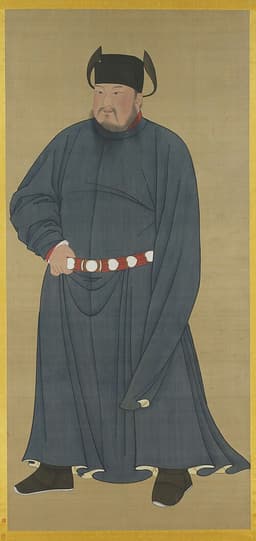
Li Cunxu
Emperor · Medieval
66.5Total
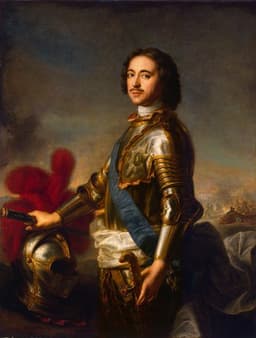
Peter the Great
Emperor · Modern
73.2Total
Basic Information
Born
885
1672
Died
926
1725
Era
Medieval
Modern
Nationality
China
Russia
Occupation
Emperor
Emperor
Civilization
Eastern
Western
Score Comparison
Military (10%)
76.0
75.0
Political (20%)
68.0
90.0
Influence (20%)
62.0
68.0
Legacy (20%)
58.0
65.0
Leadership (15%)
80.0
78.0
Strategy (15%)
67.2
72.0
TOTAL
66.5
73.2
Li Cunxu — Complete Timeline
908 AD
Succeeded as Prince of JinPolitical Action◆ Major
Li Cunxu inherited the title Prince of Jin from his father Li Keyong. He continued the struggle against Later Liang, consolidating the Jin state as a major power in northern China.
JinSuccessionFive Dynasties
Impact: regional
910 AD
Battle of BaixiangWar◆ Major
Li Cunxu's Jin army defeated the Later Liang forces under Zhu Wen at Baixiang. This victory established Jin as the dominant military power in the north and marked a turning point in the war.
JinLater LiangBattle
Impact: regionalconstructive
923 AD
Conquered Later LiangWar
Li Cunxu led a successful campaign against Later Liang, capturing its capital Kaifeng and ending the dynasty. He then proclaimed himself emperor, founding the Later Tang dynasty.
Later TangConquestDynastic Change
Impact: nationalconstructive
Founded Later Tang DynastyPolitical Action
Li Cunxu declared himself emperor of the Later Tang dynasty, claiming legitimacy as the restorer of the Tang lineage. He established his capital at Luoyang and reunified much of northern China.
Later TangDynasty FoundingReunification
Impact: nationalconstructive
926 AD
Killed in mutiny at XingyuanWar◆ Major
Li Cunxu faced a mutiny by his own troops at Xingyuan during a campaign against the Khitans. He was killed in the fighting, leading to the collapse of Later Tang and the rise of Later Jin.
Later TangMutinyDeath
Impact: nationaltragic
Peter the Great — Complete Timeline
1697 AD
Grand EmbassyPolitical Action◆ Major
Peter the Great traveled incognito to Western Europe as part of a diplomatic mission. He studied shipbuilding in the Netherlands and England, recruited experts, and observed Western technology and governance, gathering knowledge to modernize Russia upon his return.
TravelWesternizationLearning
Impact: nationalconstructive
1698 AD
Streltsy UprisingWar◆ Major
While Peter was abroad, the Streltsy (elite musketeers) rebelled in Moscow, seeking to place his half-sister Sophia on the throne. Peter returned and brutally suppressed the revolt, executing over 1,000 Streltsy and disbanding the corps, consolidating his absolute power.
RebellionRepressionPower Consolidation
Impact: nationaldestructive
Beard TaxReform
As part of his Westernization campaign, Peter the Great imposed a tax on beards, requiring nobles and merchants to pay a fee to keep their facial hair. Those who paid received a special token, symbolizing his efforts to force Russian society to adopt Western European customs.
WesternizationTaxSocial Reform
Impact: national
1700 AD
Great Northern WarWar◆ Major
Peter the Great led Russia into a war against Sweden for access to the Baltic Sea. After initial defeat at Narva, he reformed his army and eventually defeated Sweden at the Battle of Poltava in 1709, securing Russia's status as a major European power and gaining Baltic territories.
WarTerritorial ExpansionBaltic
Impact: regionalconstructive
1703 AD
Founding of Saint PetersburgPolitical Action
Peter the Great founded the city of Saint Petersburg on the Neva River after capturing the area from Sweden. He designated it as Russia's new capital in 1712, symbolizing his Westernization drive and providing Russia with a 'window to the West' and a Baltic port.
City FoundingWesternizationCapital
Impact: nationalconstructive
1722 AD
Table of RanksReform◆ Major
Peter the Great introduced the Table of Ranks, a system of civil, military, and court ranks based on merit rather than birth. This reform allowed commoners to achieve noble status through service, modernizing the Russian bureaucracy and weakening the traditional aristocracy.
BureaucracyMeritocracySocial Reform
Impact: nationalprogressive
Expert Analysis
Peter the Great vs Li Cunxu
# The Iron Tsar and the Dragon Emperor
On a frozen morning in 1703, Peter the Great stood on a swampy island at the mouth of the Neva River, ordering the foundation of a city that would defy nature itself. A century earlier and half a world away, Li Cunxu rode into Kaifeng in 923, the conquered capital of the Later Liang, proclaiming himself emperor of a restored Tang dynasty. Both men seized history by the throat. One built a window to the West; the other tried to rebuild a golden age. Their paths converged on ambition—then diverged into triumph and ruin. What separates a legend from a footnote?
Origins
Peter Alekseyevich Romanov was born in 1672 into a Russia still medieval in spirit, isolated from Europe, ruled by boyars who measured power by land and lineage. His childhood was chaotic: his father died when he was four, and the Kremlin became a nest of intrigue between his half-sister Sophia and rival noble families. Peter grew up in the foreign quarter of Moscow, surrounded by Dutch shipwrights and German engineers. He learned to build boats before he learned to read state papers. The West was not an abstraction to him—it was a workshop.
Li Cunxu was born in 885 into the chaos of the Five Dynasties and Ten Kingdoms period, when northern China had fractured into warring states after the collapse of the Tang dynasty. His father, Li Keyong, was a Shatuo Turkic warlord who controlled the region of Shanxi. Li Cunxu was raised in the saddle, trained from boyhood in archery and cavalry tactics. His world was one of blood oaths and betrayals, where a man’s word could build an empire—or end it in a single night. Unlike Peter, he inherited a war, not a kingdom.
Rise to Power
Peter’s ascent was neither smooth nor inevitable. In 1689, at age seventeen, he overthrew his half-sister Sophia’s regency with the help of loyal troops—but he did not immediately take the throne. Instead, he left governing to his mother and spent years building a “toy army” that became the real Preobrazhensky Regiment, learning the craft of war from the ground up. His true turning point came in 1697, when he launched the Grand Embassy, traveling incognito to Europe. In the shipyards of the Netherlands, he worked as a common carpenter. In England, he studied naval architecture. He returned to Russia not as a tsar who had heard of the West, but as a man who had smelled its salt and felt its steel.
Li Cunxu’s rise was swifter and more brutal. In 908, at age twenty-three, he inherited the title Prince of Jin after his father’s death. The Later Liang emperor Zhu Wen saw an opportunity to crush the Jin and sent a massive army north. Li Cunxu met him at Baixiang in 910 and delivered a devastating defeat, using feigned retreats and ambushes that became legendary. For the next thirteen years, he chipped away at the Liang, winning battle after battle, until in 923 he stormed Kaifeng and ended the dynasty. He declared himself emperor of the Later Tang, claiming to restore the Tang lineage—a powerful symbol in a land that craved continuity.
Leadership & Governance
Peter the Great ruled with a hammer. He imposed a beard tax in 1698 to force Russian nobles to shave their Western-style—a small gesture that symbolized a revolution. He introduced the Table of Ranks in 1722, replacing hereditary nobility with a merit-based system that allowed commoners to rise through service. He built a navy from nothing, founded St. Petersburg as a capital carved from marsh, and reformed the army along European lines. His methods were harsh: he personally tortured rebels, taxed every aspect of life, and drove his people like a draft horse. But he understood that modernization required pain.
Li Cunxu governed like a general who never learned peace. He was a brilliant tactician—the Battle of Baixiang proved that—but his political instincts were weaker. He rewarded his soldiers generously but failed to build a stable bureaucracy. He claimed legitimacy through the Tang name, but he did not create institutions to hold his conquests together. His court was riven by factions, and he trusted only his inner circle of commanders. Where Peter saw a nation to be built, Li saw a throne to be held.
Triumph & Tragedy
Peter’s greatest triumph was the Great Northern War (1700–1721). After a crushing defeat at Narva in 1700, he rebuilt his army and eventually smashed the Swedish empire at Poltava in 1709. Russia gained access to the Baltic Sea, and St. Petersburg became its symbol—a city of palaces and canals rising from a swamp. But his tragedy was personal: he tortured his own son Alexei to death for opposing his reforms. The price of Peter’s vision was the Romanov bloodline itself.
Li Cunxu’s triumph was brief and glorious. In 923, he united northern China under the Later Tang, a feat no one had achieved in decades. His tragedy was his end: in 926, during a campaign against the Khitans, his own mutinous troops killed him at Xingyuan. The empire he had built fractured within years. He died not in battle against an enemy, but in a camp surrounded by men he had once led.
Character & Destiny
Peter was a force of nature: six-foot-seven, restless, crude, brilliant. He saw Russia as raw material to be forged. His personality—impatient, hands-on, ruthless—drove every reform. He did not delegate; he built ships with his own hands. His destiny was to force Russia into Europe, whether it wanted to go or not.
Li Cunxu was a warrior-king in the old mold: brave, charismatic, and ultimately brittle. He could win battles but could not win loyalty beyond the battlefield. His character—proud, trusting of his sword, suspicious of civil officials—doomed him. He believed that conquest was enough. It never is.
Legacy
Peter the Great left a transformed Russia: a navy, a capital, a bureaucracy, a place at the European table. His legacy is St. Petersburg—and the long, painful march of Russian modernization. He is remembered as the father of his country, for better and worse.
Li Cunxu left a name in the annals of the Five Dynasties—a brilliant flash that faded. The Later Tang collapsed, and China would not be unified again until the Song dynasty. He is remembered by historians as a tragic hero, a man who could take an empire but could not keep it.
Conclusion
Both men reached for greatness. Peter grabbed it with both hands and bent the world to his will; Li grasped it and watched it slip through his fingers. The difference was not talent—both were extraordinary. It was the difference between a builder and a conqueror. Peter understood that power must be institutionalized, that a nation must be reshaped as well as ruled. Li believed that glory was enough. In the end, the iron tsar built a city that still stands; the dragon emperor left a story that still haunts.
Rankings
🥇
Peter the GreatLeader
Mil: 75.0Pol: 90.0Inf: 68.0
73.2
🥈
Li Cunxu
Mil: 76.0Pol: 68.0Inf: 62.0
66.5
+6.7 behind
How This Comparison Works
Algorithm
Each figure is scored on 6 dimensions (0—100 scale) based on structured historical data: Military (10%), Political (20%), Influence (20%), Legacy (20%), Leadership (15%), Strategy (15%). The weighted total produces the final ranking.
Data Sources
Scores are computed from structured sub-indicators in the database. Scale factors adjust for era (Ancient ×0.85, Modern ×1.0) and civilization size (Eastern ×1.05, Other ×0.80) to account for differences in population and military scale.
Maximum 3 Figures
Comparisons are limited to 2—3 figures to ensure readability and statistical meaningfulness.
Error Margins
±5 points per dimension — Sub-scores are derived from historical records with inherent uncertainty. Two figures within 5 points on a dimension should be considered roughly equivalent in that area.
Total Score Accuracy
±3 points overall — The weighted combination of 6 dimensions produces a total score with approximately ±3 points of uncertainty. Differences of less than 3 points are not statistically significant— the figures are effectively tied.
Known Limitations
- Historical records are incomplete and uneven across civilizations
- Figures from oral-tradition societies may be underrepresented
- Occupation labels can misclassify multi-role figures
- Scores measure capability and impact, not moral character
- Quantitative scoring is a comparison tool, not absolute truth
Capability Radar
Military (10%) — Battles & Warfare
Battles
85
85
Win Rate
80
80
Expansion
75
90
Political (20%) — Governance & Reform
Reform
50
95
Diplomacy
60
80
Economy
45
85
Influence (20%) — Cultural & Global Reach
Cultural
55
85
Global
45
85
Legacy (20%) — Historical Impact
Historical
65
90
Longevity
50
85
Leadership (15%) — Power & Stability
Tenure
55
90
Stability
40
70
Strategy (15%) — Tactics & Innovation
Strategy
78
85
Tactics
82
75
Reform
60
95
Similar Comparisons
Comments & Discussion
IVAN-THE-FORGOTTEN6/16/2026
Peter's swamp city is overrated. Li Cunxu actually conquered territory and united a fractured realm, while Peter just bought Western tech and pretended to be progressive. The Neva foundation myth ignores how many serfs died building that vanity project. Li built a dynasty from sheer military genius—Peter inherited a kingdom and played dress-up as a carpenter. Give me the Dragon Emperor who charged into Kaifeng over a Tsar who played with toy boats any day.
黄河铁骑6/16/2026
拿彼得大帝跟李存勖比,简直是对后唐庄宗的侮辱!彼得那套西化改革说白了就是给贵族换身洋皮,可李存勖是真刀真枪从乱世里杀出来的。他爹李克用留下的残兵败将,到他手里就变成了横扫中原的铁骑。923年攻破开封那是军事教科书级别的操作。彼得?1709年波尔塔瓦打赢瑞典人,可那是靠二十年学来的炮兵技术。一个是天生的战神,一个是花钱买的先进武器,高下立判!
DATA-SMASHER6/16/2026
Let's be real: the comparison metrics are flawed. Li Cunxu ruled for barely three years before his empire crumbled due to his own incompetence in governance. Peter reigned for 42 years and transformed Russia from a medieval backwater into a European power. Army size under Peter went from 40,000 to 210,000; Li's forces probably peaked around 100,000 and collapsed instantly after his death. One built institutions that lasted centuries; the other built a personal cult that died with him. Numbers do
铁血史官6/16/2026
我觉得你们忽略了一个关键点:李存勖是沙陀人,一个突厥部落的后裔,却硬生生把自己包装成了唐朝正统继承人。这种政治手腕比彼得大帝抱着西方大腿搞改革高明多了。923年他进开封时,用的是“光复大唐”的旗号,这个文化认同的把戏彼得一辈子都玩不转。彼得只会用武力强迫贵族剃胡子穿西服,而李存勖让整个中原汉人政权承认一个突厥军阀是他们的天子——这才是真正的政治天才!
CLASSICS-SCHOLAR6/16/2026
The real irony here is how both men destroyed what they built through the same flaw: hubris. Peter's toxic legacy includes brutal taxation that halved Russia's population in some regions, and his son Alexei died under torture in his dungeons. Li Cunxu's fall came from believing his own propaganda—he spent his last days acting in plays while his generals revolted. One built a window to Europe on thousands of corpses; the other rebuilt a golden age out of paper. Neither could see their own reflect