Loading...
Li Cunxu vs Mao Zedong
Mao Zedong leads by 12.9 pts · 2 figures compared
…
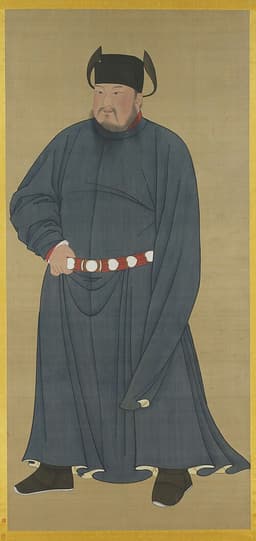
Li Cunxu
Emperor · Medieval
66.5Total
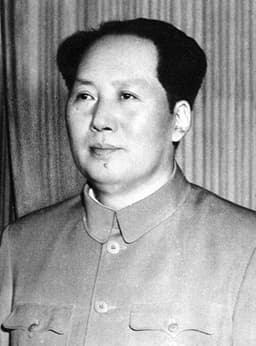
Mao Zedong
Politician · Modern
79.4Total
Basic Information
Born
885
1893
Died
926
1976
Era
Medieval
Modern
Nationality
China
China
Occupation
Emperor
Politician
Civilization
Eastern
Eastern
Score Comparison
Military (10%)
76.0
75.0
Political (20%)
68.0
88.0
Influence (20%)
62.0
85.0
Legacy (20%)
58.0
70.0
Leadership (15%)
80.0
85.0
Strategy (15%)
67.2
72.0
TOTAL
66.5
79.4
Li Cunxu — Complete Timeline
908 AD
Succeeded as Prince of JinPolitical Action◆ Major
Li Cunxu inherited the title Prince of Jin from his father Li Keyong. He continued the struggle against Later Liang, consolidating the Jin state as a major power in northern China.
JinSuccessionFive Dynasties
Impact: regional
910 AD
Battle of BaixiangWar◆ Major
Li Cunxu's Jin army defeated the Later Liang forces under Zhu Wen at Baixiang. This victory established Jin as the dominant military power in the north and marked a turning point in the war.
JinLater LiangBattle
Impact: regionalconstructive
923 AD
Conquered Later LiangWar
Li Cunxu led a successful campaign against Later Liang, capturing its capital Kaifeng and ending the dynasty. He then proclaimed himself emperor, founding the Later Tang dynasty.
Later TangConquestDynastic Change
Impact: nationalconstructive
Founded Later Tang DynastyPolitical Action
Li Cunxu declared himself emperor of the Later Tang dynasty, claiming legitimacy as the restorer of the Tang lineage. He established his capital at Luoyang and reunified much of northern China.
Later TangDynasty FoundingReunification
Impact: nationalconstructive
926 AD
Killed in mutiny at XingyuanWar◆ Major
Li Cunxu faced a mutiny by his own troops at Xingyuan during a campaign against the Khitans. He was killed in the fighting, leading to the collapse of Later Tang and the rise of Later Jin.
Later TangMutinyDeath
Impact: nationaltragic
Mao Zedong — Complete Timeline
1934 AD
Long MarchWar
Mao Zedong led the Chinese Red Army on a strategic retreat from Nationalist forces, covering approximately 6,000 miles over 370 days. The march solidified Mao's leadership within the Chinese Communist Party and became a foundational myth of the Communist revolution.
Chinese Civil WarCommunist RevolutionRetreat
Impact: national
1949 AD
Proclamation of the People's Republic of ChinaPolitical Action
Mao Zedong declared the founding of the People's Republic of China from Tiananmen Gate in Beijing. This ended the Chinese Civil War and established Communist rule over mainland China, with Mao as Chairman of the Central People's Government.
Founding of PRCCommunist VictoryRevolution
Impact: global
1958 AD
Great Leap ForwardReform◆ Major
Mao launched a campaign to rapidly industrialize China and collectivize agriculture. The policy led to widespread mismanagement, resulting in a famine that caused an estimated 15-45 million deaths between 1959 and 1961.
FamineIndustrializationCollectivization
Impact: nationaldestructive
1960 AD
Sino-Soviet SplitPolitical Action◆ Major
Mao's ideological differences with Soviet leader Nikita Khrushchev led to a breakdown in relations between China and the Soviet Union. The split ended the Sino-Soviet alliance and reshaped global Cold War dynamics, with China pursuing an independent path.
Cold WarIdeological ConflictAlliance Breakdown
Impact: global
1966 AD
Cultural RevolutionPolitical Action
Mao initiated a sociopolitical movement to purge capitalist and traditional elements from Chinese society. The Red Guard youth groups attacked intellectuals and officials, leading to widespread violence, destruction of cultural artifacts, and an estimated 1-2 million deaths.
Political PurgeSocial UpheavalRed Guard
Impact: nationaldestructive
1971 AD
Ping-Pong DiplomacyCultural◆ Major
Mao approved an invitation for the U.S. table tennis team to visit China, initiating a thaw in Sino-American relations. This cultural exchange paved the way for President Nixon's visit to China in 1972 and the eventual normalization of diplomatic ties.
DiplomacyU.S.-China RelationsCultural Exchange
Impact: globalconstructive
Expert Analysis
Mao Zedong vs Li Cunxu
### The Emperor and the Chairman: Two Paths to Power in China
In the winter of 926, a desperate emperor fled his own mutinous army, clutching a string of pearls he had once torn from a fallen enemy. By the time the rebels caught up with him at Xingyuan, Li Cunxu, the first ruler of the Later Tang dynasty, was already dead—killed not by a foreign invader, but by his own disillusioned troops. A thousand years later, another Chinese leader would also die in the midst of chaos, but with a difference: Mao Zedong, the founder of the People’s Republic, passed away in his own bed in 1976, his body preserved in a crystal sarcophagus, while the nation he had torn apart and reshaped mourned—or pretended to mourn. Both men sought to reunite and transform China. One failed in a matter of years; the other’s shadow still falls across the world. The question is not just what they did, but why their fates diverged so violently.
### Origins
Li Cunxu was born in 885 into a world of shattered empires. The great Tang dynasty, which had ruled for nearly three centuries, was in its death throes, its authority dissolving into the hands of warlords. His father, Li Keyong, was a Shatuo Turk chieftain who had been granted the title Prince of Jin by the dying Tang court. From infancy, Li Cunxu was trained for war in the saddle and at the sword. His world was one of blood feuds, shifting alliances, and the raw struggle for survival. There was no ideology beyond loyalty to the clan and the dream of restoring the Tang name.
Mao Zedong, born in 1893 in the village of Shaoshan, inhabited a different universe. The Qing dynasty, though tottering, still held nominal power. Mao was the son of a prosperous peasant farmer, a man who beat his children and hoarded every copper coin. Mao rebelled early—against his father, against Confucian filial piety, against the backwardness of rural China. Unlike Li Cunxu, who inherited a sword, Mao inherited a library. He devoured Chinese historical romances and, later, the radical texts of the West: Darwin, Rousseau, Marx. His battle was not merely for territory but for a new kind of world.
### Rise to Power
Li Cunxu’s path to power was starkly direct. In 908, at age twenty-three, he inherited the title Prince of Jin from his dying father. His first act was to personally lead a raid against the rival Later Liang, slaying their commander in single combat. This was a warrior’s rise: he proved himself with blood. The crucial turning point came in 910 at the Battle of Baixiang, where his outnumbered Jin army crushed the forces of Zhu Wen, the Later Liang emperor. Li Cunxu did not win through mass mobilization or ideological fervor; he won through tactical brilliance and personal courage, charging into the enemy ranks with his own hands.
Mao’s rise was slower and more precarious. He was not a battlefield commander in the traditional sense. His ascent was bureaucratic and ideological. In 1934, after the Chinese Communist Party’s urban bases were destroyed by Nationalist forces, Mao emerged as the leader of the Long March—a 6,000-mile retreat that became a legend. He did not win battles; he survived them. His genius lay in reinterpreting defeat as victory, transforming a desperate flight into a founding myth. By 1949, when he proclaimed the People’s Republic from Tiananmen Gate, he had not conquered China with a sword but with a narrative: the story of a peasant revolution that would sweep away the old world.
### Leadership & Governance
Li Cunxu ruled as a medieval warlord-king. After conquering the Later Liang in 923 and founding the Later Tang dynasty, he claimed legitimacy as the restorer of the Tang lineage. But his governance was primitive. He rewarded his generals with land and women, but he never built a bureaucracy, never created a tax system that could sustain his wars, never won the loyalty of the common people. His political score of 62.0 reflects this: he was a brilliant tactician but a poor administrator. His court was riven by factionalism, and he alienated his own soldiers by favoring actors and musicians over veterans.
Mao, by contrast, was a master of political organization. With a political score of 82.0, he understood that power flows not from the sword but from the party, the cadre, the cell. He transformed the Chinese Communist Party into a machine that could mobilize hundreds of millions. The Great Leap Forward of 1958 was his attempt to industrialize China overnight, to leap from the 12th century into the 20th—and it was a catastrophe that caused a massive famine. Yet Mao survived this failure because he had built a system that could absorb blame and redirect loyalty. The Cultural Revolution, launched in 1966, was even more destructive, but it was a political weapon, not a military campaign. Mao did not lead armies; he led movements.
### Triumph & Tragedy
Li Cunxu’s greatest triumph was the conquest of the Later Liang in 923. He had avenged his father, reunited the north, and sat on the dragon throne. But his tragedy came swiftly. In 926, while campaigning against the Khitans, his own troops mutinied at Xingyuan. The emperor who had never lost a battle died in a skirmish with his own men. His dynasty collapsed within a decade.
Mao’s triumph was the proclamation of the People’s Republic in 1949—the unification of China after a century of chaos. His tragedy was the human cost of his utopian dreams. The Great Leap Forward and Cultural Revolution left millions dead or broken. Yet Mao did not die in disgrace. He died in power, having reshaped China’s social fabric irrevocably. The difference is stark: Li Cunxu’s failure was personal and immediate; Mao’s was systemic and long-term.
### Character & Destiny
Li Cunxu was a warrior who could not become a king. He was brave, impulsive, and generous to his friends but cruel to his enemies. He trusted in his sword and his luck. His fatal flaw was that he never learned to rule men, only to defeat them. Mao was a revolutionary who could not become a builder. He was cunning, patient, and ruthless, but also deeply paranoid. His fatal flaw was that he could not stop destroying. Both men were shaped by their eras: Li Cunxu by the anarchy of the Five Dynasties, where only the strong survived; Mao by the collapse of the old order, where only the ideologically pure could rebuild.
### Legacy
Li Cunxu is remembered, if at all, as a footnote in Chinese history—a brave warrior who briefly restored the Tang name before his empire crumbled. His total score of 69.6 places him as a competent but forgettable figure. Mao’s legacy is colossal and contested. His influence score of 79.7 and leadership score of 80.6 reflect a man who changed the course of a civilization. He is both revered as the father of modern China and reviled as the architect of catastrophic policies. His body lies in the mausoleum he built for himself, a mummy in a crystal coffin, while his works are debated, censored, and worshipped.
### Conclusion
One died in the mud, killed by his own soldiers. The other died in a palace, mourned by a nation he had remade. But perhaps the deeper contrast is this: Li Cunxu fought for a dynasty, for a name, for the past. Mao fought for an idea, for a future that never arrived. Both sought to reunite China. One failed because he could not build; the other succeeded—and failed—because he built too much. In the end, the emperor and the chairman remind us that power is not just about winning battles. It is about creating a world that outlasts you. Li Cunxu did not. Mao did—for better and for worse.
Rankings
🥇
Mao ZedongLeader
Mil: 75.0Pol: 88.0Inf: 85.0
79.4
🥈
Li Cunxu
Mil: 76.0Pol: 68.0Inf: 62.0
66.5
+12.9 behind
How This Comparison Works
Algorithm
Each figure is scored on 6 dimensions (0—100 scale) based on structured historical data: Military (10%), Political (20%), Influence (20%), Legacy (20%), Leadership (15%), Strategy (15%). The weighted total produces the final ranking.
Data Sources
Scores are computed from structured sub-indicators in the database. Scale factors adjust for era (Ancient ×0.85, Modern ×1.0) and civilization size (Eastern ×1.05, Other ×0.80) to account for differences in population and military scale.
Maximum 3 Figures
Comparisons are limited to 2—3 figures to ensure readability and statistical meaningfulness.
Error Margins
±5 points per dimension — Sub-scores are derived from historical records with inherent uncertainty. Two figures within 5 points on a dimension should be considered roughly equivalent in that area.
Total Score Accuracy
±3 points overall — The weighted combination of 6 dimensions produces a total score with approximately ±3 points of uncertainty. Differences of less than 3 points are not statistically significant— the figures are effectively tied.
Known Limitations
- Historical records are incomplete and uneven across civilizations
- Figures from oral-tradition societies may be underrepresented
- Occupation labels can misclassify multi-role figures
- Scores measure capability and impact, not moral character
- Quantitative scoring is a comparison tool, not absolute truth
Capability Radar
Military (10%) — Battles & Warfare
Battles
85
85
Win Rate
80
80
Expansion
75
85
Political (20%) — Governance & Reform
Reform
50
95
Diplomacy
60
80
Economy
45
70
Influence (20%) — Cultural & Global Reach
Cultural
55
90
Global
45
90
Legacy (20%) — Historical Impact
Historical
65
95
Longevity
50
85
Leadership (15%) — Power & Stability
Tenure
55
95
Stability
40
60
Strategy (15%) — Tactics & Innovation
Strategy
78
85
Tactics
82
75
Reform
60
90
Similar Comparisons
Comments & Discussion
革命幽灵6/16/2026
说李存勖和毛泽东都是统一者?笑死。李存勖灭后梁、收河北,但五年后军队反叛,王朝灭亡。毛泽东打败国民党、抗美援朝、建设工业基础,还留下了核武器和导弹。一个亡于乱军,一个寿终正寝。如果非要比,李存勖更像是失败的项羽,而不是成功的毛泽东。
The Red Archivist6/16/2026
The analysis buries the key point: Li Cunxu's Tang dynasty lasted 13 years; Mao's China still exists after 75+ years. That's not luck—that's institutional design. Mao built the party, the army, and the bureaucracy. Li built a court. Courts fall when the emperor dies. Institutions survive. End of lesson.
The Spear of Shatuo6/16/2026
The comparison misses the fundamental difference: Li Cunxu was a military genius who personally led charges and won battles through tactical brilliance (he crushed the Later Liang at the Battle of Yedu in 923). Mao was a strategist who directed from caves in Yan'an. One died with his army; the other died in bed. Apples to rocket launchers.
统计的刀锋6/16/2026
你们在比较两个完全不同语境的人!李存勖统治时期人口约3000万,而毛泽东时代人口从5.4亿增长到9.3亿。李存勖三年亡国,毛泽东在位27年。基数不同,控制手段不同。这不是历史比较,是拼凑比喻。
The Jade Emperor's Shadow6/16/2026
Li Cunxu was a tragic hero undone by hubris after founding Later Tang—he stopped listening to his generals and started listening to actors. Mao? He purged the military, created the PLA, and turned China into a nuclear power. One is a cautionary tale for courtiers; the other reshaped global geopolitics. Different leagues entirely.