Loading...
Li Bian vs Valdemar I of Denmark
Valdemar I of Denmark leads by 3.8 pts · 2 figures compared
…
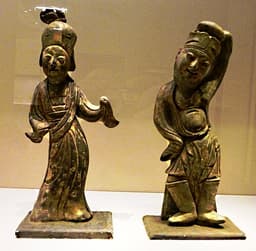
Li Bian
Emperor · Medieval
54.1Total
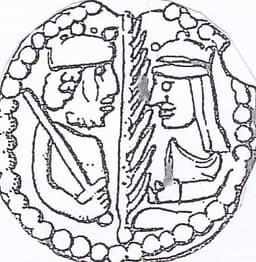
Valdemar I of Denmark
Emperor · Medieval
57.9Total
Basic Information
Born
889
1131
Died
943
1182
Era
Medieval
Medieval
Nationality
China
Denmark
Occupation
Emperor
Emperor
Civilization
Eastern
Western
Score Comparison
Military (10%)
55.0
70.0
Political (20%)
68.0
68.0
Influence (20%)
58.0
59.0
Legacy (20%)
47.5
50.0
Leadership (15%)
40.0
53.2
Strategy (15%)
60.0
55.0
TOTAL
54.1
57.9
Li Bian — Complete Timeline
937 AD
Founded the Southern Tang DynastyPolitical Action
Li Bian, originally Xu Zhigao, usurped the throne from the Yang family of the Wu kingdom and proclaimed himself emperor of the Southern Tang dynasty. He established his capital at Jinling (Nanjing) and initiated a period of cultural and economic prosperity.
Dynasty FoundingSouthern TangUsurpation
Impact: regional
938 AD
Implemented Peaceful and Prosperous PoliciesReform◆ Major
Li Bian reduced taxes, promoted agriculture, and encouraged trade. He also patronized literature and the arts, attracting scholars to his court. His reign brought stability and relative peace to the Yangtze River region during the turbulent Five Dynasties period.
ReformsProsperityCultural Patronage
Impact: regionalconstructive
Valdemar I of Denmark — Complete Timeline
1157 AD
Became King of DenmarkPolitical Action◆ Major
Valdemar I became King of Denmark after a civil war, defeating his rival Sweyn III at the Battle of Grathe Heath. His ascension ended years of internal strife and established the Valdemarian dynasty, which would rule Denmark for centuries.
Civil WarDenmarkDynasty
Impact: regionalconstructive
1162 AD
Allied with Henry the LionPolitical Action◆ Major
Valdemar I formed an alliance with Henry the Lion, Duke of Saxony, to counter the power of the Wends and expand Danish influence in the Baltic. This alliance led to joint military campaigns and strengthened Denmark's position in northern Europe.
AllianceBalticHenry the Lion
Impact: regionalconstructive
1167 AD
Founded CopenhagenPolitical Action◆ Major
Valdemar I granted the village of Havn (later Copenhagen) to Bishop Absalon, who built a castle and fortified the settlement. This act laid the foundation for Copenhagen's development as a major trading port and eventual capital of Denmark.
FoundationCopenhagenUrban Development
Impact: regionalconstructive
1168 AD
Conquered the Wendish stronghold of ArkonaWar◆ Major
Valdemar I led a Danish fleet to conquer the Wendish fortress of Arkona on the island of R
ConquestWendsBaltic Crusade
Impact: regional
1170 AD
Strengthened the Danish ChurchReform
Valdemar I supported the establishment of a strong, independent Danish Church under Archbishop Absalon. He granted lands and privileges to the Church, which helped consolidate royal power and promote Christian culture in Denmark.
ChurchReformAbsalon
Impact: nationalconstructive
Expert Analysis
Origins
Li Bian (888–943), originally Xu Zhigao, was born into humble origins in China during the turbulent Five Dynasties and Ten Kingdoms period. Orphaned at a young age, he was adopted by Yang Xingmi, a powerful warlord, and later by Xu Wen, another key figure. Through his adoptive families, Li Bian gained access to military and political circles, but his early life was marked by uncertainty and the need to navigate shifting loyalties.
Valdemar I (1131–1182), known as Valdemar the Great, was born into the Danish royal family during a period of civil war. His father, Knud Lavard, was murdered, and Valdemar grew up amidst conflict. He was raised by his mother and later by powerful nobles, learning the arts of war and statecraft from a young age. His early experiences of violence and instability shaped his determination to unify Denmark.
Rise to Power
Li Bian rose through the ranks of the Wu kingdom, first as a military officer and then as regent. In 937, after the death of Xu Wen, he usurped the throne from the Yang family, establishing the Southern Tang dynasty. His coup was bloodless, relying on political maneuvering rather than force. He changed his name to Li Bian to claim descent from the Tang imperial family, legitimizing his rule.
Valdemar I became king in 1157 after defeating his rival Sweyn III at the Battle of Grathe Heath. The battle ended a long civil war among co-claimants. Valdemar's victory was aided by his alliance with Bishop Absalon and the support of the Danish Church. He consolidated power by executing or exiling opponents and rewarding loyal nobles.
Leadership & Governance
Li Bian focused on internal development. He reduced taxes, promoted agriculture, and encouraged trade, leading to economic prosperity. He also patronized literature and arts, attracting scholars to his court. His governance scored 68.0 in political skill, reflecting his ability to maintain stability. However, his military score of 55.0 indicates a preference for peace over expansion. He avoided large-scale wars, which limited Southern Tang's territory but preserved resources.
Valdemar I was a warrior-king with a military score of 70.0. He allied with Henry the Lion of Saxony to counter the Wends and expand Danish influence in the Baltic. He led a fleet to conquer the Wendish fortress of Arkona in 1168, destroying the pagan temple of Svantevit. He also strengthened the Danish Church under Archbishop Absalon, granting lands and privileges. His political score of 68.0 matches Li Bian's, but his leadership style was more aggressive.
Triumph & Tragedy
Li Bian's greatest success was founding a stable dynasty that lasted nearly four decades. His peaceful policies allowed Southern Tang to become a cultural and economic hub. However, his failure to expand militarily left the state vulnerable. After his death, Southern Tang was conquered by the Song dynasty in 975. His legacy score of 47.5 reflects the short-lived nature of his dynasty.
Valdemar I's triumphs include ending civil war, conquering Rügen, and founding Copenhagen. His alliance with Henry the Lion expanded Danish power. However, his reliance on the Church and German allies created tensions. His death in 1182 left Denmark strong, but subsequent kings faced challenges from the same German powers. His legacy score of 50.0 is modest, partly because Copenhagen's rise was gradual.
Character & Destiny
Li Bian was cautious and cunning, preferring negotiation to conflict. His decision to adopt a new imperial lineage shows his strategic mind. He scored 60.0 in strategy, reflecting careful planning. However, his reluctance to militarize limited his long-term impact.
Valdemar I was bold and decisive, with a leadership score of 53.2. He took risks, such as the assault on Arkona, which paid off. His character was shaped by the civil wars of his youth, driving him to seek strong centralized power. Yet his aggression sometimes alienated potential allies.
Legacy
Li Bian's Southern Tang is remembered as a cultural golden age, but its political legacy is minimal. The dynasty was absorbed by the Song, and its institutions did not endure. His scores: Military 55.0, Political 68.0, Influence 58.0, Legacy 47.5, Leadership 40.0, Strategy 60.0, TOTAL 54.1.
Valdemar I's legacy includes the foundation of Copenhagen, which became a major city, and the Christianization of the Wends. His strengthening of the Danish Church laid groundwork for medieval Denmark. His scores: Military 70.0, Political 68.0, Influence 59.0, Legacy 50.0, Leadership 53.2, Strategy 55.0, TOTAL 57.9.
Conclusion
Valdemar I had a greater impact than Li Bian. His military conquests and founding of Copenhagen had lasting effects on the Baltic region. While Li Bian's cultural contributions were significant, they were ephemeral. The total score gap of 3.8 points reflects Valdemar's stronger military and leadership. Valdemar's actions shaped Denmark's future, whereas Li Bian's dynasty vanished. Thus, Valdemar I is the more consequential figure.
Rankings
🥇
Valdemar I of DenmarkLeader
Mil: 70.0Pol: 68.0Inf: 59.0
57.9
🥈
Li Bian
Mil: 55.0Pol: 68.0Inf: 58.0
54.1
+3.8 behind
How This Comparison Works
Algorithm
Each figure is scored on 6 dimensions (0—100 scale) based on structured historical data: Military (10%), Political (20%), Influence (20%), Legacy (20%), Leadership (15%), Strategy (15%). The weighted total produces the final ranking.
Data Sources
Scores are computed from structured sub-indicators in the database. Scale factors adjust for era (Ancient ×0.85, Modern ×1.0) and civilization size (Eastern ×1.05, Other ×0.80) to account for differences in population and military scale.
Maximum 3 Figures
Comparisons are limited to 2—3 figures to ensure readability and statistical meaningfulness.
Error Margins
±5 points per dimension — Sub-scores are derived from historical records with inherent uncertainty. Two figures within 5 points on a dimension should be considered roughly equivalent in that area.
Total Score Accuracy
±3 points overall — The weighted combination of 6 dimensions produces a total score with approximately ±3 points of uncertainty. Differences of less than 3 points are not statistically significant— the figures are effectively tied.
Known Limitations
- Historical records are incomplete and uneven across civilizations
- Figures from oral-tradition societies may be underrepresented
- Occupation labels can misclassify multi-role figures
- Scores measure capability and impact, not moral character
- Quantitative scoring is a comparison tool, not absolute truth
Capability Radar
Military (10%) — Battles & Warfare
Battles
30
55
Win Rate
35
60
Expansion
40
60
Political (20%) — Governance & Reform
Reform
65
60
Diplomacy
55
55
Economy
60
50
Influence (20%) — Cultural & Global Reach
Cultural
50
45
Global
30
40
Legacy (20%) — Historical Impact
Historical
45
55
Longevity
40
50
Leadership (15%) — Power & Stability
Tenure
60
65
Stability
55
55
Strategy (15%) — Tactics & Innovation
Strategy
45
55
Tactics
40
50
Reform
50
45
Similar Comparisons
Comments & Discussion
No comments yet. Be the first to share your thoughts!