Loading...
Li Bian vs Shaybani Khan
Shaybani Khan leads by 6.4 pts · 2 figures compared
…
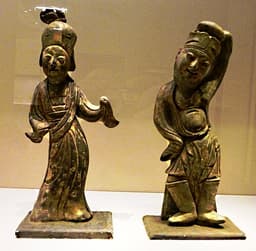
Li Bian
Emperor · Medieval
54.1Total
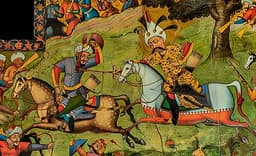
Shaybani Khan
Emperor · Medieval
60.5Total
Basic Information
Born
889
1451
Died
943
1510
Era
Medieval
Medieval
Nationality
China
Khanate of Bukhara
Occupation
Emperor
Emperor
Civilization
Eastern
Eastern
Score Comparison
Military (10%)
55.0
78.0
Political (20%)
68.0
45.0
Influence (20%)
58.0
62.0
Legacy (20%)
47.5
54.0
Leadership (15%)
40.0
72.0
Strategy (15%)
60.0
61.2
TOTAL
54.1
60.5
Li Bian — Complete Timeline
937 AD
Founded the Southern Tang DynastyPolitical Action
Li Bian, originally Xu Zhigao, usurped the throne from the Yang family of the Wu kingdom and proclaimed himself emperor of the Southern Tang dynasty. He established his capital at Jinling (Nanjing) and initiated a period of cultural and economic prosperity.
Dynasty FoundingSouthern TangUsurpation
Impact: regional
938 AD
Implemented Peaceful and Prosperous PoliciesReform◆ Major
Li Bian reduced taxes, promoted agriculture, and encouraged trade. He also patronized literature and the arts, attracting scholars to his court. His reign brought stability and relative peace to the Yangtze River region during the turbulent Five Dynasties period.
ReformsProsperityCultural Patronage
Impact: regionalconstructive
Shaybani Khan — Complete Timeline
1500 AD
Conquest of SamarkandWar◆ Major
Muhammad Shaybani Khan, leader of the Uzbek Shaybanids, captured Samarkand from the Timurids. This conquest marked the beginning of the end for the Timurid dynasty in Transoxiana and established the Khanate of Bukhara.
ShaybanidsConquestSamarkand
Impact: regionaldestructive
1507 AD
Conquest of HeratWar◆ Major
Shaybani Khan captured Herat, the Timurid capital of Khorasan, after the death of Husayn Bayqara. This conquest ended the Timurid dynasty and brought Khorasan under Uzbek control.
ShaybanidsConquestHerat
Impact: regionaldestructive
1510 AD
Battle of MarvWar◆ Major
Shaybani Khan was defeated and killed by the Safavid Shah Ismail I at the Battle of Marv. His death ended the rapid expansion of the Shaybanid state and allowed the Safavids to briefly occupy Khorasan.
ShaybanidsBattleSafavids
Impact: regionaltragic
Expert Analysis
Origins
Li Bian (888–943), originally Xu Zhigao, was born into obscurity in Pengcheng (modern Xuzhou, China). Orphaned at a young age, he was adopted by Yang Xingmi, a powerful warlord of the Wu kingdom. He rose through the ranks of Wu's bureaucracy, gaining experience in administration and military affairs. His adoptive father's patronage provided him with a foundation in governance, but his humble beginnings instilled a pragmatic and cautious approach to leadership.
Shaybani Khan (1451–1510), born Muhammad Shaybani, was a descendant of Genghis Khan through Shiban, the fifth son of Jochi. He grew up among the Uzbek nomadic tribes of the Dasht-i Qipchaq (the steppes north of the Caspian and Aral Seas). His early life was shaped by the turbulent politics of the steppe, where loyalty was fluid and power was won through military prowess. He received a traditional nomadic education in warfare and tribal leadership, preparing him for a life of conquest.
Rise to Power
Li Bian's rise was gradual and calculated. He served as a general and administrator under the Wu kingdom, eventually becoming regent for the young Wu emperor. In 937, he forced the abdication of the Wu ruler and proclaimed himself emperor of the Southern Tang dynasty, adopting the name Li Bian. His coup was bloodless, reflecting his preference for political maneuvering over military force. He consolidated power by building a strong central bureaucracy and co-opting local elites.
Shaybani Khan's rise was swift and violent. In 1500, he led the Uzbek tribes in a campaign against the Timurid Empire, capturing Samarkand, the Timurid capital, in 1501. This conquest established his reputation as a formidable military leader. He continued his expansion, capturing Khiva in 1504 and Herat in 1507, effectively ending the Timurid dynasty. His success was driven by superior cavalry tactics and the fragmentation of Timurid power after the death of Sultan Husayn Bayqara.
Leadership & Governance
Li Bian's leadership was characterized by peace and prosperity. He reduced taxes, promoted agriculture, and encouraged trade, leading to economic stability. He patronized literature and the arts, attracting scholars to his court. His governance was centralized and bureaucratic, modeled on Tang dynasty practices. He scored 40.0 in Leadership, reflecting his cautious, non-militaristic style, but his political score of 68.0 indicates effective state-building.
Shaybani Khan was a warrior-khan, leading from the front. His governance was based on tribal confederation and military merit. He rewarded loyal followers with land and booty, but failed to establish stable institutions. His political score of 45.0 reflects the fragility of his state. He imposed Uzbek tribal law over settled populations, causing resentment. His leadership style was direct and charismatic, scoring 72.0, but his lack of administrative depth limited his long-term success.
Triumph & Tragedy
Li Bian's greatest triumph was founding the Southern Tang dynasty, which lasted until 975. His policies created a period of cultural and economic flourishing, known as the "Golden Age of Southern Tang." However, his tragedy was that his successors, particularly his son Li Jing, failed to maintain his policies, leading to military defeats and eventual conquest by the Song dynasty. Li Bian himself died in 943, leaving a stable but vulnerable state.
Shaybani Khan's triumph was the destruction of the Timurid Empire and the establishment of the Shaybanid dynasty in Transoxiana. He controlled key Silk Road cities like Samarkand and Herat. His tragedy was his death in 1510 at the Battle of Marv against the Safavid Shah Ismail I. His head was presented to the Ottoman sultan, symbolizing his complete defeat. The Shaybanid state survived but lost its expansionist momentum.
Character & Destiny
Li Bian was cautious, pragmatic, and culturally refined. His character shaped a destiny of peaceful consolidation rather than expansion. He scored 60.0 in Strategy, reflecting his careful planning. His decision to avoid military confrontation preserved his state but left it vulnerable to stronger neighbors. Historians view him as a capable but unambitious ruler.
Shaybani Khan was bold, ambitious, and ruthless. His character drove him to conquer vast territories but also led to his downfall. His strategy score of 61.2 was slightly higher than Li Bian's, but his overconfidence in facing the Safavids proved fatal. He was a product of the steppe tradition, where personal valor often trumped strategic caution.
Legacy
Li Bian's legacy is the Southern Tang dynasty, which became a center of Chinese culture during the Five Dynasties and Ten Kingdoms period. His patronage of literature and arts influenced later Song dynasty culture. His political and economic reforms served as a model for subsequent southern regimes. However, his military score of 55.0 reflects his limited territorial expansion.
Shaybani Khan's legacy is the establishment of Uzbek dominance in Central Asia. The Shaybanid dynasty ruled until the 18th century, shaping the region's political landscape. His conquests ended the Timurid Renaissance but paved the way for the rise of the Khanate of Bukhara. His military score of 78.0 underscores his effectiveness as a conqueror.
Conclusion
Shaybani Khan had a greater impact on history, despite his lower political score and shorter reign. His military conquests fundamentally altered the political map of Central Asia, ending the Timurid dynasty and establishing Uzbek rule that lasted for centuries. Li Bian's achievements were significant but more localized and ephemeral. The score gap of 6.4 points reflects Shaybani Khan's higher overall influence. While Li Bian built a stable state, Shaybani Khan's actions reshaped an entire region. Thus, Shaybani Khan emerges as the more impactful historical figure.
Rankings
🥇
Shaybani KhanLeader
Mil: 78.0Pol: 45.0Inf: 62.0
60.5
🥈
Li Bian
Mil: 55.0Pol: 68.0Inf: 58.0
54.1
+6.4 behind
How This Comparison Works
Algorithm
Each figure is scored on 6 dimensions (0—100 scale) based on structured historical data: Military (10%), Political (20%), Influence (20%), Legacy (20%), Leadership (15%), Strategy (15%). The weighted total produces the final ranking.
Data Sources
Scores are computed from structured sub-indicators in the database. Scale factors adjust for era (Ancient ×0.85, Modern ×1.0) and civilization size (Eastern ×1.05, Other ×0.80) to account for differences in population and military scale.
Maximum 3 Figures
Comparisons are limited to 2—3 figures to ensure readability and statistical meaningfulness.
Error Margins
±5 points per dimension — Sub-scores are derived from historical records with inherent uncertainty. Two figures within 5 points on a dimension should be considered roughly equivalent in that area.
Total Score Accuracy
±3 points overall — The weighted combination of 6 dimensions produces a total score with approximately ±3 points of uncertainty. Differences of less than 3 points are not statistically significant— the figures are effectively tied.
Known Limitations
- Historical records are incomplete and uneven across civilizations
- Figures from oral-tradition societies may be underrepresented
- Occupation labels can misclassify multi-role figures
- Scores measure capability and impact, not moral character
- Quantitative scoring is a comparison tool, not absolute truth
Capability Radar
Military (10%) — Battles & Warfare
Battles
30
75
Win Rate
35
80
Expansion
40
80
Political (20%) — Governance & Reform
Reform
65
55
Diplomacy
55
60
Economy
60
50
Influence (20%) — Cultural & Global Reach
Cultural
50
55
Global
30
55
Legacy (20%) — Historical Impact
Historical
45
65
Longevity
40
50
Leadership (15%) — Power & Stability
Tenure
60
65
Stability
55
45
Strategy (15%) — Tactics & Innovation
Strategy
45
75
Tactics
40
70
Reform
50
60
Similar Comparisons
Comments & Discussion
No comments yet. Be the first to share your thoughts!