Loading...
Al-Qadir vs Li Bian
Al-Qadir leads by 1.0 pts · 2 figures compared
…
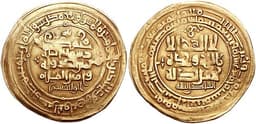
Al-Qadir
Emperor · Medieval
55.1Total
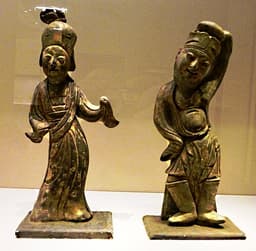
Li Bian
Emperor · Medieval
54.1Total
Basic Information
Born
947
889
Died
1031
943
Era
Medieval
Medieval
Nationality
Abbasid Caliphate
China
Occupation
Emperor
Emperor
Civilization
Middle Eastern
Eastern
Score Comparison
Military (10%)
21.2
55.0
Political (20%)
68.0
68.0
Influence (20%)
60.0
58.0
Legacy (20%)
52.0
47.5
Leadership (15%)
74.0
40.0
Strategy (15%)
36.8
60.0
TOTAL
55.1
54.1
Al-Qadir — Complete Timeline
1011 AD
Assertion of Sunni OrthodoxyPolitical Action◆ Major
Caliph Al-Qadir issued a manifesto condemning Shia doctrines and affirming Sunni orthodoxy. This document was read in mosques across Baghdad and served to strengthen Sunni identity against the Shia Buyid emirs who controlled the caliphate politically.
Sunni-Shia RelationsReligious PolicyBuyid Era
Impact: regionalconstructive
1018 AD
Al-Qadir CreedCultural◆ Major
Al-Qadir promulgated a formal creed (al-i'tiqad al-qadiri) that defined Sunni beliefs, including the createdness of the Quran and the legitimacy of the first four caliphs. This creed was enforced in Baghdad and influenced later Sunni theology.
TheologySunni OrthodoxyCreed
Impact: regionalconstructive
1020 AD
Suppression of Shia RitualsPolitical Action
Al-Qadir ordered the suppression of public Shia mourning rituals for Husayn ibn Ali in Baghdad. This action aimed to reduce Shia influence and assert caliphal authority over religious practices in the capital.
Religious SuppressionShiaBaghdad
destructive
Li Bian — Complete Timeline
937 AD
Founded the Southern Tang DynastyPolitical Action
Li Bian, originally Xu Zhigao, usurped the throne from the Yang family of the Wu kingdom and proclaimed himself emperor of the Southern Tang dynasty. He established his capital at Jinling (Nanjing) and initiated a period of cultural and economic prosperity.
Dynasty FoundingSouthern TangUsurpation
Impact: regional
938 AD
Implemented Peaceful and Prosperous PoliciesReform◆ Major
Li Bian reduced taxes, promoted agriculture, and encouraged trade. He also patronized literature and the arts, attracting scholars to his court. His reign brought stability and relative peace to the Yangtze River region during the turbulent Five Dynasties period.
ReformsProsperityCultural Patronage
Impact: regionalconstructive
Expert Analysis
Origins
Al-Qadir was born in 947 AD into the Abbasid caliphate, a dynasty that had long lost temporal power to various military factions. His father, Caliph al-Muttaqi, was a puppet of the Buyid emirs, and al-Qadir himself spent years in hiding before his accession. He received a traditional Islamic education, steeped in Sunni theology and jurisprudence. In contrast, Li Bian (born 889 AD) was a foundling adopted by Yang Xingmi, the founder of the Wu kingdom. Originally named Xu Zhigao, he rose through the ranks of the Wu court, gaining administrative experience and building a network of loyalists. His humble origins shaped his pragmatic and cautious approach to governance.
Rise to Power
Al-Qadir became caliph in 991 AD after the death of his cousin al-Ta'i, who was deposed and blinded by the Buyid emir Baha' al-Dawla. The Buyids, Shia Muslims, controlled Baghdad and allowed al-Qadir to assume the title of caliph but kept him under strict supervision. Al-Qadir slowly asserted his authority by leveraging Sunni religious sentiment and exploiting divisions among the Buyids. Li Bian's rise was more direct: he served as a regent for the Wu king Yang Pu, then forced him to abdicate in 937 AD, founding the Southern Tang dynasty. He secured his position through a combination of strategic marriages, bureaucratic reforms, and military consolidation.
Leadership & Governance
Al-Qadir's leadership was defined by his intellectual and religious assertiveness. With a Political score of 68.0 and Leadership of 74.0, he skillfully navigated the constraints of Buyid dominance. He issued the 'Al-Qadir Creed' in 1017 AD, a formal declaration of Sunni orthodoxy that condemned Shia doctrines and emphasized the legitimacy of the first three caliphs. This creed was read in mosques and became a cornerstone of Sunni identity. He also suppressed Shia rituals, such as the mourning of Husayn ibn Ali, and promoted Hanbali theology. Li Bian, with a Leadership score of 40.0 but Political score of 68.0, focused on internal development. He reduced taxes, promoted agriculture, and patronized arts, attracting scholars and poets to his court. His reign was marked by peace and prosperity, but he avoided military expansion, scoring only 55.0 in military compared to Al-Qadir's 21.2.
Triumph & Tragedy
Al-Qadir's greatest triumph was the reassertion of Sunni orthodoxy in the face of Shia political dominance. His creed influenced subsequent Sunni theology and solidified the caliph's role as a religious leader. His tragedy was his inability to restore temporal power; he remained a puppet of the Buyids and later the Seljuks. His suppression of Shias also deepened sectarian divides. Li Bian's triumph was founding the Southern Tang, which became a haven for culture and commerce. His tragedy was that his peaceful policies left his state vulnerable to the expansionist Later Zhou dynasty. After his death, Southern Tang was conquered by the Song in 975 AD.
Character & Destiny
Al-Qadir was patient, intellectually rigorous, and resolute. He used religious authority as a weapon, understanding that his only power was symbolic. His Strategy score of 36.8 reflects his limited options; he could not directly confront the Buyids. Li Bian was cautious, benevolent, and focused on stability. His low Leadership score of 40.0 suggests a lack of aggressive ambition, which was both a strength and a weakness. He preferred negotiation over conflict, a trait that preserved his state during his lifetime but left it unprepared for future threats.
Legacy
Al-Qadir's legacy is profound in Islamic history. His creed became a standard for Sunni orthodoxy, and his efforts helped marginalize Shia influence in the Abbasid caliphate. His Influence score of 60.0 reflects this. Li Bian's legacy is more regional: the Southern Tang dynasty is remembered as a golden age of Chinese culture, but its political impact was limited. His Legacy score of 47.5 indicates that his achievements were overshadowed by the eventual Song unification.
Conclusion
While Li Bian's reign brought immediate prosperity, Al-Qadir's impact on the religious landscape of the Islamic world was more enduring. With a total score of 55.1 against Li Bian's 54.1, Al-Qadir edges ahead. His assertion of Sunni orthodoxy shaped the future of Islam for centuries, whereas Li Bian's state was ephemeral. Therefore, Al-Qadir had greater historical impact.
Rankings
🥇
Al-QadirLeader
Mil: 21.2Pol: 68.0Inf: 60.0
55.1
🥈
Li Bian
Mil: 55.0Pol: 68.0Inf: 58.0
54.1
+1.0 behind
How This Comparison Works
Algorithm
Each figure is scored on 6 dimensions (0—100 scale) based on structured historical data: Military (10%), Political (20%), Influence (20%), Legacy (20%), Leadership (15%), Strategy (15%). The weighted total produces the final ranking.
Data Sources
Scores are computed from structured sub-indicators in the database. Scale factors adjust for era (Ancient ×0.85, Modern ×1.0) and civilization size (Eastern ×1.05, Other ×0.80) to account for differences in population and military scale.
Maximum 3 Figures
Comparisons are limited to 2—3 figures to ensure readability and statistical meaningfulness.
Error Margins
±5 points per dimension — Sub-scores are derived from historical records with inherent uncertainty. Two figures within 5 points on a dimension should be considered roughly equivalent in that area.
Total Score Accuracy
±3 points overall — The weighted combination of 6 dimensions produces a total score with approximately ±3 points of uncertainty. Differences of less than 3 points are not statistically significant— the figures are effectively tied.
Known Limitations
- Historical records are incomplete and uneven across civilizations
- Figures from oral-tradition societies may be underrepresented
- Occupation labels can misclassify multi-role figures
- Scores measure capability and impact, not moral character
- Quantitative scoring is a comparison tool, not absolute truth
Capability Radar
Military (10%) — Battles & Warfare
Battles
10
30
Win Rate
10
35
Expansion
10
40
Political (20%) — Governance & Reform
Reform
60
65
Diplomacy
50
55
Economy
40
60
Influence (20%) — Cultural & Global Reach
Cultural
60
50
Global
40
30
Legacy (20%) — Historical Impact
Historical
60
45
Longevity
50
40
Leadership (15%) — Power & Stability
Tenure
60
60
Stability
50
55
Strategy (15%) — Tactics & Innovation
Strategy
10
45
Tactics
10
40
Reform
10
50
Similar Comparisons
Comments & Discussion
No comments yet. Be the first to share your thoughts!