Loading...
Itzcoatl vs Shaybani Khan
Shaybani Khan leads by 2.4 pts · 2 figures compared
…
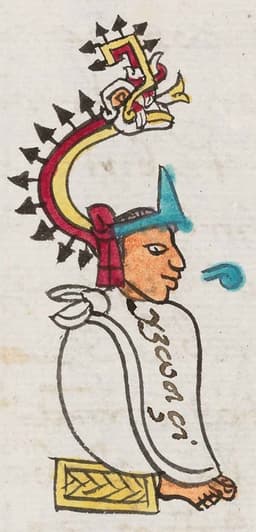
Itzcoatl
Emperor · Medieval
58.1Total
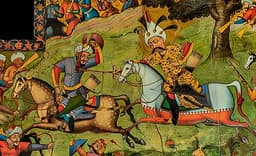
Shaybani Khan
Emperor · Medieval
60.5Total
Basic Information
Born
1380
1451
Died
1440
1510
Era
Medieval
Medieval
Nationality
Aztec Empire
Khanate of Bukhara
Occupation
Emperor
Emperor
Civilization
Other
Eastern
Score Comparison
Military (10%)
61.7
78.0
Political (20%)
55.0
45.0
Influence (20%)
61.0
62.0
Legacy (20%)
52.0
54.0
Leadership (15%)
66.0
72.0
Strategy (15%)
55.0
61.2
TOTAL
58.1
60.5
Shaybani Khan — Complete Timeline
1500 AD
Conquest of SamarkandWar◆ Major
Muhammad Shaybani Khan, leader of the Uzbek Shaybanids, captured Samarkand from the Timurids. This conquest marked the beginning of the end for the Timurid dynasty in Transoxiana and established the Khanate of Bukhara.
ShaybanidsConquestSamarkand
Impact: regionaldestructive
1507 AD
Conquest of HeratWar◆ Major
Shaybani Khan captured Herat, the Timurid capital of Khorasan, after the death of Husayn Bayqara. This conquest ended the Timurid dynasty and brought Khorasan under Uzbek control.
ShaybanidsConquestHerat
Impact: regionaldestructive
1510 AD
Battle of MarvWar◆ Major
Shaybani Khan was defeated and killed by the Safavid Shah Ismail I at the Battle of Marv. His death ended the rapid expansion of the Shaybanid state and allowed the Safavids to briefly occupy Khorasan.
ShaybanidsBattleSafavids
Impact: regionaltragic
Expert Analysis
Origins
Itzcoatl (1380-1440) was born the illegitimate son of Acamapichtli, the first Aztec ruler of Tenochtitlan. His mother, a Mexica noblewoman, ensured he received military training despite his status. He rose through the ranks as a warrior, gaining experience in the ongoing conflicts between the Tepanecs and the Mexica. His early life was shaped by the dominance of the Tepanec city-state of Azcapotzalco, which controlled the Valley of Mexico.
Shaybani Khan (1451-1510) was born Muhammad Shaybani, a descendant of Genghis Khan through his son Jochi. He grew up among the nomadic Uzbek tribes of the Dasht-i Qipchaq (the steppes of Central Asia). His father, Shah Budaq, was a minor chieftain. Shaybani spent his youth in exile, fleeing from the expanding power of the Kazakh Khanate. He found refuge with the Timurid ruler of Samarkand, Sultan Ahmad Mirza, where he learned the politics of settled empires while maintaining his steppe warrior identity.
Rise to Power
Itzcoatl was elected emperor in 1427 after the death of his brother Chimalpopoca, who was assassinated by the Tepanec ruler Maxtla. Itzcoatl immediately formed the Triple Alliance with the city-states of Texcoco and Tlacopan. In 1428, he led a coalition army against Azcapotzalco and defeated Maxtla, ending Tepanec hegemony. This victory established Tenochtitlan as the dominant power in the Valley of Mexico. Itzcoatl then initiated a series of campaigns to expand the alliance's control, conquering cities like Coyoacán and Xochimilco by 1430.
Shaybani Khan rose to prominence by uniting the Uzbek tribes. In 1499, he launched a campaign against the Timurid Empire, which had fractured after the death of Abu Sa'id Mirza. In 1500, he captured Samarkand, the Timurid capital, with a force of 3,000 men. He then defeated the combined forces of the Timurids and the Mughal prince Babur at the Battle of Sar-e Pol in 1501. By 1505, he had conquered the entire Transoxiana region. In 1507, he captured Herat, the Timurid capital of Khorasan, after the death of Husayn Bayqara. This conquest ended the Timurid dynasty, which had ruled since 1370.
Leadership & Governance
Itzcoatl was a political reformer. He restructured Aztec society by burning historical codices and rewriting history to legitimize the Triple Alliance's dominance. He centralized power by creating a new nobility based on military merit rather than hereditary lineage. He expanded the tribute system, requiring conquered cities to pay goods and labor. His military strategy relied on the flower wars (xochiyaoyotl) to capture prisoners for sacrifice, which he institutionalized to maintain religious legitimacy and military readiness.
Shaybani Khan governed as a traditional steppe conqueror. He divided conquered lands among his Uzbek followers, replacing the Persian-speaking Timurid bureaucracy with a nomadic elite. He minted coins in his name and had the khutba (Friday sermon) read in his honor. However, his rule was destabilized by constant infighting among the Uzbek tribes. He failed to integrate the settled Persian population, leading to unrest. His administration lacked the sophistication of the Timurid bureaucracy; for example, he did not maintain the irrigation systems, causing agricultural decline.
Triumph & Tragedy
Itzcoatl's greatest triumph was the formation of the Triple Alliance, which transformed Tenochtitlan from a tributary state into the center of an empire. He expanded Aztec control from the Valley of Mexico to the Gulf Coast, conquering the Huastec region by 1435. His greatest failure was his short reign (1427-1440), which limited his ability to consolidate the empire. He also failed to secure a stable succession; his nephew Moctezuma I later had to reconquer some rebellious provinces.
Shaybani Khan's greatest triumph was ending the Timurid dynasty and establishing the Shaybanid state, which ruled Transoxiana for a century. He conquered an area from the Syr Darya to the Oxus, controlling key Silk Road cities like Samarkand, Bukhara, and Herat. His greatest failure was his defeat at the Battle of Marv in 1510, where he was killed by the Safavid Shah Ismail I. His death led to the loss of Khorasan and the fragmentation of his empire. He scored 78.0 in military but only 45.0 in political, reflecting his inability to secure lasting political structures.
Character & Destiny
Itzcoatl was pragmatic and politically astute. He understood the importance of ideology, rewriting history to create a unified Aztec identity. His decision to form the Triple Alliance showed strategic foresight. He was ruthless but not cruel; he preferred diplomacy over unnecessary warfare. His character shaped his destiny: he died of natural causes at age 60, having secured the foundation of the Aztec Empire.
Shaybani Khan was ambitious and charismatic but reckless. He was a skilled warrior who led from the front, but he underestimated the Safavid threat. He refused to negotiate with Shah Ismail I, declaring war despite being outnumbered. His overconfidence led to his death at Marv, where he was killed and his skull was turned into a drinking cup. His character—pride and impatience—sealed his fate. Historical assessments note that he was a "conqueror but not a builder" (R. G. Mukminova).
Legacy
Itzcoatl's legacy is the Aztec Empire itself. The Triple Alliance he formed lasted until the Spanish conquest in 1521. His reforms created the political structure that allowed Tenochtitlan to dominate Mesoamerica. He is remembered as the "founder of the Aztec state" (Miguel León-Portilla). His legacy score is 52.0, reflecting that his empire was destroyed by the Spanish.
Shaybani Khan's legacy is the Shaybanid dynasty, which ruled Bukhara until 1598. He ended the Timurid Renaissance, but his state became a center of Islamic learning under his successors. He is remembered as the "founder of the Uzbek state" (modern Uzbekistan). His influence score is 62.0, reflecting his role in shaping Central Asian identity. However, his legacy is tarnished by his failure to establish a stable empire; his death led to a period of instability.
Conclusion
Shaybani Khan had greater military impact, scoring 78.0 in military versus Itzcoatl's 61.7. He conquered a larger territory and ended a major dynasty. However, Itzcoatl's political achievements were more enduring: he built the institutional framework for the Aztec Empire, which lasted a century. While Shaybani Khan's conquests were dramatic, they were ephemeral; his state collapsed within decades. Itzcoatl's legacy of the Triple Alliance had a deeper impact on Mesoamerican history. Therefore, Itzcoatl had greater overall impact despite lower total scores. The score gap of 2.4 points favors Shaybani Khan numerically, but in terms of lasting influence, Itzcoatl's political reforms outweigh Shaybani's military victories.
Rankings
🥇
Shaybani KhanLeader
Mil: 78.0Pol: 45.0Inf: 62.0
60.5
🥈
Itzcoatl
Mil: 61.7Pol: 55.0Inf: 61.0
58.1
+2.4 behind
How This Comparison Works
Algorithm
Each figure is scored on 6 dimensions (0—100 scale) based on structured historical data: Military (10%), Political (20%), Influence (20%), Legacy (20%), Leadership (15%), Strategy (15%). The weighted total produces the final ranking.
Data Sources
Scores are computed from structured sub-indicators in the database. Scale factors adjust for era (Ancient ×0.85, Modern ×1.0) and civilization size (Eastern ×1.05, Other ×0.80) to account for differences in population and military scale.
Maximum 3 Figures
Comparisons are limited to 2—3 figures to ensure readability and statistical meaningfulness.
Error Margins
±5 points per dimension — Sub-scores are derived from historical records with inherent uncertainty. Two figures within 5 points on a dimension should be considered roughly equivalent in that area.
Total Score Accuracy
±3 points overall — The weighted combination of 6 dimensions produces a total score with approximately ±3 points of uncertainty. Differences of less than 3 points are not statistically significant— the figures are effectively tied.
Known Limitations
- Historical records are incomplete and uneven across civilizations
- Figures from oral-tradition societies may be underrepresented
- Occupation labels can misclassify multi-role figures
- Scores measure capability and impact, not moral character
- Quantitative scoring is a comparison tool, not absolute truth
Capability Radar
Military (10%) — Battles & Warfare
Battles
65
75
Win Rate
70
80
Expansion
70
80
Political (20%) — Governance & Reform
Reform
80
55
Diplomacy
75
60
Economy
60
50
Influence (20%) — Cultural & Global Reach
Cultural
55
55
Global
50
55
Legacy (20%) — Historical Impact
Historical
70
65
Longevity
60
50
Leadership (15%) — Power & Stability
Tenure
65
65
Stability
70
45
Strategy (15%) — Tactics & Innovation
Strategy
75
75
Tactics
60
70
Reform
55
60
Similar Comparisons
Comments & Discussion
No comments yet. Be the first to share your thoughts!